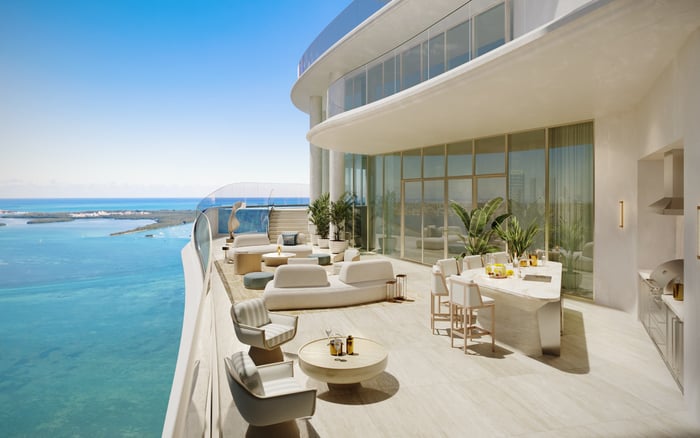
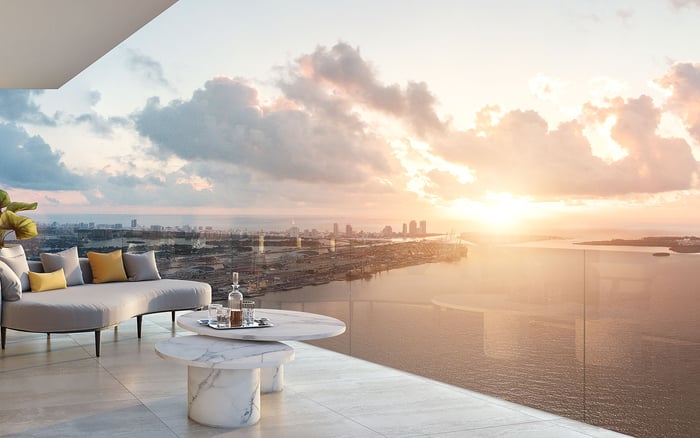
A buyer-focused, design-literate guide to understanding high-rise glazing, window wall systems, and the engineering decisions that affect comfort, durability, and long-term value in South Florida.
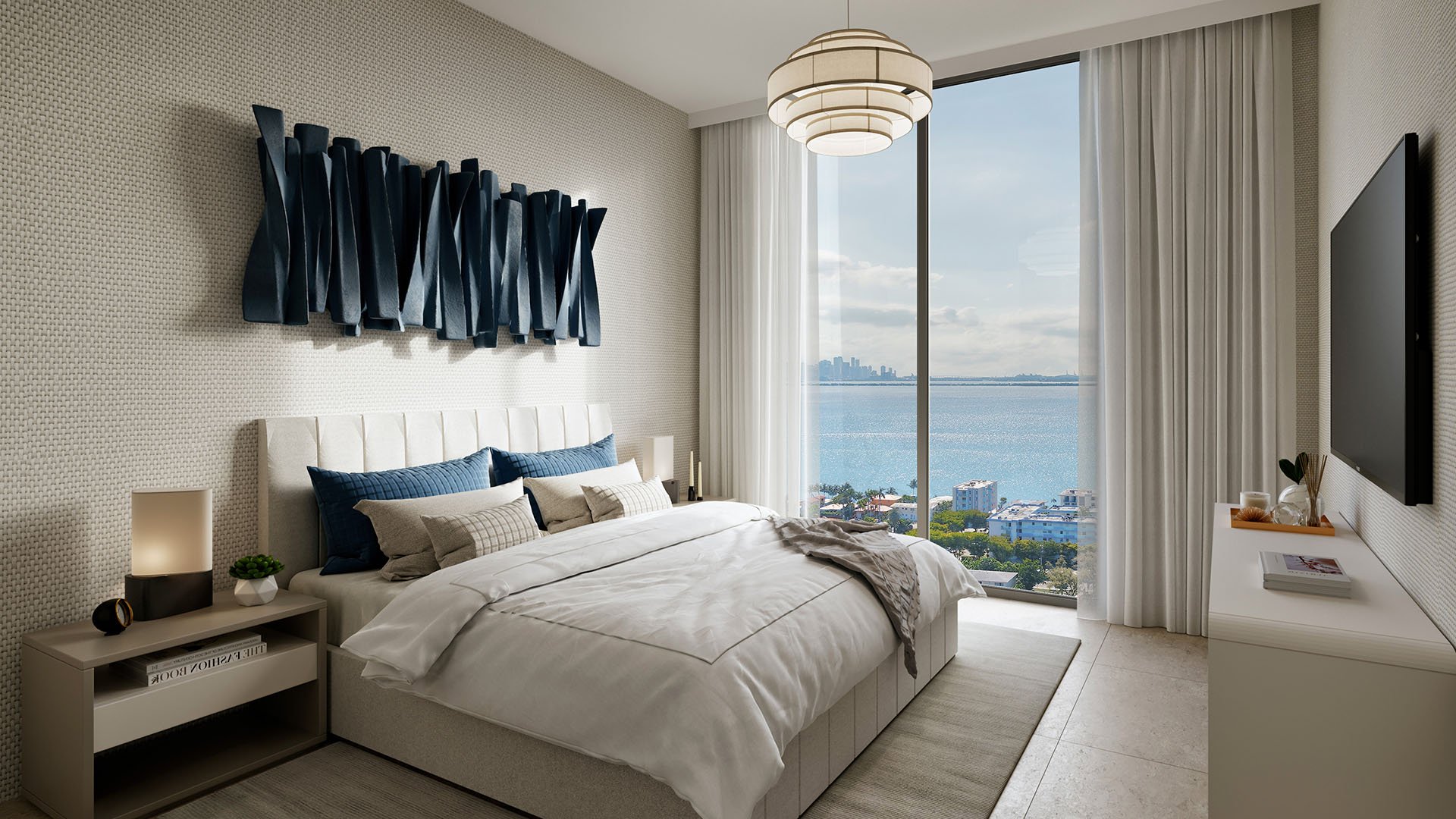
In a high-rise, glass is not decoration. It is the building’s environmental boundary, its pressure vessel, its acoustic filter, and often the defining expression of the architecture. For buyers in Miami-beach, Brickell, Sunny-isles, and Bal-harbour, glazing decisions can quietly shape day-to-day comfort, salt-air durability, insurance conversations, and future resale liquidity.
A sophisticated evaluation starts with one mindset shift: you are not “buying windows.” You are buying a tested, maintainable facade system-plus the developer’s discipline in executing critical details in the field. The same floor-to-ceiling aesthetic can be achieved through very different engineering approaches, and those choices tend to surface later as interior noise, condensation patterns, hardware fatigue, and the ease-or difficulty-of repair.
Most buyers use the terms interchangeably, but the difference is structural and practical.
A curtain wall is typically installed outside the slab edge, creating a continuous facade plane. It often enables cleaner sightlines and a more uniform exterior. Because it is anchored back to the structure, the system is designed to accommodate building movement and inter-story drift.
A window wall is commonly installed between slabs, sitting “in” the frame of each floor. It can be efficient to build, but it places critical interfaces at the slab edge-where water management, thermal bridging, and sound transmission can become more challenging when detailing is ordinary.
Neither is automatically superior. The buyer’s job is to confirm which system is used, what performance standard it was designed to meet, and how the project team intends to maintain it over decades.
Your best questions are not aesthetic. They are performance questions-questions that can be answered with shop drawings, testing documentation, and warranty language.
Start by asking for:
Wind design pressure and safety factor. Coastal high-rises are engineered for extreme wind events. Get clarity on the design criteria and how the glazing and anchors were sized to meet it.
Water penetration performance. Water is the long-term enemy. A strong facade is not “waterproof”; it is designed to resist wind-driven rain and to manage incidental water through pressure equalization, gaskets, weeps, and internal drainage paths.
Air infiltration limits. Air leakage affects comfort, humidity control, and energy use. It also influences how stable interiors remain when seasonal winds pick up.
Acoustic performance intent. If you are evaluating a waterfront tower or a location near nightlife corridors, ask how the glazing package and perimeter seals were selected to control sound.
Solar control strategy. In South Florida, comfort is often decided by solar heat gain. Look for a coherent approach to coatings, tint, and shading that balances clarity with thermal performance.
In premium product, you are also evaluating how clearly the developer communicates these targets-and whether the design team treats facade engineering as a first-order decision.
Many buyers stop at impact resistance. Impact rating is essential, but it is only one layer of performance.
Key items to understand:
Laminated assemblies and interlayers. Laminated glass can improve safety and sound, and it can influence how glass behaves after impact. Interlayers vary; ask what is specified and the rationale.
Insulated glass units (IGUs). Dual-pane IGUs can improve comfort and sound, but they introduce long-term questions about seal integrity and replacement logistics. Ask how edge-seal durability is addressed in coastal conditions.
Low-E coatings and visible light transmission. A well-selected coating can reduce solar load without turning the ocean view into a gray filter. Ask the intent: glare control, heat control, or both.
Spandrel and frit conditions. Opaque zones hide slabs and mechanical runs, but they can also be the first place you notice color shift, hazing, or sealant irregularity.
A discreet but revealing buyer move is to compare mockups or installed examples at different times of day. Harsh afternoon sun exposes optical distortion, heat buildup near mullions, and any waviness that reads as value engineering.
High-rise glazing succeeds or fails at interfaces: where glass meets frame, where frame meets sealant, where frame meets structure, and where drainage paths meet the exterior.
Focus on four details:
Perimeter sealant design. Ask what sealant system is specified and what the expected service life is under UV and salt exposure. Strong design also assumes sealant is a maintenance item-not a forever material.
Slab edge and fire-safing coordination. Where the facade crosses floors, there is a complex assembly that must satisfy fire, sound, movement, and water requirements. Execution quality here is often the difference between truly premium construction and merely expensive finishes.
Anchors, embeds, and tolerances. Coastal high-rises move. Your facade must move with them without stressing glass edges, gaskets, or fasteners.
Drainage and weep strategy. Water management should be deliberate and redundant. If the explanation feels vague, treat it as a signal.
If you are touring a completed building, look for uniform gasket lines, clean sightlines, and consistent caulking geometry. Irregular sealant widths can suggest field improvisation-rarely where you want improvisation.
The most common comfort complaints are not about fixed glass. They are about operable elements: sliding doors, tilt-turn windows, and balcony interfaces.
For buyers who prioritize Balcony and Terrace living, evaluate:
Track design and drainage at sliders. Tracks collect debris and salt; drainage must stay functional.
Hardware grade and corrosion resistance. Coastal air attacks rollers, locks, and fasteners first.
Threshold height and water management. Low, flush thresholds look elegant, but they demand excellent detailing to avoid water intrusion during wind-driven rain.
Limitations on window opening. Many high-rises restrict operable windows for safety and pressure management. Confirm what opens, how far, and whether screens are integrated.
This is where a building can feel serene or perpetually fussy. A refined slider is quiet, aligned, and confident. A compromised one announces itself in sound, wobble, and maintenance calls.
In South Florida, indoor humidity control is a lifestyle expectation. Glazing affects condensation in two ways: thermal bridging at frames and air leakage at seals.
Ask how the building addresses:
Thermal breaks in frames.
Perimeter insulation and slab edge detailing.
HVAC dehumidification strategy relative to large expanses of glass.
If you see persistent condensation at mullions or near slab edges in a similar finished tower, treat it as a preview of ownership-not a one-off anomaly.
Luxury buyers should evaluate facade maintainability with the same seriousness they evaluate amenities.
Questions that separate strong buildings from risky ones:
How is facade access handled? Look for planned systems for window washing and exterior inspections.
What is the warranty structure? Understand what is covered on glass, seals, hardware, and installation workmanship-and how claims are administered.
What is the replacement strategy for damaged units? In high-rises, glass replacement is a logistics and safety operation. Buildings with clear protocols and experienced vendors reduce downtime and stress.
How are owner modifications controlled? Unapproved films, shades, or hardware changes can void warranties and create facade inconsistency. Strong governance protects the building’s exterior identity.
This is particularly relevant in New-construction towers where the facade is visually central to the brand promise. The strongest buildings treat the envelope as a managed asset.
Glazing selection is not one-size-fits-all across Miami’s luxury map.
In Brickell, the buyer’s comfort equation often includes reflections, solar exposure, and a lively soundscape. In that context, many buyers gravitate toward towers where the facade strategy feels intentionally tuned to heat and noise, rather than simply maximizing glass. When you are evaluating newer inventory in Brickell, it can be useful to compare the lived-in feel of lobby-to-unit transitions in buildings like Una Residences and Baccarat Residences Brickell, where buyers tend to notice whether the “quiet luxury” promise continues all the way to the window line.
In Miami-beach and along oceanfront corridors, salt, wind, and wind-driven rain intensify the importance of corrosion resistance and water-management detailing. Buyers evaluating a modern beachfront lifestyle often look closely at how terraces, sliders, and corner conditions are executed in buildings such as Five Park Miami Beach, where a tower’s relationship to breeze and exposure becomes part of daily living.
In Sunny-isles, height and direct coastal exposure place a premium on robust anchors, reliable operable systems, and high confidence in impact-rated assemblies. For buyers touring the market, Turnberry Ocean Club Sunny Isles offers a useful reference point for how premium towers often emphasize views while still requiring disciplined engineering at every interface.
Bring a buyer’s eye that is calm and systematic.
Stand near the glass and listen. Excessive exterior noise, whistling, or rattle can indicate air leakage or hardware issues.
Check alignment. Mullion lines should be straight and consistent. Doors should feel square, with even reveals.
Look at sealant geometry. Clean, consistent sealant lines suggest controlled execution.
Observe interior temperature gradients. If the area near the glass is notably hotter, ask about coatings and shading strategy.
Ask about screens, shades, and wind limits. Many owners discover too late that the “window wall lifestyle” is more closed-up than expected.
The goal is not to become an engineer. It is to ask the questions that reveal whether the team treated the envelope as a luxury system, not a commodity.
If you are in contract or considering a resale, due diligence should include facade-related documents that directly affect cost and risk.
Review building rules on exterior alterations, films, and treatments.
Understand reserve philosophy for envelope maintenance.
Ask whether any facade-related repairs, investigations, or water intrusion remediation has been discussed.
For resale buyers, this is where an otherwise beautiful unit can carry hidden future assessments. For new buyers, this is where the developer’s warranty and turnover process becomes material.
What is the difference between curtain wall and window wall? Curtain wall typically hangs outside the slab edge; window wall sits between slabs, changing interfaces and maintenance considerations.
Is impact-rated glass enough for a coastal high-rise? It is necessary, but you should also evaluate water resistance, air leakage, and long-term hardware durability.
Do double-pane windows always mean a quieter unit? Not always; acoustic comfort also depends on seals, frame design, and how operable doors are detailed.
Why do sliders matter more than fixed glass? Operable systems have tracks, rollers, and locks that wear and can leak air or water if detailing is average.
What should I look for during a unit tour? Listen for noise and whistling, check door alignment, and inspect gasket and sealant consistency at edges.
Can window film improve comfort? Sometimes, but buildings often restrict films because they can affect glass stress, appearance, and warranties.
How do I evaluate condensation risk? Ask about thermal breaks, perimeter detailing, and humidity control; persistent mullion condensation is a warning sign.
Who pays for glass replacement in a condo tower? It depends on governing documents; clarify what is unit responsibility versus association responsibility before closing.
Does more glass always equal higher value? Only when performance is excellent; poorly engineered glass can create heat, noise, and maintenance burdens.
What is the single best question to ask the developer or association? Request the facade’s tested performance criteria and the plan for inspection, sealant upkeep, and long-term replacement.
If you'd like a private walkthrough and a curated shortlist, connect with MILLION Luxury.
If branded residences are on your mind — as a home or as an allocation — we would be glad to share what we are seeing, privately.
Begin a quiet conversation