A discreet, buyer-oriented playbook for combining adjacent condo residences into a single, expansive home, with the design, legal, and resale considerations that protect long-term value in South Florida.
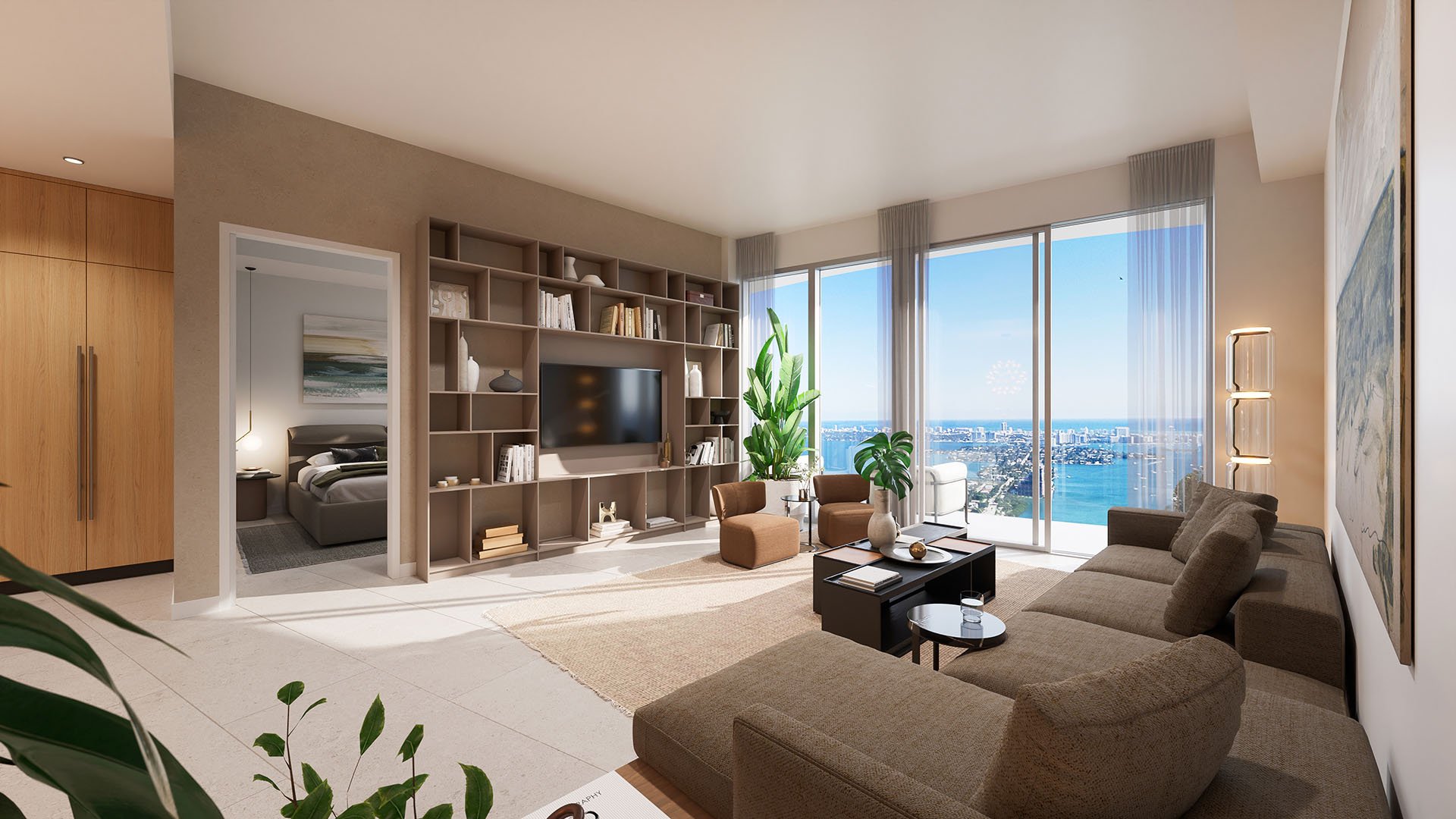
In South Florida’s premium condo market, some of the most compelling residences are the ones that never existed on a floor plan. Purchasing adjoining condominium units and consolidating them into a single mega residence lets a buyer remain in a prized building-and at a preferred vertical position-while achieving the scale, privacy, and customization more often associated with a single-family estate.
The appeal is clear: larger entertaining volumes, real separation between public and private zones, and the ability to build a bespoke program such as a gallery corridor, library, wellness suite, media lounge, or staff-support spaces. Done with discipline, consolidation can also resolve a classic luxury condo trade-off: a house-like lifestyle while preserving the lock-and-leave convenience, security, and services that define the best towers.
But the strategy is not simply “buy two units, remove a wall.” It is a governance and construction project that touches association approvals, life-safety requirements, building systems, financing, insurance, and-ultimately-resale. The objective is a residence that lives as one, yet remains legible and marketable as an asset.
Before design inspiration boards or furniture plans, confirm feasibility on three fronts: legal, physical, and operational.
Legal feasibility
starts with the condominium documents. Some associations allow combining units through a streamlined approval path; others require board review, architectural committee sign-off, and specific protocols for noise, elevator usage, and working hours. Many also require the residence to remain capable of being separated later, which can influence decisions around kitchens, electrical panels, and entry doors.
Physical feasibility
comes down to what can-and cannot-be changed without compromising the building. Structural walls, columns, shear elements, slab penetrations, and wet-stacks are not aesthetic choices. A combination that depends on relocating plumbing far from existing risers, or requires aggressive slab cuts, can move from “premium renovation” to a high-risk engineering exercise.
Operational feasibility
considers how you will live during the work. If you plan to occupy one unit while renovating the other, verify the association’s tolerance for extended construction and weigh sound transmission, dust control, and the day-to-day reality of life during demolition. Carrying costs on two units can be significant, even before a single finish is selected.
Not all combinations deliver the same experiential payoff. The adjacency type dictates privacy, circulation, and long-term optionality.
Side-by-side combinations
are often the cleanest. They support a single, continuous plan with minimal stair or elevator complications. They also make it easier to create a dramatic arrival sequence-such as a gallery-like foyer that opens toward water views.
Stacked combinations
(one unit above another) can be compelling when you want clear separation between entertaining and sleeping levels, but they introduce vertical circulation. Internal stairs require careful life-safety consideration and may be limited by building rules. Stacked combinations also demand more coordination around plumbing and mechanical distribution.
Corner-to-corner or wrap-around combinations
can deliver the most impactful mega residence, especially when they capture multiple exposures. The risk is over-optimizing for views at the expense of practical planning. A home that photographs well but circulates poorly can become a resale challenge.
In areas like Brickell and Miami Beach, many buyers prioritize a floor plan that can host a black-tie evening as easily as a quiet weekday. A building that already leans into refined, contemporary living, such as 2200 Brickell, can be an intuitive starting point for a consolidation mindset because the lifestyle expectations often align with discreet, design-forward customization.
Treat the association as a project stakeholder from day one. The most sophisticated consolidations are the ones that feel coordinated and cooperative, not adversarial.
Expect to submit architectural drawings, engineering narratives, contractor licensing and insurance, and a schedule. Some buildings require a dedicated construction deposit and strict elevator reservation procedures. If your consolidation modifies entry conditions, doors, or corridors, approvals can become more sensitive because they touch shared spaces and fire-rated assemblies.
A practical move is to request an early “concept review” before a full permit set is produced. This can clarify non-negotiables such as keeping two legal entrances, retaining a second kitchen rough-in behind millwork, or maintaining separate mechanical shutoffs.
In boutique coastal settings where privacy is part of the brand promise, boards may be especially focused on minimizing disruption. If you are consolidating in a quieter oceanfront environment, a project like 57 Ocean Miami Beach reflects the kind of intimate scale where neighbor relations and construction etiquette matter as much as the final plan.
A mega residence should read as a single composition: one front-door experience, one coherent material language, and one logical flow. Yet the strongest designs quietly preserve the option of future separation.
Consider these design decisions early:
Some consolidations retain two doors but treat one as a “service entry” or private family entry. Others create a discreet vestibule behind one door so the corridor experience remains orderly.
Even if you plan a single show kitchen, preserving the ability to reinstate a secondary kitchen can protect resale flexibility. This can be as subtle as keeping capped plumbing and electrical in place.
Separate HVAC systems can remain in place, then be managed through a unified smart-home interface. This can improve comfort and redundancy, and it supports a future split.
Sound isolation is not a luxury add-on; it is quality of life. Plan for enhanced underlayment, resilient channels, and door hardware that meets the standard of the rest of the home.
If your goal is a truly house-like footprint with distinct wings, consolidation can deliver an elegant “public to private” sequence: entertaining rooms along the view line, bedrooms and study spaces set apart, and service functions placed where they do not interrupt the experience.
Condo consolidation can feel like interior work, but it can quickly intersect with regulated systems. Any modification to fire-rated walls, smoke separation, sprinklers, alarms, or egress paths requires careful documentation and professional oversight.
Plan for a timeline that includes design development, association review, permit preparation, permitting, procurement, construction, and close-out. The most common delays are rarely aesthetic decisions; they are coordination points between disciplines and the building’s operational constraints.
Work with a contractor experienced in high-rise logistics. Elevator protection, staging, debris removal, and noise control are not “site extras.” They are the difference between a smooth project and an ongoing relationship problem with management and neighbors.
For buyers who value a building culture that understands custom interiors as part of its DNA, waterfront, service-rich towers such as Aston Martin Residences Downtown Miami can be a natural context to explore consolidation-provided approvals and engineering align.
Consolidation changes how the asset is financed and insured. Some buyers acquire the second unit with cash to simplify approvals and timing, then evaluate longer-term financing once the final configuration is clear. Others finance both purchases, but must coordinate lender requirements around collateral, appraisals, and insurance.
Insurance should be reviewed with the end design in mind. A mega residence may contain higher-value finishes, specialized art lighting, wine storage, or integrated smart systems that shift coverage needs. Additionally, if the units remain legally separate, there may be separate policies, deductibles, and claims considerations.
Taxes and ownership structure also matter. Some owners prefer to keep units in separate entities for flexibility; others aim for a unified structure for simplicity. The right answer depends on your personal planning and the building’s rules, and it should be decided early enough to avoid friction at closing and during permitting.
A consolidated residence can be a trophy asset, but the resale universe is smaller. Your plan should widen the buyer pool where possible.
Tactics that often protect resale:
A future buyer may want one grand residence, or they may want two. Designing for reversibility can keep both options alive.
A private spa is attractive; a highly specific niche room that replaces a bedroom may narrow demand.
Grand scale should not come at the expense of livability. The best mega residences feel calm and inevitable.
In ultra-premium submarkets such as Sunny Isles, the expectation for dramatic views and high design is already baked into buyer psychology. A consolidation in a headline building like Bentley Residences Sunny Isles can be compelling when it delivers a seamless, gallery-level interior and a practical bedroom count, without compromising the tower’s signature sense of privacy.
For many buyers, the critical moment is not design approval-it is deciding whether to purchase the adjacent unit when it becomes available. Use a disciplined checklist:
Confirm the association’s consolidation policy and approval pathway.
Have an engineer evaluate whether the connection is plausible without structural risk.
Map plumbing and mechanical locations to understand limitations.
Build a realistic budget that includes design, permitting, construction deposits, carrying costs, and contingency.
Define your end-state: one legal unit if possible, or two legally separate units that function as one.
Decide how you will protect resale: reversibility, bedroom count, and a plan that reads as timeless.
A consolidation is a strategy for buyers who think like both a collector and a steward: pursuing a singular living experience while respecting the realities of governance, building physics, and future marketability.
Is it always legal to combine two condo units? Not always. You need written approval pathways in the condominium documents and the board’s sign-off.
Can I remove any wall between two units? No. Structural and fire-rated assemblies may be untouchable or require engineered solutions.
Do I need to keep two front doors after combining? Often yes, at least legally. Many owners disguise one door as a secondary or service entry.
Will I pay two HOA fees forever? It depends on whether the units can be legally unified; many owners continue paying separate dues.
How long does a consolidation renovation usually take? Timelines vary widely based on approvals, permitting, and logistics; plan for a multi-phase process.
Does combining units increase resale value? It can, but it also narrows the buyer pool. Designs that allow de-consolidation tend to be safer.
Can I finance a combined mega residence like a single unit? Sometimes, but lenders may treat the units separately until legal unification is completed.
What is the biggest surprise cost in these projects? Coordination and compliance costs, including engineering, permits, and building-required deposits.
Should I keep a second kitchen or laundry rough-in? If allowed, preserving rough-ins can protect flexibility and future resale options.
When should I involve an architect and engineer? Before you commit to the second purchase, so feasibility and risk are understood early.
When you're ready to tour or underwrite the options, connect with MILLION Luxury.
If branded residences are on your mind — as a home or as an allocation — we would be glad to share what we are seeing, privately.
Begin a quiet conversation