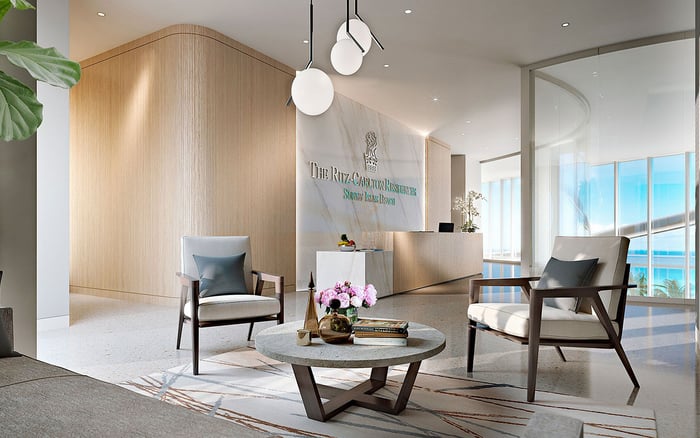
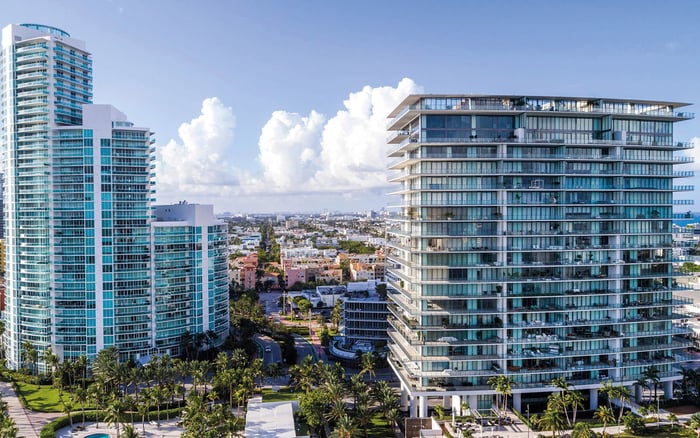
A buyer-oriented framework for assessing thermal hydrotherapy circuits at The Ritz-Carlton Residences® South Beach, with practical questions to ask, red flags to avoid, and what “good” looks like in a private residential context.

In ultra-prime Miami Beach, wellness amenities are no longer “nice-to-have” line items on an offering plan. For many buyers, the spa becomes a daily reset: a place to decompress after travel, recover after training, and regulate sleep in a climate where heat, humidity, and social calendars can run high.
A thermal hydrotherapy circuit is often the most meaningful subset of a spa because it is both experiential and measurable. Unlike a lounge, it either performs-or it doesn’t. At its best, it moves you through a deliberate sequence of temperatures, humidity levels, and water therapies that support circulation, muscle recovery, and mental calm. In a residential setting, the circuit’s real advantage is consistency: you can use it multiple times a week, at off-peak hours, without the friction of booking or crowds.
For buyers evaluating The Ritz-Carlton Residences® South Beach, the right question isn’t simply, “Is there a spa?” It’s whether the thermal journey reads as a carefully designed private ritual-delivering the discretion, hygiene, and longevity expected at this level.
Thermal circuits are often described with marketing language that can obscure what’s actually on offer. The cleanest way to evaluate is to think in components-and, just as importantly, the transitions between them.
Thermal variety.
The core principle is contrast: hot, warm, cool, cold. Heat may be dry (sauna) or humid (steam). Cold may be a plunge, a cold shower, or a controlled cooling room. Strong circuits typically provide more than one heat profile, letting you choose based on the day, your training load, and how your body responds.
Hydrotherapy.
Water can be used for pressure (jets), immersion, or directed rinsing. It should feel purposeful, not decorative. In a residential circuit, the hydro element ideally supports recovery and reset without pushing you into a public pool environment.
Sequencing.
A circuit is only as good as its flow. If you feel lost, exposed, or forced to cross a high-traffic zone in a robe, you’ll use it less. High-functioning layouts read intuitively: heat, rinse, cool, rest, repeat.
Rest and regulation.
The most overlooked component is the downshift. Look for a calm, temperate space that allows breathing and heart rate to normalize. Without it, you’re left with a collection of “amenities” rather than a therapeutic routine.
In a luxury residential environment, the thermal circuit should operate like a private club. Three factors typically separate a truly elevated circuit from a beautiful room that rarely makes it into your routine.
Privacy that is architectural, not policy-based.
“Adults only” or “by appointment” can help, but design is stronger: controlled sightlines, quiet entries, and circulation paths that keep wet and dry traffic organized. Ask how robe circulation works from the fitness area to the thermal rooms. If that path feels exposed, real-world usage drops.
Access that aligns with your life.
A circuit that closes early-or requires complex booking-can quickly become irrelevant. You’re buying lifestyle infrastructure. Confirm the typical operating rhythm and whether residents have distinct access from transient guests, if applicable.
Impeccable maintenance.
Thermal environments are unforgiving on materials. Stone, tile, door hardware, and benching reveal the truth quickly. Look closely: grout lines, corners, drains, and even the smell of the space will tell you more than any brochure.
Treat the tour the way you’d evaluate a kitchen: test the transitions, note the details, and picture repeated daily use.
1) Start with the entrance experience.
Is there a calm threshold, or do you enter directly from a busy corridor? The best spas create a psychological switch from “city” to “quiet.”
2) Follow the wet-to-dry logic.
A well-run circuit minimizes dripping across dry areas. Look for smart placement of rinsing showers and towel points.
3) Check temperature integrity.
Sauna and steam rooms should feel stable-not inconsistent. If you step in for 30 seconds and it feels underpowered, you may be seeing a capacity or maintenance issue.
4) Look for safe, comfortable materials.
Benches should remain comfortable at temperature. Floors should be slip-resistant without feeling abrasive. Doors should close with a reassuring seal.
5) Confirm how crowding is managed.
Even the best circuit fails if it turns into a social bottleneck. Ask where people wait and whether there’s a separate recovery lounge.
6) Ask about protocols, discreetly.
Without turning the tour into an interrogation, ask how sanitation is handled and how often rooms are checked during operating hours. The answers should sound routine, specific, and confident.
South Beach changes how wellness amenities get used. Heat and humidity can make a steam-heavy circuit feel redundant on certain days, while a cold element can become the year-round hero. If you train outdoors, cycle, or walk the Beach regularly, you may value cold exposure and recovery more than a dramatic relaxation suite.
Consider how you’ll actually use the circuit:
quick heat and rinse to loosen joints and set the day’s tone.
reset between meetings or after travel, prioritizing quiet and privacy.
gentler heat and a longer rest phase to downshift.
This is where residential wellness differentiates itself from destination spa culture. You’re not trying to “make a day of it.” You’re integrating it into your calendar.
The strongest circuits feel integrated into a coherent wellness ecosystem. When you evaluate The Ritz-Carlton Residences® South Beach, pay attention to adjacency and choreography between spaces.
Fitness integration.
The ideal layout lets you finish a workout, transition into recovery, and re-emerge without crossing the building’s social heart.
Acoustics and calm.
Luxury is often quiet engineering: soft-close doors, sound attenuation, and lighting that flatters rather than performs.
Human service without intrusion.
The highest level of service is invisible. You want a space that is monitored and maintained, but never feels watched.
Many buyers cross-shop Miami Beach with Brickell, Sunny Isles, and other coastal enclaves. Thermal circuits can be a subtle differentiator because they reveal how a building thinks about daily living.
In Miami Beach, wellness is often lifestyle-led: walkability, beach time, and social energy. In Brickell, the buyer profile can skew more schedule-driven, with wellness functioning like a private club that supports a workweek cadence. When you compare, keep the question consistent: which building makes it easiest for you to use the circuit three times a week.
For context, buyers also benchmark amenity philosophy against other branded residential offerings such as The Ritz-Carlton Residences® Miami Beach, The Ritz-Carlton Residences® Sunny Isles, and Continuum on South Beach. The point isn’t that one is universally “better.” It’s that each building expresses luxury differently-privacy versus spectacle, routine versus occasion.
Wellness amenities rarely translate to a single line-item value, but they can shape buyer emotion, time-on-market, and the ease of defending a premium.
Before you commit, verify the elements that change the lived experience:
Clarify whether the thermal circuit is truly resident-forward in practice.
Thermal areas wear faster than lounges. Ask how updates are planned and funded.
A circuit is only as good as its daily execution-from towel service to temperature stability.
Finally, evaluate your own usage with discipline. A world-class circuit only matters if you’ll actually use it. If you’re rarely in town, you may prioritize lock-and-leave simplicity over an elaborate multi-station journey. If you live here full-time, the circuit can become one of the most tangible, repeatable luxuries you own.
What is a thermal hydrotherapy circuit, in practice? It’s a guided sequence of heat, cold, rinsing, and rest-designed to be repeated for recovery and relaxation.
Do I need a cold plunge for the circuit to be “legit”? Not necessarily, but a strong cold element often makes the circuit more useful year-round in Miami’s climate.
Is steam or sauna better for daily use? Many residents prefer having both options, since dry and humid heat feel different and suit different days.
How long should a typical circuit session take? Most users find 30 to 60 minutes realistic, depending on how much rest time they include.
What’s the biggest red flag during a spa tour? Poor wet-to-dry flow or visible maintenance issues usually signal the circuit will be frustrating to use.
Should I expect resident-only access in a branded building? Policies vary, so confirm how access is managed and whether peak-time crowding is a concern.
Are thermal rooms expensive to maintain, and does that matter to me? They can be, and it matters because deferred maintenance shows up quickly in temperature stability and finishes.
Can a great thermal circuit influence resale value? Indirectly, yes, because it supports buyer perception of daily luxury and can help defend a premium.
What questions should I ask about hygiene without sounding difficult? Ask how often spaces are checked and refreshed during the day, and what the routine is for cleaning.
How do I compare two buildings’ wellness offerings quickly? Focus on privacy, access hours, ease of robe circulation, and whether the sequence feels intuitive.
If you'd like a private walkthrough and a curated shortlist, connect with MILLION Luxury.
If branded residences are on your mind — as a home or as an allocation — we would be glad to share what we are seeing, privately.
Begin a quiet conversation