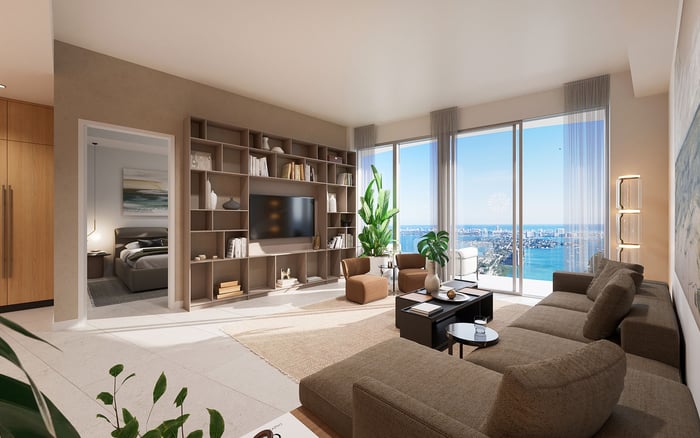
A buyer-oriented, detail-driven walkthrough plan for South Florida turnkey luxury condos, focused on punch-listing, systems verification, building coordination, and move-in readiness.

A turnkey luxury condominium is sold on the idea of effortless arrival: curated interiors, coordinated vendors, and building operations that feel invisible. The final walkthrough is where you confirm that promise in measurable terms. Done well, it is less about taste and more about performance, documentation, and move-in readiness.
Treat the visit as a controlled inspection held to a hospitality standard. Your objective is to leave with three outcomes: (1) a complete punch list acknowledged by the seller or developer, (2) a transfer package that clarifies what you own and how it operates, and (3) a move-in plan aligned with how the building actually functions.
In markets like Brickell, Miami-beach, and Sunny-isles, where amenity-rich towers and high-design interiors are common, the difference between “beautiful” and “ready” can be one unresolved leak sensor, one missing access credential, or one smart thermostat that was never calibrated.
Schedule the final walkthrough only when the home is truly in its intended handover condition. In a turnkey setting, it is surprisingly easy to arrive to a unit that is staged, mid-cleaning, or still waiting on a final vendor pass.
Confirm the basics in writing
before the appointment:
The unit will be vacant (or exactly as conveyed), fully powered, with water on, HVAC operational, and internet-ready if applicable.
The building will allow access to electrical panels, mechanical closets, and any private storage or assigned parking.
Elevators are reserved if you are bringing a consultant or expect to measure and photograph.
Bring the right people.
For many buyers, an independent inspector remains valuable even in new construction. You can also consider your interior designer, a smart-home integrator, or a trusted contractor for a fast, systems-forward read. The goal is not to redesign the residence on-site; it is to identify what must be corrected, calibrated, or properly documented.
A useful benchmark: if you were arriving for a long stay that same day, could you live comfortably without calling anyone? The walkthrough is where you remove the reasons you would need to.
A tight, practical kit keeps the walkthrough efficient and eliminates “we will check later” gaps.
Phone with ample storage, plus a shared album for your team
Small flashlight (for under-sink and closet corners)
Outlet tester or a simple charging brick and cable
Blue painter’s tape (to mark issues without damage)
Microfiber cloth (to distinguish finish scratches from dust)
A 6 to 10 foot tape measure (for furniture clearances and door swings)
A printed floor plan and finish schedule if you have them
Use video sparingly and with intent. Short clips that clearly show the problem and its location can prevent weeks of back-and-forth, especially when coordinating with building management.
Luxury residences are often evaluated in reverse: first the view, then the kitchen stone, then the closet boutique lighting. Flip that sequence.
Start with thresholds and function, move to systems, and finish with cosmetics. A residence can be made prettier later; it cannot be easily made more watertight, quieter, or better ventilated without disruption.
A clean sequence that works:
Entry, doors, locks, and access
HVAC and air quality basics
Plumbing and drainage
Electrical, lighting controls, and smart systems
Appliances and built-ins
Windows, sliders, balconies, and water management
Finishes: stone, paint, millwork alignment, hardware
If you are touring multiple properties in one day, keep your notes consistent. You want a punch list that reads like a professional document, not a stream of impressions.
In a turnkey condominium, access is an ecosystem, not a single key. Confirm every element you will rely on in daily life-and in an emergency.
Inside the unit:
Confirm the main entry door closes smoothly, latches securely, and seals evenly.
Test all interior doors for rubbing, misaligned strikes, and inconsistent reveals.
Check that keys, fobs, and any mobile access are provided and functional.
Building interface:
Verify delivery protocols, guest access, and any service entrance rules.
Confirm parking access, assigned spaces, and any storage cage keys.
This is where tower lifestyle varies by neighborhood and building culture. In 2200 Brickell, for example, many buyers will care as much about the daily rhythm of arrivals, valet routines, and lobby privacy as the unit itself. Let your walkthrough reflect that reality: access is part of the product.
In South Florida, luxury living is inseparable from climate control. During the walkthrough, move the thermostat through a range and give the system time to respond.
Check for:
Even airflow room-to-room and noticeable temperature differentials
Unusual vibration, rattling, or a high-pitched whine from vents
Condensation signs at diffusers or on nearby ceilings
Bathroom exhaust performance and kitchen ventilation function
If the unit has linear diffusers, concealed returns, or integrated smart thermostats, document any irregular behavior. Comfort problems often start subtle-and then become chronic.
Turn on every fixture and let it run longer than feels necessary. Flush each toilet. Fill and drain sinks. Run showers and watch how water behaves.
What you are looking for:
Slow drains, gurgling, or odors at traps
Hot water delivery time and temperature stability
Under-sink connections that appear damp or poorly supported
Shower pans and thresholds that allow water to escape
In waterfront towers and ocean-adjacent settings like Hallandale or Surfside, salt air and humidity can accelerate small issues. The point is not to be suspicious; it is to be exhaustive.
Luxury condos often rely on layered lighting plans and centralized control. Your walkthrough should validate both the basics and the intended, programmed experience.
Flip every switch and confirm it controls what you expect
Test dimmers for flicker or buzzing at low levels
Confirm under-cabinet lighting, toe-kick lighting, and closet lighting
Test GFCI outlets in kitchens, baths, balconies, and laundry areas
Verify any motorized shades, blackout functions, and remotes
If the residence includes smart-home capability, ask for a clean handover: admin access transferred, devices unpaired from prior accounts, and a clear map of what is integrated. The most “turnkey” homes can become the least convenient if you inherit partial programming without credentials.
Design-forward residences in the core, such as 888 Brickell by Dolce & Gabbana, tend to magnify this point: the experience is often deliberately curated, and that curation depends on systems working in concert. Confirm the choreography before you sign off.
Open and close everything. Start every appliance. Let the dishwasher run long enough to confirm it fills and drains. Run the cooktop briefly. Check refrigerator seals and ice-maker status if applicable.
Inspect built-ins for:
Soft-close operation and consistent alignment
Veneer or lacquer blemishes in raking light
Stone or quartz seams that are clean and properly supported
Hardware tightness and finish consistency
For closets, confirm hanging heights, drawer operation, and any integrated lighting sensors. A closet can look perfect and still function poorly.
Test sliding doors slowly. Lock them. Watch whether they seat firmly and whether the threshold feels properly detailed.
On balconies, confirm:
Drainage location and visible slope away from the residence
Condition of railings and glass, including chips at edges
Any exterior lighting or outlets function as expected
In Miami-beach and other coastal microclimates, the building envelope is non-negotiable. A residence like 57 Ocean Miami Beach speaks to buyers who value ocean adjacency and a refined interior-exterior lifestyle. That lifestyle only works when sliders, seals, and drainage perform flawlessly-especially during wind-driven rain.
Cosmetic items still matter in the luxury segment, but they should be documented with discipline.
Use a simple method:
Mark with painter’s tape
Photograph wide (context), then close (detail)
Note the room, surface, and issue type
Typical items:
Paint touch-ups, drywall nail pops, or corner cracks
Scratched metal trim, nicked baseboards, stained grout
Stone etching, chips at countertop edges, uneven caulking
If the unit is staged, look behind art, under rugs, and around furniture legs-areas where damage can be easily concealed.
A luxury handover is as much a document transfer as it is a physical one. Before you conclude, confirm you will receive what you need to operate and maintain the property discreetly.
Request or confirm:
Warranties (appliances, HVAC, fixtures, and any developer coverage)
Manuals and model numbers for key equipment
Paint codes and finish care guidance for specialty surfaces
Association rules relevant to renovations, deliveries, pets, and noise
Building insurance requirements and move-in deposit procedures
If you plan to lease, review building policies early. Many buildings are strict about leasing terms, application windows, and deposits. That is operational, not optional.
A walkthrough that ends with “we will take care of it” is not a complete walkthrough. Your final minutes should be structured.
Read back the punch list item-by-item while still in the unit
Assign responsibility (seller, developer, or building) to each item
Agree on timelines and the re-check method (second visit, photos, or both)
Confirm who has authority to authorize entry for repairs
If you are buying a true turnkey residence, hold the finish standard to the level implied by the marketing: aligned millwork, clean caulk lines, properly seated doors, and systems that perform quietly.
In trophy buildings where privacy is paramount, such as Apogee South Beach, it is also worth confirming service etiquette: how vendors are scheduled, where they may park, and what hours are permitted. The goal is to protect your time-and your neighbors’ experience.
Treat your walkthrough as a “day-one readiness audit.” If these statements are true, you are close to a confident sign-off:
Every door, lock, and access credential works without improvisation
HVAC cools and dehumidifies evenly, without noise or odor
Every fixture flows and drains cleanly, with no seepage
Lighting scenes, dimmers, outlets, and shades operate reliably
Appliances run, built-ins align, and nothing feels improvised
Windows and sliders seal, lock, and drain as designed
Your transfer package is complete and your punch list is acknowledged
Turnkey is a service promise. Your walkthrough is the moment you make it real.
Should I do a final walkthrough even in brand-new construction? Yes. New does not guarantee calibrated systems, complete documentation, or flawless finishes.
How long should a final walkthrough take for a luxury condo? Plan for 60 to 120 minutes depending on size, systems complexity, and amenities.
What is the single most common overlooked issue in turnkey units? Access and controls. Missing fobs, incomplete smart-home handover, and mis-mapped switches are frequent.
Do I need an inspector if the unit is “turnkey”? Often yes, especially to pressure-test plumbing, confirm electrical protection, and spot envelope concerns.
What should I photograph during the walkthrough? Anything that affects function, water risk, safety, or finish quality, with both context and close-ups.
How do I handle minor cosmetic flaws without seeming difficult? Document them calmly and consistently. Luxury standards are precise, not personal.
Should I test appliances during the walkthrough? Yes. Start each appliance and verify it fills, heats, drains, or cools as intended.
What if the seller promises to fix items after closing? Get it in writing with clear scope, timing, and access permissions, or negotiate remedies before closing.
Is it normal to request a second walkthrough? Yes. A brief re-check after punch-list completion is common and protects your move-in timeline.
What documents should I insist on receiving at handover? Warranties, manuals, access credentials, and any building procedures that affect move-in and vendors.
For a tailored shortlist and next-step guidance, connect with MILLION Luxury.
If branded residences are on your mind — as a home or as an allocation — we would be glad to share what we are seeing, privately.
Begin a quiet conversation