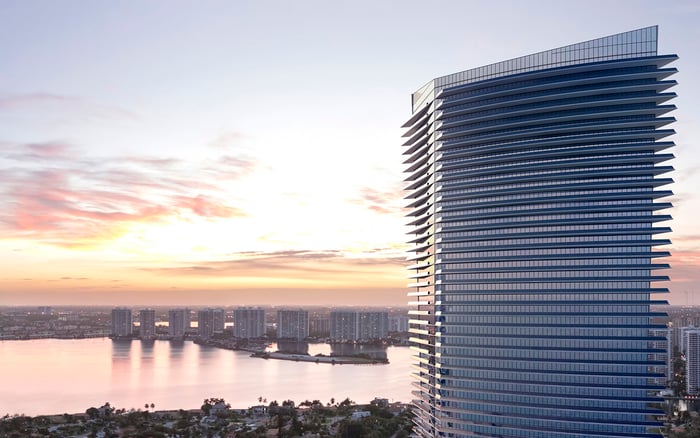
A buyer-oriented editorial on how to evaluate South Florida pre-construction for multi-generation planning, with a ranked top five framework centered on governance, use flexibility, and durability of demand.

In ultra-prime South Florida, pre-construction is rarely only about the first owner. It’s often about securing an asset that can be held, financed, enjoyed, and transferred with minimal friction across decades. That shift in intent changes the due diligence. You’re not only selecting a view corridor or a floor plan-you’re selecting governance, operating culture, and long-term desirability.
For legacy-minded buyers, the strongest pre-construction opportunities tend to share a few traits: a scarce location that stays relevant through cycles, a building program that remains “easy to own” when the original decision-maker is no longer the day-to-day user, and a reputation profile that continues to attract high-quality neighbors and future buyers.
Discretion matters here. The most durable assets are usually the least dependent on any single trend. They read as timeless rather than topical, and they support a family’s evolving use cases: full-time, seasonal, multigenerational gatherings, and strategic leasing where permitted.
Below are the practical filters MILLION Luxury uses when the goal is not just appreciation, but transferability.
1) Title clarity and financeability.
A clean, conventional ownership structure and lender-friendly profile can matter more than marginal price per square foot. Estates often prefer assets heirs can refinance, leverage, or sell without having to navigate unusual restrictions.
2) Governance you can live with.
Over time, condominium documents-and the culture they create-become a form of invisible architecture. Prioritize reasonable leasing rules, a clear reserve philosophy, and controls that protect privacy without undermining usability.
3) True end-user fundamentals.
Walkability, waterfront adjacency, and daily-life conveniences outlast short-term narratives. A building that functions as a residence first is typically easier to hold through cycles.
4) Service model and operating simplicity.
White-glove service is only a virtue if it’s predictable and properly managed. Families planning for generational handoffs often favor a service stack that reduces friction: arrivals, security, valet, package handling, and maintenance access.
5) Scarcity that is hard to replicate.
Certain micro-markets in Miami Beach, Surfside, Bal Harbour, and select pockets of Brickell and Coconut Grove remain structurally supply-limited. Scarcity isn’t hype-it’s a constraint.
A ranked list like this is inherently personal because every family balances privacy, liquidity needs, and usage patterns differently. Still, these five categories consistently align with transfer-ready ownership in South Florida.
1. Brickell trophy condo - brand stature and resale liquidity
A top-tier Brickell address can behave like a financial instrument in the best sense: widely understood, consistently sought-after, and relatively liquid compared to more idiosyncratic coastal niches. For generational planning, the advantage is optionality. Heirs can keep it as a pied-à-terre, convert it to a primary residence, or sell into a deep buyer pool.
The key identifier is market clarity. A building with enduring brand recognition and a prime, core location is typically easier to price, finance, and transact-important when timing is driven by life events rather than market cycles.
2. Miami Beach prime residential - privacy-forward enjoyment value
Miami Beach remains a global second-home market, but the transfer thesis is more specific: lifestyle utility that doesn’t require explanation. When a family asset is also the place where traditions form, it can become sticky in the best way.
The key identifier is privacy and ease of use. For heirs, a straightforward arrival experience, secure access control, and sensible house rules can matter as much as interior finishes.
3. Surfside/Bal Harbour adjacency - scarcity and enduring prestige
In the Surfside and Bal Harbour orbit, long-term appeal is rooted in scarcity, walkable luxury retail and dining, and a quieter residential feel relative to more intensely programmed districts. For generational transfer, this often supports lower volatility in desirability.
The key identifier is supply constraint. When comparable new development is limited, the “replacement cost” narrative matters less than the lived reality: you can’t replicate the location.
4. Coconut Grove legacy neighborhood - family usability and livability
Coconut Grove delivers a different kind of luxury: mature streetscapes, a village-like rhythm, and a residential identity that tends to reward long holds. For multi-generation families, it can function as a primary base-not only a seasonal landing.
The key identifier is livability. A home that integrates with schools, parks, marinas, and daily errands typically remains valuable to a wider range of family members over time.
5. Sunny Isles “vertical waterfront” - view value and multigenerational flexibility
Sunny Isles offers a recognizable beachfront identity with a broad mix of building styles and price points. For families, the appeal can be straightforward: direct beach proximity and layouts that can flex between entertaining, multigenerational stays, and periodic rental where permitted.
The key identifier is use flexibility. The best candidates combine strong building management with a location that reliably draws end users-not only investors.
When buyers say they want something their children will want, they usually mean three things: it will still feel current, it won’t become a management burden, and it won’t be difficult to monetize.
Start with the building’s operating blueprint. Review how the association is structured to handle staffing, security, maintenance access, and capital planning. A family-office mindset treats the association documents like an operating agreement-because functionally, that’s what they are.
Next, underwrite the unit for longevity. Favor layouts that make sense across multiple phases of life: a true primary suite, meaningful storage, and separation between entertaining and sleeping zones. If you anticipate heirs using the residence at different times, think through privacy lines and lockable owner storage.
Finally, consider the exit story from day one. The best generational assets aren’t “forever homes” because they’re impossible to sell. They’re forever homes because you don’t need to.
Pre-construction adds an additional layer: timing. Deposits are typically staged, and the asset may be years away from delivery. For generational intent, that can be an advantage-it creates room for deliberate planning and coordination.
Most families start by aligning the ownership structure with long-term objectives: privacy, liability containment, and ease of transfer. The goal is rarely complexity for its own sake. It’s a clean chain of decision-making that future owners can operate without re-litigating the original rationale.
Also consider governance continuity. If multiple family members will use the home, establish house rules early: usage calendars, responsibility for outfitting, and a plan for ongoing costs. A surprising amount of generational friction isn’t legal-it’s operational.
In neighborhoods like Brickell and Miami Beach, where second-home use is common, that operational clarity can be as valuable as the marble package.
Across South Florida, the most legacy-aligned pre-construction opportunities tend to cluster where daily-life convenience meets long-term scarcity. Brickell offers cosmopolitan ease and a deep resale audience. Miami Beach offers enduring lifestyle demand. Surfside and Bal-harbour adjacency tends to reward quiet prestige and constrained supply. Coconut-grove offers residential texture that supports true primary living. Sunny-isles can provide beachfront utility with broad multigenerational appeal.
Use this checklist to keep the purchase aligned with transfer, not just acquisition.
Confirm what “flexibility” means for your family: usage, leasing, furnishing, and storage.
Review condo documents with future decision-makers in mind, not only your current needs.
Stress test carrying costs under conservative assumptions.
Prioritize locations with persistent end-user demand and frictionless daily life.
Plan your furnishing and property management strategy early so delivery feels calm, not chaotic.
What makes a pre-construction condo good for generational wealth transfer? Clean title, strong governance, enduring location fundamentals, and easy financeability.
Is Brickell a better legacy play than beachfront? Brickell can offer liquidity and convenience, while beachfront often offers scarcity and lifestyle; the best choice depends on your family’s use.
Should heirs be involved before the contract is signed? Yes-even a brief conversation about lifestyle and usability can prevent costly misalignment later.
Do stricter rental rules help or hurt generational planning? They can help protect the building’s character, but too much rigidity can reduce flexibility for future owners.
What is the biggest hidden risk in pre-construction for long holds? Misjudging ongoing operating costs and governance culture, which can compound over time.
How should families think about furnishing and delivery? Treat it like a project plan with a single decision-maker so the residence is turnkey when ownership shifts.
Is a larger unit always better for multigenerational use? Not always; smarter layouts and privacy separation often outperform raw size.
Why does “financeability” matter if the home is owned free and clear? Because future owners may want liquidity options, and financeable assets are typically easier to sell.
How do you evaluate whether a neighborhood will stay desirable? Focus on what is hard to replicate: walkability, waterfront access, and constrained supply.
Can pre-construction timing help with estate planning? It can, because phased deposits and a known delivery horizon allow coordinated planning.
To compare the best-fit options with clarity, connect with MILLION Luxury.
If branded residences are on your mind — as a home or as an allocation — we would be glad to share what we are seeing, privately.
Begin a quiet conversation