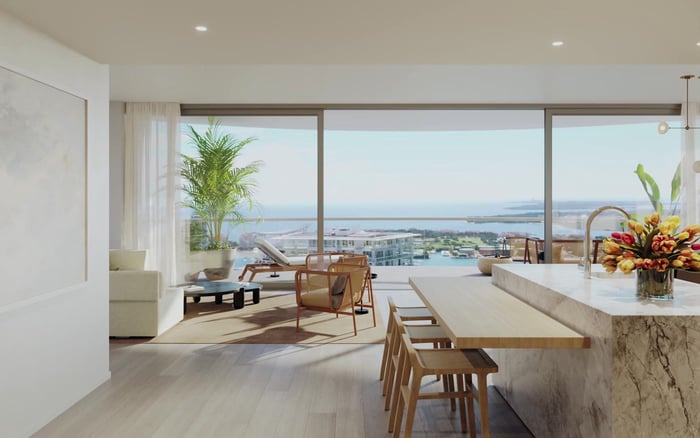
A discreet guide for estate owners considering Bal Harbour, with practical priorities for privacy, service, space, waterfront living, and the transition from single-family responsibilities to refined condominium ownership.

Leaving a large estate is rarely a simple question of square footage. For many buyers, the more meaningful move is from ownership as management to ownership as ease. A single-family residence may offer lawns, drives, guest houses, staff zones, and deeply personal control, but it also brings a constant choreography of vendors, maintenance, security, weather readiness, and household logistics. Bal Harbour attracts buyers who want to preserve privacy and refinement while reducing the operational weight of an estate.
This is why Bal Harbour belongs in any serious Buyer’s Guide for South Florida’s most selective clients. The decision is not merely whether to buy a condominium. It is whether a building can replace the quiet authority of a private compound with a more polished, service-led way of living. The right residence should feel edited, not reduced.
The first priority is privacy. Estate owners are accustomed to controlling distance, arrival, sightlines, and access. In a vertical residence, privacy is expressed differently: through the quality of the approach, the discretion of the lobby, the separation between public and private circulation, and how naturally service can occur without becoming visible.
The second priority is scale. A buyer leaving substantial Estates & Single-Family living should not think only in terms of bedrooms. Consider ceiling presence, gallery walls, entertaining zones, terrace depth, staff-friendly back-of-house space, private storage, parking convenience, and the ability to live with art, collections, wardrobes, seasonal gear, and visiting family without compromise.
The third priority is rhythm. A house may have offered breakfast outdoors, evening swims, formal dinners, quiet offices, guest wings, and weekend family rituals. The Bal Harbour search should begin with those rituals, then identify residences that support them gracefully.
Not every buyer coming from an estate wants the same relationship to water. Some want Oceanfront living, with the immediacy and drama of the Atlantic as the emotional centerpiece. Others prefer a Waterfront setting that feels calmer, more sheltered, and less theatrical. Both can be appropriate, but they create different daily lives.
A former estate owner should stand in the residence at different points of the day and ask practical questions. Where does morning coffee happen? Does the primary suite feel serene or exposed? Can guests gather without overwhelming the main living room? Is the terrace usable as an extension of the home, or is it mainly a visual amenity?
For buyers who want to remain unmistakably in Bal Harbour, Rivage Bal Harbour may be part of the conversation because it places the decision within the village’s most focused luxury lens. Buyers considering established Bal Harbour ownership may also include Oceana Bal Harbour in a broader comparison of presence, privacy, and lifestyle fit.
The most successful transitions happen when the buyer stops trying to recreate a house and starts evaluating the building as an estate in the sky. In that framework, the lobby becomes the gatehouse, the valet becomes part of the arrival court, the residential team becomes the invisible household staff, and the amenity program becomes the extended grounds.
This does not mean accepting a hotel atmosphere. Many estate owners prefer quiet service over constant attention. They want competence without performance, warmth without familiarity, and staff who understand that privacy is a luxury equal to design. A tour should examine how packages, guests, drivers, deliveries, pets, maintenance visits, and household help move through the building.
Ask how a residence functions during high season, during storms, during renovations, and during family visits. Ask where overflow luggage goes, how many vehicles can be accommodated comfortably, and whether service elevators and loading access match the buyer’s standard of living. These details matter more than a dramatic first impression.
Estate buyers often underestimate how much a floor plan can either soften or sharpen the transition. A well-composed condominium can live larger than its measurements if it has proper separation, generous circulation, strong storage, and clear zones for public and private life. Conversely, a large residence can feel inadequate if every room competes for the same open-plan space.
Look for an entry sequence that gives the home a sense of arrival. Evaluate whether the living and dining areas can support formal and informal entertaining. Consider whether secondary bedrooms feel dignified for adult guests. If staff or long-term household help are part of daily life, confirm that the residence can accommodate that reality discreetly.
Terraces deserve particular attention. For buyers leaving gardens, terraces are not decorative. They are outdoor rooms. The best ones support conversation, dining, reading, and a sense of retreat. A narrow ledge with a view may be beautiful, but it may not replace the emotional function of a private lawn or pool terrace.
Some buyers begin in Bal Harbour and discover that the most refined answer sits just outside its borders. Surfside, Bay Harbor Islands, Sunny Isles Beach, Fisher Island, Miami Beach, and select mainland enclaves can offer different balances of privacy, service, access, and architectural character. The key is to compare them by lifestyle, not by reputation alone.
A buyer who wants a quieter residential cadence may study Surfside alongside Bal Harbour, where The Delmore Surfside can enter the discussion for those seeking a composed coastal alternative. For a buyer who wants a more intimate island setting, Bay Harbor Towers may be worth evaluating in the context of privacy, neighborhood rhythm, and daily convenience.
This broader lens helps avoid a common mistake: choosing a prestigious address before understanding the life it will require. Bal Harbour may be the right answer, but the best buyers confirm it by testing adjacent options with the same rigor.
A serious tour should be conducted as if the buyer already lives there. Arrive as you would normally arrive. Ask where the driver waits. Walk the path from car to residence. Open closets. Stand in service areas. Imagine a dinner for twelve, a rainy weekend with family, a visiting couple staying for a week, and a quiet Tuesday morning with no staff visible.
Then test the emotional side. Does the residence feel like a retreat or a compromise? Does the view calm the room or dominate it? Does the building’s energy feel discreet enough for daily life? Does the address support the buyer’s social world without forcing participation in it?
For estate owners, the right Bal Harbour residence is not the one that tries to mimic a house. It is the one that delivers the parts of estate life that still matter: privacy, proportion, beauty, control, and ease.
Is Bal Harbour a good fit for buyers leaving large estates? It can be, especially for buyers who want privacy, service, and coastal living with less day-to-day property management.
Should estate owners prioritize square footage first? No. Proportion, storage, arrival, terraces, service access, and privacy often matter more than headline size.
What is the biggest adjustment from a house to a condominium? The main adjustment is shared infrastructure. The best buildings make that infrastructure feel discreet and highly controlled.
Is Oceanfront living always better than Waterfront living? Not necessarily. Oceanfront living feels dramatic, while Waterfront living may feel calmer depending on the setting and view corridor.
How important is the lobby experience? Very important. For a former estate owner, the lobby often replaces the private gate and sets the tone for discretion.
Should buyers consider buildings outside Bal Harbour? Yes. Nearby luxury enclaves can offer different forms of privacy, architecture, and daily convenience.
What should buyers ask about staff and deliveries? They should ask how household help, packages, vendors, guests, and maintenance move through the building.
Do terraces matter for former estate owners? Yes. A terrace often becomes the emotional substitute for gardens, patios, and outdoor entertaining space.
Can a condominium feel as private as a house? It can feel highly private when circulation, staffing, access control, and residence layout are carefully aligned.
What is the best way to compare Bal Harbour residences? Compare each option by daily routine, not just finishes, views, or prestige.
To compare the best-fit options with clarity, connect with MILLION.
If branded residences are on your mind — as a home or as an allocation — we would be glad to share what we are seeing, privately.
Begin a quiet conversation