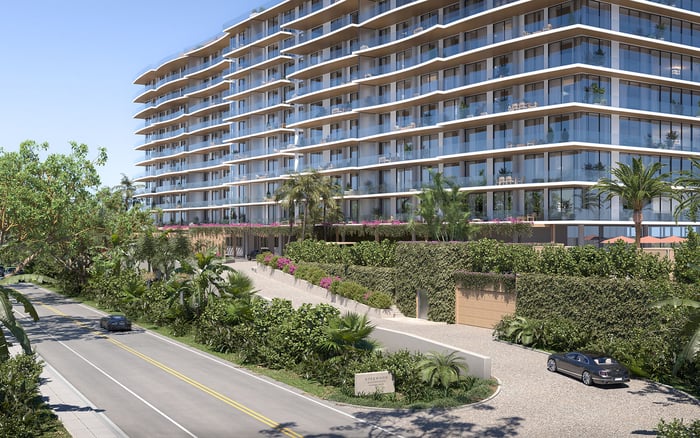
A new wave of ultra-high-net-worth relocations is concentrating demand into South Florida’s most privacy-forward neighborhoods and turnkey luxury towers, reshaping pricing, inventory, and design priorities.
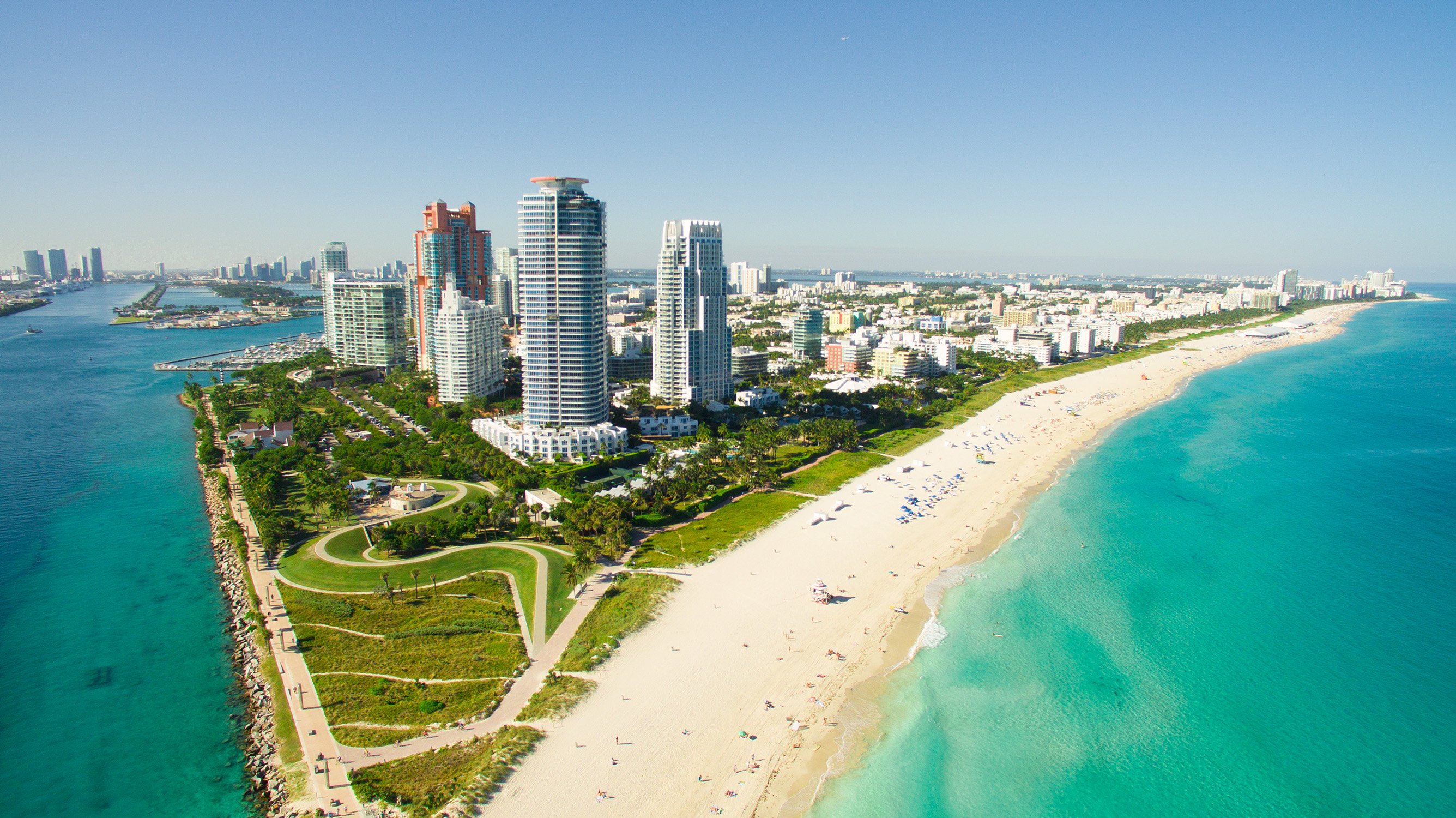
South Florida has welcomed wealth for decades, but this cycle reads less like seasonal lifestyle arbitrage and more like a strategic reallocation of residency, assets, and time. Buyers are arriving with a clear mandate: establish domicile quickly, secure privacy, and reduce future friction. In practical terms, that means decisive closings, a preference for properties that can be controlled end-to-end, and a renewed premium for neighborhoods where security and discretion are built into the geography.
A key accelerant has been policy anxiety. A proposed California “Billionaire Tax Act” has been described as including a one-time 5% levy on assets above $1 billion, with urgency tied to a Jan. 1, 2026 residency deadline. When the timeline is that explicit, real estate stops being purely a lifestyle decision. It becomes a logistics problem-and South Florida’s best solutions are already well-known: scarce waterfront land, private islands, gated access, and high-service condo living that can be executed rapidly.
This migration is not spreading evenly across Miami-Dade and beyond. The highest-intensity demand is converging into a handful of micro-markets where the value proposition is clearest.
Coconut Grove is a prime example because it delivers a true single-family estate experience-mature canopy, a refined dining and cultural scene, and access that feels insulated without feeling remote. In this context, Grove inventory behaves like a portfolio asset: finite, locally prized, and difficult to replace.
At the opposite end of the spectrum is the ultra-secure island model. Indian Creek Island-often nicknamed “Billionaire Bunker”-is a highly secured enclave accessed via a guarded bridge, supported by a dedicated police force, and defined by a tiny housing stock often cited around 40 to 41 homes. That level of scarcity changes the negotiation psychology. Buyers are not simply purchasing a home; they are buying into a security posture that is difficult to replicate.
Then there is vertical living in Brickell, Miami’s primary high-rise finance district, widely viewed as “Wall Street South.” For executives building an operating footprint in the city, Brickell offers one of the shortest commutes between the boardroom, the airport, and waterfront dining. It is also a natural fit for lock-and-leave living, where service, security, and turnkey design reduce friction.
Luxury in South Florida has always accommodated decisive buyers, but the tempo has tightened. Some brokers have described California billionaires moving and closing Miami-area deals in about seven days amid proposed wealth-tax pressure. Whether a given buyer closes in one week or several, the market signal is consistent: certainty is now valued more than incremental negotiation.
That preference is reinforced by transaction structure. Miami luxury deals skew cash-heavy-especially at the upper tiers-which can compress timelines and reduce contingencies. For trophy sellers, a cash-forward buyer is not just convenient. It is often the cleanest path to closing, with less exposure to the uncertainty that financing, appraisals, or extended inspections can introduce.
For buyers, speed doesn’t mean carelessness. It means arriving prepared: counsel in place, residency strategy clarified, and a clear thesis on which neighborhood aligns with their risk tolerance and lifestyle. In 2026, the strongest acquisitions are the ones that anticipate the next step-whether the home will be held as a primary residence, a legacy asset, or a platform for future redevelopment.
At the top of the market, the conversation is increasingly about control. Indian Creek has become the clearest symbol of that mindset. Jeff Bezos has assembled an Indian Creek Island property portfolio reported around $237 million across multiple purchases, and has been renovating while planning a larger build, including privacy-focused landscaping improvements and amenity upgrades.
The takeaway isn’t celebrity. It’s strategy. Landscaping, setbacks, and sightlines can carry as much value as interior finishes when discretion is the priority. Likewise, the ability to renovate now while planning a larger future build turns a property into a long-term instrument rather than a static purchase.
Coconut Grove answers the same desire for control differently: through land, canopy, and neighborhood texture. When a buyer acquires multiple adjacent or nearby holdings, the area’s residential character and relative calm become part of the value.
For buyers drawn to a wellness-forward, design-led interpretation of Grove living, projects like Four Seasons Residences Coconut Grove and Mr. C Tigertail Coconut Grove speak to a preference for elevated service in a neighborhood that still reads as residential-not purely corporate.
Brickell isn’t competing with island estates on land. It competes on time. As Miami’s finance district, it’s built for buyers who want immediate proximity to offices, restaurants, and cultural life-while preferring a home that operates like a private club: staffed, secured, and impeccably maintained.
That’s why the district continues to attract major capital and corporate gravity. Ken Griffin’s Miami expansion has included major Brickell real estate spending and plans for a landmark Brickell headquarters tower widely reported at roughly $2.5 billion. Commitments at that scale reinforce Brickell as an enduring node for business life, which in turn supports demand for luxury residences within walking distance.
In that environment, new and forthcoming towers become more than residences-they become addresses with signaling power. Consider the brand-forward, design-centric positioning of 888 Brickell by Dolce & Gabbana, and the buyer appeal of waterfront-oriented living at Una Residences Brickell. For a principal splitting time between multiple cities, the right Brickell home is less about raw square footage than about frictionless arrivals and departures.
Miami Beach remains a global brand, but its luxury submarkets operate differently. One corridor that continues to represent classic waterfront prestige is North Bay Road, a prominent mansion stretch where $10 million-plus listings are commonplace and celebrity ownership is part of the neighborhood narrative.
For a more controlled version of Miami Beach living, Fisher Island sits in a category of its own. Accessible only by ferry, boat, or helicopter, it is widely described as one of America’s most exclusive and often most expensive ZIP codes. Residency also comes with meaningful gatekeeping and ongoing costs, including club and membership requirements and high HOA dues that reinforce the island’s private-club ethos.
In other words, Fisher Island is not simply expensive; it is intentionally selective. For buyers who value that framework, a residential choice like Palazzo del Sol aligns with the island’s logic: security, service, and a curated sense of arrival.
The ultra-luxury market’s health isn’t a matter of vibes. It shows up in the scarcity-and significance-of closings at the very top. Florida led the nation in $50 million-plus home sales in 2025, with 17 such sales cited, ahead of New York and California totals. South Florida’s $10 million-plus market also remained active, with 361 closings in 2025, marking the second-highest year on record for the region.
These aren’t ordinary statistics. They point to a state that has become a preferred venue for trophy acquisition, and a region capable of supporting repeated, high-value transactions without relying on a single buyer cohort.
Another structural tailwind is Miami’s global demand base. Foreign buyers account for a meaningfully higher share of Miami-area home purchases than the U.S. average, with Latin America functioning as a key driver. That diversity matters because it reduces dependence on any single domestic migration narrative. Even as a policy-triggered rush draws headlines, the deeper story is a market with multiple independent demand engines.
For buyers evaluating South Florida right now, the decision often comes down to three archetypes.
First, the privacy-first land buyer: someone who wants gates, setbacks, and long-term control. Coconut Grove and Indian Creek fit here, in different ways. This buyer should underwrite not only the home, but also the future optionality-adjacency, renovation scope, and the neighborhood’s long-term character.
Second, the executive lock-and-leave buyer: someone who prioritizes speed, service, and proximity to business life. Brickell is the strongest match, particularly for those who want a residence that can be left unattended without anxiety.
Third, the legacy-status buyer: someone drawn to the social and cultural language of Miami Beach and the controlled exclusivity of islands. Here, the underwriting includes rules, memberships, and the non-financial benefits of belonging.
In all three cases, the advantage tends to go to buyers who commit early to a neighborhood thesis and then move decisively. In a market defined by scarce inventory and cash-heavy competition, the premium is increasingly paid for clarity.
Why are California billionaires focusing on Miami now? Policy uncertainty and explicit timing pressure have made domicile decisions more urgent.
What makes Coconut Grove so appealing at the top end? It combines estate-style privacy with a mature neighborhood fabric close to the city core.
Is Indian Creek Island truly that limited in supply? It is widely cited as having a tiny housing stock, often around 40 to 41 homes.
Why does Brickell keep attracting high-net-worth buyers? Brickell offers a finance-district lifestyle with secure, turnkey, lock-and-leave living.
Are ultra-luxury buyers still paying cash in South Florida? Yes, the market remains notably cash-heavy, especially in the highest price tiers.
What does a $50M+ sales lead for Florida suggest? It signals deep liquidity and a buyer base comfortable with trophy-level acquisitions.
How exclusive is Fisher Island in practical terms? Access is limited, and ongoing costs and memberships reinforce a private-club environment.
Does Miami rely only on U.S. domestic migration for demand? No. Foreign buyers represent a higher-than-average share, with Latin America a key driver.
Why would a buyer purchase multiple properties in one neighborhood? It can create control over privacy, future expansion, and long-term optionality.
What is the simplest way to choose between estate and condo living? Match the purchase to your time demands: control and land versus service and convenience.
When you're ready to tour or underwrite the options, connect with MILLION Luxury.
If branded residences are on your mind — as a home or as an allocation — we would be glad to share what we are seeing, privately.
Begin a quiet conversation