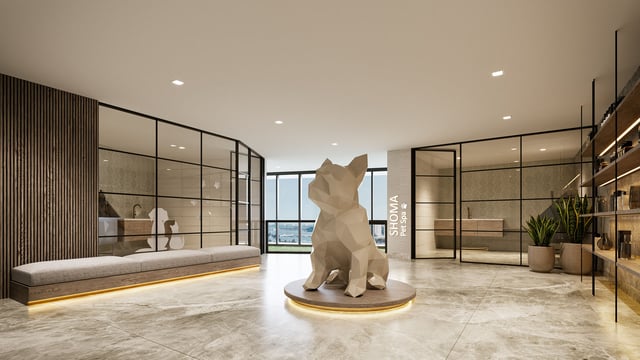
Leading Seven Branded Residences in Miami Integrating High Fashion Aesthetics
In Miami, the most persuasive branded residences no longer rely on a logo at the porte cochere. They translate fashion’s disciplines into real estate: proportion, material intelligence, runway-level lighting, and a hospitality choreography that makes daily life feel edited. The result is not costuming. It is a composed interior language that reads as confident and quiet, even at scale. High fashion aesthetics in a residence are recognizable in the details: a lobby that behaves like a gallery, corridors with the restraint of a couture atelier, and amenities that feel like private clubs rather than shared facilities. In South Florida, this approach is also a buyer strategy. Brand-led design can deliver consistency across finishes, furnishings, service, and long-term maintenance, which matters when a home is part-time, multi-residence, or held for legacy. Below, MILLION Luxury ranks seven Miami-area branded residences where the fashion mindset is most legible, followed by a buyer-oriented framework for evaluating which expression of “high fashion” actually fits your lifestyle.

Top Ten Ultra Luxury Condominiums in South Florida Featuring Dedicated Cold Plunge Therapy
Cold plunge therapy has moved from boutique biohacking studios to the amenity decks of South Florida’s most ambitious residential towers. For buyers who treat wellness as infrastructure, the most compelling buildings design plunge programs as part of a complete recovery circuit: heat, cold, breath, movement, and privacy. Below, MILLION Luxury outlines what to look for and presents a ranked, buyer-oriented list of ultra-luxury condominiums where cold exposure is positioned as a defining lifestyle detail rather than a novelty.
The Strategic Use of Land Trusts to Maintain Anonymity in Miami Condominium Acquisitions
For privacy-minded buyers, Miami’s condominium market presents a paradox: trophy assets trade in a city that runs on visibility, yet ownership records remain broadly accessible. A land trust can be a sophisticated, lawful way to reduce public-facing exposure while keeping the transaction, financing, and estate planning aligned. This MILLION Luxury editorial outlines how land trusts typically work in Florida, where they deliver meaningful discretion, and where they do not. It also highlights the decision points that matter to ultra-premium purchasers: lender posture, closing logistics, governance documents, and how to avoid privacy strategies that create more risk than quiet.

Comparing the Aesthetics of Raw Concrete vs. Polished Plaster: 57 Ocean Miami Beach vs. Arte Surfside
A buyer-oriented design comparison of raw concrete and polished plaster, using two oceanfront-minded references: 57 Ocean Miami Beach and Arte Surfside. The focus is not on specs or sales figures, but on how each finish reads in South Florida light, how it ages in salt air, and what it signals about taste, privacy, and daily living. Along the way, we connect the conversation to Surfside and Miami Beach’s broader design landscape, including nearby ultra-luxury benchmarks.

The Logistics of Arranging Private Chef Catering for Holidays at The Surf Club Four Seasons
A buyer-oriented, discreet field guide to planning private chef catering for holiday hosting at The Surf Club Four Seasons in Surfside, with practical timing, access, service flow, and contingency considerations.

Assessing the Value of Dedicated Wine Cellars and Tasting Rooms
A dedicated wine cellar or tasting room can read as pure indulgence, yet in South Florida’s top tier it often functions like a well-designed library: a quiet signal of seriousness, restraint, and long-view collecting. The value is not only in bottles protected from heat and light, but in how the space is integrated into the home’s circulation, entertaining rhythm, and service infrastructure. For buyers, the question is less “Does it add dollars?” and more “Does it reduce friction?” A properly executed cellar makes hosting easier, preserves collections in a challenging climate, and can differentiate a residence in competitive neighborhoods where finishes are otherwise comparable. Done poorly, it becomes a temperamental closet with a glass door. This guide frames wine rooms the way an appraiser-minded buyer would: as a combination of performance, placement, and permanence, with an emphasis on what transfers cleanly at resale.