A buyer-focused editorial on how terrace landscaping designers are redefining private outdoor living in Coconut Grove through restraint, privacy, shade, planting discipline, and long-term livability.

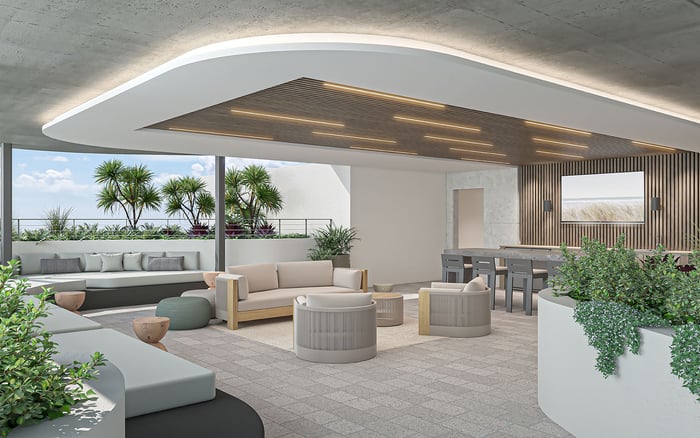
In Coconut Grove, luxury is increasingly defined by how gracefully a residence lives between indoors and out. The most compelling terraces are no longer treated as leftover exterior space. They are private open-air rooms, composed with the same discipline expected of a great salon, primary suite, or dining gallery.
That shift has elevated the role of the terrace landscaping designer. The work is not simply a matter of selecting plants or placing planters near a railing. It is about proportion, shade, privacy, material restraint, horticultural intelligence, lighting, drainage, and the daily rituals of ownership. A truly refined terrace should feel effortless, even when every element has been carefully considered.
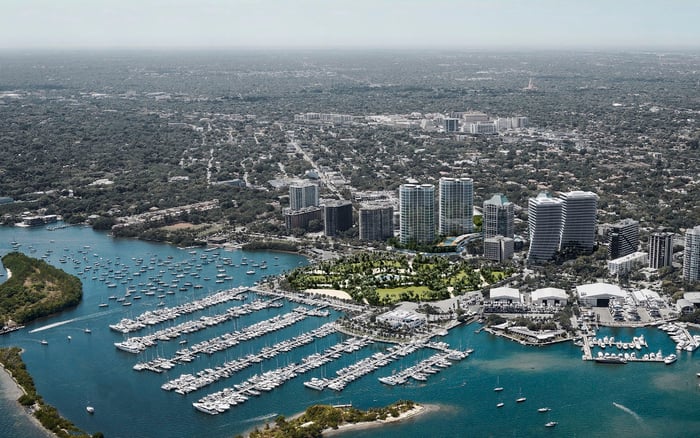
For a Coconut Grove buyer, this matters because the neighborhood’s appeal is inseparable from its leafy, intimate character. A terrace should not compete with that atmosphere. It should translate it into a private setting where morning coffee, evening conversation, and quiet weekends feel naturally supported.
The best terrace landscapes begin with constraints. Designers evaluate weight, wind exposure, sunlight, irrigation, waterproofing, root behavior, maintenance access, and the visual relationship between the terrace and the residence. These are not ornamental details. They determine whether an outdoor room will remain beautiful beyond the initial installation.
Privacy is often the first request, but it should not be solved crudely. Dense green walls can feel heavy if they block light or compromise views. More sophisticated schemes use layered planting, calibrated heights, textured foliage, and carefully positioned furniture to create seclusion without closing the terrace off from its surroundings.
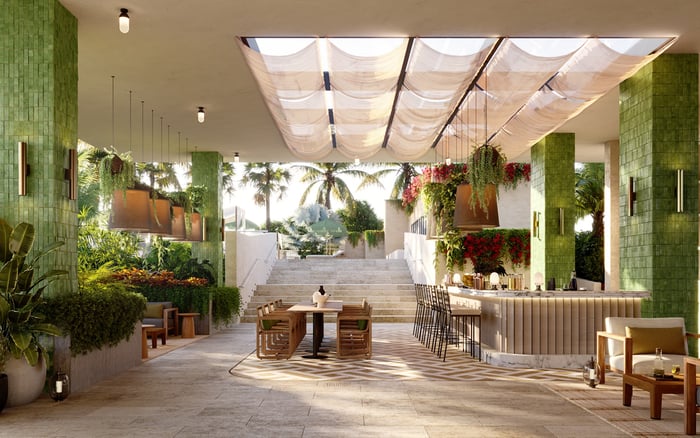
Shade is equally important. A terrace that photographs well but cannot be used comfortably is not a luxury asset. Designers consider how people actually move through the space, where they sit, where the sun falls, and how planting, pergola elements, umbrellas, or architectural overhangs can extend usability without clutter.
A balcony or terrace also needs a maintenance philosophy. Some owners enjoy an abundant garden experience, while others prefer a more architectural composition with fewer interventions. The designer’s role is to align beauty with the owner’s tolerance for care, so the finished space feels like a pleasure rather than a responsibility.
Before a buyer falls in love with a planted terrace, the essential question is performance. How is water managed? Where are the drains located? Can planters be serviced without disturbing furniture? Is irrigation discreet and dependable? Are lighting and power locations planned for actual use rather than afterthought convenience?
Structure should be understood early. Large planters, specimen trees, stone, soil, and water features can add meaningful load. A strong design respects what the building can support and avoids forcing a landscape concept onto a terrace that was not designed for it.
Views require a disciplined eye. In Coconut Grove, the most elegant terrace landscapes frame outlooks rather than overwhelm them. Planting should draw the gaze outward, soften edges, and create depth. If the terrace has a pool, plunge element, or reflective water feature, the landscape should make it feel integrated rather than staged.
Furniture matters as much as planting. A refined terrace is not a nursery with seating added later. It is a living room, dining room, garden, and viewing platform working together. Scale, circulation, upholstery, tables, and planter placement should create an intuitive rhythm.
New and established residential projects in Coconut Grove have helped raise expectations for outdoor living. Buyers looking at Four Seasons Residences Coconut Grove are often thinking beyond square footage alone, considering how private exterior space can support a more composed daily routine.
At The Well Coconut Grove, the conversation naturally extends to the relationship between home, wellness, and the restorative potential of outdoor environments. A terrace landscape in that context should feel calm, balanced, and deeply usable rather than decorative.
For buyers drawn to boutique scale, Arbor Coconut Grove offers another lens through which to consider terrace design. The smaller the perceived setting, the more important precision becomes. Every planter, chair, light source, and sightline carries more visual weight.
The continued relevance of Park Grove Coconut Grove also reinforces a central point: in the Grove, outdoor space is part of the residence’s identity. A terrace that feels mature, private, and thoughtfully edited can influence how a home is experienced long before a buyer reviews specifications.
The most successful terrace landscapes in Coconut Grove tend to avoid theatrical excess. They are layered, but not crowded. Lush, but not unmanaged. They create shade and intimacy while preserving air, light, and a sense of openness.
Planting palettes should be chosen for endurance as well as beauty. A plant that looks dramatic on installation day may not be the right choice if it struggles with exposure, requires constant replacement, or outgrows its container too quickly. Designers who understand terrace conditions can create compositions that age with dignity.
Lighting is another marker of quality. The goal is atmosphere, not brightness. Soft illumination at planting, steps, seating edges, and dining zones can make a terrace feel usable after sunset without turning it into a display. The best lighting disappears until it is needed.
Materials should converse with the interiors. Stone, wood, metal, ceramics, textiles, and planting containers need to feel connected to the residence’s architecture. When the palette is controlled, the landscape becomes a continuation of the home rather than a separate decorative layer.
Restraint is especially important for high-value residences. An overly themed terrace can date quickly. A quieter scheme, built on proportion, texture, comfort, and practical care, is more likely to remain compelling through changing tastes.
Terrace landscaping is not merely an aesthetic upgrade. It affects how often an owner uses the residence, how guests experience the home, and how the property reads in a competitive market. A beautifully resolved terrace can make a residence feel larger, more private, and more emotionally complete.
For end users, the advantage is daily enjoyment. For second-home owners, it is ease of arrival. For sellers, it is the immediate impression of a home considered from every angle. In Coconut Grove, where atmosphere is a defining part of desirability, that impression carries weight.
A sophisticated terrace designer brings together landscape architecture, interior sensitivity, and technical coordination. The result is not simply greenery. It is a private outdoor world shaped for the way discerning owners actually live.
Why are terrace landscaping designers important in Coconut Grove? They help transform outdoor space into a private living environment with comfort, privacy, shade, and long-term maintenance in mind.
What should buyers evaluate first on a landscaped terrace? Buyers should look at drainage, irrigation, structural load, planting health, lighting, and whether the space is easy to service.
Is privacy more important than views? The best terraces balance both. Layered planting can create intimacy without blocking the outlook that gives the space its value.
Can a small terrace still feel luxurious? Yes. Scale matters less than proportion, comfort, material quality, and how intelligently the layout supports daily use.
What makes a terrace landscape feel timeless? A restrained palette, durable materials, appropriate planting, and subtle lighting usually age better than highly themed design.
Should terrace furniture be selected before planting? Furniture and planting should be planned together so circulation, views, shade, and seating all work as one composition.
How does lighting affect a luxury terrace? Good lighting creates evening atmosphere, improves safety, and highlights planting without making the terrace feel overlit.
Are large planters always better? Not necessarily. Planter size should respond to structural capacity, plant needs, maintenance access, and the desired visual rhythm.
Can a pool area and terrace garden work together? Yes. The strongest designs integrate water, planting, seating, and circulation so the outdoor space feels cohesive.
What should owners ask a terrace designer before hiring? Ask how the design will handle exposure, drainage, irrigation, plant maturity, service access, and long-term upkeep.
If you'd like a private walkthrough and a curated shortlist, connect with MILLION.
If branded residences are on your mind — as a home or as an allocation — we would be glad to share what we are seeing, privately.
Begin a quiet conversation