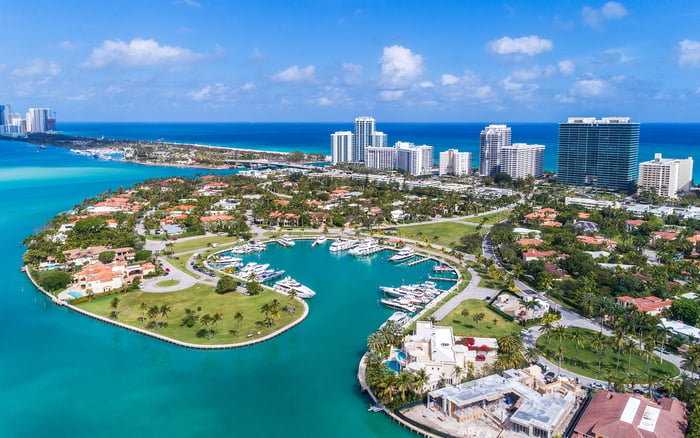
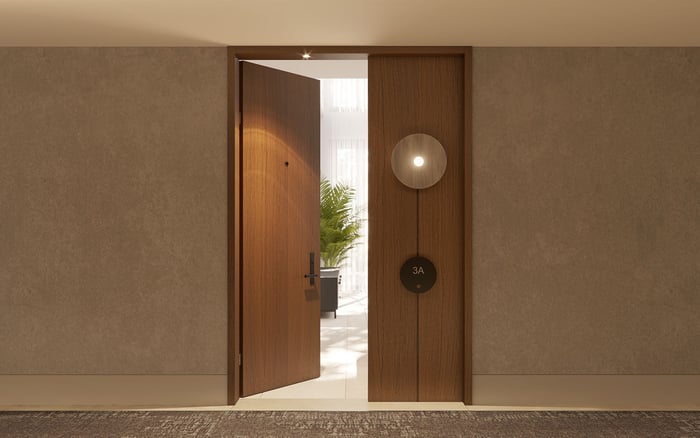
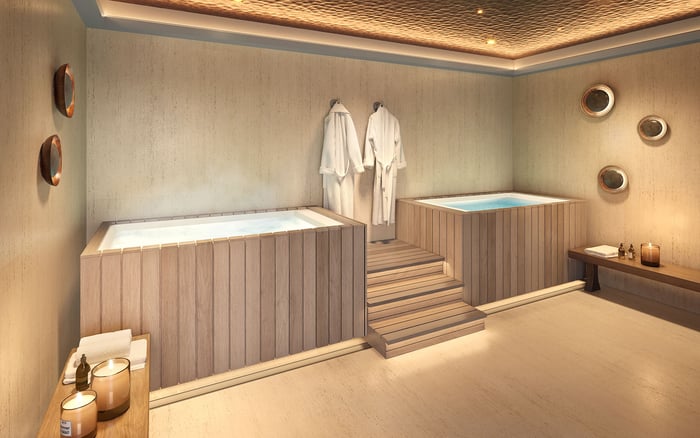
In Miami, the most persuasive branded residences no longer rely on a logo at the porte cochere. They translate fashion’s disciplines into real estate: proportion, material intelligence, runway-level lighting, and a hospitality choreography that makes daily life feel edited. The result is not costuming. It is a composed interior language that reads as confident and quiet, even at scale. High fashion aesthetics in a residence are recognizable in the details: a lobby that behaves like a gallery, corridors with the restraint of a couture atelier, and amenities that feel like private clubs rather than shared facilities. In South Florida, this approach is also a buyer strategy. Brand-led design can deliver consistency across finishes, furnishings, service, and long-term maintenance, which matters when a home is part-time, multi-residence, or held for legacy. Below, MILLION Luxury ranks seven Miami-area branded residences where the fashion mindset is most legible, followed by a buyer-oriented framework for evaluating which expression of “high fashion” actually fits your lifestyle.
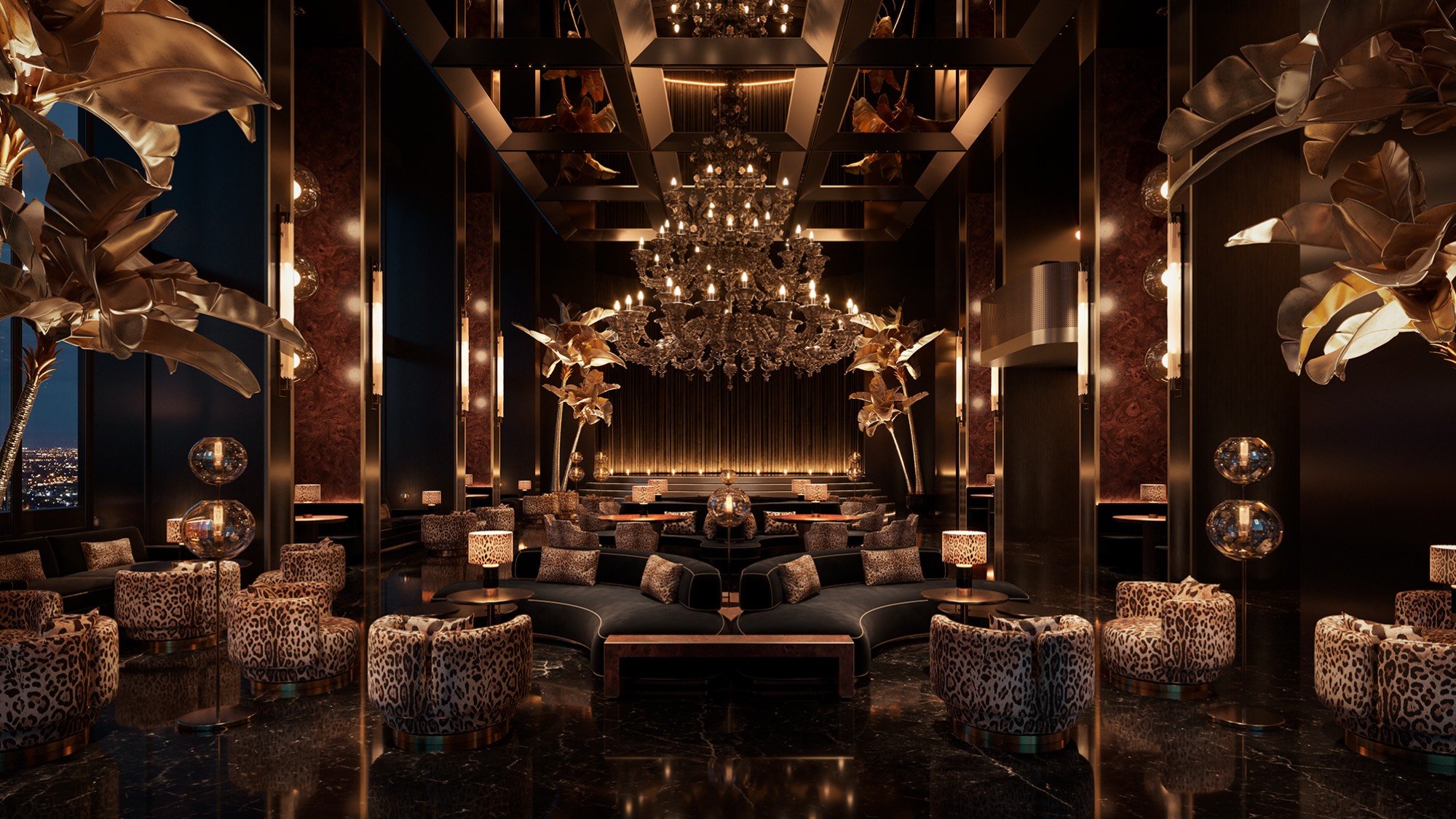
Miami’s luxury buyer has grown more visually discerning. After years in which glass, height, and amenity lists signaled prestige, the real differentiator is mood: how a building edits your day, from arrival through after-hours. High fashion aesthetics deliver that edit-cleaner, more tactile, and more intentional about circulation, sightlines, and the way light shapes surfaces.
In practice, this is not about loud branding. It is about design governance. When brand DNA directs material selection, furniture packages, and even staff presentation, a residence can feel calibrated rather than merely decorated. For buyers splitting time-Brickell during the week, Miami Beach on weekends-consistency becomes a luxury of its own.
1. 888 Brickell by Dolce & Gabbana - Italian house codes at vertical scale
This is the most literal translation of a fashion house into a residential tower: unapologetically glamorous, detail-driven, and organized around a recognizable aesthetic signature. For buyers who want a home that reads like a tailored look, the appeal is cohesion-across public spaces and private interiors.
Its sensibility best suits those who prefer high contrast and statement finishes over coastal minimalism. In Brickell, where towers often compete on views and amenity decks, this project differentiates by committing to identity rather than neutrality.
2. Fendi Château Residences Surfside - couture calm with beachfront restraint
Fendi’s Surfside expression is aligned with a quieter register of luxury: refined surfaces, controlled palettes, and texture prioritized over spectacle. The fashion read lives in the tailoring, not the logo.
For end users, the advantage is durability. A restrained, couture-minimal environment tends to photograph well, age well, and remain current without chasing trends-especially in an oceanfront context.
3. Armani Casa Sunny Isles Beach - modernist tailoring with disciplined lines
Armani’s design language is known for consistency: clean geometry, tactile neutrals, and an elegance that avoids ornament. In Sunny Isles, that becomes residences that feel composed and deliberate, with calm interiors that frame the Atlantic instead of competing with it.
This is an ideal fit for buyers who want the home to function as a backdrop for art, wardrobe, and collecting-confident, but never performative.
4. Casa Bella by B&B Italia Downtown Miami - furniture-grade modernism at home scale
While not a fashion house, B&B Italia is a design authority whose influence can feel like a runway for furniture: sculptural silhouettes, modern comfort, and rigorous proportion. In a Downtown setting, that can create a more editorial residential mood, where composition matters as much as the skyline.
Buyers drawn to contemporary European interiors often prefer this kind of branded partnership because it prioritizes livability without losing design intent.
5. Baccarat Residences Brickell - crystal-house drama with classic polish
Baccarat’s codes center on light, reflection, and ceremony. In Brickell, that typically translates into a grander arrival and interiors with a more formal posture-paired with a hospitality cadence that feels closer to a private club than a casual condo.
For buyers who want entertaining spaces that feel dressed rather than relaxed, this is a compelling interpretation of “high fashion”: evening-oriented, luminous, and composed.
6. Aston Martin Residences Downtown Miami - performance luxury translated into interiors
Aston Martin brings an automotive read on fashion: aerodynamic lines, engineered detailing, and precision as the point of view. The aesthetic often appeals to buyers who prefer modern design with a technical edge, where materials and geometry do the talking.
This is a strong match for those who value motion and craftsmanship over softness-especially with a waterfront, skyline-facing lifestyle.
7. The Ritz-Carlton Residences® Miami Beach - resort polish with enduring discretion
Ritz-Carlton’s residential appeal is less about trend and more about standards. The “fashion” element is the grooming: spaces and service that feel pressed, consistent, and quietly elevated. In Miami Beach, where many offerings lean theatrical, restraint can read as the ultimate luxury.
For owners who prioritize ease, privacy, and predictable operations, the brand’s discipline can matter more than any single design flourish.
High fashion aesthetics can be intoxicating on a first tour, but the smartest buyers pressure-test the elements that shape daily living.
First, determine whether the brand promise is primarily visual or operational. A visually bold project can still feel fragmented if staffing, maintenance, and finish replacement drift from the original intent. Conversely, a quieter building can feel deeply luxurious when the service choreography is exact.
Second, look for repeatable elegance. Ask whether you would still want the lobby, corridors, and amenity palette in ten years. Fashion translates best when it behaves like tailoring-proportion and material quality that remain persuasive as tastes evolve.
Third, assess how the brand approaches personalization. The best branded residences establish a clear base language while leaving room for the owner’s art, furniture, and lifestyle to lead. When the brand overwhelms the interior, the home can start to feel like a set rather than a sanctuary.
In Brickell, high fashion typically reads as vertical glamour: dramatic arrivals, skyline framing, and interiors that feel ready for evening. If that matches your lifestyle, compare the brand-led expression at 888 Brickell by Dolce & Gabbana against quieter modern options like 2200 Brickell, where the tone can skew more residential and understated.
In Miami Beach, the most valuable fashion move is often restraint. A building that looks calm by day and polished at night can support both privacy and resale appeal. For buyers seeking that balance, The Ritz-Carlton Residences® Miami Beach is a useful reference point-particularly if service and consistency are priorities.
In Sunny Isles, the fashion aesthetic often shows up as disciplined modernism and panoramic glass: the ocean as protagonist, interiors tailored to stay quiet. Armani’s language fits naturally here, and buyers seeking a similarly edited, high-design environment sometimes compare the broader branded landscape nearby, including automotive-led concepts.
In Surfside, the “couture beachfront” idea resonates-smaller-feeling, more curated, and less performative. The appeal is an enclave-like atmosphere without sacrificing proximity to Miami’s cultural calendar.
In Miami, resale durability is rarely about playing it safe. It is about selecting an aesthetic that stays legible across different buyer profiles. Three elements tend to hold.
One, honest materials. Stone, quality woods, and well-detailed metalwork read as expensive even as styles shift. Two, lighting that flatters people and art-not only the architecture. Three, layouts that feel genuinely residential: adequate storage, sensible circulation, and kitchens that function as well as they photograph.
If you are choosing between a bold brand statement and a quieter luxury, ask which future buyer you are underwriting. The more specific the design identity, the more it can polarize; the more tailored and restrained, the broader the appeal. Neither is better-each simply carries consequences.
For buyers splitting time between ocean and city, it can also help to anchor one home in an expressive, evening-forward environment and the other in a calmer, daylit palette. That combination often feels more luxurious than asking every residence to do the same job.
When touring branded residences, approach the experience the way you would evaluate a couture house: inspect the seams. Stand in the elevator lobby and listen. Watch how staff interacts with residents. Look for wear points in high-traffic areas-and how those areas are maintained. Ask how replacement finishes are controlled so the building does not drift into a patchwork of “similar” materials over time.
If the project is still in planning, focus on design authorship and governance: who controls the final interior language, what customization is allowed, and how brand standards are enforced as ownership changes. The most successful fashion-led residences feel as coherent in year ten as they do on opening day.
What makes a residence feel “high fashion” rather than simply expensive? It is the edit: disciplined proportion, tactile materials, and lighting that feels intentional.
Do fashion-branded residences typically command higher resale value? They can, when the design identity stays timeless and operations remain consistent.
Is Brickell better than Miami Beach for fashion-forward branded living? Brickell tends to read more urban and evening-oriented; Miami Beach skews resort-polished.
What should I look for on a first tour? Evaluate the arrival sequence, corridor finish quality, acoustic calm, and staff professionalism.
Are bold interiors a risk for long-term ownership? They can be polarizing; the safest boldness is executed through materials, not gimmicks.
How important are brand standards after delivery? Extremely, because maintenance and replacement finishes determine whether the look endures.
Can I customize interiors in branded residences? Often yes, but the best outcomes respect the base design language rather than fighting it.
Which Miami area feels most discreet for couture-style living? Surfside often appeals for a quieter, more curated beachfront atmosphere.
Do hotel-branded residences live differently than design-branded ones? Yes; hotel branding often emphasizes service cadence, while design branding leads with aesthetics.
What is the simplest way to compare two branded buildings? Ask which one you would still choose if the logo disappeared and only the experience remained.
For a tailored shortlist and next-step guidance, connect with MILLION Luxury.
If branded residences are on your mind — as a home or as an allocation — we would be glad to share what we are seeing, privately.
Begin a quiet conversation