In Surfside, the difference between “rare” and “unrepeatable” can be measured in unit count, design intent, and how a building handles daily life on the ocean. Arte Surfside and Fendi Château sit within minutes of each other on Collins Avenue, yet they speak to two distinct luxury buyer profiles: one prioritizing extreme privacy and design authorship, the other seeking a brand-forward, full-service ecosystem with more market liquidity. Here is how to compare them with a buyer’s lens, from architecture and amenities to resale dynamics and lifestyle fit.
Surfside has become a shorthand for a specific kind of South Florida luxury: discreet, residential in tone, and fiercely protective of oceanfront scarcity. For serious buyers, the decision is rarely about finding a universally “best” building. It is about choosing the right format of rarity, the right operating style, and the right daily rhythm.
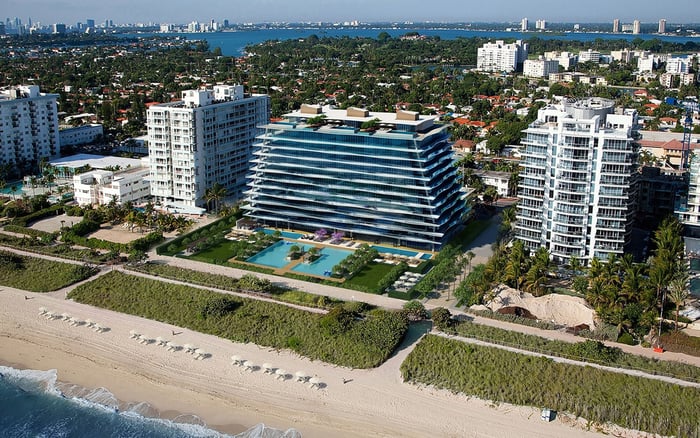
Two addresses capture that choice with unusual clarity. Arte Surfside at 8955 Collins Ave is a 12-story, 16-residence statement in controlled supply. The lived experience is intentionally limited and highly private, designed to feel closer to a villa community in the sky than a conventional condominium.
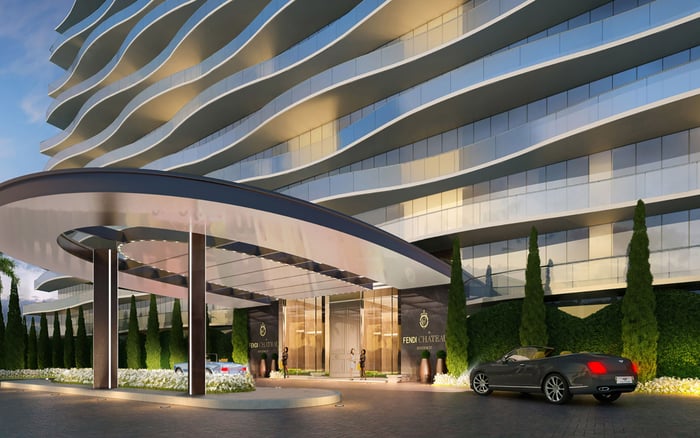
A few blocks north, Fendi Château Residences Surfside at 9349 Collins Ave is also 12 stories, but with 58 residences and a different proposition. The positioning is more brand-forward and more explicitly service-led, with an ecosystem that reads as classic white-glove luxury.
This comparison matters because both buildings can deliver exceptional oceanfront living, yet they tend to reward different buyer instincts. One emphasizes fewer neighbors and a tighter circle of ownership. The other emphasizes visibility, operational consistency, and a broader resale marketplace.
Arte Surfside’s headline is straightforward: 16 total residences in the entire building. In Surfside, where true oceanfront inventory is limited and new supply is not easily replicated, that number does more than sound impressive. It changes how ownership behaves. Fewer residences can mean fewer resale events, fewer publicly visible comparable sales, and a greater sensitivity to the specific line you select and the exact view corridor it captures.
This is why Arte can feel “unrepeatable” when the right residence comes to market. If a buyer misses a preferred layout or a preferred elevation, there is no guarantee a similar option returns soon. Scarcity is not just a marketing term here; it is a functional characteristic of the market.
Fendi Château, with 58 residences, remains boutique by many Miami standards, but it lives in a more liquid middle ground. Over time, there tends to be more inventory movement, more listing history, and more reference points for pricing. For some buyers, that is a feature, not a drawback. More transaction signals can create a clearer sense of how the market is trending, and it can reduce the anxiety that comes with buying into a building with very few data points.
Practically, the distinction reads like this: Arte can feel like a singular opportunity, where decisiveness matters. Fendi Château can feel like a curated selection, where patience may be rewarded with a preferred terrace exposure, a better interior program, or a line that better matches your use case.
Arte Surfside is associated with architect and designer Antonio Citterio, with a stated intent to reduce corridor impact and improve indoor-to-outdoor flow. In real-life terms, that philosophy tends to show up in how you arrive, how your privacy is protected at the elevator, and how the home feels oriented around light and terrace living rather than shaped by a typical condo core.
The result is often described as restrained and composed. It is the kind of design intent that can read “quiet” on a brochure, then feel unusually considered once you are inside, especially if you value a home that prioritizes calm and proportion over visual theatrics.
Fendi Château’s architect is Arquitectonica, a firm that describes the building’s signature undulating terraces and wave-like horizontal balcony bands. This is architecture that announces itself through geometry and façade rhythm. It also arrives with institutional recognition: Fendi Château received an AIA Miami Merit Award of Excellence for Architecture.
For buyers, the choice often comes down to temperament and identity. If you want your building to function as a backdrop to a private interior world, Arte’s framing can resonate. If you prefer an exterior that reads as unmistakably Miami, with terrace language that feels expressive and instantly recognizable, Fendi Château makes that case.
Landscape authorship reinforces the split. Arte’s landscaping is credited to Enzo Enea, an approach that tends to favor controlled, gallery-like greenery. Fendi Château’s landscape architecture is attributed to ArquitectonicaGEO, aligned with the project’s broader design cohesion.
In ultra-luxury buildings, amenities are valuable only when they become part of routine. The question is not whether an amenity exists, but whether it reliably fits the way you live in Surfside, week after week.
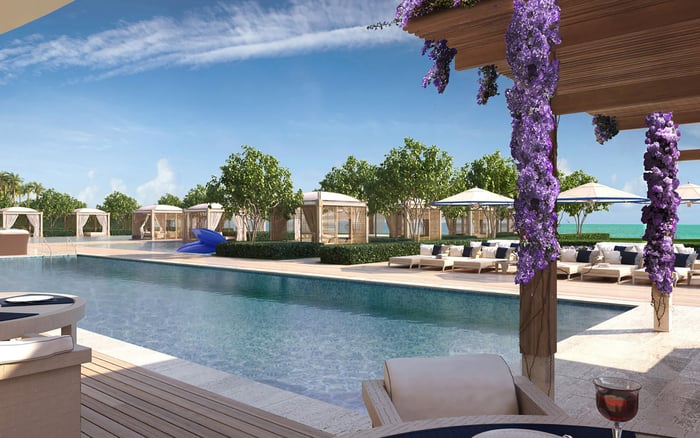
Arte Surfside’s official program includes a 75-foot indoor pool, an outdoor pool, a rooftop tennis court, a spa with sauna and steam, fitness and yoga spaces, and direct beach access with beach service. The indoor pool is a meaningful differentiator for owners who treat wellness as a year-round commitment, not a seasonal preference. The rooftop tennis court is similarly specific. It is either something you will use regularly, or it will be a beautiful feature you admire from a distance.
Fendi Château positions itself around concierge-style, white-glove service and a comprehensive amenity program described in its official materials. The appeal is the feeling of an orchestrated lifestyle, where the logistics of coastal condo ownership are intentionally absorbed by the building. Arrival, guest coordination, package handling, and the subtle details that matter to second-home owners are meant to feel seamless.
The best way to choose between the two is to audit your habits with discipline.
If you will realistically train, swim, and reset on a schedule, Arte’s amenity selection can feel unusually purposeful. If your lifestyle includes frequent travel, hosting, and a desire for a service layer that feels closer to a luxury hotel standard, Fendi Château’s approach may align more naturally.
Both buildings trade in large-format residences, but their market narratives differ, and that matters when you evaluate livability.
Arte Surfside residences are commonly described as 3 to 6 bedrooms, with very large floorplans that can span roughly 3,100 to 7,600+ interior square feet depending on the residence. With only 16 homes, each unit tends to feel like a distinct product rather than a repeatable template. That can be attractive to buyers who want a residence to feel one-of-one, even within the same building.
Fendi Château residences are marketed as 3 to 5 bedrooms with flow-through layouts, with marketing that commonly cites roughly 3,300 to 7,100 square feet depending on the line and configuration. Flow-through living has practical meaning in Surfside. It can translate to sunrise and sunset exposures, cross-breezes, and a sense that the ocean is not merely a view but part of how the home circulates and breathes.
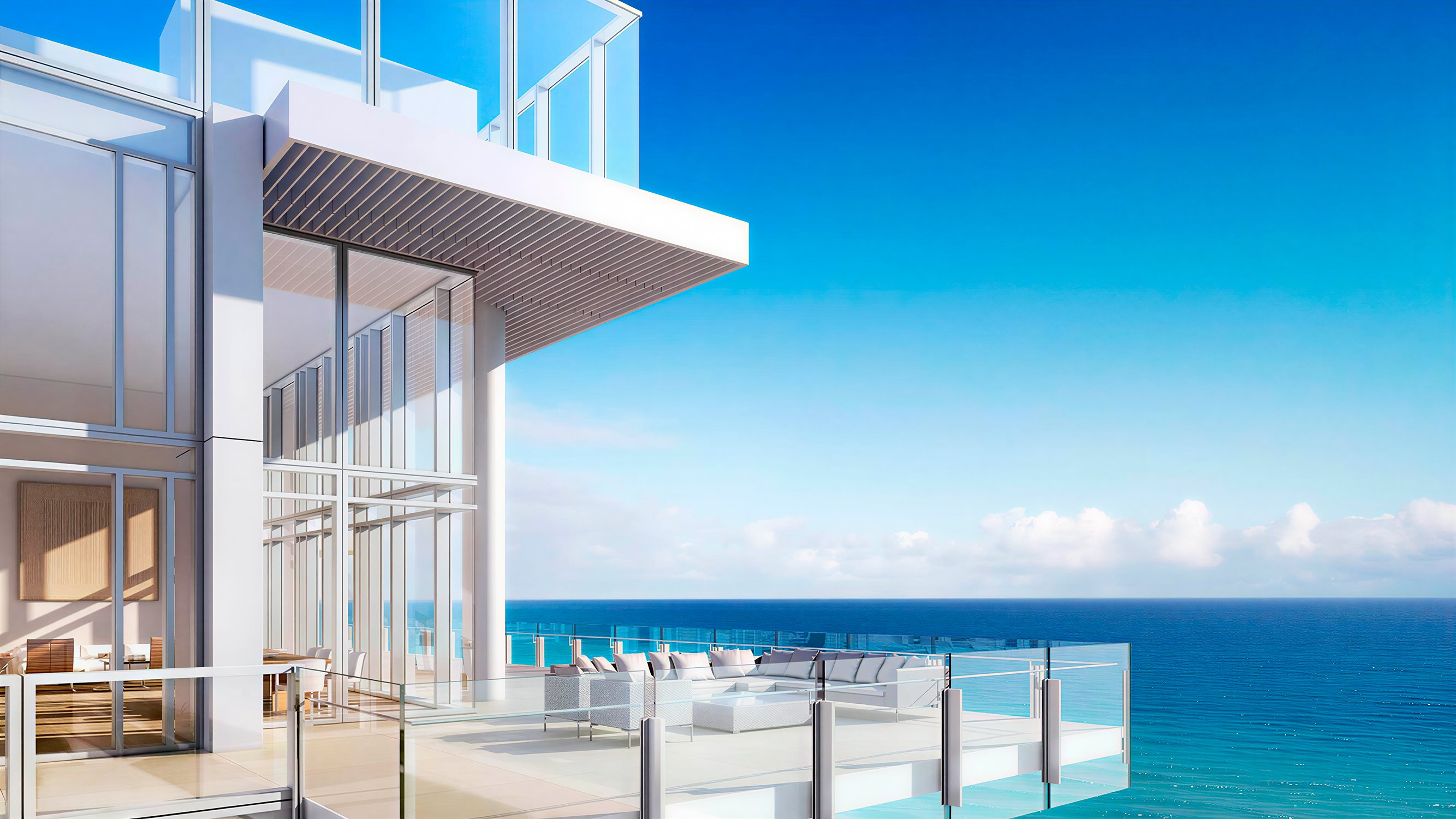
A buyer-focused insight: in Surfside, terraces are not an accessory. They are living rooms. When you compare homes, look beyond total square footage. Evaluate terrace depth, furniture logic, and how the outdoor space connects to kitchen and living areas. Stand where a dining table would actually go. Consider wind patterns, shade, and how often the terrace will be comfortable at your preferred time of day.
The daily value of oceanfront ownership is often decided by whether the terrace lives like an outdoor gallery or like an outdoor family room.
Pricing and availability shift continuously in both buildings, and public snapshots should be treated as time-stamped rather than definitive. Still, these projects are closely tracked on listing platforms, and that transparency can be useful when you are calibrating the spread between “asking” and “closing” expectations.
Arte carries an additional narrative premium because of widely covered transactions. A penthouse sale reported at $33 million in December 2020 was described as breaking Surfside condo records in published coverage, and the building has also been reported in connection with a penthouse transaction using cryptocurrency. Whether you care about the headlines or not, these stories shape perception. They can reinforce Arte’s positioning as trophy-grade, boutique inventory, and they can influence how sellers frame value when rare residences come to market.
Fendi Château’s value proposition is less dependent on singular headline moments and more rooted in durable desirability: recognized architecture, strong brand association, and a service-forward identity that remains legible to international buyers. That legibility can matter in resale, particularly for second-home owners who want a buyer pool that immediately understands the address.
For context, Surfside and nearby Bal Harbour have been tracked in luxury market reporting for notable movement in recent periods, including Q3 2025. In practice, timing matters. In active conditions, ultra-luxury buyers can become less price-sensitive and more line-sensitive. When conditions normalize, the best residences still trade, but the negotiation often shifts from headline pricing to terms, timing, and finish level.
Arte Surfside often fits buyers who:
Fendi Château often fits buyers who:
Both can be exceptional second-home solutions. The differentiator is which type of luxury you trust most: the luxury of fewer neighbors, or the luxury of a larger operational ecosystem.
Surfside’s appeal is its residential calm, but some buyers ultimately want a Miami Beach rhythm, with more dining density and a more immediate resort energy. In that case, it is useful to compare oceanfront and near-ocean alternatives that express luxury in different ways, without leaving the South Florida context.
For a modern, design-forward oceanfront experience in Miami Beach, 57 Ocean Miami Beach is often discussed in the same aspirational conversations as Surfside’s boutique towers, especially for buyers who want a newer-feeling product language.
If your lifestyle includes frequent entertaining, on-demand services, and a location that reads globally, Setai Residences Miami Beach offers a different kind of convenience-driven luxury.
And for buyers who place brand-standard service and managed ease above nearly everything else, The Ritz-Carlton Residences® Miami Beach can be a compelling reference point, particularly if you want a Miami Beach address with a hospitality-forward sensibility.
The strategic takeaway is simple. Surfside prizes discretion and supply constraint. Miami Beach can deliver more lifestyle immediacy. The right choice depends on whether your ideal day begins with quiet and ends with quiet, or whether you prefer the city’s tempo close at hand.
When you tour, go beyond finishes and views. Ask questions that reveal how the building actually behaves, especially in day-to-day operations.
How private is arrival? Consider elevator access, corridor length, and whether the entry sequence feels “home-like.”
Which amenities will you use weekly? Indoor pool, tennis, spa, and fitness are only valuable if they become routine.
How does the terrace live? Stand where furniture would actually go. Imagine wind, shade, and the path from kitchen to outdoor dining.
What is your liquidity preference? Some owners love ultra-rare inventory. Others prefer a market with more frequent transaction signals.
What is your service expectation? Decide whether you want a minimalist, private-club feel or a more overt white glove operating style.
Is Arte Surfside truly boutique? Yes. Arte is a 12-story building with 16 total residences, which is unusually supply-constrained for Surfside.
What is the main architectural difference between the two? Arte is associated with Antonio Citterio and emphasizes indoor-to-outdoor flow and minimized corridor impact. Fendi Château is designed by Arquitectonica and is defined by wave-like terrace geometry.
Does either building have standout amenities? Arte’s official amenities include a 75-foot indoor pool and a rooftop tennis court, in addition to pools, spa, fitness, and beach service.
Have there been notable sales at Arte? A penthouse sale reported at $33 million in December 2020 drew wide coverage, and a cryptocurrency-related penthouse transaction has also been reported.
To compare current availability and align a Surfside strategy with your lifestyle, connect with MILLION Luxury.
If branded residences are on your mind — as a home or as an allocation — we would be glad to share what we are seeing, privately.
Begin a quiet conversation