In South Florida’s luxury market, the choice between a design-forward spec residence and a fully custom build is less about taste and more about risk, timing, and the kind of decision-making you want to live with. Here is how sophisticated buyers are weighing certainty versus control as 2026 approaches, and where branded, turnkey condominium living fits as a third path.
In South Florida, the most meaningful luxury real estate decisions rarely hinge on whether a home is attractive. At the top of the market, the baseline is already high: strong architecture, premium finishes, and the expectation of comfort and privacy. What separates one path from another is how you want to manage risk and responsibility: schedule risk, budget risk, permitting risk, and the lifestyle risk of living through a long sequence of choices.
That is why the spec-versus-custom conversation has returned with real urgency, even among buyers who can comfortably afford either. A spec home is built without a specific buyer under contract, typically aimed at a high-end audience and delivered as close to turnkey as possible. A fully custom home is designed and built around an individual owner’s requirements, usually on land the buyer owns or acquires, with a far broader set of decisions and consequences.
As 2026 approaches, the trade-off is sharpening. Many buyers are increasingly willing to pay for move-in readiness and the ability to underwrite the outcome with confidence. Others remain committed to the precision of a home that fits their lifestyle the way a tailored garment fits a body: purposeful, personal, and highly specific.
There is also a third path gaining share in the decision set. For global households, branded, service-oriented condominium living can sit between spec and custom, offering a controlled, design-forward experience with an operational model that competes directly with newly completed spec inventory.
Spec and custom are often discussed as if they are style categories. In practice, they are governance models. The most important differences show up in who makes the decisions, when they are made, and how reversible they are.
A spec purchase buys a finished decision. The architect, builder, and design team have already resolved the floor plan, core systems, and most material packages. If the home is completed, personalization is typically limited to surface-level changes rather than structural revisions. The advantage is clarity: a visible product, a defined price, and a closing path that resembles a conventional acquisition once due diligence is complete.
A custom build buys a process. You are paying for control across layout, materials, fixtures, and home systems. That control is invaluable when you have non-negotiables that cannot be retrofitted easily: multi-generational planning, specific accessibility needs, an office strategy that must function from day one, or a resilience-first approach that begins at the foundation and envelope.
The trade-off is not simply time. With custom, you assume responsibility for sequencing, approvals, and the downstream implications of each choice. Some buyers enjoy that level of involvement and see it as part of the privilege of building. Others find that, without a clearly defined scope and strong project management, the process can become its own full-time job.
There is also a quieter psychological difference. Spec ownership reduces decision load because most choices have already been made. Custom construction can amplify decision fatigue because it asks you to make dozens of consequential calls, often in quick succession, and often with incomplete information about how small changes will ripple across trades and timelines.
Time is often the most underestimated line item in this decision, particularly in South Florida where seasonal living, business commitments, and school calendars can impose hard deadlines.
Spec homes and other quick move-in residences can frequently close on a familiar buying timeline once due diligence is complete. In many markets, that is commonly discussed as roughly 30 to 90 days, depending on the transaction, financing, and the readiness of the asset. The point is not the exact number. The point is that, when the home is complete or near completion, you can typically plan your move with a level of confidence that is difficult to replicate in a build.
By contrast, building in Florida is often planned on a roughly 12 to 18 month range, with complexity, approvals, and construction conditions shaping the final outcome. Importantly, “build time” is not only vertical construction. Pre-construction can take months: architecture and engineering, selections, permitting, and the inevitable revisions that occur as a vision becomes a set of documents that must satisfy code and jurisdiction.
For buyers balancing multiple residences, family logistics, or an international relocation, this is not abstract. If you need to be in South Florida for a season, a completed spec home can align with a known arrival date. If your priority is a forever home with exacting requirements, you may accept a longer runway because the end result is the point, not the speed.
The most sophisticated timeline decisions are less about patience and more about risk management. A custom timeline can be appropriate when you can absorb uncertainty and you value control. A spec timeline is often appropriate when you are optimizing for certainty, especially when the rest of your life does not pause while a home is being built.
Even ultra-premium buyers care about predictability. Not because the budget is tight, but because uncertainty has an opportunity cost. When the scope is fluid, the true cost of a project can become opaque, and opaque costs are difficult to plan around.
In a custom project, cost overruns are a known risk. Pricing can shift with scope changes, material availability, labor conditions, and the cascading effect of one change on multiple trades. The antidote is not optimism. It is documentation, contingencies, and a team that treats change orders as a last resort rather than the default mechanism for decision-making.
Spec purchases typically arrive with a set price and limited change capability. That does not mean the home is “cheaper,” particularly at the luxury end, where design and convenience can command a premium. It does mean the purchase can be easier to underwrite because the bulk of the costs have already been absorbed by the builder. Developers also benefit from standardized plans and volume purchasing, which can reduce per-unit costs in ways that are difficult to replicate in a one-off custom build.
For buyers who want a clear number and a visible product, this pricing clarity can feel like its own form of luxury. It supports cleaner decision-making: evaluate the home as delivered, weigh it against alternatives, and commit with fewer variables.
There is also a market nuance worth noting. In the current new-home environment, builders have used incentives to compete, including price adjustments, financing-related concessions, and upgrade packages. In luxury, those incentives may be less publicly advertised, but the principle remains. When a builder is managing inventory and timeline, the competitive set can create negotiating room, particularly when multiple comparable deliveries are available.
Spec homes have evolved. In South Florida, the category is increasingly marketed as ultra-modern, design-forward turnkey rather than generic product. You will see stronger architectural lines, curated stone palettes, and statement kitchens intended to deliver a “custom-like” impression on day one.
Even so, custom construction retains an edge in three areas where precision matters.
First is true spatial governance. If you want a split-bedroom concept that protects privacy for guests, a dedicated wellness wing, or a circulation plan that keeps service areas discreet, custom allows you to build your lifestyle into the bones. Those decisions are difficult to “edit in” later without paying a premium in time and disruption.
Second is resilience and mitigation planning. South Florida buyers are often motivated to prioritize hurricane-ready assemblies, impact-rated openings, stronger roofing strategies, and a robust building envelope from day one. A spec home may include many of these features, but a custom approach lets you dictate the hierarchy: where you harden, where you simplify, and what you will not compromise.
Third is indoor-outdoor living tailored to how you actually host and unwind. Covered outdoor areas, privacy zoning, pool positioning, and true outdoor kitchens can be designed around sun angles, neighbor sightlines, and the way your household uses the property. These are not cosmetic details. They are quality-of-life decisions that can be difficult to find perfectly aligned in a finished spec home.
The practical distinction is that spec can be beautifully executed, but it is still someone else’s thesis about what luxury should be. Custom lets you make the thesis your own, provided you accept the responsibility that comes with authorship.
South Florida is not one market. It is a set of micro-markets with priorities that can be radically different. The right choice in one neighborhood can be the wrong choice in another, not because the homes change, but because the ownership experience does.
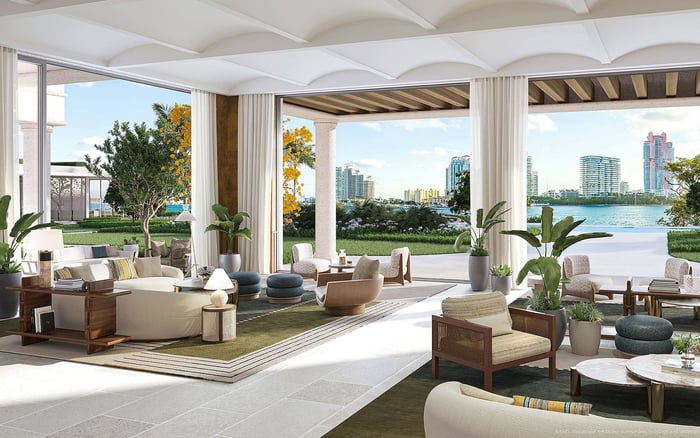
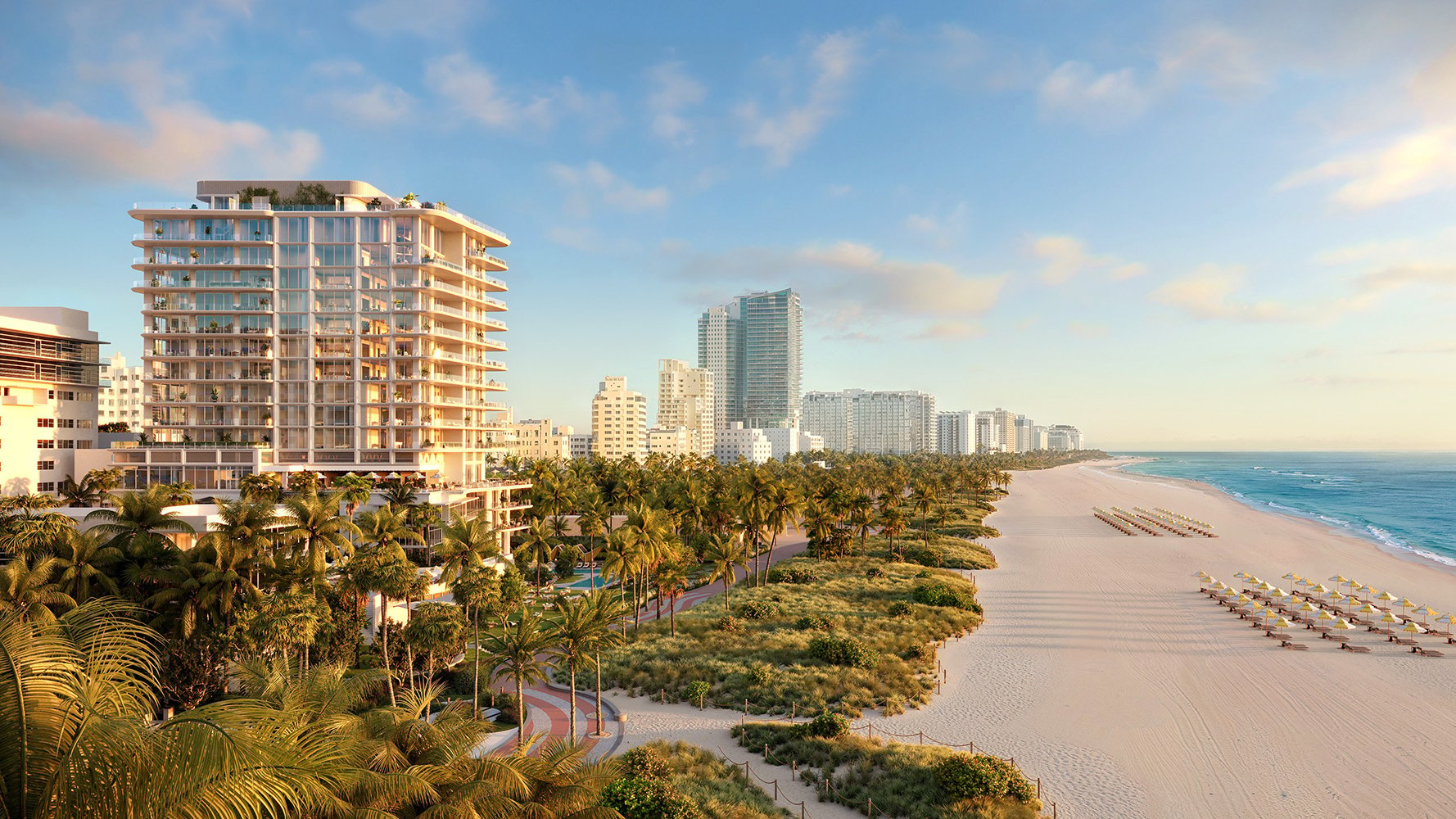
In Miami Beach, scarcity and lifestyle often elevate turnkey convenience. Many buyers prioritize proximity to the ocean, security, and a lock-and-leave rhythm. In that environment, branded and amenitized residences can compete directly with a spec purchase because the buyer is not only buying square footage. They are buying frictionless ownership.
It is easy, in that context, to understand the appeal of highly serviced condominium living and design-forward beachfront inventory. For a buyer who wants immediate immersion in the Miami Beach lifestyle, residences associated with names like Faena House Miami Beach or Setai Residences Miami Beach illustrate a category defined by turnkey polish and a simplified operational burden.
Pinecrest often pulls in the opposite direction. Widely covered as a family-oriented, privacy-forward luxury area with larger lots and a suburban feel, it aligns naturally with the logic of building or heavily tailoring a home. When land, setback patterns, and daily routines matter, custom can be the most rational way to get exactly what you want. In Pinecrest, a buyer may accept a longer schedule because the end product is a highly specific lifestyle asset rather than a seasonal base.
The takeaway is simple: neighborhood context should influence the decision. The best path is not universal. It is situational, and it starts with how you intend to use the property, not only how it photographs.
For many households, the real comparison is no longer only spec versus custom. It is spec versus custom versus branded condominium living.
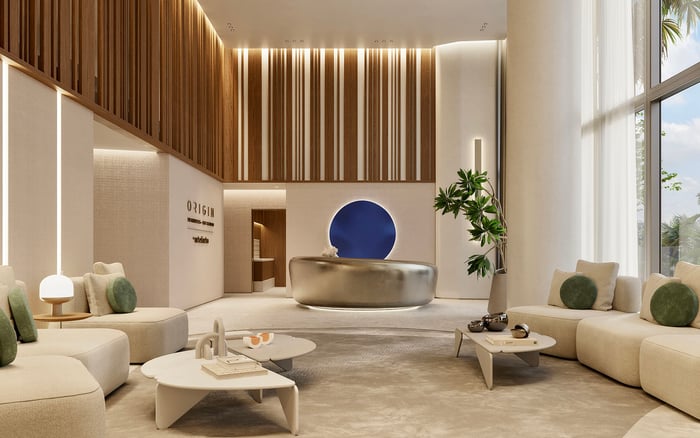
Branded residences often deliver a high level of move-in readiness with curated aesthetics, staff-supported operations, and a sense of arrival that can be difficult to replicate in a single-family setting without building a substantial team around the home. They can also offer a version of “custom” through finish packages and controlled personalization, without exposing the buyer to the full complexity of building.
This is especially relevant when a buyer wants new construction but values simplicity. Some buyers prefer to avoid the operational friction of owning a large property in South Florida while still securing a meaningful design statement. Others want a second home that behaves like a primary: ready when they land, quiet when they leave, and supported by a system that reduces day-to-day demands.
Timing intersects with this path in a distinct way. Pre-construction purchases can allow a buyer to secure a position early, then follow a managed timeline toward delivery. The trade-off is straightforward: you are buying into a future date and a structured set of selections, not an immediately inspectable product.
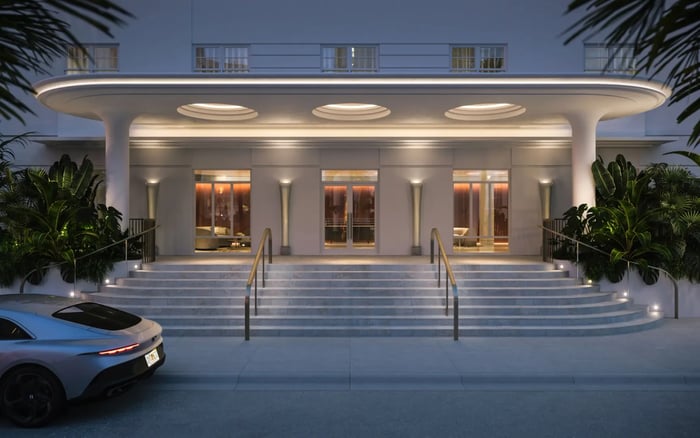
Miami Beach offers clear examples across this spectrum. The Ritz-Carlton Residences® Miami Beach represents a service-oriented approach to luxury ownership, while boutique oceanfront options like 57 Ocean Miami Beach speak to buyers who want a quieter, design-led alternative to larger towers.
If you are weighing spec, custom, or a branded alternative, clarity comes from asking buyer-oriented questions that translate taste into execution.
First, what is your non-negotiable move-in date? If the date is fixed, you are likely choosing between existing inventory and near-complete deliveries. If the date is flexible, you can consider builds and structured pre-construction timelines more comfortably.
Second, what must be true about the floor plan for your household to function? If you have hard requirements, custom or highly configurable offerings will serve you better than a completed spec home. When a plan is merely “close,” the compromises have a way of showing up in daily routines.
Third, how much decision load do you want? Some buyers enjoy the creative work of curating a home. Others prefer to conserve attention for business, family, and travel. Neither is more luxurious. It is simply a preference, and it should be honored early because it affects everything from team selection to contract structure.
Fourth, what is your tolerance for uncertainty? Custom construction can be deeply rewarding, but it is not a fixed-price product unless the contract structure and scope discipline make it one. Spec purchasing tends to be more legible on day one because the product exists and the major decisions have already been priced.
Fifth, how private do you need the search to be? Ultra-luxury dealmaking can differ from the public market. In South Florida, off-market and whisper listings are widely discussed as common in high-end transactions where privacy and controlled access matter. That reality can influence what you even see, and when, which in turn can narrow or expand your options across spec, custom land acquisition, and branded inventory.
The 2026 market backdrop adds one more layer: expectations are evolving. Coverage of the outlook suggests a nuanced environment where preparedness and positioning matter. In that setting, “value” can mean the ability to execute cleanly and move in with minimal friction, not simply a headline number.
Is a spec home always faster than custom? Typically, yes. A spec purchase is often on a conventional closing timeline once the home is complete or near completion, while custom builds in Florida are commonly planned around a longer 12 to 18 month range.
Are spec homes less expensive than custom homes in South Florida? Not necessarily. Spec homes can offer more price predictability and may benefit from standardized plans and purchasing power, but luxury spec product can be priced at a premium for design and convenience.
What is the biggest risk in a custom build? Schedule and scope. Pre-construction, permitting, and selections can extend timelines, and changes midstream can create cost overruns if scope is not tightly managed.
How does Pre-construction differ from building a custom home? Pre-construction usually means buying into a planned condominium project with structured selection options and a managed timeline. A custom home is buyer-driven from design through construction, with broader control and broader responsibility.
When does it make sense to choose a branded residence instead? When you want high design with reduced operational burden, a lock-and-leave lifestyle, and a controlled decision process that still feels elevated.
For a discreet introduction to South Florida’s luxury options across spec, custom, and branded living, connect with MILLION Luxury.
If branded residences are on your mind — as a home or as an allocation — we would be glad to share what we are seeing, privately.
Begin a quiet conversation