A buyer-oriented look at The Residences at 1428 Brickell: a 70-story Brickell tower where ultra-luxury living is paired with a publicly disclosed solar-integrated facade, full-service positioning, and a high-altitude amenity program. From design pedigree to construction milestones and what “move-in ready” means at this tier, here is how to evaluate the opportunity with precision.
Brickell has matured into a global address where buyers increasingly expect more than height and views. The new benchmark is performance: operational intelligence, long-term efficiency, and the sense that a tower was conceived as a cohesive whole - not a stack of amenities.
That is the lane The Residences at 1428 Brickell is aiming to own. Planned as a 70-story ultra-luxury condominium tower by Ytech, it is positioned as the world’s first solar-powered residential high-rise, integrating building-integrated photovoltaics into the facade concept. For the luxury buyer, that framing is less about virtue and more about control: resilience for common-area operations, a forward-facing narrative, and architecture that communicates intention.
Within the broader category of New-construction in Brickell, the project reads as a statement - design pedigree, a finite residence count, and a lifestyle offering calibrated toward private-club altitude rather than a sprawling resort campus.
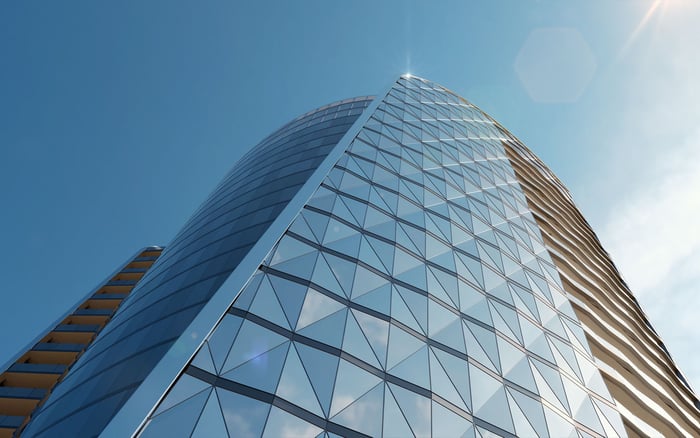
Sustainability in luxury is often reduced to checklists. Here, it is embedded in the building’s identity. A key feature is the planned “Solar Backbone”: approximately 500 photovoltaic-integrated windows on the west-facing facade, totaling nearly 20,000 square feet of PV glazing. The disclosed expectation is that this PV glazing could generate up to about 170,000 to 175,000 kWh of clean electricity annually for common-area operations.
For buyers, the practical takeaway is clear: the clean-energy component is designed to serve the building’s operations rather than act as a symbolic add-on. Day to day, common-area energy loads influence the operating profile that ultimately shapes the ownership experience.
The project is also pursuing LEED certification as part of its sustainability strategy. In a market where “green” can become marketing shorthand, a recognized certification framework brings a clearer definition of intent, documentation, and performance targets.
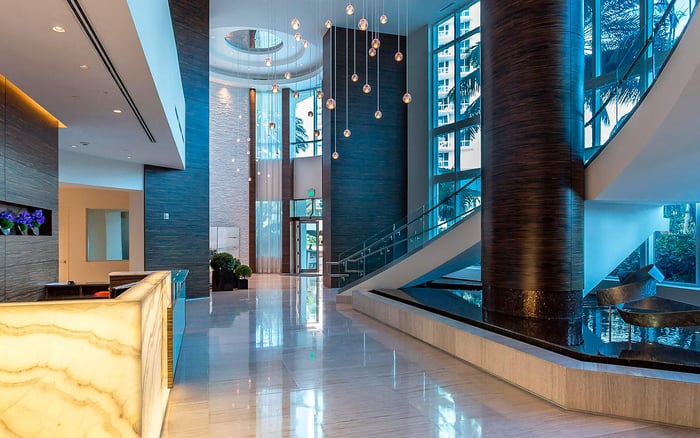
The tower is designed by Arquitectonica, with interiors by ACPV Architects (Antonio Citterio and Patricia Viel). At this level, names matter - but continuity matters more. A coherent architecture-to-interiors narrative shows up in arrival proportions, the quiet confidence of corridors, the alignment of materials and detailing, and the way the building holds its aesthetic as tastes evolve.
In-residence, kitchens are designed by Antonio Citterio and feature Arclinea cabinetry as a named partner. It is a detail, but an instructive one: high-luxury buyers are increasingly precise about what is truly bespoke versus merely branded. A kitchen program with disclosed design authorship and a stated cabinetry partner is typically easier to evaluate before delivery.
The project is planned to include 195 residences, a count that supports a more private atmosphere than the mega-tower format. For some buyers, that translates into fewer variables: fewer neighbors, less congestion in amenity spaces, and a service model that can feel more tailored.
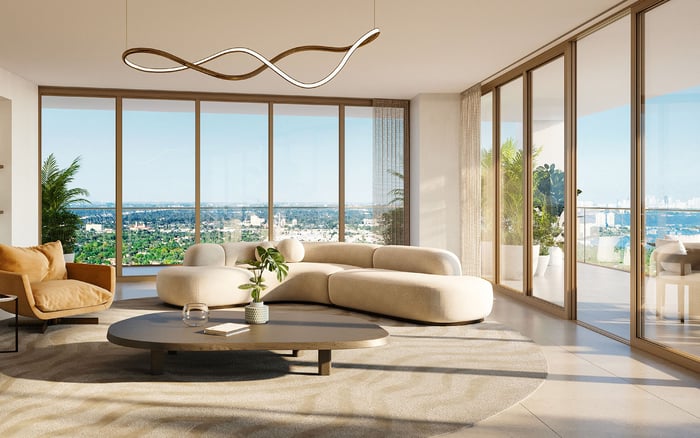
The residences are described as fully finished and “move-in ready,” rather than delivered as raw shells. At the high end, that distinction is material because time is often the most expensive line item. Finished delivery can reduce the risk of a prolonged post-closing build-out, compress the path to occupancy, and limit the complexity of coordinating contractors in a vertical building.
Layouts span 2 to 4 bedrooms plus den, with published floorplans and residence line layouts. Even if you plan to customize furnishings and art placement, a clear layout catalog lets you evaluate livability early: where the den works best as an office versus a media room, how public and private zones are separated, and whether the kitchen’s relationship to living and dining matches your entertaining style.
Ceiling heights are described as 11 feet in standard residences, with select residences featuring volumes up to 30 feet. In practical terms, volume changes everything: it elevates the experience of daylight, improves display potential for art, and creates a calmer interior presence that reads as “estate-like,” even in a tower.
If your portfolio includes other South Florida ownership styles, it can be useful to benchmark: Brickell’s vertical privacy and services can feel distinctly different from an oceanfront cadence such as 57 Ocean Miami Beach, where the daily rhythm is built around beach access and a more seasonal, resort-leaning energy.
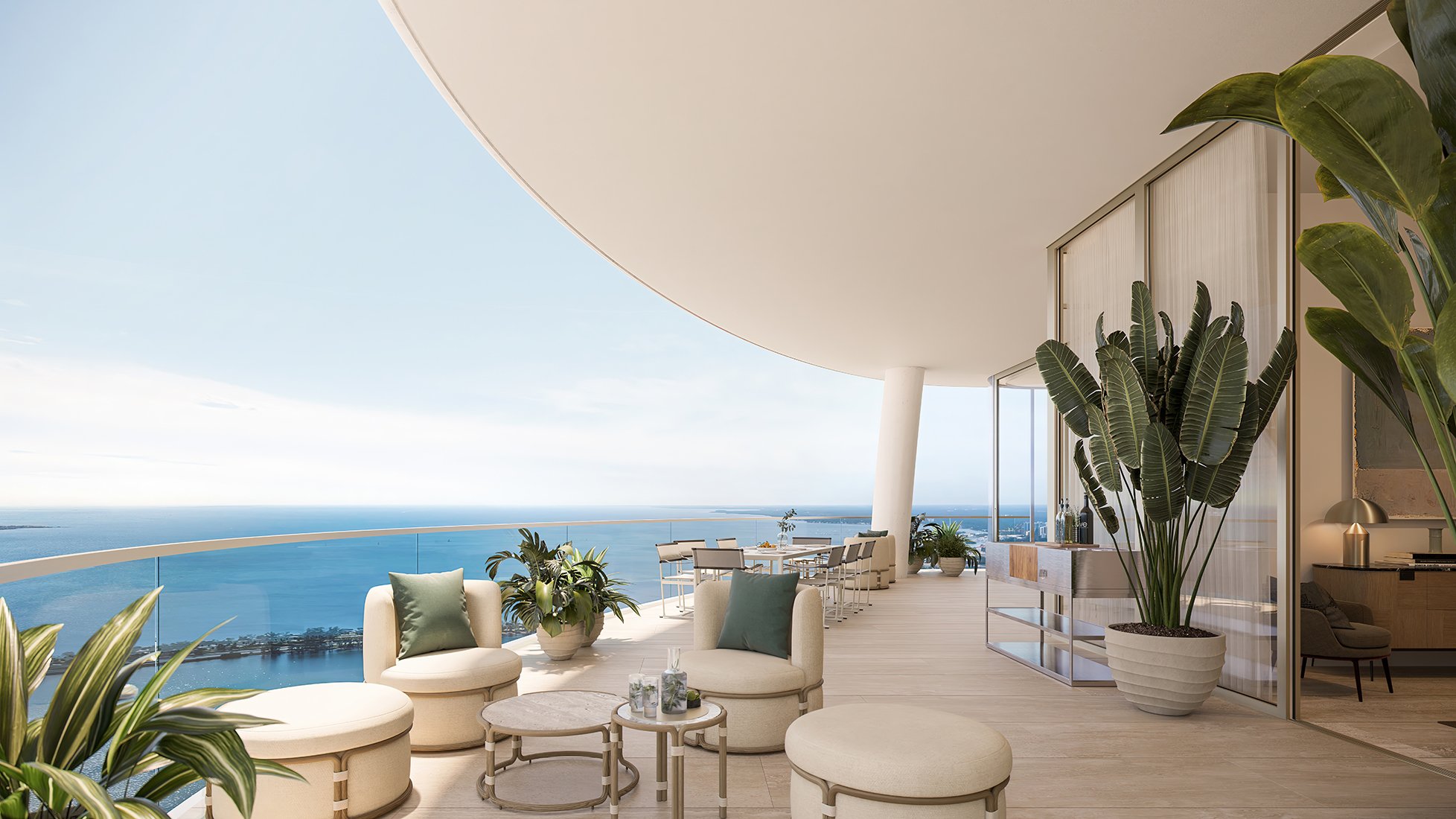
The amenity program totals more than 80,000 square feet, with signature amenities concentrated near the top of the building. The upper-level amenities are described as being around 850 feet above Brickell Avenue, including rooftop features such as an observatory and pool.
For the luxury buyer, that altitude is not just a view premium - it changes the psychology of the building. A high-elevation amenity program can feel less like a public clubhouse and more like an owner’s aerie. It can also reframe daily wellness: a morning swim or an evening pause that is literally above the city’s tempo.
The project also markets an “estate manager” service concept, positioned as a dedicated resident-facing service and concierge model. In an era where many buildings use “concierge” as a catch-all, the difference is in structure: whether service is reactive or anticipatory, whether it supports long-stay owners as well as second-home patterns, and how it protects privacy.
For comparison, buyers who prioritize a hospitality-forward experience often cross-shop Miami Beach service environments such as Setai Residences Miami Beach or The Ritz-Carlton Residences® Miami Beach. The point is not sameness; it is clarity on what you want your building to do for you.
In ultra-premium Pre-construction, confidence is earned through verifiable momentum. Groundbreaking occurred on November 13, 2024. A master permit was obtained in February 2025, intended to facilitate vertical construction. Foundation work has also included a continuous mat foundation pour described as roughly 13,000 cubic yards of concrete with approximately 2,700 tons of reinforcing steel over about 33 hours.
The financing profile is equally telling: a publicly disclosed $565 million construction financing package was secured with a senior and junior lender structure. While the average buyer does not underwrite construction loans, a substantial, defined package typically signals a project moving beyond vision into execution.
Delivery is widely cited as targeting Q4 2028. As with all timelines, buyers should treat delivery targets as planning tools rather than guarantees, but the combination of major construction milestones and financing tends to support a more legible pathway.
If you are comparing Brickell opportunities, it can be helpful to frame this project alongside other neighborhood-forward plays such as 2200 Brickell, where the conversation may revolve more around scale, setting, and lifestyle adjacency than a singular “technology plus height” thesis.
The Residences at 1428 Brickell will appeal most to buyers who want three things at once: a prime Brickell address, a design-led interior environment, and a building identity that extends beyond marble-and-mirrors luxury.
It is likely to resonate with:
It may be less compelling for buyers whose ideal is a sprawling, low-density campus, or for those who prioritize immediate occupancy over a longer horizon.
At this tier, the decision is best made with the discipline of an investor and the sensitivity of a collector.
Start with plan logic. In 2 to 4 bedroom plus den layouts, the den is often the hinge point: an everyday office for a primary resident, or a flexible “third space” that protects bedroom privacy when entertaining. Next, consider ceiling height and window orientation - particularly if you are drawn to the project’s west-facing solar-integrated facade concept.
Then evaluate services. The “estate manager” positioning suggests a more curated approach to resident needs, but buyers should define what matters: package handling, guest arrival experience, in-home access protocols, and the building’s discretion standards.
Finally, evaluate amenities as a lifestyle tool, not an accessory. With more than 80,000 square feet of amenities and signature spaces near the top of the building, the question is whether you will truly use those spaces weekly. If yes, they can materially improve quality of life. If no, you may prefer a simpler building with fewer moving parts.
What is The Residences at 1428 Brickell? It is a planned 70-story ultra-luxury condominium tower in Brickell developed by Ytech.
How many residences are planned? The building is planned to include 195 residences.
What makes the building “solar-powered”? It is positioned around a facade concept that integrates photovoltaics as part of the design.
What is the Solar Backbone? It is planned as about 500 PV-integrated windows totaling nearly 20,000 square feet on the west facade.
How much electricity is the PV glazing expected to generate? The disclosed projection is up to about 170,000 to 175,000 kWh annually for common-area operations.
Is the project pursuing any green building certification? Yes, it is pursuing LEED certification as part of its sustainability strategy.
Who designed the tower and interiors? The tower is designed by Arquitectonica, with interiors by ACPV Architects (Antonio Citterio and Patricia Viel).
What is the residence delivery style? Residences are described as fully finished and move-in ready rather than delivered as raw shells.
What are the typical layouts and ceiling heights? Layouts include 2 to 4 bedrooms plus den, with 11-foot ceilings in standard residences and select volumes up to 30 feet.
When is delivery expected? Completion is widely covered as targeting Q4 2028.
For a confidential assessment and a building-by-building shortlist, connect with MILLION Luxury.
If branded residences are on your mind — as a home or as an allocation — we would be glad to share what we are seeing, privately.
Begin a quiet conversation