South Florida’s ultra-luxury market is no longer defined by simple “best views” narratives. At eight and nine figures, the decision framework tightens around scarcity, discretion, security, and operational ease. From record waterfront sales in Miami-Dade to headline listings on Indian Creek and legacy-scale assembly in Palm Beach, the market is increasingly set by buyers who treat real estate as long-horizon infrastructure.
South Florida’s ultra-luxury tier is increasingly clearing at eight and nine figures, and that context matters even for buyers shopping below the very top. Trophy listings and trophy closings become reference points. They reset expectations, shape seller confidence, and influence the psychology of the broader luxury segment, especially when one transaction reframes what “waterfront scarcity” is worth.
In Miami-Dade, a record-setting single-family sale reportedly reached $120 million on Star Island in 2025. At that level, deals do more than generate headlines. They reinforce the idea that truly scarce waterfront land in prime corridors can trade like a strategic asset, not merely a discretionary purchase.
The upper boundary is also being tested by widely covered trophy listings, including a roughly $200 million Indian Creek offering designed by Ferris Rafauli. Whether or not every record ask ultimately converts into a closing, the signal remains consistent: the region’s most secure, most limited enclaves are being priced and marketed as global-grade luxury.
In the ultra-premium segment, finishes can be upgraded. Scarcity cannot.
The properties that command the strongest premiums tend to offer at least one non-repeatable attribute: controlled access, irreplaceable waterfront orientation, or an extremely limited supply of comparable sites. Indian Creek Island’s “Billionaire Bunker” reputation is built on precisely that thesis, a hyper-secure enclave where controlled-access features are central to the value narrative.
This scarcity lens also explains why some buyers broaden the map. Coconut Grove has been pulled into the UHNW conversation as a credible alternative to legacy trophy zones, highlighted by reporting that Larry Page spent $173.4 million on two waterfront properties there. The bigger story is not celebrity. It is optionality. When one enclave becomes fully priced and tightly held, adjacent neighborhoods with comparable lifestyle advantages can re-rate.
For buyers, the practical move is to define the scarcity lever early:
Discretion is no longer a nice-to-have. At the top end, it is increasingly part of the product.
Off-market and “stealth” activity has been rising among the super-wealthy, reflecting a preference for exclusivity and reduced digital footprints. Luxury agents have also leaned harder into private listings and off-MLS marketing as competition intensifies and confidentiality expectations rise. In practice, that usually means limited distribution of details, tightly managed showings, and a smaller circle of qualified counterparties.
NDAs are common, as is information gating. Photos, addresses, and even tour logistics may be restricted until financial capability and intent are verified. For billionaire and celebrity profiles, this is not theatrics. It is risk management that protects personal safety, reputational exposure, and negotiating leverage.
For buyers, a privacy-first process can feel slower at the front end and faster at the back end. You see fewer opportunities, but the opportunities you do see are often more actionable, with ownership and representation aligned around certainty of close.
At trophy pricing, negotiation becomes more structured and more analytical. Reporting on ultra-high-end dealmaking often frames billionaire buyers as leverage-aware, with sharper discipline around term structure, contingencies, and the relationship between replacement cost and scarcity value.
In South Florida, that intersects with a second dynamic: many top-tier buyers are cash buyers. In competitive situations, certainty of close can rival price as a deciding factor. The winning bid is not always the highest number on paper. It is frequently the offer that removes friction, compresses timelines, and reduces perceived execution risk.
A practical “terms advantage” playbook often includes:
Florida’s tax profile, including no state income tax, is repeatedly cited as a driver of high-net-worth relocation and second-home purchasing. Add the periodic media cycle around proposed wealth taxes in high-tax states, and decision timelines can accelerate.
But taxes alone rarely explain why a buyer chooses a specific neighborhood or building. The decisive factor is often the daily operating experience: who manages the home, how quickly service issues are resolved, what security feels like at midnight, and how seamlessly an owner can arrive and depart.
This is where branded residences and hotel-adjacent service models have gained momentum with global luxury buyers. The promise is not simply a name on the façade. It is staffing, concierge infrastructure, and lock-and-leave ease that competes with the complexity of maintaining a private estate.
In Miami Beach, that service-first logic helps explain the appeal of residences tied to hospitality-grade operations. For buyers who want a high-control lifestyle without the overhead of a standalone compound, options such as Shore Club Private Collections Miami Beach, Setai Residences Miami Beach, and The Ritz-Carlton Residences® Miami Beach represent a distinct value proposition: a home that performs like an asset with an operating system.
At the ultra-premium level, access is not only physical. It is social.
Miami’s members-only club ecosystem has become a lifestyle draw in luxury positioning, with exclusivity functioning as a selling feature for certain neighborhoods and buildings. Reports of high-priced memberships reinforce a broader point: gated social networks can be part of perceived value, particularly for newly relocated wealth seeking immediate community, curated programming, and high-trust environments.
For buyers weighing Brickell versus the beach versus quieter enclaves, the real question is practical: which area delivers the right mix of privacy and proximity to your network?
That answer varies by household, which is why Coconut Grove and Palm Beach remain relevant reference points in the region’s luxury conversation. Palm Beach, in particular, is repeatedly profiled as a major U.S. billionaire cluster, including estimates of 67 billionaires with nearly $500 billion in combined wealth. That concentration supports a legacy dynamic. Buyers are not only purchasing homes; they are buying into a long-running, high-trust ecosystem.
In South Florida, water is not just a view. It is logistics.
Yacht-centric positioning is a distinct luxury lane in Miami and Fort Lauderdale, where boating realities shape value: deep-water access, turning basins, bridge clearances, and time-to-open-ocean. For some buyers, the “better” home is the one that makes an unplanned departure effortless.
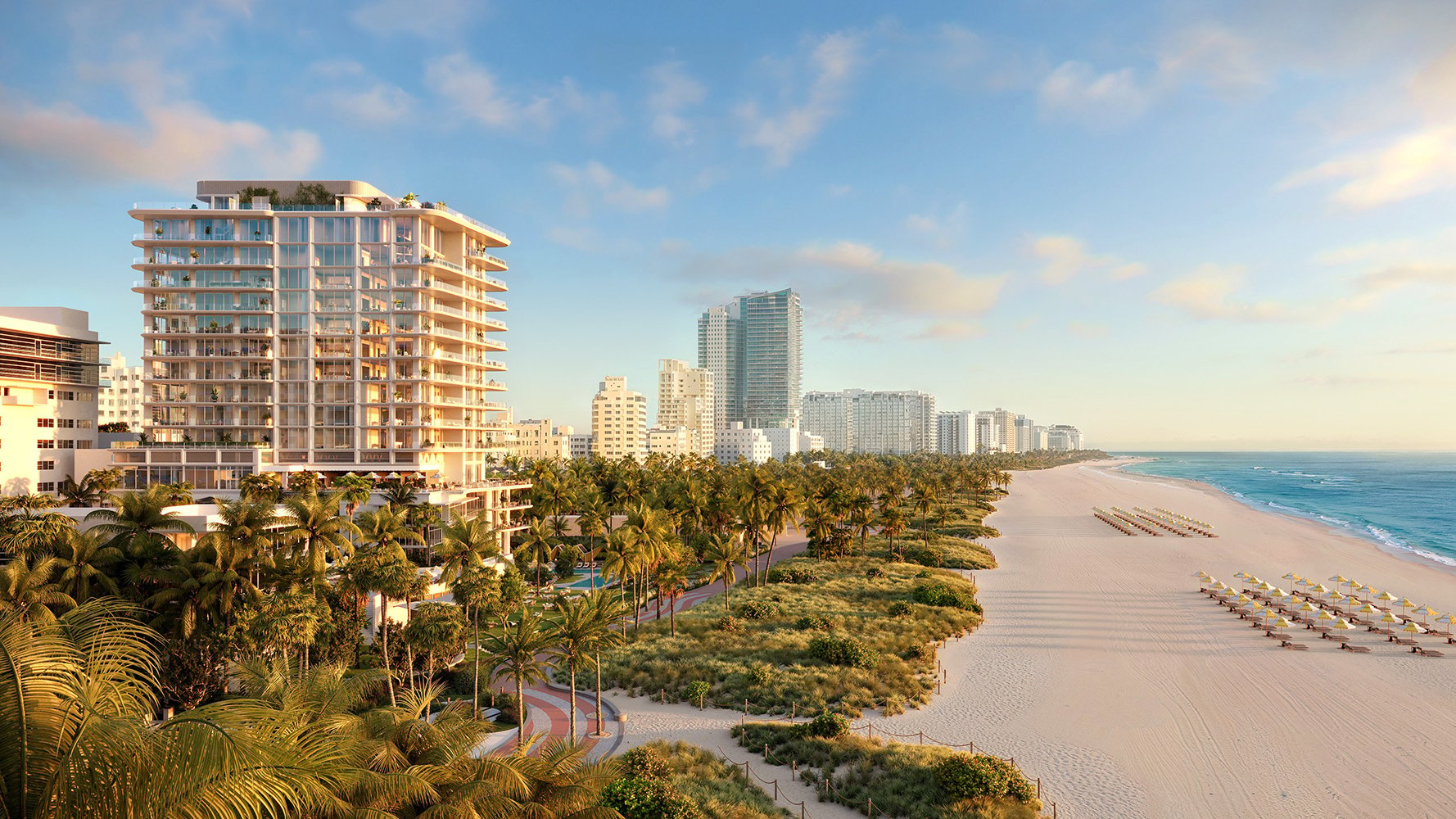
Oceanfront living has its own non-negotiables: direct beach access, horizon exposure, and the prestige of true Atlantic frontage. For buyers who want that experience in Miami Beach’s quieter edges, 57 Ocean Miami Beach speaks to a preference that has strengthened as trophy pricing has expanded: fewer neighbors, more discretion, and a daily rhythm anchored by the shoreline.
Intergenerational wealth dynamics are reshaping luxury demand, with reporting pointing to a large wealth transfer influencing buyer demographics and decision-making. In practice, this can mean younger principals with institutional standards. They want design, but also governance, operating predictability, and an asset that can be held across cycles.
That is also why large-scale assembly stories resonate. Ken Griffin’s widely reported Palm Beach holdings, pursued for a planned mega-estate, signal how UHNW buyers can treat real estate as long-horizon capital deployment and legacy infrastructure.
Across these signals, the throughline is discipline. Trophy buyers underwrite security, privacy, and operations with the same rigor they apply to other assets. Read South Florida through that lens and the market becomes easier to interpret, and easier to navigate.
What defines a trophy home in South Florida today? A trophy home typically combines an irreplaceable location with scarcity, privacy, and a price point that resets local benchmarks.
Why do record sales matter if I am shopping below that level? They influence pricing psychology, appraisal conversations, and what sellers believe is possible in adjacent luxury tiers.
Are off-market deals common at the ultra-high end? Yes. Privacy-first marketing and stealth transactions have been rising among the super-wealthy.
What does privacy-first actually look like in a transaction? Expect limited distribution of details, controlled showings, and often NDAs before tours, disclosures, or address confirmation.
Why do some buyers prefer branded residences? They prioritize operations, staffing, and lock-and-leave ease over the demands of managing a private estate.
Is Indian Creek’s security reputation a real value driver? It is widely marketed that way, and controlled access is central to the premium perception.
How should I think about oceanfront versus bayfront? Oceanfront offers direct beach and horizon exposure. Bayfront can deliver boating logistics and faster access routes depending on location.
Why is Coconut Grove discussed alongside legacy enclaves? Reported UHNW waterfront purchases have helped spotlight it as a credible alternative with strong lifestyle appeal.
How important are taxes in the decision to buy in Florida? They are meaningful for many high-net-worth buyers, but lifestyle fit and operational ease often finalize the choice.
What is the biggest mistake buyers make at the trophy level? Underestimating how much terms, confidentiality, and operational planning can matter, sometimes as much as price.
For private guidance on South Florida’s trophy market, connect with MILLION Luxury.
If branded residences are on your mind — as a home or as an allocation — we would be glad to share what we are seeing, privately.
Begin a quiet conversation