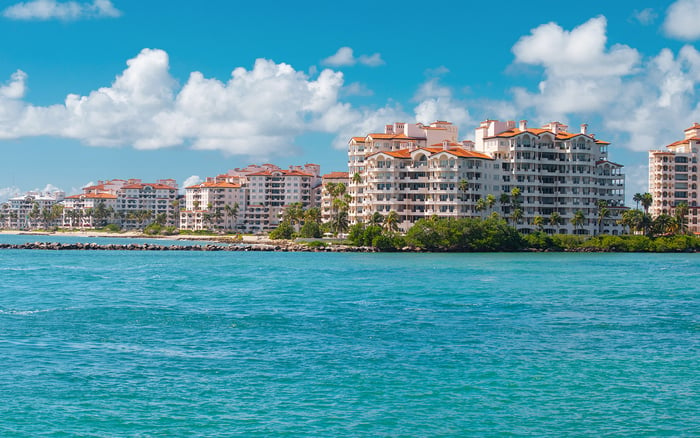
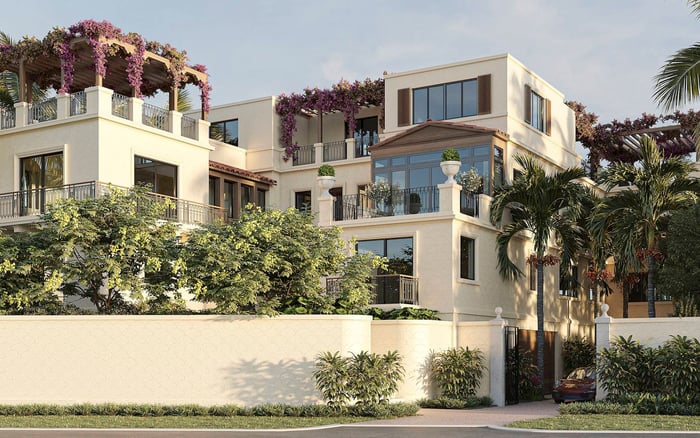
South Florida’s luxury market has a rhythm: winter brings maximum selection and competition, while summer and shoulder months can reward patient buyers with better terms. Using recent pricing and absorption signals across Miami Beach, Fisher Island, Edgewater, and Coconut Grove plus Coral Gables, this guide outlines how to time a purchase without mistaking seasonality for value.
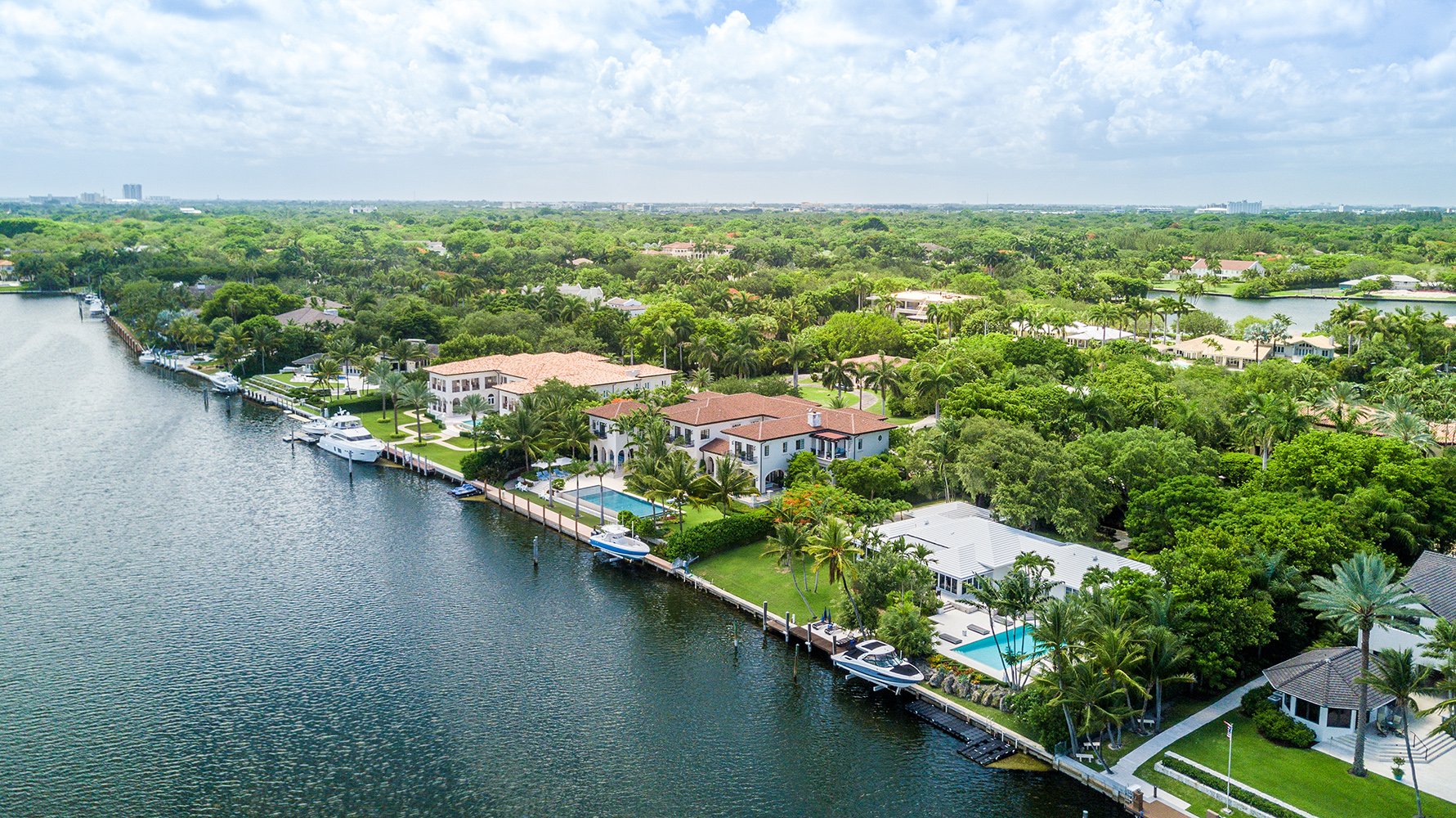
In South Florida, “timing the market” is rarely about calling a peak or a bottom. It is about knowing when the right inventory surfaces, when competition is most intense, and when sellers become more flexible on terms. In lifestyle and second-home corridors, the calendar still matters: winter concentrates buyer activity, while summer typically thins the field and slows decision cycles.
Seasonality, however, is not uniform. A trophy oceanfront residence in Miami Beach can trade differently than a scarcity address where supply stays tight year-round. Sophisticated buyers do not ask, “Is it a good time to buy?” They ask, “Is this the right quarter to buy this specific product type, in this specific micro-market, with my preferred deal structure?”
Buyer activity in South Florida luxury generally crests during the winter “season,” roughly November through March, when seasonal residents and second-home buyers return. Winter often brings the widest selection of active listings and the deepest bench of serious, ready-to-act buyers.
Early December can be an accelerant. Art Basel week functions as a global attention event and has been associated with meaningful local economic spillover, with reported estimates around $565 million in economic impact for Miami. The real estate implication is subtle but real: discretionary buyers arrive in market already primed for lifestyle purchases, and sellers frequently anchor pricing to the heightened visibility.
For buyers, winter can still be the right moment when optionality matters. If you need a rare line, a specific view corridor, or a unique floor plan, season is often when that inventory finally appears. The tradeoff is competition: multiple-bid dynamics and firm counteroffers are more common, and the best opportunities require quick, organized execution.
Summer months typically bring lighter buyer traffic in South Florida, which can extend days on market and increase negotiating leverage versus peak winter season. In luxury, the advantage is often expressed in terms rather than headline price. Summer negotiations may yield longer inspection windows, cleaner punch lists, more cooperative closing timelines, and occasionally meaningful concessions when a listing has aged.
The most durable summer edge is psychological. In a quieter market, sellers and listing teams usually have more bandwidth to negotiate thoughtfully, and “best and final” pressure tends to soften. If your goal is to buy well rather than buy fast, summer and shoulder months can be productive, especially when you are targeting resale inventory where motivation is more variable.
Miami Beach remains one of the most seasonally sensitive submarkets because it sits at the intersection of second-home demand, global travel patterns, and a steady pipeline of luxury product.
Recent reporting showed Miami Beach luxury condos at a $2.0M median sale price in Q3 2025, up 8.1% year over year, alongside a $1,292 median price per square foot, up 15.1%. Within that umbrella, South Beach registered a striking price-per-square-foot figure of $1,538 in Q3 2025, up 37% year over year.
The practical lesson is that “quiet season” does not automatically equal “discount season,” particularly when new-development closings and high-design offerings pull medians higher. Buyers who want the Miami Beach lifestyle but prefer a turnkey, hospitality-inflected experience may gravitate toward options such as Setai Residences Miami Beach or The Ritz-Carlton Residences® Miami Beach, where branding and service can help support pricing even when broader traffic slows.
For oceanfront buyers, the central question is often less about seasonality and more about scarcity, rules, and day-to-day livability. True oceanfront inventory can be thin, and genuinely private, residential-forward buildings can trade on their own cadence.
If your priority is a calmer, more residential feel with a direct relationship to the sand, it is worth tracking opportunities that match that brief, such as 57 Ocean Miami Beach. In this tier, “timing” becomes less about month-to-month pricing and more about preparedness: having clarity on must-haves, documentation ready, and decision-makers aligned when the right residence comes available.
Some markets resist the seasonal playbook because supply is structurally constrained and ownership tends to be long-term. Fisher-island is a prominent example.
In Q3 2025 reporting, Fisher Island was identified as Miami’s most expensive neighborhood, with a $2,708 median price per square foot and an $11.2M median sale price. Public market snapshots have also shown active listings and a separate, more moderate median sale price estimate on a local portal. Meanwhile, Redfin market data has indicated median days on market around 167 days, with days on market increasing year over year.
The takeaway is not that Fisher-island is “soft” or “strong.” It is that a market can be both expensive and slow at the same time. For buyers, slower velocity can create room for diligence and negotiation, but pricing often remains anchored by scarcity and the lifestyle proposition.
In Greater Downtown Miami, the $2M+ luxury condo segment recorded 97 closings in Q3 2025 versus 116 in Q3 2024, a 17% year-over-year decline. Yet pricing and price-per-square-foot performance have been attributed in part to new luxury deliveries, illustrating how headline strength can coexist with softer transaction volume.
For buyers who want waterfront adjacency and a refined high-rise lifestyle without being fully dependent on Miami Beach seasonality, Edgewater has stood out in neighborhood-level reporting. In Q2 2025, Edgewater posted a $1,575,000 median condo sale price with a $902 median price per square foot, along with 37 closed sales and about 96 days on market.
That blend can appeal to buyers seeking a modern, amenity-forward building profile near cultural nodes. A representative option to watch in that context is EDITION Edgewater, where the value equation can include services, design, and long-term hold appeal.
Not every luxury decision in South Florida is driven by ocean views. For many families and long-horizon buyers, walkability, schools, and day-to-day elegance carry equal weight.
In Q3 2025 neighborhood reporting, Coconut Grove plus Coral Gables recorded 58 luxury condo closings with 56 days on market. That cadence suggests a market where well-positioned residences can transact efficiently, even without the intense winter surge associated with the beach.
Broader luxury-trends coverage has also highlighted multigenerational living as a material demand driver, with about 1 in 5 U.S. home purchases described as motivated by multigenerational needs. In Coconut-grove and Coral-gables, that demand can translate into preferences for larger footprints, practical layouts, and neighborhoods that feel residential rather than resort-like.
In South Florida luxury, the most important “timing” decision is sometimes financial rather than seasonal. Cash remains a dominant factor, with roughly 40% to 43% of Miami luxury sales described as cash in early 2025. Cash buyers can move faster, negotiate cleaner, and absorb short-term volatility with less friction.
Financed buyers can still compete, but it requires strategy and precision. One market update cited a forecast for 30-year fixed mortgage rates reaching about 5.8% by late 2026, a detail that matters because rate expectations influence how aggressively financed buyers bid for limited inventory. If financing is part of your plan, your most advantaged timing may be the window when inventory is broader and competitive pressure is lighter.
Timing works best when it is tied to a concrete plan, not a general headline.
First, decide whether you are shopping for selection or leverage. Winter favors selection and speed. Summer and shoulder months often favor leverage and terms.
Second, treat days on market as a negotiating tool, not a vanity metric. Market analysis has noted that faster-moving listings tend to trade nearer to asking price, while stale listings that sit longer can invite deeper discounts. Your leverage is often highest when the listing is still desirable but no longer new.
Third, separate new-development comps from resale reality. When new luxury deliveries are closing, quarterly medians and price-per-square-foot metrics can look stronger even if resale demand is more negotiable. If your goal is a value-oriented purchase, the resale channel is often where seasonal flexibility appears.
Finally, keep perspective on the top end. South Florida recorded 262 ultra-luxury home sales above $10M in the first nine months of 2025, with projections cited for roughly 426 such sales for full-year 2025. That activity level suggests depth of demand, and it reinforces the importance of acting decisively when a true outlier appears.
What months are considered South Florida’s peak luxury season? Typically November through March, when seasonal residents return and buyer activity rises.
Does summer automatically mean lower prices? Not necessarily. Summer often improves negotiating leverage and terms, but pricing can stay firm for prime product.
Why does Art-basel matter to real estate timing? It draws global high-net-worth visitors and can intensify early-December demand and visibility.
What is Miami Beach’s recent luxury pricing snapshot? Q3 2025 reporting showed a $2.0M median sale price and $1,292 median price per square foot for Miami Beach luxury condos.
Is South Beach pricing behaving differently than broader Miami Beach? Recent reporting showed South Beach at $1,538 price per square foot in Q3 2025, up sharply year over year.
Do scarcity markets follow seasonality? Often less. Areas like Fisher-island can remain expensive year-round, even if transactions move slowly.
What does longer days on market usually signal for negotiation? It can increase leverage, since older listings may be more open to price and term adjustments.
How active is the Greater Downtown $2M+ condo segment? Q3 2025 reporting cited 97 closings versus 116 in Q3 2024, reflecting a year-over-year decline in volume.
Is cash still common in Miami luxury purchases? Yes. Roughly 40% to 43% of Miami luxury sales were described as cash in early 2025.
What is a smart way to choose timing if I need financing? Target periods with more inventory and less competition, and align your purchase with a clear rate and closing plan.
For discreet guidance tailored to your timing, lifestyle, and negotiating posture, speak with MILLION Luxury.
If branded residences are on your mind — as a home or as an allocation — we would be glad to share what we are seeing, privately.
Begin a quiet conversation