Ultra-luxury velocity, a deeper global buyer pool, and a widening pipeline of branded, amenity-rich towers are reshaping how South Florida buyers evaluate value, privacy, and permanence.
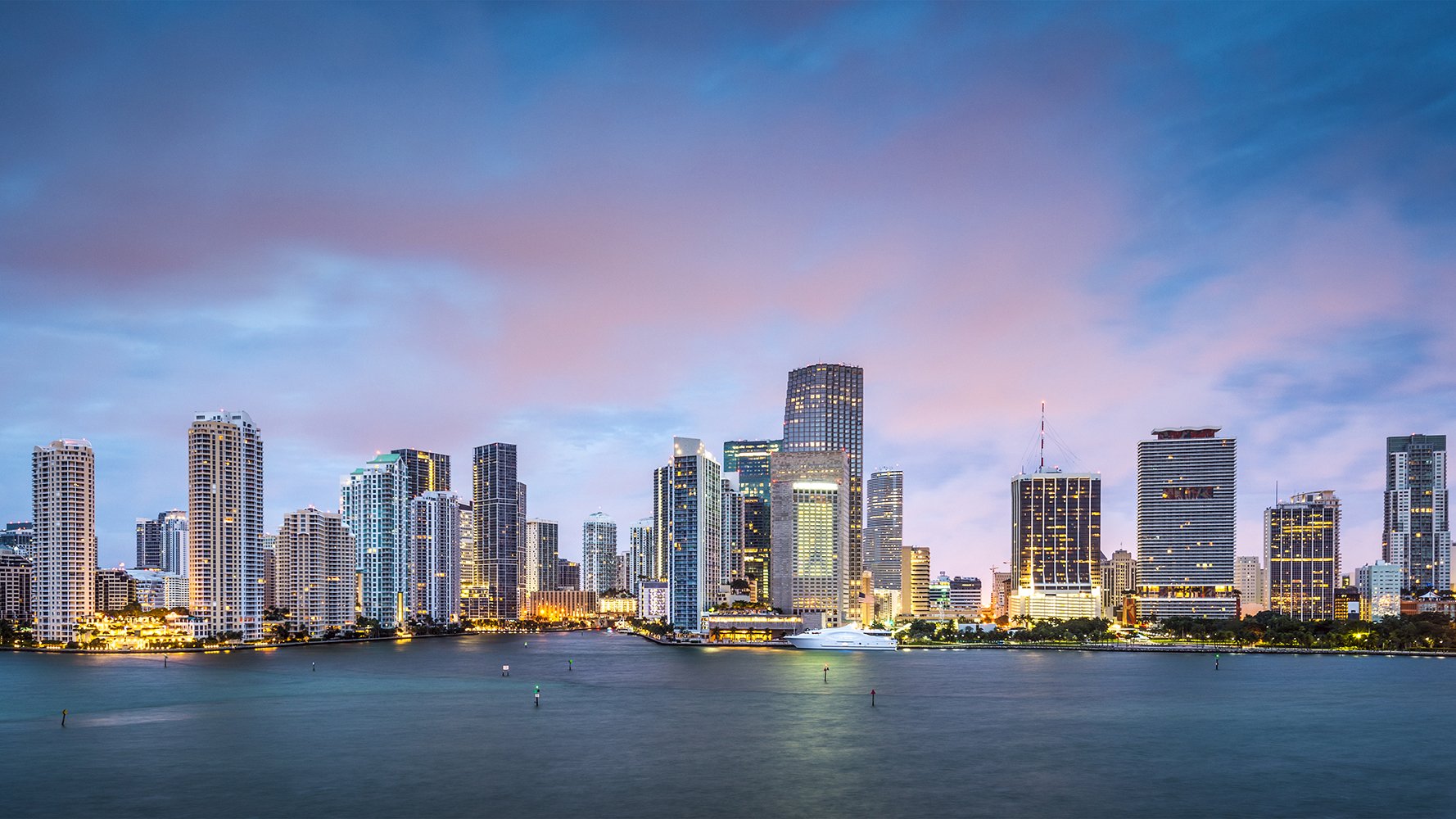
South Florida is never short on headlines, but serious buyers tend to track a more useful indicator: liquidity at the very top of the market. In the first nine months of 2025, the region recorded 262 sales of $10M+ properties. That pace points to roughly 426 ultra-luxury sales by year-end, near the 2021 record of 444. Volume at this level does not just signal demand. It clarifies where pricing is real, compresses the gap between aspiration and execution, and rewards the properties that are clearly best in class.
In practical terms, high-end velocity creates a sharper market. Buyers become more discriminating, and sellers with exceptional assets tend to hold pricing power, especially when quality is obvious on first inspection. The market is not indiscriminate. What is moving is the product with unmistakable advantages: siting, views, privacy, and a level of finish that reads as intentional rather than merely expensive.
MILLION Luxury has also stressed a nuance sophisticated buyers already understand: MLS-based snapshots can undercount condo activity. Many New-construction and Pre-construction transactions do not appear on the MLS because they are handled through developer sales channels, reservation systems, and private deal flow. As a result, the public-facing market can look smaller than it is, and sometimes slower than it is, particularly in the new-development segment.
The takeaway is not that everything sells. The takeaway is that exceptional product still clears, even when conditions require more discernment. This environment favors clarity and completeness: locations that make sense over decades, design that feels resolved, amenity programming that supports daily life, and buildings that feel composed rather than overproduced.
Luxury condo absorption in South Florida is being powered by two distinct, reinforcing buyer groups. The first is international demand that views Miami as both a lifestyle destination and a capital-preservation play. The second is a domestic cohort treating the region as a primary base, not simply a seasonal address.
Recent Miami Realtors reporting indicates that international buyers represent a majority of Miami new-construction condo buyers, with the global buyer share rising to about 52% and spanning 73 countries. The same report highlights notable concentration among buyers from Colombia and Mexico, alongside meaningful participation from Argentina, Brazil, Turkey, Peru, and Spain. That breadth matters because it spreads demand across multiple economic cycles and multiple geographies. In other words, the market is not reliant on a single country or a single trend.
At the same time, U.S. buyers remain highly consequential. MILLION Luxury market coverage cites domestic buyers at roughly 48% of new-construction luxury condo purchases in the referenced period. Many are re-underwriting major life decisions around Florida’s widely noted absence of a state individual income tax. For households with significant earned income, carried interest, or liquidity events, tax policy can be as influential as a skyline view or waterfront exposure.
Demographics reinforce the theme. Miami’s millionaire population has been reported to have risen about 94% over the last decade to around 39,000 as of 2024. Even if you never meet that entire cohort, you see its impact in the market’s behavior. Buyers are more decisive, more comfortable with branded living, and more focused on turnkey residences that do not require a multi-season renovation campaign to feel current.
The result is a deeper, more layered buyer pool. It is not simply bigger. It is more sophisticated in how it evaluates service, design, and long-term value, and it is more willing to pay for residences that reduce friction and protect time.
Luxury buyers have always cared about craftsmanship. What has changed is the definition of turnkey. Today, turnkey is not only about pristine finishes. It is about predictability and ease: modern systems, contemporary layouts, integrated amenity ecosystems, and an ownership experience that feels deliberate from arrival to daily operations.
National homebuyer research has found that many buyers prefer new homes for reasons that include modern features and reduced need for repairs or renovations. In South Florida, that preference is amplified by climate realities and lifestyle patterns. For buyers who split time across multiple residences, the appeal is straightforward: a home that is simple to lock and leave, supported by building services that function more like a private club than a conventional condo association.
This is also where branded towers become more than a logo. A strong brand can signal design coherence, hospitality cues, and a consistent standard of service. In contrast, resale inventory, even when large and beautifully finished, can struggle to match the sense of arrival and the operational clarity that a newly delivered, amenity-forward building is engineered to provide.
Downtown’s Aston Martin Residences Downtown Miami is frequently cited as a flagship example of this brand-driven thesis. It appeals to buyers seeking a globally legible address paired with the convenience of a new building and an amenity program designed to support modern luxury living.
None of this disqualifies legacy buildings. It simply resets the benchmark. If a resale residence is not unmistakably special, whether through rarity, renovation quality, or a truly irreplaceable position, it is now competing against a marketplace built around effortless ownership.
In South Florida, location has always been leverage. What is changing is how buyers use location in their daily lives. Brickell and Downtown are no longer evaluated only by proximity to offices or the business district. They are increasingly underwritten as complete lifestyle ecosystems where walkability, dining, wellness, and private services combine into a single ownership proposition.
Brickell’s current wave of high-end development is notable for how deliberately it targets a globally mobile buyer. Baccarat Residences Brickell reflects the broader branded-luxury momentum in the market. Buyers are not only purchasing square footage. They are buying into an identity, an expected service level, and a social cadence intended to feel consistent whether one is in Miami, New York, or Paris.
For buyers who prefer a more architectural, design-first posture, Una Residences Brickell has been positioned as a luxury new development option in the Brickell market. Its appeal aligns with demand for modern, high-finish residences and a cleaner, more contemporary lifestyle narrative.
These neighborhoods also illustrate the MLS undercount issue in real time. Some of the most competitive inventory transacts through channels that do not always show up quickly in public-facing data. For buyers, the implication is practical: if you are waiting to “see it on MLS,” you are often late to the decision.
It is also worth acknowledging the competitive pressure New-construction places on older stock. Market commentary has examined how new developments can influence resale condo dynamics in Miami, including increased competition for attention and pricing power. The resale properties that win today tend to do so by being one of two things: historically rare, or recently reinvented with a level of execution that stands up to new-build standards.
In this environment, Brickell and Downtown function as a proving ground. Buildings that deliver coherent design, strong operations, and true lifestyle infrastructure are defining what premium means in the core.
Miami-beach remains a global shorthand for leisure, design culture, and an elevated resort rhythm. Its luxury residential market behaves accordingly. The buyer profile often skews toward second-home ownership, entertainment, and proximity to hospitality. In that context, the winning proposition is less about raw size and more about experience: privacy, views, service, and a neighborhood cadence that fits an owner’s calendar.
This is where the condo conversation becomes especially precise. Buyers who value consistent standards and hotel-caliber operations often gravitate toward residences with hospitality DNA. Setai Residences Miami Beach fits naturally within this preference set, reflecting how Miami-beach luxury is frequently underwritten as an experience-led asset as much as a real estate decision.
Miami-beach also highlights why the boutique versus mega-development split matters. Some buyers want smaller resident populations, quieter lobbies, and a sense of being known. Others want a larger amenity ecosystem and a more club-like, campus feel. MILLION Luxury has explored this boutique versus mega-development divide as a defining theme in South Florida luxury condos, and Miami-beach is often where these preferences become clearest.
The broader point is that trophy markets are becoming more curated. Buyers are less willing to compromise on operations, privacy, or service continuity. They want a residence that performs day to day, not only during peak season.
A common misconception is that a growing pipeline automatically translates to more meaningful choice. In ultra-luxury, additional supply often produces more segmentation, not simply more options. South Florida saw about 320 new ultra-luxury residential units launched over the prior year, described as roughly a 10% increase from the previous year. That expansion signals developer confidence, but it also raises the stakes on differentiation.
Buyers should treat the pipeline as a filter, not a flood. The question is not how many towers are coming. The question is what is truly rare about a given building and whether that rarity will matter in five, ten, or twenty years. Evaluate the elements that cannot be easily replicated: siting, view corridors, privacy profile, resident-to-amenity ratio, design pedigree, and the long-term operational plan.
When those variables align, demand tends to remain durable even as additional inventory arrives. Conversely, when a building’s value proposition is generic, it can feel dated quickly in a market that is continually raising its own standards.
For many buyers, the decision now resembles portfolio construction. A primary residence may prioritize walkability, access to business, and cultural gravity. A second home may prioritize tranquility, service, and a more resort-oriented daily experience. In that framework, New-construction can function as a risk-management tool: fewer near-term capital projects, fewer unknowns in building systems, and a clearer baseline for maintenance.
The market’s paradox is simple. Supply can be expanding on paper, while truly premium homes remain scarce in practice. Scarcity, at the top, is less about unit count and more about irreplaceability.
Pre-construction can be compelling, but it is not interchangeable with a delivered home. The right choice depends on how you want to live, how you define risk, and how much uncertainty you are willing to manage.
Consider Pre-construction when your priority is selection. The appeal is the ability to choose exposure, elevation, and layout within the building’s stack logic, often with more control over positioning than the resale market can offer. For certain buyers, that control is worth the trade-off of time and the reality that the final product is experienced later.
Consider delivered New-construction when your priority is immediacy and verification. You can see the actual light, the finished materials, and the real operational culture of the property. The experience is tangible, which can be decisive for buyers who want to move quickly or who are unwilling to underwrite a residence based only on renderings and projected programming.
In both cases, treat the purchase as an assessment of three systems.
First, the building’s service model. Luxury is increasingly defined by staffing, operational discipline, and how the property feels on a normal Tuesday, not just on a holiday weekend. Evaluate how service is delivered, how residents are handled, and whether the building’s daily rhythm matches your expectations.
Second, the long-term competitiveness of the residence itself. The question is not whether the home is beautiful today. The question is whether it will remain desirable when the next wave of new towers arrives. Look for durable advantages, not temporary trends.
Third, the neighborhood’s trajectory. Brickell and Downtown continue to refine their identity as luxury cores, while Miami-beach remains trophy-driven and lifestyle-led. In all of these submarkets, the best decisions tend to be the ones anchored by enduring advantages that are difficult to replicate, even by the next generation of development.
Is the ultra-luxury market still active in South Florida? Yes. 2025 data showed 262 sales of $10M+ properties in the first nine months, putting the region on pace to approach prior peak territory.
Why do new-development condo sales feel hard to track? Because many New-construction and Pre-construction sales are not entered into the MLS, so public data can understate total condo activity.
Are international buyers still important in Miami new construction? Yes. Recent reporting indicates international buyers account for about 52% of Miami new-construction condo buyers, spanning 73 countries.
What is the practical difference between boutique and mega-developments? Boutique typically emphasizes privacy and a lower resident count, while mega-developments emphasize a larger amenity ecosystem and a more club-like campus feel.
For confidential guidance on evaluating New-construction and Pre-construction opportunities across Brickell, Downtown, and Miami-beach, connect with MILLION Luxury.
If branded residences are on your mind — as a home or as an allocation — we would be glad to share what we are seeing, privately.
Begin a quiet conversation