Private-island shopping in South Florida sits at the intersection of romance and regulation. Inventory exists, but it is thin and often marketed through portals and boutique channels; pricing spans widely, and the true differentiator is not just shoreline or sunset exposure, but what you can legally build, dock, insure, and maintain. This guide outlines the micro-markets most often associated with “island living” in the Florida Keys and Biscayne Bay, then translates the state’s ownership and permitting realities into a due-diligence framework. Finally, it offers a pragmatic option for buyers who want the island feel with a more predictable operational burden: the island-address residence in Miami’s most refined waterfront buildings.
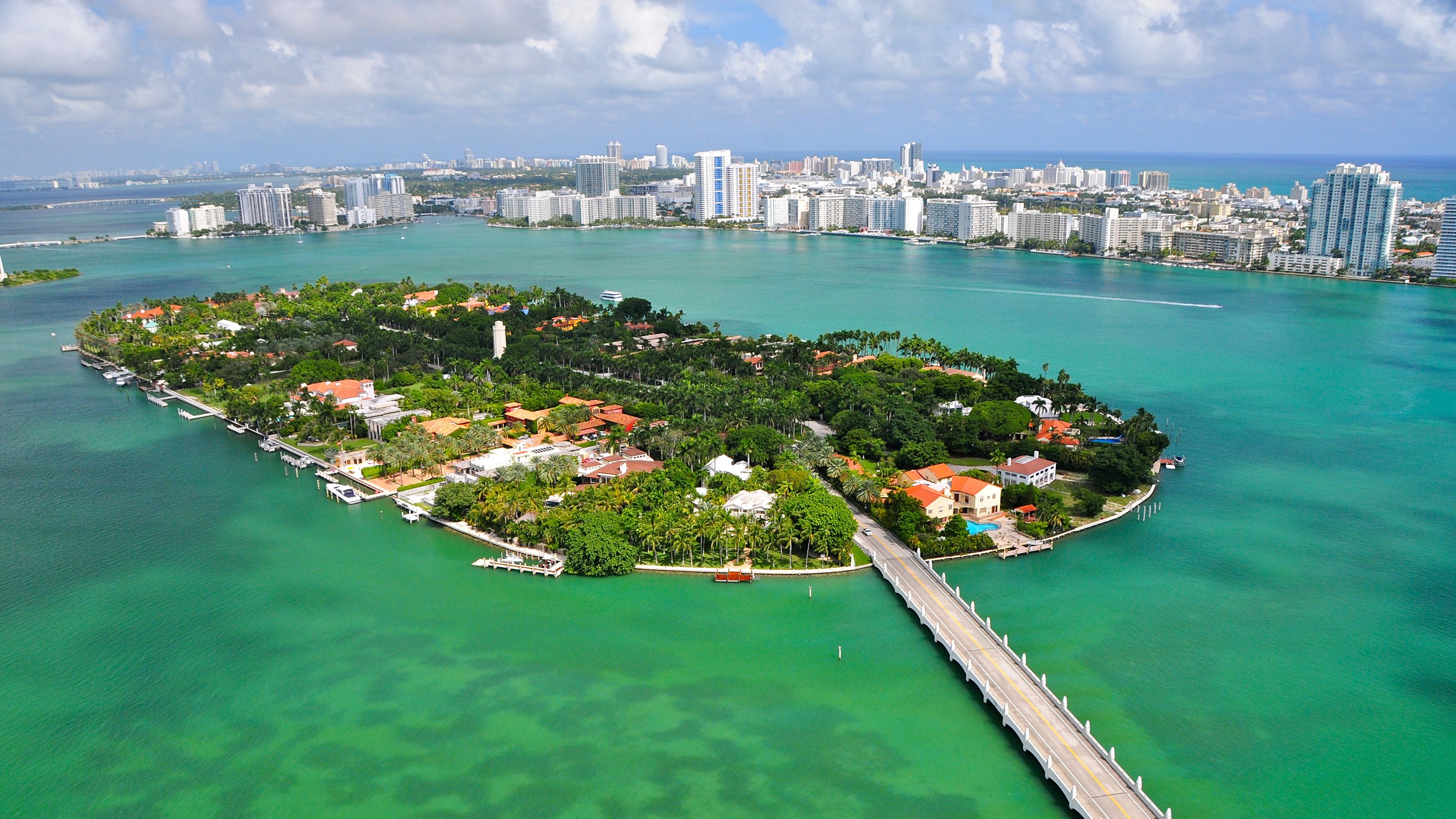
In South Florida, “private island” can describe three distinct realities, and each comes with a different ownership profile.
First is the true stand-alone island: a discrete parcel surrounded by water, often remote, sometimes undeveloped, and frequently shaped by environmental protections. Second is the private-island community: an established enclave with shared infrastructure, governance, and rules that can feel more like a gated neighborhood than a castaway fantasy. Third is the island-address alternative: living on an island city, or on an island-like waterfront footprint, with the privacy and water access buyers want, but within the operational consistency of a managed luxury building.
The appeal is immediate. Fewer neighbors. Wider horizon lines. The particular quiet that arrives when your driveway is water. What is less obvious is that the purchase price is only the entry point. The real decision is whether the island’s legal and physical realities fit your life: navigable depth, dock permissions, shoreline control, storm resilience, and how much time and discretion you want to devote to stewardship.
In this market, romance sells the idea, but regulation and logistics determine whether the idea works. The smartest buyers approach “island living” as a blend of lifestyle and feasibility, and they evaluate both with equal discipline.
Island inventory in Florida is consistently niche. Statewide marketplace snapshots have shown roughly 370 island listings at a time, with aggregated metrics indicating an average listing price around $2,009,552 and an average cost of about $625,533 per acre. Those figures work as a high-level barometer, not a guarantee. Islands vary dramatically by access, buildability, utilities, entitlements, and the rights that matter once you move from concept to construction.
Zoom into the Florida Keys and the selection tightens further. A Keys-focused “island” inventory view has shown on the order of a few dozen opportunities, which is why serious buyers treat timing, preparedness, and due diligence as real competitive advantages.
In practice, many shoppers monitor availability through major portals that maintain dedicated private-island filters for areas such as Key West and Miami Beach. Even when those portals feel more mainstream than bespoke, they serve an important role: a live pulse check of what is being marketed, how long offerings linger, and what the market is signaling about scarcity.
Because the universe of listings is small, the market can turn on details. A compelling shoreline is not the same as a usable shoreline. A dramatic aerial photo is not the same as insured, buildable, serviceable property. Inventory may be rare, but the differentiation is granular.
The Keys deliver the version of island life most buyers picture: turquoise shallows, offshore breezes, and a pace that feels decisively removed from the mainland. They also magnify every practical question: access, utilities, storm planning, and the permitting path for anything that touches shoreline or seabed.
Two established island-address enclaves off Key West appear repeatedly in buyer conversations.
Sunset Key is widely recognized as a private island community off Key West, with for-sale inventory often visible through major portals. This is an important distinction for buyers evaluating risk and workload. Buying into an existing island community can trade a measure of autonomy for predictability. There is often more clarity on access, rules, and neighborhood expectations, which matters for second-home owners and for buyers who prefer a defined operating environment.
Shark Key, near Key West and the Big Coppitt Key area, also maintains a distinct market identity, with active inventory commonly aggregated across multiple portals. The advantage of a known enclave is the ability to watch market behavior over time: how homes are positioned, how quickly they trade, and which features consistently command the premium.
For buyers drawn to a purer version of privacy, the Keys can occasionally surface opportunities that read like headlines. One widely reported example described a roughly 25-acre island near Marathon, known as Pretty Joe Rock or Sea Shell Key, that was reported as listed for $2.5 million in 2023. Listings like this capture attention because they are rare and cinematic. They also highlight the central buyer question: what, precisely, comes with the land, and what still requires negotiation, permits, or long timelines.
Islamorada’s vicinity has also seen marketed private-island opportunities framed as direct bay-front lots on a private island, with one such offering promoted at $5,995,000. Whether a buyer is considering a finished residence or a lot-level proposition, the same discipline applies: confirm access, utilities, and build rights in writing, then price your timeline and carrying costs accordingly.
In the Keys, the landscape is not just scenic. It is regulated. The best outcomes come from buyers who treat the island as a project with dependencies, and who underwrite those dependencies before falling in love with the view.
Not every island buyer wants distance. For many, the real luxury is proximity: being minutes from restaurants, schools, galleries, and private aviation, while still feeling insulated by water.
Biscayne Bay offers that hybrid. Grove Isle, in Coconut Grove, is a private island with a recognizable residential profile, and it sits close enough to Miami’s core to feel effortless. Here, island living is less about rugged independence and more about controlled access, curated waterfront views, and the ease that comes from a managed environment.
For buyers who want a contemporary expression of that lifestyle, Vita at Grove Isle remains part of the next-generation island-adjacent conversation. It has been marketed as a 65-residence project, a scale that suggests intimacy over volume, and it reinforces a key theme for ultra-premium buyers: securing privacy and bayfront calm without giving up the cadence and convenience of the Grove.
Elsewhere in Biscayne Bay, Bird Key has been promoted as a rare privately owned island opportunity, marketed as roughly four acres. Whether or not that type of asset aligns with your goals, it illustrates the Miami-area reality: “private island” often means scarce, highly specific, and as much about legal definition as it is about geography.
In this submarket, proximity is not a concession. It is part of the value proposition. The closer you are to the city’s advantages, the more the market tends to reward assets that deliver privacy without introducing uncertainty.
In South Florida, some of the most important parts of an island transaction sit just offshore.
A central concept for waterfront and island buyers is sovereign submerged lands, which are state-owned underwater lands. The practical takeaway is straightforward: the edge of your deed is not always the edge of your usable world. Docking, shoreline changes, and in-water improvements can involve state-managed lands and permissions. That can affect everything from the feasibility of a boat lift to the ability to repair or expand an aging dock.
Coastal construction regulation is another defining constraint. Florida law includes Coastal Construction Control Line provisions that can materially affect what can be built or modified along coastal shorelines and barrier areas. Even when a plan seems architecturally simple, the coastal framework can influence setbacks, elevation requirements, and the scope of permissible change.
Then there is the wetlands question, which is often where island fantasies meet a hard boundary. In South Florida, activities such as clearing, filling, dredging or excavation, or altering hydrology can trigger wetland impacts and permitting obligations. The practical implication is that “blank canvas” can be a misnomer. Before you value an island for what you want to do, value it for what you can do.
This is why sophisticated island buyers underwrite the project, not just the property. They treat survey work, environmental assessments, and early permitting conversations as part of acquisition, not as a post-closing phase that will somehow resolve itself.
Island ownership concentrates luxury and responsibility in the same view.
Storm vulnerability is not a theoretical risk. It is an operating condition. Long-form accounts of private island ownership often emphasize what seasoned coastal owners already know: after the sunset comes the checklist. You are not only buying a home; you are buying exposure to wind, surge, salt corrosion, and the logistics of repairs that may depend on marine access.
Even within established island communities, the day-to-day is different. Landscaping is harsher on plantings, mechanical systems live in salt air, and routine maintenance becomes more specialized. If the property is reachable only by boat, every service call must be scheduled and staged. If it is reachable by bridge, security and access control become defining parts of the experience.
Insurance and resilience planning carry outsized importance. Buyers should expect to spend time with advisors who understand coastal building requirements, flood considerations, and the practicalities of protecting a waterfront asset and keeping it functional.
The operational question is not whether an island can be maintained. It is whether the owner wants to maintain it. In ultra-premium decision-making, time is often the most expensive input.
For a meaningful share of South Florida’s ultra-premium buyers, the best “private island” choice is not an island at all.
Miami Beach can satisfy the emotional thesis: water on every side, a resort-grade lifestyle, and immediate proximity to dining and culture. Portals even maintain a Miami Beach private-island search filter, reflecting how the market segments exclusive island-like pockets and enclaves.
For buyers who prefer predictable services and a lock-and-leave posture, the modern luxury residence can deliver privacy without the full operational weight of stand-alone island ownership.
Consider what the building model can provide: professional management, staffed security, engineered resiliency standards typical of new construction, and amenities that replace the need to build your own infrastructure. The lifestyle remains maritime, but much of the complexity is outsourced.
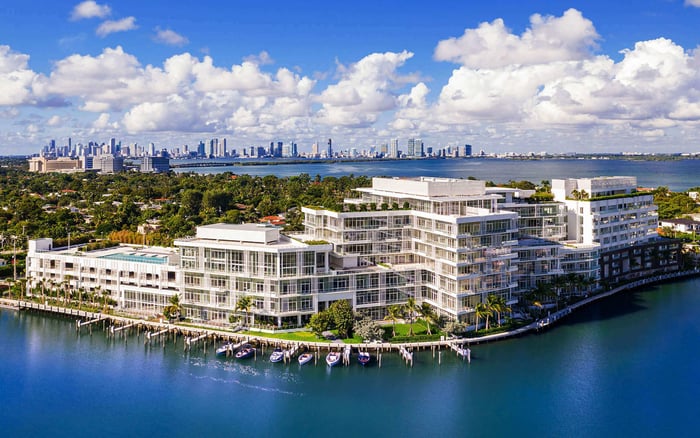
Within this framework, refined Miami Beach options such as Setai Residences Miami Beach speak to buyers who value a hospitality-caliber environment, while Shore Club Private Collections Miami Beach resonates for those seeking a more boutique, design-forward statement with the discretion of a curated collection. For a classic brand signature with a residential lens, The Ritz-Carlton Residences® Miami Beach offers a familiar promise: service, security, and an ownership experience designed to feel effortless.
For many, this is not a compromise. It is a strategic choice: capture the island sensation, protect your time, and preserve optionality.
Island transactions reward disciplined preparation. Before you commit to the horizon line, confirm the fundamentals.
Access and control: How do you reach the property in all weather, at all tides? Is access deeded, customary, or dependent on third parties?
Water depth and docking: Can your preferred vessel be accommodated today, and is the dock legal and maintainable? If you want modifications, what approvals are required?
Boundaries and what is truly owned: Understand how shoreline and submerged lands interact with your parcel, and what permissions govern in-water work.
Buildability and coastal constraints: Treat coastal construction rules as a core valuation factor, not a legal footnote.
Environmental conditions: Wetlands considerations can define what can be cleared, filled, or altered. Your timeline and budget should assume real-world permitting.
Lifestyle fit: Decide how much “private” you actually want. Total solitude is seductive, but managed privacy can be a better match for second-home ownership.
Coconut Grove buyers often arrive at this point quickly: a desire for water and discretion, paired with the reality that time is the ultimate luxury.
Is Florida a realistic place to buy a private island? Yes. Florida regularly shows meaningful island inventory statewide, but selection and quality narrow dramatically in the most coveted submarkets.
Are private-island listings in the Florida Keys common? They exist, but inventory is thin relative to the state overall. Many buyers track the Keys through portal filters and local specialists to stay current.
What is the biggest legal issue island buyers overlook? Misunderstanding what is privately owned versus what is governed as submerged lands, plus underestimating how coastal and wetlands rules can shape buildability.
Is an island community easier than a stand-alone island? Often, yes. A known island enclave can offer more clarity on access, infrastructure, and neighborhood norms, though it may come with additional rules.
What is the simplest way to get the island lifestyle near Miami? An island-address residence in a managed luxury building can deliver privacy, water, and services with fewer operational variables than stand-alone island ownership.
For tailored, discreet guidance on island and waterfront acquisitions in South Florida, connect with MILLION Luxury.
If branded residences are on your mind — as a home or as an allocation — we would be glad to share what we are seeing, privately.
Begin a quiet conversation