Florida’s property-insurance story is shifting from pure sticker shock to smarter structuring. For luxury buyers, the decisions now hinge on deductibles, flood strategy, condo master policies, and high-value coverage details that affect real out-of-pocket exposure.
In South Florida, insurance has moved from an administrative afterthought to a real pricing lever. It affects negotiations, financing timelines, and, for certain waterfront exposures, the long-term economics of ownership. For luxury buyers, it belongs in the same decision set as build quality, service levels, and amenity packages.
The market tone has also shifted. After several years of abrupt resets, there are early signs of stabilization. Florida’s Office of Insurance Regulation has received numerous filings that reflect either rate decreases or flat renewals. That does not make premiums inexpensive. It does, however, move the conversation from urgency to precision, where sophisticated buyers can structure coverage with intent.
For buyers evaluating Miami Beach and Downtown towers, or a second home in Brickell, the most consequential question is rarely the headline premium. The leverage is in the structure underneath it: hurricane deductibles, condo master policy terms, loss assessment exposure, and whether flood coverage is aligned to realistic replacement cost.
Florida’s average annual homeowners insurance premium has been reported around $3,815, including wind coverage, with a slower year-over-year increase than prior periods. Alongside that, recent filing activity has included both rate decreases and filings for 0 percent increases. For luxury buyers, the statewide average is less important than the signal: underwriting appetite and pricing may be gradually normalizing.
State leadership has publicly linked litigation and claims reforms to what officials describe as rate relief and increased insurer participation. Practically, high-net-worth clients may see more quote options than during the tightest part of the cycle, especially when a property presents strong mitigation characteristics.
Still, treat “stabilization” as a prompt to shop with discipline, not a reason to disengage. Luxury properties concentrate replacement-cost exposure. High-end interiors and shared amenities in iconic residential towers can create a dense risk profile that influences both association coverage and unit-level decisions.
For coastal Florida, the most misunderstood number on an insurance declaration page is often the hurricane deductible. Florida consumer guidance explains that insurers must offer hurricane deductible options of $500, 2 percent, 5 percent, or 10 percent of Coverage A, unless the percentage would be under $500. In many high-value scenarios, percentage-based choices are the practical reality.
Two nuances matter for luxury owners.
First, for dwellings insured at $250,000 or more (Coverage A), insurers do not have to offer the $500 hurricane deductible, but must offer 2 percent, 5 percent, or 10 percent. Second, for homes insured between $1 million and $3 million, insurers may offer 3 percent, 5 percent, and 10 percent hurricane deductible options instead of 2 percent, 5 percent, and 10 percent.
Those percentages can translate into six-figure out-of-pocket exposure from a single event. That is why luxury insurance planning is often capital management, not just compliance. Florida guidance also explains that once a hurricane deductible applies, no other deductible may be applied to the same loss. And if the hurricane deductible is not fully met by the first hurricane claim in a calendar year, the remainder carries forward to subsequent hurricane claims in that same year.
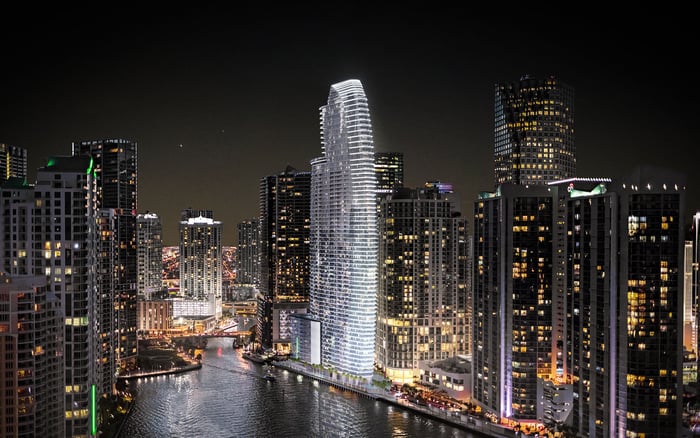
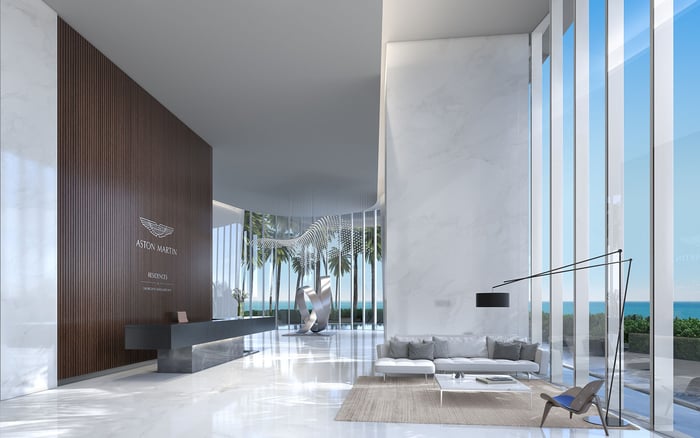
For new-construction buyers, the cleanest approach is to move beyond brochures and ask a simple set of questions: what is the insured value basis, and how does the deductible scale under worst-case assumptions? The answer matters whether you are underwriting a Downtown skyline view at Aston Martin Residences Downtown Miami or a beachfront lifestyle with complex shared systems.
Luxury buyers often choose condominiums for security, services, and simplicity. Insurance is the exception.
Condo insurance explainers focused on Brickell emphasize a split structure: the condominium association carries a master policy covering the building and common elements, while the owner carries an HO-6 policy covering interiors and personal property, typically with critical endorsements such as loss-assessment coverage.
This split creates two decision layers:
Association risk: The master policy’s limits, exclusions, and deductibles can influence special assessments after major losses. Hurricane deductibles in particular may be percentage-based and substantial.
Unit risk: The HO-6 must be aligned to the master policy’s definition of what is covered, especially around improvements and betterments, high-end finishes, and personal property that may exceed standard sublimits.
In practice, request the most recent insurance summary from the association during due diligence. The objective is not to critique the board. It is to quantify your personal exposure, including the possibility that the association’s deductible and coverage terms could translate into an assessment for owners after a named storm.
Miami Beach inventory can add another layer. Buildings closer to the ocean may face different underwriting scrutiny than those farther inland, and the pricing implications often appear at the association level first.
Standard homeowners insurance typically does not cover flood damage. That is why flood coverage is commonly purchased separately, either through the National Flood Insurance Program (NFIP) or private markets.
For luxury homes and premium condominiums, the issue is adequacy. NFIP flood coverage is commonly described as capped at $250,000 for the building and $100,000 for contents, figures that can be insufficient when replacement costs include high-value interiors, custom millwork, and elevated per-square-foot rebuild considerations.
Pricing is also more property-specific than many buyers expect. Florida-focused commentary notes that flood insurance costs can vary widely by risk, with higher outcomes associated with higher-risk zones and coastal exposure. FEMA’s Risk Rating 2.0 is widely cited as a driver of premium changes, shifting pricing toward property-specific risk factors. Commonly described inputs include flood frequency and type, distance to water, and elevation characteristics.
For buyers comparing Miami Beach addresses, the takeaway is not to generalize from a friend’s policy. Model multiple scenarios and decide whether the right solution is NFIP, private flood, or a layered approach that better matches luxury replacement economics.
A Florida-focused high-end insurance guide describes “high-value” homeowners insurance as designed for homes with higher replacement costs and coverage needs than standard homeowners policies. These policies are commonly positioned to include options like higher limits for valuables and broader protections than standard coverage.
Another Florida agency guide cites high-value home insurance pricing often ranging roughly from $2,000 to $10,000+ annually depending on location, rebuild cost, and risk profile. In the ultra-luxury segment, treat that range as directional. The point is not the number; it is the underwriting logic. High-value carriers tend to focus on build quality, mitigation, claims history, and the precision of the statement of values.
An investment mindset helps here. A policy that looks expensive can still be the better value if it reduces coverage friction, aligns deductibles to your liquidity preferences, and properly schedules valuables that would otherwise be capped.
A 2026 Florida insurance-law summary describes HB 815, effective July 1, 2026, as limiting insurers’ ability to deny or avoid renewal solely due to roof age, requiring more condition-based consideration. For luxury owners, this matters even if the roof is new, because it signals a broader tilt toward underwriting that emphasizes condition, documentation, and maintenance.
The same summary describes HB 459 as creating a structured process to resolve disputed property insurance claims before the Division of Administrative Hearings. This can matter most after major events, when claim volume is high and the need for an orderly resolution pathway becomes operational.
In Downtown, vertical luxury often means sophisticated building systems, extensive amenities, and interiors built to a high standard. Those features can elevate replacement-cost considerations, which then influence both association coverage and unit-level HO-6 decisions.
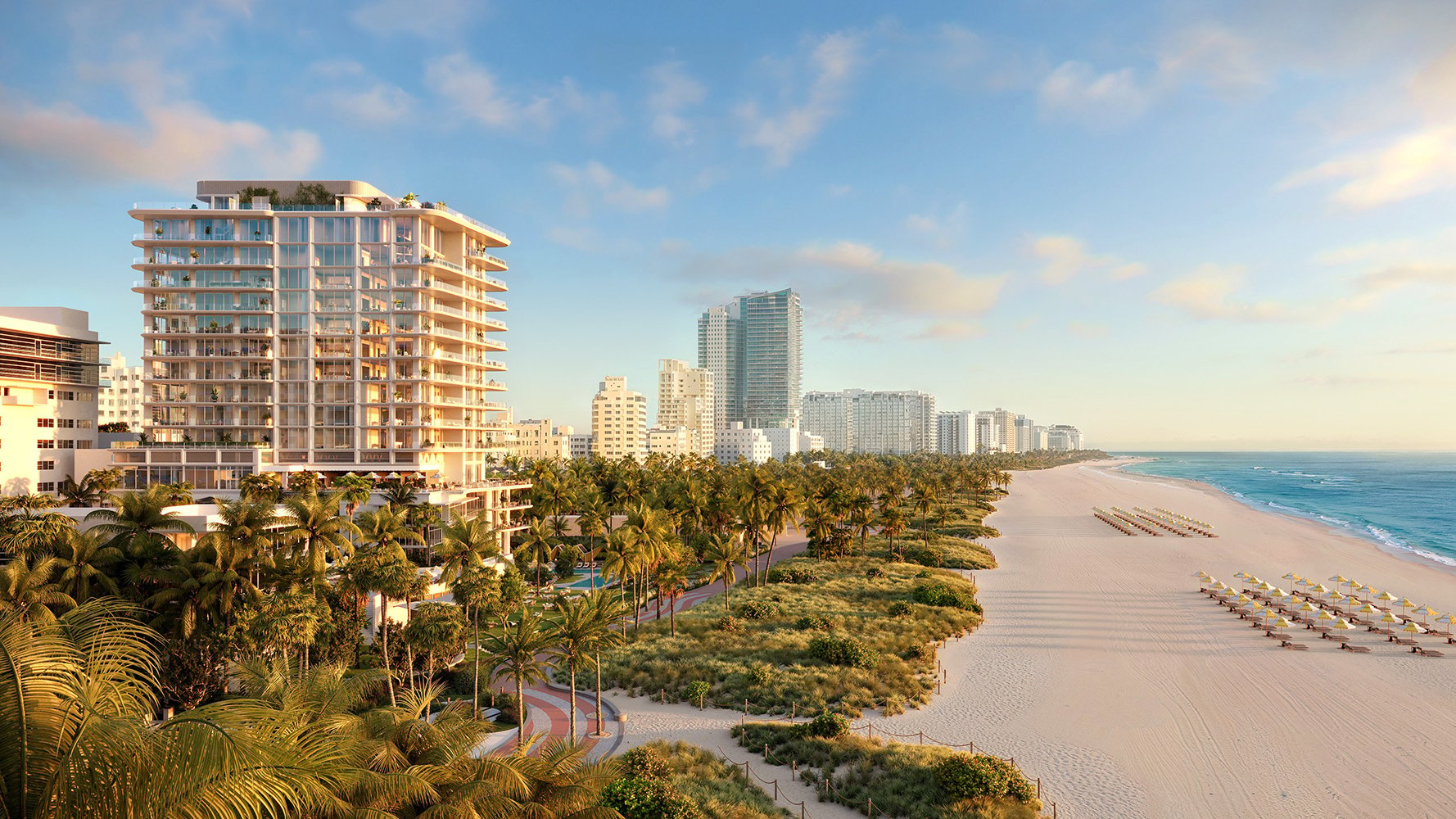
In Miami Beach, the equation often tilts toward wind and water proximity, plus the practical question of flood strategy. Buyers drawn to branded or service-forward living should still confirm how the building’s master policy is structured and what the owner is expected to insure inside the unit. A residence at Shore Club Private Collections Miami Beach reflects a particular lifestyle, but the diligence is the same.
Insurance also functions as a resale variable. A building with clear documentation, predictable deductibles, and a well-understood split between association and owner responsibilities tends to be easier to underwrite for future buyers.
If your short list includes well-known hospitality-adjacent product, use the process to clarify what is association risk versus personal risk. That applies whether you are evaluating Setai Residences Miami Beach or the more residential, low-density feel of boutique inventory. Similarly, a service-rich option like The Ritz-Carlton Residences® Miami Beach can simplify day-to-day living, but it does not eliminate the need to model loss-assessment exposure.
Luxury underwriting rewards clarity. Before you remove contingencies, align these items with your broker and advisor team:
This is where neighborhoods become practical filters: Brickell often highlights the master policy and HO-6 interplay; Downtown can emphasize dense replacement-cost exposure; Miami Beach tends to elevate flood and wind planning. If you are buying new-construction, you may start with a cleaner mitigation profile, but the deductible math still governs your true risk.
Are Florida home insurance premiums finally going down? Some insurers have filed for rate decreases and others for 0 percent increases, which suggests stabilization, but pricing remains property-specific.
What is a hurricane deductible in Florida? It is a special deductible that applies to hurricane losses, often expressed as a percentage of Coverage A rather than a flat dollar amount.
What deductible options must insurers offer? Florida guidance describes hurricane deductible options of $500, 2 percent, 5 percent, or 10 percent in many cases, with nuances based on insured value.
If my home is insured for $250,000+, can I still choose a $500 hurricane deductible? Insurers do not have to offer the $500 option for Coverage A at $250,000 or more, but they must offer 2 percent, 5 percent, or 10 percent.
What changes for homes insured between $1 million and $3 million? Insurers may offer 3 percent, 5 percent, and 10 percent hurricane deductible options instead of 2 percent, 5 percent, and 10 percent.
Can my insurer apply multiple deductibles to one hurricane loss? Florida guidance explains that once a hurricane deductible applies, no other deductible may be applied to the same loss.
If I have two hurricane claims in the same year, do I pay the full deductible twice? If the deductible is not fully met by the first hurricane claim in a calendar year, the remainder carries forward to subsequent hurricane claims in that year.
Does homeowners insurance usually cover flood damage? Typically it does not, which is why flood coverage is often purchased separately through NFIP or private markets.
Why can NFIP flood limits be a concern for luxury homes? NFIP coverage is commonly described as capped at $250,000 for the building and $100,000 for contents, which may not match luxury replacement costs.
Why do condo owners need HO-6 if the building has a master policy? The master policy generally covers common elements, while the HO-6 covers interiors and personal property, often with loss-assessment coverage to address certain shared-loss exposures.
For tailored guidance on South Florida luxury real estate decisions, connect with MILLION Luxury.
If branded residences are on your mind — as a home or as an allocation — we would be glad to share what we are seeing, privately.
Begin a quiet conversation