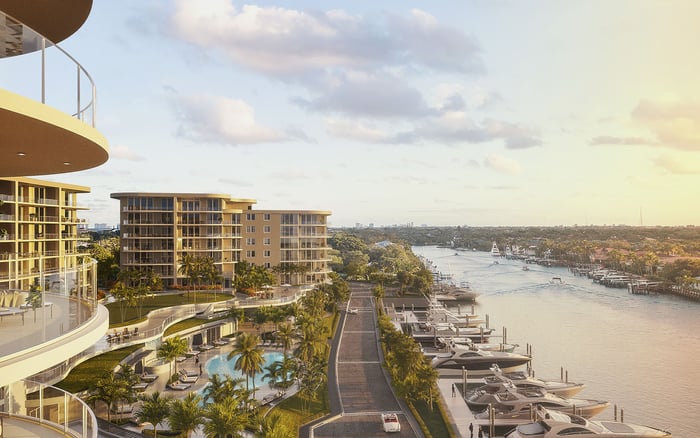
A discreet, buyer-oriented comparison of Coral Gables’ most coveted waterfront enclaves, from governance and gatekeeping to boating access and pricing signals.
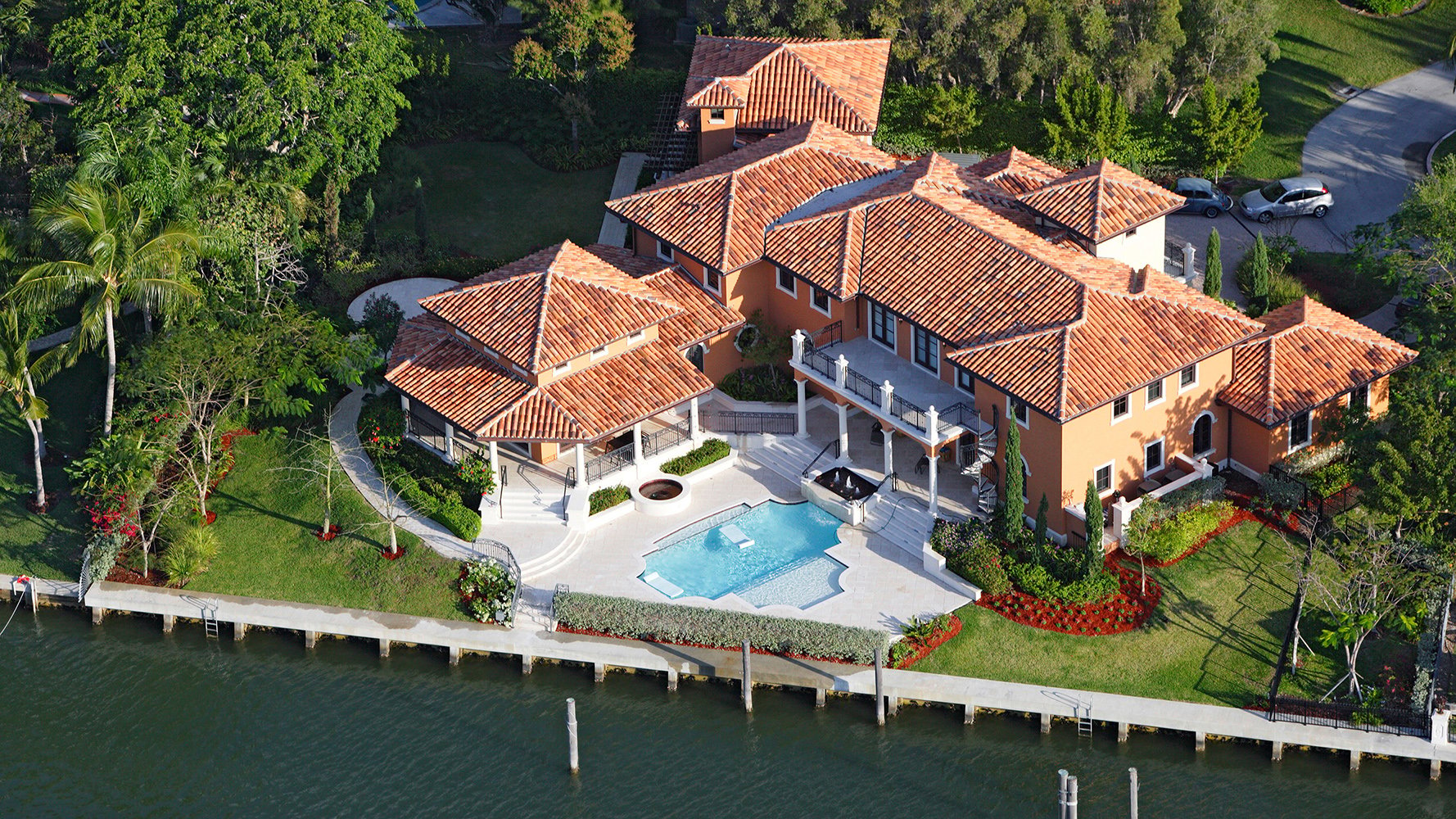
In Coral Gables, prestige is rarely just a function of square footage. It is shaped by governance, access, and a level of privacy that is built and maintained over decades. Two names consistently anchor that discussion: Gables Estates and Old Cutler Bay.
Both are waterfront-first, insulated from through-traffic, and closely tied to the Old Cutler Road corridor, where mature canopy and landscaped edges create a distinctly residential cadence. Both can produce true trophy transactions, including recent county standouts tied to addresses on Arvida Parkway in Gables Estates and Reinante Avenue in Old Cutler Bay.
Where they diverge is in the lived experience. One is widely framed as a club-like enclave with formal gatekeeping and membership costs. The other is often described as a large, boating-forward neighborhood with a lighter-touch association structure. If you are weighing security versus flexibility, or “legacy enclave” versus “quiet, practical waterfront,” these differences are not cosmetic. They affect how you buy, how you live, and how you eventually sell.
Model-based indices are not sale prices, but they can establish a starting range for expectations.
Zillow’s Home Value Index places Gables Estates at roughly $22.1 million, with about 4.5% year-over-year growth. Old Cutler Bay, by the same measure, sits around $11.0 million, with about 7.4% year-over-year growth. The right way to read this is as a spread between two luxury tiers, not as precise bid guidance. In neighborhoods with thin inventory and highly customized homes, an index works best as a temperature check, not a valuation.
The next layer is scarcity. Both enclaves are defined by limited turnover, and listings, when they appear, become part of the narrative. Track active waterfront availability over time, not just a single week’s snapshot, and you will get a clearer sense of whether the neighborhood is in a “patient seller” posture or a “quiet absorption” phase.
A practical framework: in Gables Estates, the premium is often tied as much to controlled access and established social infrastructure as it is to the improvements on any one parcel. In Old Cutler Bay, pricing can reflect meaningful water frontage and boating utility, but the governance model is generally less club-like. That distinction can materially change how different buyers calculate value.
Gables Estates is widely reported as privacy-first and intensely security-focused, with controlled access and surveillance. It has also been described as sponsor-driven, with applications involving references from current members. Public reporting further describes a substantial, nonrefundable membership application fee, along with ongoing annual dues.
That structure does two things at once. It introduces intentional friction, and it can reinforce shared expectations among residents. For a buyer who wants the social and security framework to be part of the asset, the “rules” may read as a feature rather than a cost.
Old Cutler Bay, by contrast, is commonly characterized by neighborhood scale and a waterfront orientation. A neighborhood profile places it at about 134 homes across roughly 150 acres, with the majority described as waterfront. The same profile notes it was established in the early 1960s and later shifted to a voluntary homeowners association structure in 1986. The headline is not the exact figures. It is the posture. The entry experience is typically less formalized than a membership-driven enclave.
For buyers who prioritize autonomy, or who prefer fewer layers between offer, closing, and occupancy, this difference can be decisive.
Waterfront can be visual, functional, or both. In these neighborhoods, the expectation is often that it is functional.
Old Cutler Bay is frequently highlighted for direct Biscayne Bay access without fixed-bridge restrictions. If you run a large center console or yacht, that detail affects everything from departure times to how you plan your day. This is where the boat-slip conversation shifts from “nice to have” to the daily-use test: can you leave when you want, return when you want, and keep the vessel you actually own, not the vessel that fits a constraint.
Gables Estates can deliver exceptional waterview conditions as well, but its value proposition is typically narrated through a different lens: ultra-controlled privacy, a guarded perimeter, and a reputation as one of the most expensive neighborhoods in the United States. For many buyers, that security and social architecture is the core amenity.
In either enclave, treat boating as a due diligence category, not a vibe. Seawalls, dock conditions, turning radius, and depth are property-specific. Still, the macro difference in “bridge freedom” can shape day-to-day enjoyment, particularly for owners who are on the water frequently.
Coral Gables has long been a story of planning and identity. The city’s origin is tied to founder and developer George Merrick, and it was incorporated in 1925. That planned-community DNA helps explain why micro-neighborhoods within Coral Gables can feel so distinct.
Old Cutler Road, with its celebrated tree canopy, reinforces a sense of separation from the rest of Miami-Dade. Even when you are minutes from major urban nodes, the approach feels quieter, landscaped, and intentionally slow. For buyers who want “city access” without “city texture,” this corridor effect is not a footnote. It is a lifestyle divider.
At the top end, momentum is rarely linear. It is episodic, driven by the right property meeting the right buyer. Even so, a few signals remain useful.
First, both neighborhoods are closely watched as bellwethers for Miami-Dade’s ultra-high-end single-family-homes segment. When trophy sales surface, they tend to influence sentiment on adjacent waterfront streets and support broader buyer confidence.
Second, public listing visibility matters because it shapes negotiation psychology. When one or two notable waterfront homes are actively marketed, buyers feel they have “options,” even if those options are imperfect. When inventory tightens and listings vanish, urgency can return quickly.
Finally, governance influences liquidity. A membership-driven entry process, as publicly reported in Gables Estates, can narrow the buyer pool by design. That can stabilize standards, but it can also elongate timelines. In a voluntary-association environment, as Old Cutler Bay is described to have, the pathway can feel more like a conventional luxury transaction, even if the homes themselves remain highly bespoke.
Gables Estates tends to fit the principal-residence buyer who wants maximum discretion, a hard perimeter, and the comfort of a highly curated community. If you treat security as an amenity and you are comfortable with formal entry requirements, the structure can read as a form of asset protection.
Old Cutler Bay tends to fit the buyer who wants serious waterfront utility with a more flexible neighborhood posture. If boating is frequent, if you value direct bay-access characteristics, and if you want an address that feels established but not club-governed, it can be a compelling match.
In both cases, the smartest underwriting goes beyond the home. Evaluate the operating environment: who controls access, how standards are enforced, and what day-to-day life feels like when the novelty fades.
Some buyers come to Coral Gables expecting an estate, then realize their real brief is lock-and-leave living with hospitality-grade service. In that scenario, Miami Beach can function as the counterpoint: higher convenience, less exterior maintenance, and a different social cadence.
For an oceanfront, design-forward lifestyle with strong service expectations, Shore Club Private Collections Miami Beach can resonate with buyers who want a polished arrival experience and a turnkey routine.
For those drawn to a branded environment with a global audience and a predictable standard of operations, Setai Residences Miami Beach can replace the “estate staff” model with a hospitality ecosystem.
If the priority is a quieter, residential-forward expression of luxury with a marquee flag, The Ritz-Carlton Residences® Miami Beach speaks to buyers who want consistency, privacy, and service without the overhead of a large waterfront parcel.
And when the brief is beachfront, boutique scale, and a more intimate feel, 57 Ocean Miami Beach is a useful reference point for how Miami Beach luxury continues to evolve beyond the largest towers.
The point is not that one is “better.” It is that the right asset class should match how you actually live: entertaining frequency, travel schedule, appetite for staffing, and tolerance for operational complexity.
Is Gables Estates truly considered one of the most expensive neighborhoods in the U.S.? It has been widely reported as the most expensive in the country, reinforcing its global trophy status.
What is the clearest difference between Gables Estates and Old Cutler Bay? Governance is the headline: Gables Estates is publicly described as membership-driven, while Old Cutler Bay is described as having a voluntary association structure.
Are the Zillow home values the same as market value? No. They are model-based indices that can help frame expectations, but they are not a substitute for property-specific pricing.
What do the current pricing signals look like? Zillow’s index is roughly $22.1M for Gables Estates and roughly $11.0M for Old Cutler Bay, with different year-over-year growth rates.
What should boat owners prioritize when touring homes? Treat docking as due diligence: access characteristics, maneuvering room, and practical usability for your vessel.
Is Old Cutler Bay known for easy bay access? It is often highlighted for direct Biscayne Bay access without fixed-bridge restrictions, which can be meaningful for larger boats.
Does Gables Estates have an added security premium? It is publicly described as guard-gated and heavily invested in controlled access and surveillance, which can command a premium for privacy-minded buyers.
How big is Old Cutler Bay? A neighborhood profile describes it as roughly 134 homes across about 150 acres, with most homes described as waterfront.
Why does Old Cutler Road matter to these neighborhoods? Its distinctive tree canopy and landscaped character reinforce a quiet, residential feel that many buyers value as part of the lifestyle.
If I want less maintenance than a waterfront estate, what is the alternative? A luxury condo with strong services, often in Miami Beach, can provide a lock-and-leave lifestyle with fewer operational demands.
Explore South Florida’s most discreet waterfront options with MILLION Luxury.
If branded residences are on your mind — as a home or as an allocation — we would be glad to share what we are seeing, privately.
Begin a quiet conversation