Discretion has become a feature, not a footnote, in South Florida’s $10M-plus real estate tier. From Miami Beach waterfront trophies that reportedly secure contracts within days to Palm Beach estates that quietly reset expectations after ambitious public pricing, the region’s most meaningful deals increasingly happen through curated access. This editorial lays out what “off-market” actually means, why it can tighten timelines and sharpen pricing dynamics, and how sophisticated buyers position themselves to see the right property at the right moment without compromising privacy.
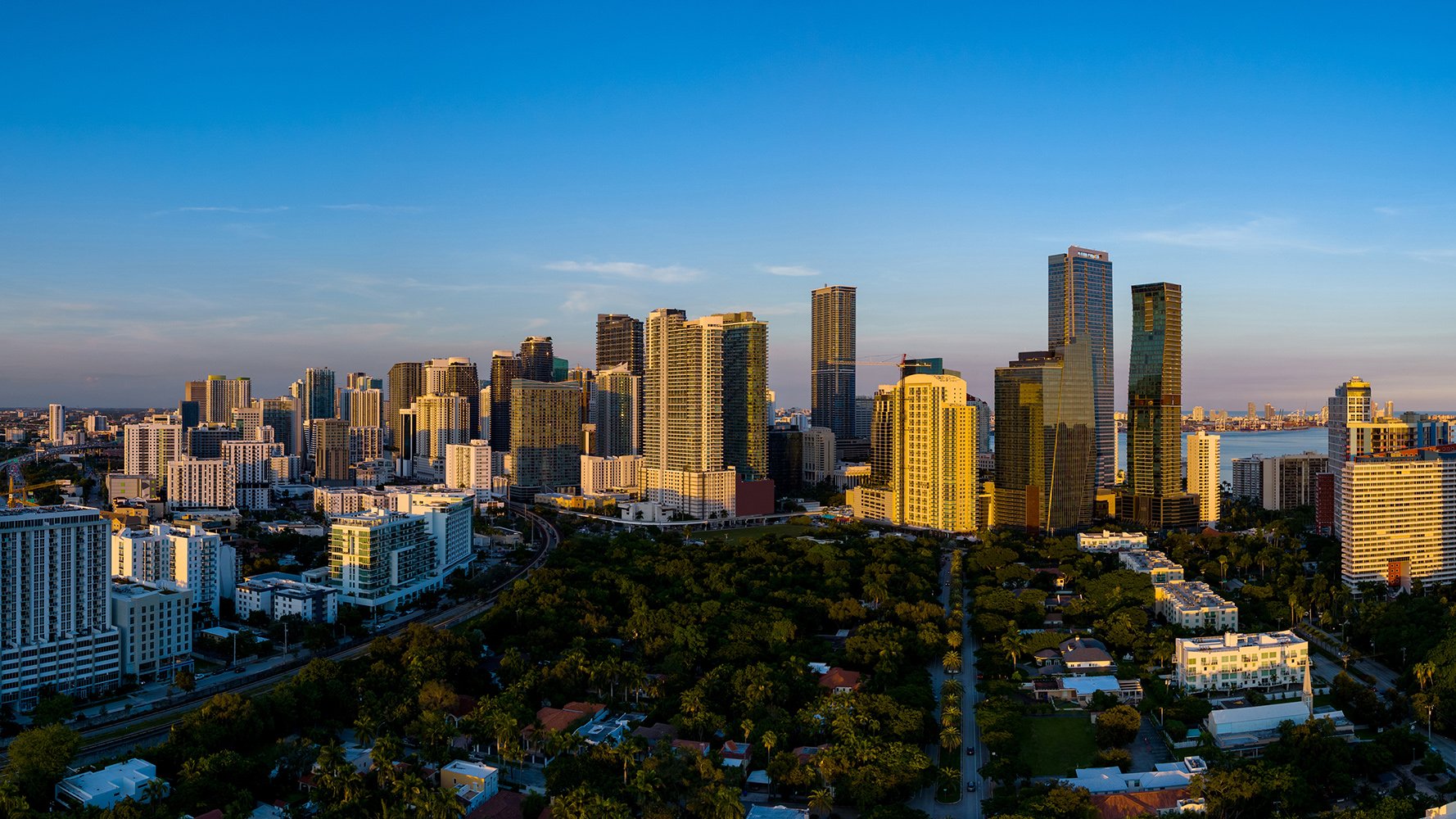
In South Florida, many of the most consequential transactions happen quietly. At the top of the market, “off-market” is less a special category than a standard operating mode: homes are shared privately, showings are controlled, and details move on a need-to-know basis.
That preference for discretion is not a signal of softness. It is a signal of depth. Across Miami-Dade, Broward, and Palm Beach, the tri-county ultra-luxury tier was projected to finish 2025 with roughly 426 sales at $10M-plus, approaching the 2021 record of 444. In a market with that level of activity, private marketing becomes a practical tool on both sides. Sellers protect privacy and security. Buyers get earlier visibility into limited inventory, often before a home ever develops a public “story.”
For anyone tracking Miami Beach and Palm Beach at the highest level, the shift is straightforward: marketing is increasingly relationship-based. The best opportunities tend to surface first inside a small circle of trusted advisors, then later, if at all, on public portals.
Off-market does not mean a home is invisible forever. Most of the time, it describes the marketing process, not the permanence of secrecy. A property may never appear on the MLS, yet the sale can still become public through recorded deeds and post-closing reporting.
In the ultra-luxury range, off-market typically includes one or more of the following realities:
The result is a market that can feel both quieter and faster. When access is limited, the decision cycle compresses. Buyers who need time to “see what else is out there” can miss the window. Buyers who arrive prepared, qualified, and decisive can secure rare inventory before it is widely shopped.
This is also why off-market can be misunderstood. It is not inherently secretive for secrecy’s sake. In many cases, it is a way to reduce noise, narrow the audience to serious parties, and keep the process efficient while protecting the seller’s lifestyle and the buyer’s privacy.
Three forces are pushing this trend from niche to normal.
Privacy and security. At $10M-plus, the buyer profile often includes business leaders, public figures, and international families. Many prefer that a home’s floor plan, security details, or even address not be promoted aggressively. In South Florida, where properties can be recognizable by location alone, discretion can be a rational safeguard, not a luxury.
Velocity at the top end. Ultra-prime homes can move quickly when distribution is limited and pricing is credible. In Miami-Dade, Homes.com reported that the county’s priciest 2025 sale, at 88 La Gorce Circle on Miami Beach, went under contract within 48 hours after limited showings. Speed like that has an obvious effect: it incentivizes sellers and buyers to work inside private channels where timelines are controlled and intent is screened early.
A more sophisticated negotiation environment. Trophy homes often come with complex considerations, including waterfront conditions, renovation appetite, and long-term estate planning. In that context, the seller may prefer private negotiation over a public price-discovery process. Quiet marketing also gives both sides room to discuss terms, access, and timing without the pressure that comes from a public listing narrative.
The fastest way to understand today’s off-market reality is to look at transactions that have been disclosed publicly after the fact.
A 48-hour contract on Miami Beach. The reported 88 La Gorce Circle transaction illustrates how scarcity and discretion can accelerate outcomes. Even when a deal is described as off-market, a trophy waterfront address can still be visible through widely used property portals. What matters for buyers is the mechanism: limited access compresses decision-making to days, not weeks. In practice, the “marketing” happens in a narrow lane, and the contract is secured before public awareness ever builds.
Palm Beach: private negotiation after public ambition. The Real Deal reported that British investor Pamela W. Starret sold an estate at 1460 N Lake Way for $72M in an off-market deal. The same reporting noted the home had previously been marketed at a higher ask, widely cited as $95M, before trading at $72M. The lesson is not that public marketing “failed.” At the top end, the public phase can function as a signal-setting exercise. The ultimate agreement is often found privately, where terms, timing, and discretion can be traded alongside price.
Lost Tree Village: scale without a listing trail. In North Palm Beach, William Wrigley Jr. reportedly sold a compound in the gated Lost Tree Village community for $97.5M. Reporting identified it as spanning 11465 and 11472 Old Harbour Road and characterized the trade as record-setting for the enclave. The South Florida Business Journal also covered the transaction at roughly $98M. For ultra-high-net-worth buyers, the takeaway is that “off-market” does not mean small, obscure, or secondary. It means controlled.
Miami’s benchmark sale still anchors expectations. A widely cited reference point for Miami-Dade’s single-family-homes tier is the reported $120M Star Island sale by Vladislav Doronin. Even as new deals arrive, benchmarks like this shape seller expectations and buyer psychology. They also reinforce why many sellers prefer privacy: a record sale creates a durable narrative, and not every seller wants their home positioned inside that spotlight.
Florida’s headline scale changes the national context. In 2025, three contiguous Port Royal waterfront estates in Naples reportedly sold for a combined $225M, spanning 2170, 2200, and 2340 Gordon Drive. Naples sits outside the tri-county region, but the message still lands in South Florida. Florida is competing at the highest global tier, and the most expensive transactions can happen with limited public marketing.
Celebrity demand can reset local ceilings. Realtor.com reported that The Weeknd bought a Coral Gables waterfront mansion in Gables Estates for $50M, described as the city’s priciest reported home sale. High-visibility buyers often prefer low-visibility processes. Over time, that preference normalizes off-market behavior for everyone operating in the same bracket.
Taken together, these examples illustrate a core reality: the whisper market is not a fringe channel. It is the architecture of how the ultra-luxury segment increasingly functions, especially when a property is singular and the seller values control.
In an off-market environment, the advantage is rarely about being first to “find” a property. It is about being first to be trusted.
1) Build a small, credible circle. Ultra-luxury access is relationship-based. Buyers represented by an advisor known to close discreetly and on schedule are more likely to be included in early conversations. The quiet market rewards reputation because reputation reduces risk for the seller.
2) Be prepared to qualify before you tour. In the whisper market, the initial gate is not always price. It is seriousness. Sellers and their representatives often want clarity on identity, timing, and ability to close before allowing a showing. The goal is to minimize foot traffic and maximize the likelihood that every tour is meaningful.
3) Treat terms as part of the currency. In private negotiations, terms can matter as much as price. Closing timeline, inspection scope, and privacy provisions are frequently negotiated to reduce friction. When marketing is controlled, the winner is often the buyer who can remove uncertainty without creating new exposure.
4) Know your “walk-away” framework in advance. A property that is not publicly marketed may not have a transparent comp set. Your decision discipline should come from pre-defined non-negotiables: waterfront orientation, land value logic, renovation tolerance, and long-term holding strategy. Without that framework, it is easy to either overpay under time pressure or hesitate until the opportunity disappears.
5) Expect information to arrive in layers. Off-market does not mean opaque, but it can be staged. A buyer may receive a short overview first, then more detail after a qualifying conversation, and full documentation only when intent is clear. This is not necessarily evasive. It is how a seller and their team manage risk while still advancing the process.
A sophisticated buyer treats this structure as part of the landscape. The goal is to be easy to work with: responsive, discreet, and ready to act when the property matches the brief.
Off-market is often associated with single-family estates, but the same discretion-driven logic is shaping the ultra-premium condo pipeline. Miami Association of Realtors reporting has highlighted that international buyers account for a substantial share of South Florida new-construction activity, which helps explain why luxury towers increasingly operate like private clubs during the sales process.
For buyers who value privacy, security, and turnkey execution, new-construction can offer a cleaner path than competing for legacy waterfront inventory. Negotiations are often more standardized, and due diligence can feel more structured, but access can still be curated, especially for the most desirable lines, high floors, or signature residences.
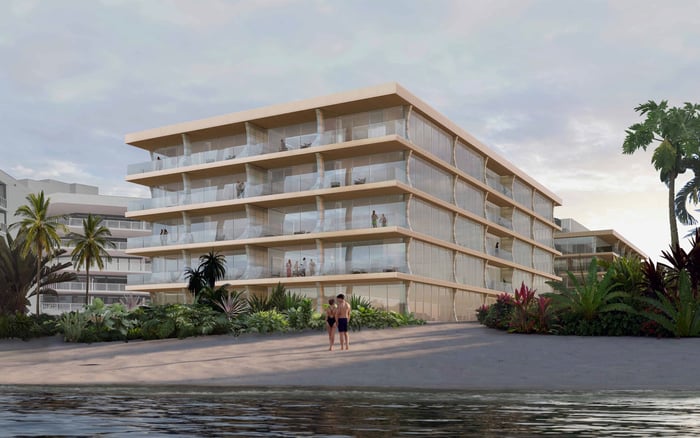
In Miami Beach, this can mean pursuing a lifestyle-forward tower such as Five Park Miami Beach, or leaning into a more heritage hospitality ecosystem through Setai Residences Miami Beach. For buyers who prioritize a classic branded-services experience, The Ritz-Carlton Residences® Miami Beach positions ownership inside a globally recognized standard of management and privacy.
The practical point is not that new-construction is “more private” by default. It is that the process can be easier to control, which aligns with the same motives that drive off-market single-family sales.
Certain submarkets in South Florida amplify the advantages of private marketing.
Miami Beach waterfront corridors. Here, security, visibility, and scarcity converge. Trophy homes can draw attention simply by being listed, which motivates many sellers to keep distribution controlled. The reported speed of the 88 La Gorce Circle deal captures the reality: when inventory is thin and buyers are qualified, the market does not require public exposure to transact.
Palm Beach estate rows and gated enclaves. The Starret and Wrigley examples show how Palm Beach’s top tier can blend old-world discretion with modern liquidity. The buyer pool may be smaller, but it is decisive, and the process often favors confidentiality.
Boutique Miami Beach collections. A buyer who values privacy may prefer a limited-residence building where ownership feels more residential than resort. In that context, Shore Club Private Collections Miami Beach speaks to a market preference that mirrors the whisper trend: fewer residences, more control, and a quieter arrival.
Across these neighborhoods, discretion is not a marketing flourish. It is a functional response to visibility, security, and the reality that the best inventory is finite.
Off-market is not inherently pro-seller or pro-buyer. It changes the texture of leverage.
In a public listing, leverage often comes from visibility: more traffic, more feedback, and a clearer picture of demand. In private marketing, leverage comes from selectivity: fewer participants, faster timelines, and a negotiated exchange of certainty, privacy, and terms.
When it favors sellers:
When it favors buyers:
The most sophisticated outcomes happen when both parties view discretion as a shared benefit, not a bargaining chip. In that setting, the negotiation can be more efficient, and the final agreement often reflects a broader definition of value than price alone.
South Florida’s ultra-luxury market has not become less transparent. It has become more selective about where transparency starts. Many of the most important deals still become visible after closing, but the opportunity to compete for them happens earlier, in smaller rooms, and through trusted channels.
For buyers, the winning strategy is not aggressive visibility. It is calm readiness: clear criteria, credible representation, and the ability to act decisively when the right home appears. In a whisper market, patience and preparedness are not opposites. They are the same discipline applied at different moments.
Is an off-market home always a better deal? Not necessarily. Off-market can reduce public price pressure, but singular homes can still command premium pricing when demand is concentrated.
How do I access the whisper market without overexposing my interest? Work through a trusted representative, qualify early, and keep communication tight. Discretion is often reciprocated.
Do off-market deals ever become public? Yes. Even if marketing is private, many sales become publicly known after closing through recorded documents and media reporting.
Should I consider New-construction if I want privacy? Often yes. New-construction can offer controlled access, security, and standardized due diligence, especially in branded buildings.
To explore discreet access across South Florida’s top addresses, connect with MILLION Luxury.
If branded residences are on your mind — as a home or as an allocation — we would be glad to share what we are seeing, privately.
Begin a quiet conversation