A buyer-oriented look at the Faena District on Collins Avenue, where culture, hospitality, and ultra-luxury residences converge into a walkable oceanfront enclave.
Luxury real estate on Miami Beach has always priced proximity: to the sand, to dining, to nightlife, and to the kind of private calm that makes a second home feel restorative rather than performative. What the Faena District introduced is a more curated version of that idea, where proximity is engineered through an intentional mix of culture, hospitality, and residential living inside a compact, walkable oceanfront pocket on Collins Avenue. It is commonly described as spanning roughly 32nd to 36th Streets, and it trades on that tight footprint.
For buyers who already understand the Miami Beach premium, the district reads less like a single building story and more like a lifestyle system. You are not simply purchasing a view corridor or a neighborhood label. You are buying into an edited environment where the hotel, venues, and residences reinforce one another and create a cohesive sense of place. The effect can feel closer to a European resort district than to a typical run of beachfront towers, not because of any single amenity, but because of the way the pieces are designed to work together.
In practical terms, that cohesion matters when you live in a market that is constantly evolving. New buildings arrive, restaurant scenes shift, and certain corridors change tone with each season. A district that feels authored tends to keep its identity clearer through those shifts, which is a meaningful advantage for an ultra-premium buyer who cares about long-term desirability as much as immediate enjoyment.
The Faena District is frequently framed as purpose-built. Hospitality and residences sit alongside arts programming, dining, and event spaces that keep the area active beyond peak weekends. That matters because Miami Beach can be seasonal in the way it moves, with noticeable changes in energy from one month to the next. An ecosystem helps smooth those peaks and valleys by making the neighborhood itself a destination.
At the center is Faena Hotel Miami Beach, a luxury resort on Collins Avenue. Public descriptions of the hotel note 169 guestrooms and suites, and the property has earned a Forbes Travel Guide Five-Star rating. In residential terms, that level of hospitality is not a nice-to-have. It becomes the service benchmark for the immediate area, setting expectations for everything from arrival rituals to staffing depth, response time, and the baseline quality of daily operations.
The hotel’s interiors were developed under Alan Faena’s creative direction, with widely covered creative involvement from filmmaker Baz Luhrmann and designer Catherine Martin. Even if a buyer never checks in, the design language performs a real function: it establishes a tone for the district that is unmistakable and difficult to replicate. In ultra-prime markets, differentiation is not just marketing. It is a tangible asset that can influence how an address is perceived, remembered, and compared.
The result is a neighborhood experience that can feel coordinated rather than accidental. For a buyer evaluating Miami Beach at the top end of the market, the distinction between a corridor that is merely convenient and one that is intentionally composed is often the distinction that justifies the premium.
In many luxury districts, art shows up as decoration: a sculpture in a lobby, a mural by the pool, a rotating display that reads as ambience. In the Faena District, art is positioned as infrastructure, with dedicated space and ongoing programming that function as anchors for the broader lifestyle.
Faena Forum, designed by OMA and associated with Rem Koolhaas, serves as a cultural and events centerpiece. Design coverage often describes it as a striking white structure organized around a dramatic circular volume used for exhibitions, performances, and large-scale gatherings. That degree of architectural intent matters. When culture is housed in purpose-built, architecturally significant space, it becomes predictable rather than sporadic, and predictability is a core ingredient in sustained desirability.
Faena’s art programming also includes initiatives such as experimental installation platforms, reinforcing the idea that the district is built to host cultural moments, not merely borrow them during major weeks. For owners, the value is not only access to events. It is the feeling that the neighborhood stays active, edited, and relevant even when the broader market is quieter.
From a buyer’s perspective, culture can be a value driver because it shapes the cadence of daily life. It influences who spends time in the area, what kinds of gatherings occur, and how the district is talked about internationally. Those softer signals can translate into harder outcomes: stronger address recognition, more consistent demand, and a clearer positioning within the South Florida luxury landscape.
A Forbes Travel Guide Five-Star rating, along with strong placements in major travel rankings, can look like a hotel story on the surface. In a district like this, the ripple effects are residential.
First, top-tier hospitality draws a specific guest and member profile. Over time, that tends to raise the bar for the adjacent retail and dining mix, because operators calibrate to the expectations of that audience. Second, it builds international familiarity. Buyers who split time among global cities often rely on a short list of brands and districts that consistently deliver, and recognizable hospitality credibility helps shorten the decision cycle. Third, it affects local service culture: staffing, vendors, and day-to-day standards nearby often align to the higher benchmark.
This is why a hotel-first district can become a residential magnet. For some households, it is the simplest way to secure five-star hospitality in a home context without turning the residence itself into a full-time operational project. The service is close, proven, and already part of the neighborhood’s DNA.
When evaluating the district, it can be useful to read hospitality signals as real estate signals. They are not substitutes for due diligence on a specific building, but they often explain why certain pockets of Miami Beach maintain strong positioning across cycles.
If the district is the ecosystem, Faena House Miami Beach is one of its clearest residential expressions.
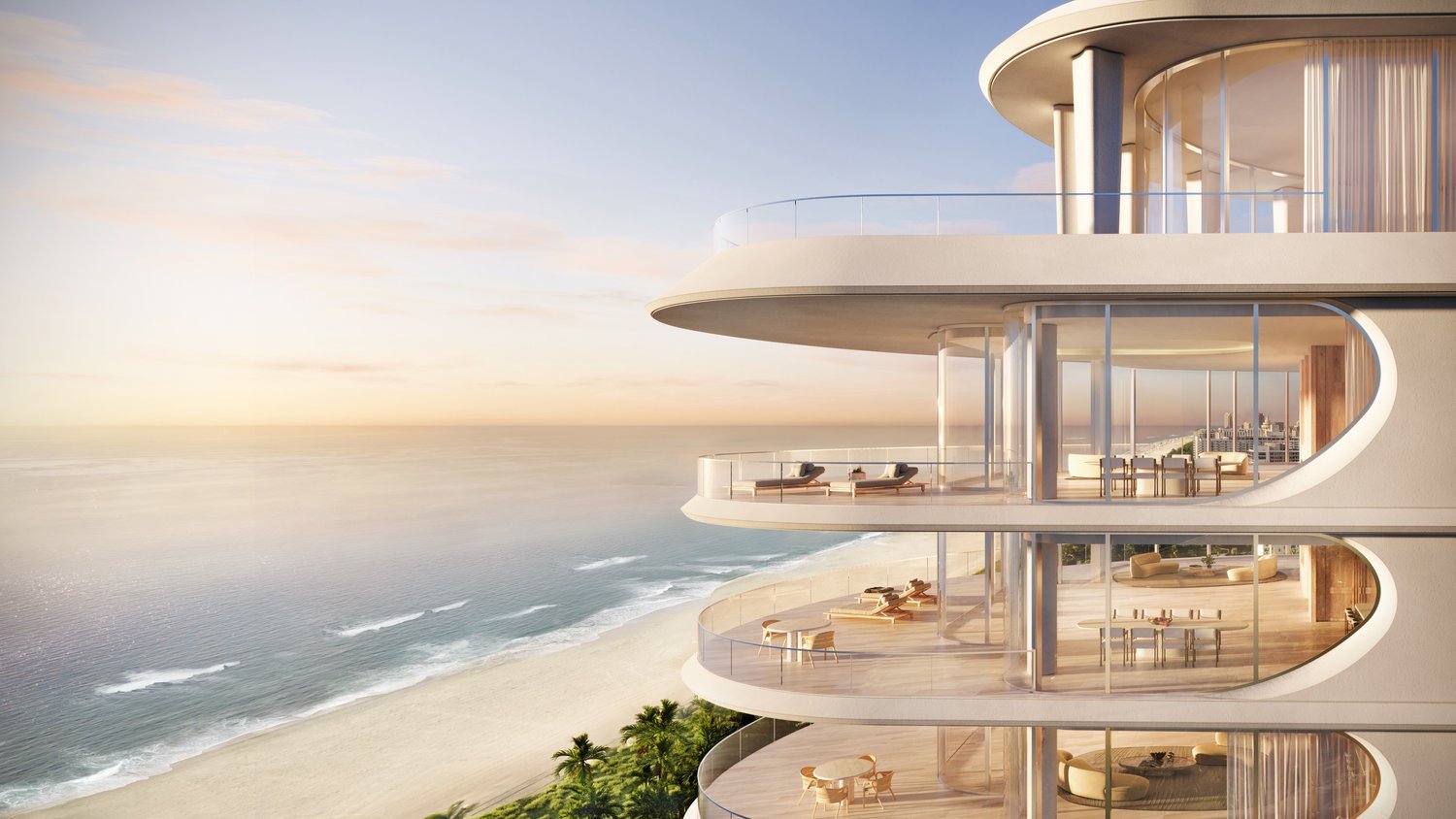
Faena House is located at 3315 Collins Avenue and is positioned as part of the Faena District. It was designed by Foster + Partners as an 18-story oceanfront residential building. Market summaries typically cite approximately the mid-40s residences, with figures varying by source. That variability itself reinforces a key point: scarcity is part of the building’s identity, and limited inventory tends to shape how availability, pricing, and buyer urgency play out over time.
This is the kind of tower that appeals to buyers who treat architecture as a filter. In a market where many condos compete on finishes and amenity lists, authorship can become the deciding factor. For collectors of design, coherence matters: the logic of the façade, the experience of arrival, the sense that the building expresses a point of view rather than a generic luxury template.
Faena House has also been associated with a widely reported $60 million penthouse sale, described as record-breaking at the time for a Miami Beach condo. Even when a buyer is not competing at that price point, record sales influence perception. Perception then influences behavior: how firmly owners hold pricing, how quickly listings move when they do appear, and how confidently the market speaks about the address.
For buyers who prioritize rarity, the combination of oceanfront positioning, design pedigree, and limited supply can be compelling. It is not a building that needs to be everything to everyone. Its strength is that it does not try to be.
Faena markets Penthouse Residences as hotel-serviced ultra-luxury living with access to hotel amenities. The concept is straightforward, but it is often misunderstood. The goal is not to live inside a hotel. The goal is to live with optionality.
Owners in this category often travel frequently, entertain intermittently, and maintain multiple homes. They value privacy and control, but they also value frictionless support when needed. A hotel-serviced residential framework can offer that balance, particularly when it is anchored by a hospitality operation that has already proven itself at the top tier.
For buyers comparing serviced living across Miami Beach, it helps to look beyond the word “amenities” and ask what sits behind them. Staffing depth matters. Operating consistency matters. So does whether the building’s identity remains stable across market cycles, because the best serviced experiences are not just about having options, but about those options being reliably executed.
In other words, the question is not only what you can access, but how the access works in day-to-day life. The district’s appeal is that service is part of the environment, not a one-off feature that requires constant coordination.
In luxury real estate, marketing often leans heavily on views and finishes. Daily life is what makes an owner stay, return, and use the home the way it was intended.
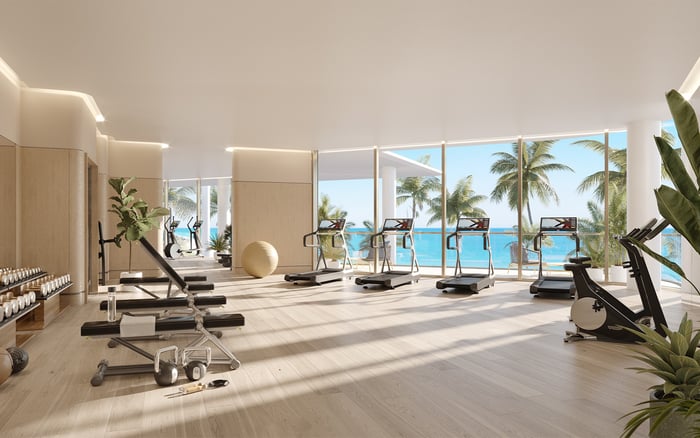
Faena Hotel Miami Beach’s wellness anchor is Tierra Santa Healing House, described as a 22,000 square foot spa and wellness facility. Size is not the only point, but it signals capacity. A wellness facility of that scale can support a broader menu and a more immersive approach, which matters to buyers who treat wellness as routine rather than occasional indulgence.
On the dining side, the district includes Los Fuegos by Francis Mallmann and Pao by Paul Qui. Signature restaurants do more than offer reservations. They create an address with a social rhythm, which can be a subtle but powerful driver of lifestyle satisfaction. In practice, it reduces the need to leave the neighborhood for a high-quality evening, and that walkable convenience is one of the reasons curated districts can retain value.
For a buyer comparing Miami Beach options, these daily-life differentiators can be more meaningful than the headline amenities that look impressive but rarely get used. The Faena District’s positioning is that the everyday is already elevated and that the district itself is part of the amenity set.
No buyer makes a decision in a vacuum. The Faena District competes with other Miami Beach experiences that emphasize privacy, service, and proximity, each with its own angle and audience.
For a more classic, hospitality-adjacent ownership proposition, Setai Residences Miami Beach speaks to buyers who prioritize refined resort sensibility and centrality. For those seeking a newer residential statement that still keeps you close to the beach and to the city’s momentum, Five Park Miami Beach enters the conversation as an option associated with contemporary planning and an updated amenity mindset.
Meanwhile, Casa Cipriani Miami Beach represents a different kind of draw: brand-coded privacy and social membership energy, where dining and club culture can be integral to the residential experience.
The takeaway is not that one is “better.” It is that Miami Beach has matured into a set of micro-districts where buyers can select not only a building, but a way of living. The best fit is the one whose cadence matches your priorities: quiet versus social, design-led versus resort-led, or culture-forward versus purely residential.
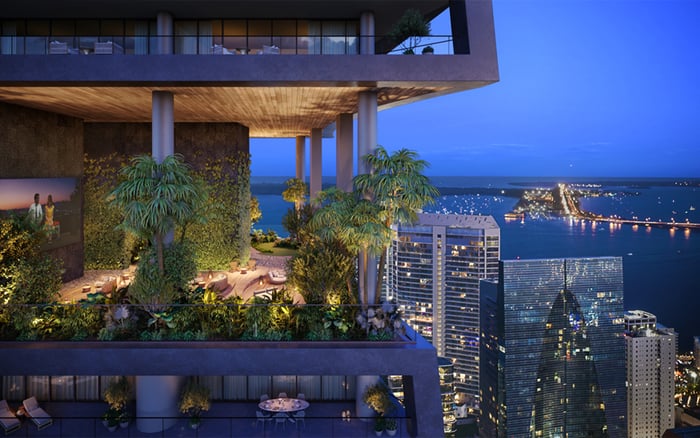
The Faena platform is also expanding in Miami through Faena Residences Miami, promoted as a major new residential and cultural project on the Miami River. Project materials describe two towers connected by a Sky Bridge feature.
For Miami Beach buyers, that matters even if you never plan to own on the river. Brand expansion can reinforce the strength of the original district by increasing visibility, building operational scale, and sustaining cultural programming across a broader network. It can also clarify the brand’s long-term commitment to South Florida, which is a meaningful signal when you are making a long-hold decision.
For those evaluating how the brand’s trajectory is being interpreted beyond the beach context, Faena Residences Miami Downtown Miami offers a direct window into the thesis as it is presented on the mainland.
For an ultra-premium buyer, the Faena District tends to resonate in three scenarios.
First is the cultural buyer who values programmed experiences, architecture, and design narrative as part of everyday life. Second is the service buyer who wants hotel-level staffing and operational rigor close at hand. Third is the lifestyle optimizer who wants a walkable routine, minimizing time spent in traffic and maximizing the ability to make spontaneous decisions without logistical friction.
When evaluating any address in or near the district, consider:
Service reality versus brochure language. Ask what is truly available day to day, and how it functions in practice.
Sound and energy. A cultural enclave can be vibrant. Make sure the cadence fits your tolerance for activity.
Long-term identity. The district’s strength is coherence. Favor residences that feel aligned with that coherence rather than merely adjacent.
And finally, liquidity psychology. Buildings associated with architectural authorship, purposeful scarcity, and major-record sales often behave differently in a correction. They may not be immune, but they can be more disciplined, with owners who are less likely to compete on price as the first lever.
If the Faena District is on your shortlist, treat it as a lifestyle purchase that happens to be real estate. The value proposition is the total environment: a concentrated walkable pocket where hospitality, culture, wellness, and architecture are designed to reinforce one another.
Is the Faena District a formally defined neighborhood? It is commonly described as a Collins Avenue stretch around the low-to-mid 30s Streets, functioning as a recognizable enclave rather than a legally fixed boundary.
How large is Faena Hotel Miami Beach? Public descriptions note 169 guestrooms and suites.
What makes Faena House Miami Beach distinct? It is an oceanfront, 18-story residential building designed by Foster + Partners, widely associated with ultra-scarce inventory and headline-making sales.
Is wellness a central part of the district experience? Yes. The hotel’s Tierra Santa Healing House is described as a 22,000 square foot wellness facility, giving the district an unusually robust wellness anchor.
To explore discreet opportunities across Miami Beach and beyond, connect with MILLION Luxury.
If branded residences are on your mind — as a home or as an allocation — we would be glad to share what we are seeing, privately.
Begin a quiet conversation