A discreet, practical guide for technology-sector buyers evaluating South Florida preconstruction condos, from neighborhood fit and contract discipline to lifestyle, design, and long-term ownership.

For a Silicon Valley buyer, South Florida is rarely a single-purpose decision. It is not just a tax conversation, a weather preference, or the appeal of a better view from a video call. At the upper end of the market, choosing a preconstruction condo is a design problem: how should capital, time, privacy, wellness, family logistics, and future flexibility come together in one residence?
That is why the best purchase is seldom the loudest one. It is the one that fits a precise use case. A founder working across time zones may value acoustic separation, elevator privacy, and a deep terrace more than a trophy lobby. A venture investor may want immediate access to Miami’s business circuit without giving up resort-level service. A family moving from the Peninsula may prioritize schools, parks, and a calmer village fabric over proximity to nightlife.
The first principle is simple: buy the life before you buy the rendering. Preconstruction gives you choice, but it also asks for patience, judgment, and a disciplined reading of what is promised versus what is essential.
South Florida’s luxury condo market is not one continuous coastline. It is a series of distinct micro-lifestyles. Surfside offers a quieter oceanfront posture, with proximity to Bal Harbour and Miami Beach without the same sense of constant performance. Brickell is urban, vertical, and business-forward, with a rhythm that suits buyers who want restaurants, offices, and private clubs close at hand. Coconut Grove trades gloss for canopy, sailing culture, and a softer residential cadence.
A buyer considering The Delmore Surfside is typically making a different choice than one focused on The Residences at 1428 Brickell. The former belongs to an oceanfront sensibility shaped by discretion and beach access. The latter speaks to a metropolitan life where business, dining, and skyline views are part of the daily value proposition.
For technology buyers accustomed to optimizing every variable, the temptation is to spreadsheet the entire coast. That helps, but only to a point. The better exercise is to rank your weekly rituals: morning swim, school drop-off, airport access, board dinners, boating, wellness, privacy, walkability, and hosting. Once those are ordered, the right geography becomes much clearer.
A preconstruction floor plan should be evaluated the way a product team evaluates user experience. Where is friction removed? Where is privacy preserved? Where does the plan create delight rather than merely deliver square footage?
Look for a clear separation between entertaining and sleeping areas. Study the entry sequence, especially if private elevators or semi-private landings are part of the offering. Consider whether the kitchen is designed for show, serious use, or both. Evaluate the placement of staff areas, laundry, storage, powder rooms, and secondary bedrooms. These details determine whether the home functions gracefully during a quiet workweek and when the residence is full in season.
Terrace depth matters in South Florida because outdoor space is not decorative. It can become a second living room, a dining room, and a decompression zone. For waterfront buyers, exposure is equally important. Sunrise, sunset, direct ocean, bay, city, and garden views each create a different emotional register. The premium is not just the view itself, but how often you will actually use it.
In preconstruction, the developer, design team, and delivery record are part of the asset. The most refined marble package cannot compensate for poor execution, weak communication, or a building concept that overpromises operationally.
Ask direct questions. Who is responsible for construction oversight? How are material substitutions handled? What is the process for buyer selections? How often are purchasers updated? What is included, what is upgradeable, and what is excluded? The answers should be clear, documented, and consistent across the purchase process.
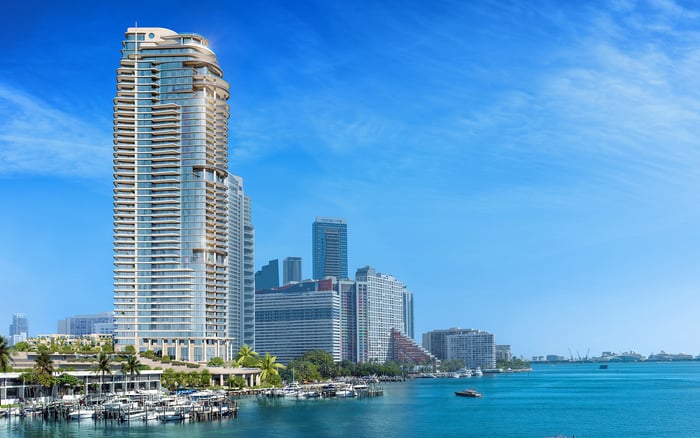
This is especially important in branded or hospitality-driven residences, where the service promise can be central to value. Buyers drawn to Four Seasons Residences Coconut Grove, for example, are often weighing not only architecture and neighborhood, but also the confidence that comes from a service culture attached to the residential experience.
Preconstruction is not the same as buying a completed residence. The purchase unfolds over time, and that timeline has financial and practical consequences. Deposits are typically staged, customization choices may have deadlines, and closing may occur well after the initial contract is signed.
Before committing, model the full ownership picture. Include purchase price, deposit schedule, potential financing strategy, closing costs, association fees, insurance expectations, taxes, upgrades, furnishings, and the carrying cost of any overlapping residence. Sophisticated buyers do this naturally for companies and portfolios. The same discipline should apply to a primary or second home.
Also think about optionality. If your company relocates, if children’s school plans change, or if your travel pattern shifts, will the residence still make sense? The strongest condo choices have more than one use case: private retreat, executive base, seasonal home, and long-term hold.
Amenity packages can be seductive, but luxury is not measured by the length of the brochure. The question is whether the building simplifies your life. A wellness suite is valuable if you will use it consistently. A private dining room matters if you entertain. A pool deck matters if it feels serene at the hours you are most likely to be there.
For some buyers, a quieter boutique environment will outperform a larger amenity ecosystem. For others, a full-service building with layered hospitality is the correct choice. Bay Harbor Islands, for instance, can appeal to buyers who want a more residential pace while remaining connected to the broader Miami Beach and Bal Harbour orbit. A project such as The Well Bay Harbor Islands naturally enters the conversation when wellness and low-friction living are central to the search.
Do not confuse abundance with fit. The most successful amenity program is the one you barely have to think about because it quietly supports how you already live.
Technology wealth often comes with visibility. For that reason, privacy should be evaluated early rather than added as an afterthought. Study arrival sequences, valet configuration, lobby exposure, elevator access, guest flow, package handling, and the relationship between residences and amenity areas.
High-profile buyers should also think about how a building feels at peak season. A glamorous lobby may photograph beautifully, but a discreet arrival and efficient service team may matter more after a long flight. The same is true inside the residence. Primary suites should feel removed. Offices should have acoustic logic. Guest rooms should allow hospitality without compromising personal space.
In Surfside, this discretion can be part of the appeal. In Brickell, it may need to be achieved through building selection, floor height, and service design. In Coconut Grove, it may come through landscape, scale, and neighborhood texture.
A beautiful preconstruction condo should still be tested. Review governing documents carefully. Understand rental policies, pet policies, parking, storage, assessments, reserves, insurance structure, and rules around alterations. Confirm how association budgets are expected to work once the building is delivered. Ask how common areas will be managed and what level of staffing is planned.
The goal is not to become skeptical. The goal is to become precise. A well-chosen preconstruction purchase should feel better after diligence, not more complicated. When the neighborhood, plan, design, service model, and contract all support the same lifestyle thesis, the decision becomes far easier.
For the Silicon Valley buyer, South Florida is no longer merely a sunny alternative. It is a place to design a more fluid life, one that can hold ambition and recovery, business and family, ocean and city, all within a carefully chosen address.
Is preconstruction better than buying a completed condo? It can be, if you value selection, customization, and a newly delivered building experience. Completed residences offer certainty and immediate use.
Which area is best for a technology buyer relocating from California? It depends on lifestyle. Brickell suits urban business access, Surfside favors discreet oceanfront living, and Coconut Grove offers a softer residential rhythm.
What should I review before signing a preconstruction contract? Review deposit terms, timelines, included finishes, cancellation rights, association documents, and the process for changes or substitutions.
How important is the developer’s track record? It is central. In preconstruction, execution quality and communication can be as important as architecture and amenities.
Should I prioritize views or floor-plan efficiency? Ideally, both. If forced to choose, a highly functional plan often creates more daily value than a dramatic view paired with awkward living spaces.
Are branded residences worth considering? They may be, especially if the brand contributes meaningful service, design consistency, or hospitality expertise rather than just name recognition.
How should I think about amenities? Focus on amenities that reduce friction in your actual routine. Wellness, dining, work, parking, and the arrival experience often matter most.
Can a preconstruction condo work as a second home? Yes, if the building supports easy lock-and-leave ownership, reliable service, and a location that matches your seasonal pattern.
What is the biggest mistake buyers make? Many buyers fall in love with imagery before testing the practical details. The strongest purchases hold up under careful review.
When should I involve an advisor? Involve an advisor before reserving a residence, especially when comparing neighborhoods, contract terms, floor plans, and long-term exit flexibility.
To compare the best-fit options with clarity, connect with MILLION.
If branded residences are on your mind — as a home or as an allocation — we would be glad to share what we are seeing, privately.
Begin a quiet conversation