A discreet buyer’s guide to evaluating whether a shorter private-aviation routine genuinely improves daily ownership in Downtown Miami, from curb-to-cabin timing to building operations, parking choreography, guest arrivals, and resale logic.

For a certain buyer, the appeal of Downtown Miami is not simply the skyline, the water, or the cultural proximity. It is the promise of compression: fewer wasted transitions, a cleaner handoff from residence to car, from car to aircraft, and from aircraft back to home. When private aviation is part of the weekly or monthly rhythm, a residence is no longer judged only by view, floor plan, or amenity language. It becomes part of a larger operating system.
That is why a shorter private-aviation routine should be evaluated before signing a contract, not romanticized afterward. The question is not whether a building feels convenient on a quiet afternoon. The question is whether the complete sequence holds when luggage, weather, security protocols, guests, children, pets, work calls, and return fatigue all enter the picture.
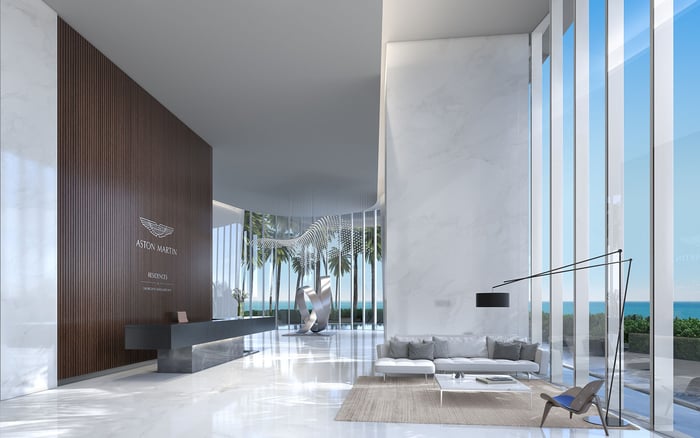
In Downtown Miami, the strongest purchase decision begins with rehearsal. Buyers considering Aston Martin Residences Downtown Miami, Waldorf Astoria Residences Downtown Miami, or One Thousand Museum Downtown Miami should evaluate not only the residence, but the choreography around it. At this level, the most revealing details are often found between the lobby and the curb.
A private-aviation routine starts well before the aircraft. It begins inside the residence, with packing, elevator access, service corridors, valet notification, vehicle positioning, and the first few minutes after leaving the building. A buyer should time the sequence from the primary closet or bedroom, not from the lobby. That distinction is often where convenience becomes measurable.
A useful test is to perform the route at the hour most likely to be used in real life. If departures often happen before meetings, before school drop-off, after dinner, or during a busy event week, the buyer should rehearse the route under similar conditions. A smooth weekend showing can tell one story. A weekday departure with two cars waiting, staff coordinating luggage, and an immediate call to join can tell another.
The point is not to chase perfection. It is to identify friction before it becomes habitual. Does the elevator plan feel private enough with luggage? Is the valet desk responsive when timing is exact? Can a driver pause without creating pressure at the porte cochere? Are there protected moments for family members who prefer discretion? These answers shape the lived value of a Downtown Miami purchase.
Luxury buyers often ask about pools, wellness suites, private dining rooms, and views. Private-aviation buyers should add operational questions. A building that performs beautifully for a gala evening may not be equally strong for frequent departures with garment bags, golf clubs, presentation materials, or a pet carrier.
Ask how luggage is handled from residence to vehicle. Ask whether staff can coordinate with a driver before the owner arrives downstairs. Ask how guests are received if they meet at the residence before departure. Ask whether the parking and valet rhythm changes during peak building activity. The building does not need to advertise itself as aviation-oriented to support the lifestyle well, but its service culture must be precise.
This is where Downtown Miami differs from a purely resort-style purchase. In the urban core, convenience is built from layers. Residential staff, vertical circulation, vehicle staging, street conditions, and the buyer’s own schedule all interact. A tower such as Casa Bella by B&B Italia Downtown Miami may appeal to buyers who want design pedigree and city access, but the aviation-focused evaluation still comes down to daily orchestration.
Downtown Miami and Brickell are often discussed together, but a private-aviation buyer should assess them separately. The lifestyle overlap is clear: dining, offices, water views, cultural access, and high-rise living. The operational differences can be subtle. A buyer who spends weekdays in Brickell may value one pattern, while a buyer who prioritizes cultural venues, arena events, or waterfront access in Downtown Miami may prefer another.
This is not a question of which district is superior. It is a question of which district reduces the most friction for a specific owner. A residence at Baccarat Residences Brickell may suit a buyer whose business and social life already concentrates in Brickell. A Downtown Miami residence may make more sense for a buyer who wants a different balance of view, cultural proximity, and access to the broader urban core.
The correct comparison should be personal, not generic. Run both routines if both districts are under consideration. Start from the building, not a nearby intersection. Use the same driver if possible. Carry the same amount of luggage. Evaluate the return as carefully as the departure, because a late arrival often reveals whether convenience is genuinely valuable or merely theoretical.
Departures receive most of the attention, but arrivals often define satisfaction. After a flight, the buyer is more likely to be tired, carrying more items, or coordinating with family and staff. A residence that feels impressive during a sales tour must also feel effortless at the end of a long travel day.
The return test should include the drive back, the building approach, the luggage handoff, the elevator experience, and the first ten minutes inside the home. Can the owner arrive quietly? Is there a place for the driver to pause? Does staff know how to receive luggage without creating a lobby spectacle? Is the route from vehicle to private space intuitive?
High-net-worth buyers often pay for time, but the more valuable currency is composure. A shorter routine is meaningful only if it preserves energy. If the final steps into the building feel crowded, exposed, or improvised, the practical advantage narrows quickly.
Private aviation is rarely a solo habit. Even when the principal travels alone, the routine may involve an assistant, spouse, children, visiting guests, household staff, security, or pets. The property should be evaluated for the entire household pattern, not merely the principal’s idealized route.
For families, the questions become more specific. Can multiple passengers assemble without disrupting the lobby? Can a child, guest, or older family member move comfortably from residence to car? Is there enough time and space for luggage to be checked, adjusted, or reorganized before departure? If pets are part of the routine, does the building’s pet policy and circulation make travel days calmer?
Staff coordination also matters. A strong residence allows assistants and drivers to communicate clearly with building personnel while maintaining privacy. The best version of luxury is not visible effort. It is the absence of visible effort.
A shorter private-aviation routine can justify a premium for the right buyer, but it should not be the only reason to purchase. The residence still needs architectural quality, view integrity, amenity relevance, service depth, and long-term desirability. Aviation convenience is one part of the value equation.
The most disciplined buyers assign that convenience a role. For a primary residence, it may be central. For a pied-à-terre, it may be a decisive lifestyle advantage. For an investment-minded purchase, it may support liquidity among a narrow but meaningful buyer pool. In each case, the routine should reinforce the thesis, not replace it.
Aviation convenience is also personal. A ten-minute improvement may feel transformative to one owner and irrelevant to another. The buyer who travels frequently, returns late, or coordinates with multiple passengers will perceive value differently from the buyer who flies occasionally and prioritizes entertaining, beach access, or boating.
Before finalizing a Downtown Miami purchase, conduct a private-aviation walkthrough with the same seriousness given to legal review and design selection. Time the route from the residence. Confirm the building’s arrival and departure procedures. Observe the porte cochere during active periods. Ask how luggage, guests, pets, and drivers are handled. Rehearse the return, not only the departure.
Then compare the routine against the competing properties on the shortlist. The strongest choice is usually not the one that promises convenience most loudly. It is the one that makes the entire sequence feel calm, repeatable, and discreet.
Should private-aviation access influence a Downtown Miami purchase? Yes, if flying is part of the owner’s regular lifestyle. It should support the broader purchase thesis rather than replace fundamentals such as residence quality and service.
What is the first thing a buyer should test? Time the full route from inside the residence to the aircraft routine. Starting at the lobby gives an incomplete view of the actual experience.
Is the departure or return more important? Both matter, but the return often reveals more. Late arrivals test privacy, staff readiness, luggage handling, and the comfort of the building approach.
Should buyers compare Downtown Miami and Brickell directly? Yes, but with the same conditions for each route. Brickell and Downtown Miami can feel similar on paper while operating differently in daily life.
How should luggage handling be evaluated? Ask how bags move from the residence to the vehicle and who coordinates the handoff. The best routine feels quiet, orderly, and almost invisible.
Do building amenities matter for aviation buyers? They do, but operations matter more on travel days. Valet, elevators, service corridors, and staff communication can be more important than showpiece amenities.
Should guests be included in the test routine? If guests often travel with the owner, yes. A routine that works for one person may feel strained with multiple passengers and additional luggage.
Can a shorter routine improve resale appeal? It can help with a specific buyer profile. Still, resale strength depends on the complete residence, building reputation, location, and market context.
How many times should the route be tested? Test it more than once if the purchase is significant. Different times of day can reveal different levels of friction.
What is the best way to shortlist comparable options for touring? Start with location fit, delivery status, and daily lifestyle priorities, then compare stacks and elevations to validate views and privacy.
When you're ready to tour or underwrite the options, connect with MILLION.
If branded residences are on your mind — as a home or as an allocation — we would be glad to share what we are seeing, privately.
Begin a quiet conversation