A buyer-focused comparison of Shore Club Private Collections Miami Beach and Viceroy Brickell, centered on branded-residence prestige, governance discipline, and the resale logic that separates scarce beachfront ownership from high-energy urban positioning.
In South Florida’s branded-residence market, prestige is often the opening argument. It is rarely the closing one. For a buyer comparing Shore Club Private Collections Miami Beach with Viceroy Brickell, the more durable question is how each ownership proposition may perform once the initial brand narrative gives way to daily living, association governance, service standards, and eventual resale.
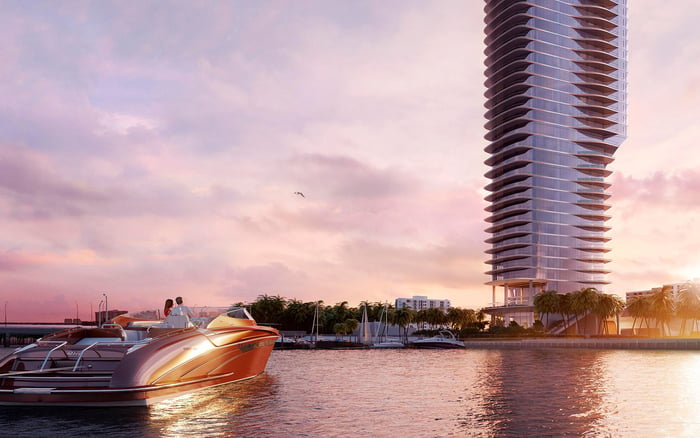
Shore Club Private Collections Miami Beach carries the clearer thesis: an oceanfront redevelopment in Miami Beach, framed around scarce beachfront land, privacy, controlled density, and long-duration ownership. That places it in a different mental category from the higher-energy Brickell conversation, where urban access, density, and liquidity tend to shape buyer expectations.
This is not simply a beach-versus-city preference. It is a question of what the buyer expects the asset to do. A preservation-minded owner may prioritize oceanfront scarcity and a quieter residential rhythm. A more urban buyer may prefer Brickell’s immediacy, connectivity, and trading depth, while still applying the same discipline to governance.
Shore Club Private Collections Miami Beach is positioned within South Florida’s branded luxury residential market, but its value logic begins with its Miami Beach setting. The central premise is not scale. It is scarcity. In the ultra-prime segment, beachfront land with a privacy-oriented, lower-density profile is fundamentally different from a vertical urban product competing within a deeper field of towers.
That distinction matters because scarce beachfront ownership tends to reward patience. Shore Club is framed less as a high-turnover investment and more as a long-duration asset for owners who value discretion, preservation, and irreplaceable positioning. Its appeal is not simply the name above the door. It is the convergence of brand, service culture, and a site that cannot be easily replicated.
For buyers using Miami Beach as a search shorthand, the real filter should be more precise: Is the residence being acquired for lifestyle, land position, or liquidity profile? Shore Club’s case rests most heavily on the first two.
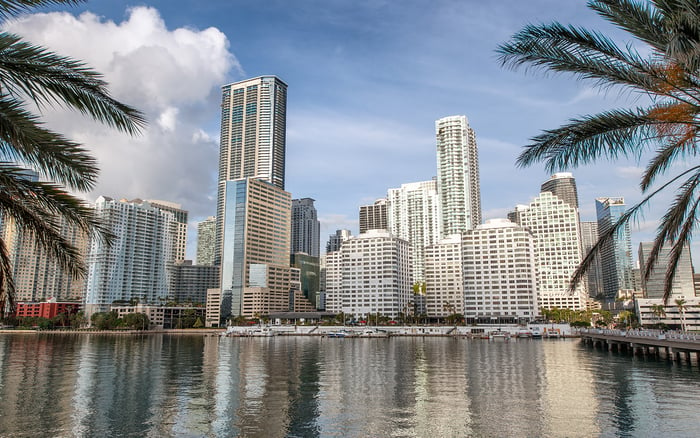
Viceroy Brickell belongs to a different conversation because Brickell itself is a different ownership environment. The district’s appeal is energetic, vertical, and urban. It draws buyers who value proximity, services, restaurants, offices, waterfront views where available, and a more immediate city rhythm.
Because specific Viceroy Brickell facts are not necessary to make the central buyer distinction, the disciplined approach is to underwrite it as a branded urban residence until the residence documents and final operating framework are reviewed. That means looking beyond the brand halo and asking how the building will regulate usage, service access, rentals if permitted, reserves, common-area standards, and owner privileges.
In Brickell, prestige can support demand, but governance often determines whether a branded building matures gracefully or becomes operationally uneven. The neighborhood may provide liquidity, but liquidity does not automatically create durability. The strongest Brickell purchases pair location and brand with rules that protect the residential experience.
Branded residences are often purchased emotionally, but they retain value operationally. The brand sets expectations for design, service, arrival sequence, amenities, and tone. Governance determines whether those expectations remain intact once the building is occupied.
This is where Shore Club’s privacy-oriented thesis becomes especially relevant. A lower-density luxury proposition depends on controlled access, consistent service standards, careful capital planning, and association rules that protect quiet enjoyment. If those elements are preserved, the brand gains substance. If they erode, the brand becomes decorative rather than defensive.
The same principle applies in Brickell. A city residence with a celebrated hospitality or lifestyle name still needs disciplined policies. Buyers should study whether the building is likely to feel residential at peak usage, how common areas are managed, and whether the association structure supports long-term capital discipline rather than short-term convenience.
In ultra-prime condominiums, governance is not a back-office detail. It is an asset class inside the asset. Service standards, association rules, reserve philosophy, owner conduct, leasing parameters, and capital-improvement discipline can all influence future buyer confidence.
For Shore Club-type properties, governance matters because the resale story is tied to scarcity and preservation. If a buyer is paying for privacy, controlled density, and irreplaceable beachfront positioning, the building must be governed in a way that protects those attributes. A loose operating culture can weaken even a strong site.
For a Brickell product, governance plays a slightly different role. It helps separate a true luxury residence from a branded high-traffic address. Urban buildings may have more moving parts: valet flow, amenity crowding, guest access, service logistics, and investor-owner alignment. The better the rules, the cleaner the future buyer narrative.
The buyer choosing between Shore Club Private Collections Miami Beach and Viceroy Brickell is often choosing between two resale personalities. Shore Club’s logic centers on scarce beachfront land, privacy, controlled density, and a long-term owner base. Its future appeal may be strongest with buyers who want an enduring Miami Beach residence rather than a trade.
Brickell, by contrast, tends to be interpreted through urban demand and comparative product depth. A branded residence there may benefit from a larger pool of buyers who understand the district, but it may also face more direct competition from other luxury towers. In that setting, resale logic often depends on differentiation: views, floor plan, service model, building rules, and the brand’s staying power.
Neither path is inherently superior. Shore Club may feel more defensive from a scarcity standpoint. Brickell may feel more liquid from an urban-market standpoint. The right answer depends on whether the buyer values preservation, city access, or a blend of both.
Before treating either brand as a conclusion, buyers should ask five practical questions.
First, what exactly is being protected: land scarcity, hotel-style service, privacy, urban convenience, or all of the above? Second, who is the likely next buyer, and will that buyer value the same attributes? Third, how clear are the association rules and service obligations? Fourth, does the ownership structure support long-term capital discipline? Fifth, is the buyer purchasing for personal use, legacy holding, or eventual market rotation?
For Shore Club, the strongest diligence lens is preservation: does the governance framework reinforce the quiet, scarce, oceanfront proposition? For Viceroy Brickell, the strongest lens is operating clarity: does the urban branded model remain residential enough to hold premium value over time?
A sophisticated buyer should not confuse a famous name with a protected ownership experience. In South Florida’s top tier, the most resilient assets usually combine location, restraint, and rules.
Is Shore Club Private Collections Miami Beach primarily a beachfront scarcity play? Yes. Its value thesis centers on scarce Miami Beach oceanfront land, privacy, controlled density, and long-duration ownership.
How should buyers think about Viceroy Brickell in this comparison? Treat it as an urban branded-residence decision and review the specific governance, service, and ownership documents before assigning a premium.
Why does governance matter so much in branded residences? Governance protects the everyday experience behind the brand, including service consistency, common-area quality, access rules, and capital discipline.
Does brand prestige alone support resale value? Not reliably. Brand prestige is strongest when reinforced by scarce positioning, careful operations, and disciplined association rules.
Is Shore Club more suited to long-term owners? The Shore Club thesis is framed around long-duration ownership rather than short-term yield or high-turnover trading.
Is Brickell generally a more liquid ownership environment? Brickell often attracts buyers seeking urban energy and market depth, but each building’s rules and differentiation still matter.
What is the key resale distinction between the two? Shore Club leans toward preservation and beachfront scarcity, while Brickell decisions often depend more on urban demand and competitive differentiation.
Should investors prioritize investment yield in this comparison? Yield should not be the only lens. For ultra-prime branded residences, governance quality and exit logic can be just as important.
What does oceanfront positioning add to the buyer thesis? Oceanfront land can create a scarcity argument that is difficult for denser urban submarkets to replicate.
What should buyers review before relying on the brand name? Buyers should review governance documents, service obligations, usage rules, reserves, common-area standards, and the likely future buyer profile.
For a tailored shortlist and next-step guidance, connect with MILLION.
If branded residences are on your mind — as a home or as an allocation — we would be glad to share what we are seeing, privately.
Begin a quiet conversation