For family buyers in South Florida, hurricane-rated openings should be evaluated as a full lifestyle, safety, maintenance, and resale system rather than a simple window upgrade.
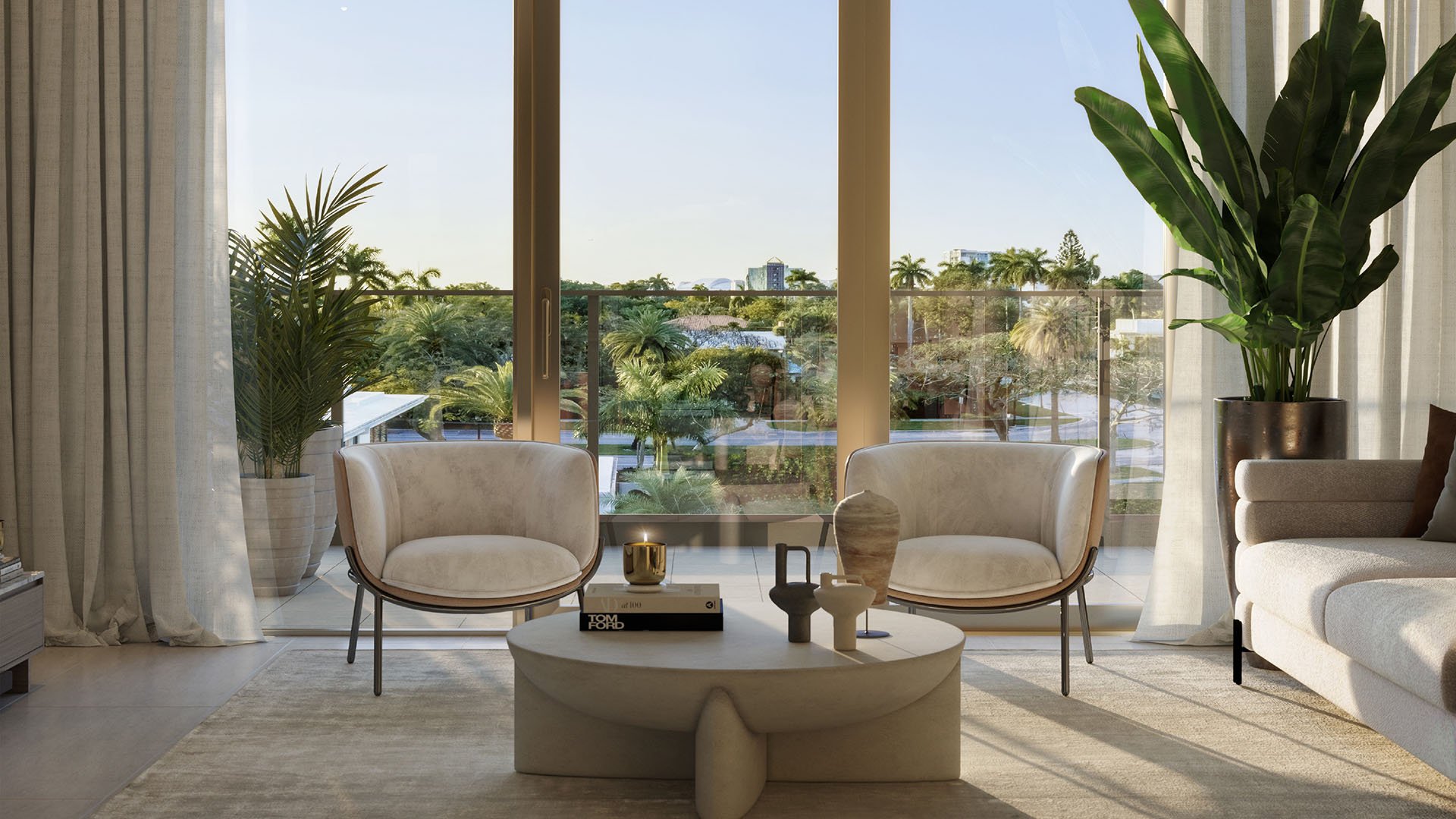
In South Florida luxury real estate, glass is often sold as poetry: sunrise over the Atlantic, a bay horizon from the primary suite, or a pool terrace framed by floor-to-ceiling sliders. For a family buyer, that same glass deserves a more practical reading. Every window, terrace door, entry door, garage opening, and large glazed wall is part of the home’s resilience profile.
Hurricane-rated openings are not simply a feature line in a listing description. They shape how a home feels during storm season, how confidently children can sleep upstairs, how easily grandparents can stay in place, and how much friction a family experiences when leaving or returning to the property. In Miami Beach, Sunny Isles, Brickell, and other coastal or high-rise environments, the question is not whether a home looks protected. The question is whether that protection is documented, coherent, well installed, and appropriate for the way the family actually lives.
This matters most when buyers are comparing new-construction towers, renovated waterfront estates, and single-family homes with mixed renovation histories. Even the most elegant residence can require careful scrutiny if its openings were upgraded at different times, by different contractors, or without a clear paper trail.
A family should ask about hurricane-rated openings early, before the negotiation becomes emotionally anchored to a view, school commute, or club membership. The strongest buyers do not wait for a late inspection surprise. They ask for documentation on the windows and doors, including product information, permit history where available, installation records, transferable warranties if any, and maintenance guidance tied to the specific system.
The point is not to turn a showing into an engineering seminar. It is to determine whether the home’s openings can be understood as a complete system. A beautifully renovated kitchen does not answer whether the terrace doors were installed correctly. A designer pivot door does not explain the rating of the adjacent glass panels. A child’s bedroom with a spectacular exposure requires the same diligence as the primary suite.
For condominium buyers, documentation should also clarify what belongs to the unit owner and what may fall under building oversight. Families should understand whether future replacement, repair, or alteration of openings is governed by association procedures. That detail can influence renovation timelines, costs, and day-to-day planning.
Luxury homes often evolve in layers. A waterfront property may have original bedroom windows, newer pool-facing sliders, an upgraded front door, and an older garage opening. A condominium residence may have building-standard windows but a terrace door that has been serviced repeatedly. Family buyers should not assume that one strong opening means the entire envelope performs to the same standard.
Walk the property with consistency in mind. Are all bedrooms treated with the same seriousness as entertaining spaces? Do children’s rooms, guest suites, staff areas, and playrooms have openings that match the home’s broader standard? Are there small overlooked windows in laundry rooms, stair landings, cabanas, or service corridors? Resilience is only as reassuring as its weakest everyday detail.
This is also where lifestyle language becomes useful. Balcony access should be judged not only for beauty but for operation, locking, water management, and child awareness. A family may love wide terrace doors, but those doors must be easy enough for adults to secure and clear enough for children to understand as boundaries.
A hurricane-rated opening still has to behave beautifully on an ordinary Tuesday. Large sliding doors should operate smoothly. Casement windows should close with confidence. Locking points should feel intuitive. Entry systems should not require an owner’s manual every time the house is secured for travel.
For families, daily usability is not a secondary matter. Parents juggling strollers, sports bags, pets, groceries, and visiting relatives will quickly notice whether doors are heavy, tracks are difficult, handles are awkward, or screens are impractical. A system that is technically impressive but frustrating to use may be left partially unsecured or deferred for maintenance too long.
Comfort matters as well. Buyers should pay attention to sound, heat, glare, and privacy. A residence beside a busy corridor of activity may benefit from the acoustic calm of better openings, while a sun-facing room may require thoughtful shading and interior treatments. These considerations are not replacements for hurricane protection, but they determine whether the family enjoys the home every day.
Family buyers should rely on qualified advisors when evaluating openings, particularly when the property is expensive, exposed, recently renovated, or architecturally complex. A general impression is not enough. The buyer’s inspection team should be asked specifically to comment on windows, doors, seals, operation, visible wear, and any concerns that merit specialist review.
If a home includes unusually large glass spans, custom doors, or older retrofits, a specialist can help separate cosmetic confidence from technical confidence. The goal is not to create fear. It is to identify what is known, what is documented, and what should be budgeted for after closing.
This approach is especially important in high-design residences where openings are part of the architecture. Minimal frames, flush thresholds, expansive sliders, and dramatic corner glass can be exceptional when properly specified and maintained. They can also be expensive to service if replacement parts, access, or association approvals are complicated.
Hurricane-rated openings can influence how a future buyer perceives the home. A family purchasing today should imagine the questions they may face later. Is the documentation organized? Are upgrades easy to explain? Does the property present a clear story of care, or will the next buyer inherit uncertainty?
The same thinking applies to insurance conversations and renovation planning. Buyers should not assume that attractive openings automatically translate into preferred treatment by insurers or effortless renovation approvals. They should ask their own insurance and construction advisors how the home’s current condition may affect future decisions.
For a family planning renovations, openings should be discussed before finishes. Replacing flooring, millwork, or window treatments around doors and windows can become inefficient if the openings themselves need attention soon after closing. The more disciplined path is to understand the envelope first, then layer design around it.
During a showing, pause in each major room and ask a simple question: how would this space feel when the family needs to secure the home quickly? The answer should be reassuring, not vague.
In bedrooms, consider whether children and guests can rest without feeling exposed. In living areas, observe whether large openings are easy to close and lock. In kitchens and family rooms, inspect the openings most likely to be used repeatedly throughout the day. At outdoor thresholds, look for smooth transitions, visible wear, and sensible drainage. At entries, think about both security and weather.
Luxury buyers sometimes focus heavily on amenities and finishes, but openings are among the rare elements that touch architecture, safety, maintenance, comfort, and value at once. When they are strong, they recede into the background. When they are weak or poorly understood, they can dominate ownership.
The best standard is simple: every opening should earn its place in the home. It should be beautiful, documented, operable, maintainable, and suited to the family’s rhythm.
Are hurricane-rated openings the same as impact windows? Not always in casual conversation. Buyers should ask exactly what products are installed and request documentation rather than relying on shorthand language.
Should family buyers review every opening or only the largest ones? Every opening deserves attention. Smaller windows, service doors, and garage openings can matter just as much as dramatic glass walls.
Is new-construction automatically safer for hurricane-rated openings? New-construction may offer a clearer starting point, but buyers should still review documents, warranties, and association procedures where relevant.
What should condominium buyers ask about openings? They should ask which components are owner responsibility, which are building responsibility, and what approvals are needed for repair or replacement.
Do single-family homes require a different review? Yes. Single-family homes often have more opening types and renovation layers, so consistency across the entire property is especially important.
Can attractive designer doors still require scrutiny? Yes. Appearance does not confirm rating, installation quality, maintenance condition, or future serviceability.
Should balcony doors be reviewed differently from windows? Balcony doors should be checked for operation, locking, thresholds, water exposure, and child-aware usability in daily family life.
How early should buyers ask for documentation? Ideally before final negotiations become highly emotional. Early review helps preserve leverage and avoids rushed decisions.
What if the seller cannot provide complete records? Buyers should proceed carefully and ask their inspection, insurance, and construction advisors what additional review or budgeting is appropriate.
Do hurricane-rated openings add value beyond storm preparation? They can support comfort, confidence, noise control, and resale clarity when properly documented and maintained.
For a tailored shortlist and next-step guidance, connect with MILLION.
If branded residences are on your mind — as a home or as an allocation — we would be glad to share what we are seeing, privately.
Begin a quiet conversation