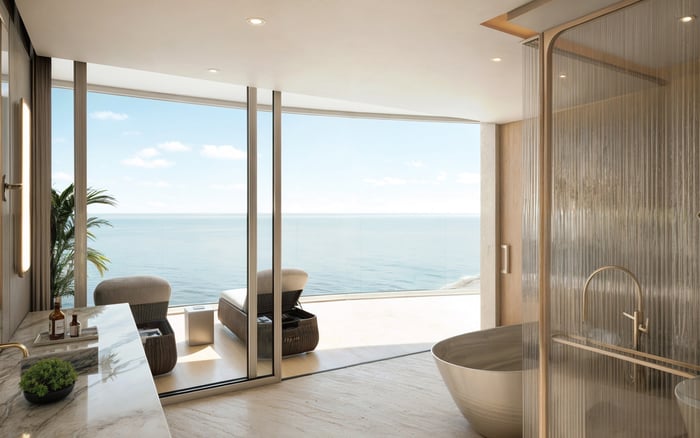
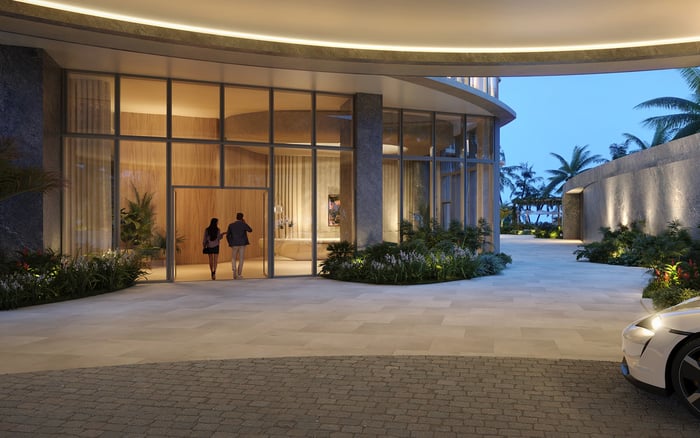
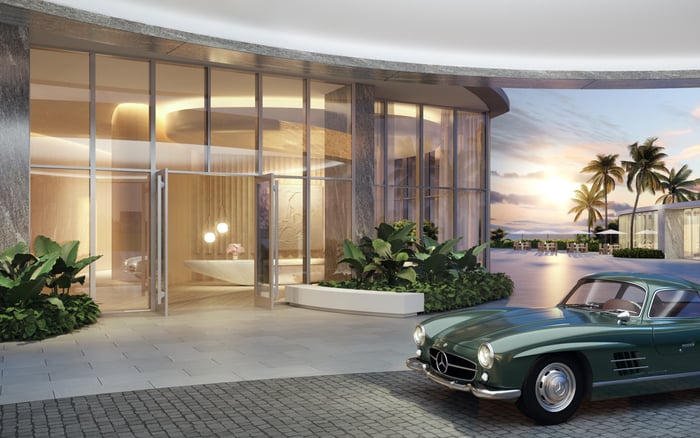
Palm Beach social season can clarify the value of a Bal Harbour pied-à-terre for buyers who want privacy, coastal ease, and a more strategic South Florida base.
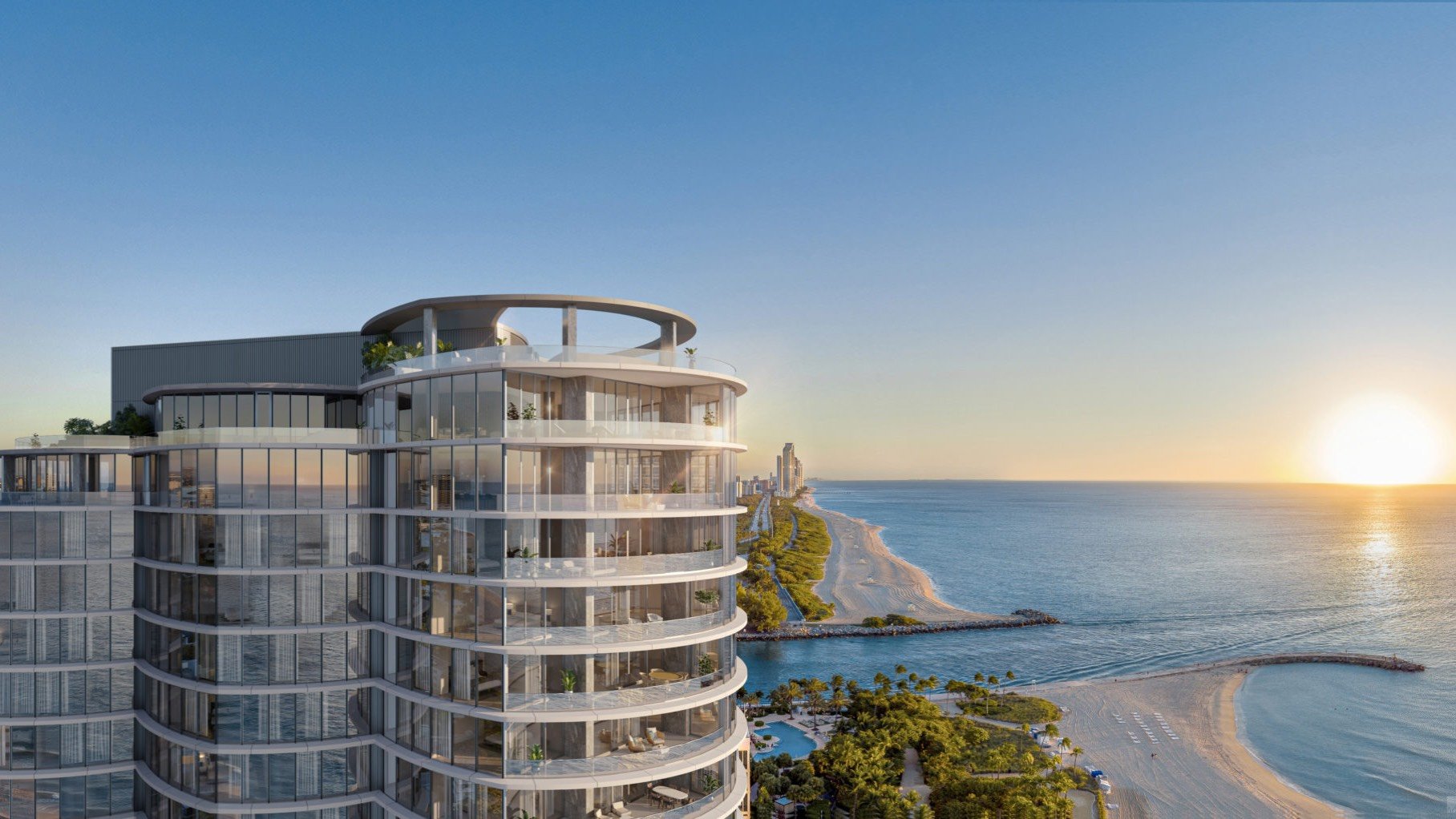
Palm Beach social season has a way of revealing the difference between a beautiful second residence and a genuinely useful one. A home may photograph flawlessly, but the more important question is whether it improves the rhythm of a demanding calendar: arrival, rest, dressing, dining, hosting, retreat, and repeating the sequence with composure.
For buyers who already spend time in Palm Beach, the case for a Bal Harbour pied-à-terre is rarely about replacing one destination with another. It is about adding a better-positioned South Florida base, one that supports the social calendar without turning every stay into a production. The right residence gives an owner a place to land between engagements, host selectively, and remain connected to Miami Beach, Surfside, Bay Harbor Islands, and the broader coastal corridor without surrendering discretion.
In a buyer’s notebook, the brief may read Bal-harbour, Oceanfront, Beach-access, Second-home, New-construction, with Rivage Bal Harbour as a named benchmark. That shorthand is not trend language. It is a way to reduce friction while protecting the privacy, service, and setting that define ultra-prime ownership.
Season changes the way a property is experienced. Roads matter more. Parking, privacy, lobby choreography, and the distance between a residence and dinner become part of the value equation. A pied-à-terre that works in August may feel less precise when the calendar is layered with private lunches, benefit evenings, gallery visits, family arrivals, and guests moving between Palm Beach and Miami.
Bal Harbour’s appeal is its restraint. It is coastal without feeling overexposed, polished without requiring constant display, and close enough to neighboring enclaves to make a short stay feel complete. For a Palm Beach resident, family office, or international buyer, that distinction matters. The residence is not merely a place to sleep; it becomes a controlled environment for recovery and transition.
This is where projects such as Rivage Bal Harbour enter the conversation. Without overstatement, the address speaks to the broader Bal Harbour proposition: a refined oceanfront setting that can serve as a measured counterpoint to the social intensity of the season.
A strong pied-à-terre brief begins with use, not square footage. How often will the owner arrive for one night rather than one week? Will staff prepare the residence in advance? Is the buyer prioritizing oceanfront quiet, building service, walkability to select conveniences, or the ability to entertain two couples privately before dinner?
The best answers often point away from maximalism and toward control. A better-positioned pied-à-terre should make short stays graceful. It should allow an owner to arrive late, leave early, and still feel the trip was restorative. It should be secure, legible, and easy for family members to use without explanation.
For some buyers, Oceana Bal Harbour represents the appeal of an established Bal Harbour name, while a newer consideration may focus on how future-forward the ownership experience feels. The comparison is not only architectural. It is about how each residence supports the owner’s seasonal pattern.
The surrounding market gives buyers meaningful alternatives. Surfside, Bay Harbor Islands, Miami Beach, and Sunny Isles can each satisfy different versions of the second-home brief. The discipline is to avoid shopping by prestige alone. A pied-à-terre should be chosen for the way it lives across the season.
Surfside may appeal to those who want a residential tone just south of Bal Harbour, especially when the buyer is comparing quiet coastal living with direct access to Miami Beach. In that context, The Delmore Surfside can be considered within a broader conversation about privacy, scale, and neighborhood feel.
Bay Harbor Islands can draw buyers who want a more tucked-away setting near Bal Harbour, particularly if they value a calmer residential cadence over direct oceanfront identity. A project such as The Well Bay Harbor Islands gives the comparison a different emphasis: not simply beachfront prestige, but lifestyle composition and daily ease.
The point is not that every buyer should choose Bal Harbour. The point is that social season reveals what each location does best. If the buyer’s calendar repeatedly moves between Palm Beach and Miami’s coastal dinner circuit, Bal Harbour can become a logical center of gravity rather than a decorative indulgence.
First, prioritize arrival. The most elegant residence loses force if every entry feels complicated. For seasonal use, the experience from car to lobby to private space is part of the asset.
Second, prioritize acoustic and visual privacy. A pied-à-terre is often used in compressed moments: a morning call, a wardrobe change, a quiet breakfast, a brief recovery after travel. Privacy is not an amenity; it is a condition of use.
Third, consider how the residence performs when unoccupied. Many second-home owners need a property that can be maintained, prepared, and secured with minimal drama. This is especially relevant when the residence is used in short, high-value windows during season.
Fourth, think about guests with restraint. A pied-à-terre should welcome close friends or family, but it does not need to solve for every possible visitor. The more precise the use case, the more satisfying the purchase.
Finally, compare buildings by rhythm. The Surf Club Four Seasons Surfside may attract a buyer who responds to a storied coastal atmosphere, while Bal Harbour may appeal to someone seeking a quieter form of residential polish. Both can be compelling, but they answer different emotional and practical questions.
For ultra-prime buyers, the strongest case for a Bal Harbour pied-à-terre is not a speculative thesis. It is lifestyle utility. If a residence makes the season easier, more private, and more enjoyable, it has already begun to justify itself.
That does not mean financial discipline disappears. Buyers should still evaluate building quality, ownership costs, resale context, rental restrictions if relevant, and the long-term desirability of the location. But the core question remains personal: will this home be used often enough, and well enough, to matter?
Palm Beach social season can sharpen that answer. When an owner finds that a coastal Miami-area base would simplify repeated movements, support private hosting, and offer a quieter retreat after public-facing events, Bal Harbour becomes more than a beautiful option. It becomes a strategic possession.
Why consider Bal Harbour if I already spend time in Palm Beach? Bal Harbour can serve as a complementary coastal base, giving owners easier access to Miami-area dining, beaches, and private social plans without changing their Palm Beach routine.
Is a pied-à-terre different from a traditional second home? Yes. A pied-à-terre is usually chosen for efficient, recurring use rather than extended seasonal residence, so convenience and service matter heavily.
What should I prioritize first in a Bal Harbour pied-à-terre? Prioritize ease of arrival, privacy, and the way the building supports short stays. Those qualities often determine whether the home is actually used.
Does oceanfront always matter? Oceanfront can be highly desirable, but the better choice depends on the buyer’s rhythm, need for discretion, and preferred daily experience.
Should I compare Surfside and Bay Harbor Islands too? Yes. Nearby enclaves may offer different balances of privacy, access, atmosphere, and residential scale.
Is new construction always the better choice? Not always. Newer residences may offer contemporary planning, while established buildings can appeal through familiarity and proven ownership patterns.
How does social season change the buying brief? It makes logistics more visible. A residence must support frequent arrivals, wardrobe changes, hosting, rest, and quick departures with minimal friction.
Can a Bal Harbour pied-à-terre work for families? It can, especially when the residence is easy to prepare and simple for family members to use independently.
Should I buy for entertaining? Buy for selective entertaining, not constant entertaining. The best pied-à-terre preserves privacy while allowing intimate hosting when needed.
When should I begin the search? Begin before peak personal demand, so you can compare options calmly and understand which address truly fits your seasonal life.
For a tailored shortlist and next-step guidance, connect with MILLION.
If branded residences are on your mind — as a home or as an allocation — we would be glad to share what we are seeing, privately.
Begin a quiet conversation