A buyer-oriented look at 2025’s record-setting Miami-Dade residential closings, what they signal about liquidity at the $10M-plus tier, and how today’s ultra-prime preferences are reshaping South Florida’s micro-markets.
In ultra-prime real estate, headlines are rarely just headlines. At the top end, a closing price is price discovery, and in 2025 Miami-Dade delivered several clear moments of widely covered discovery. A concentrated run of closed sales at $40 million and above did more than create dinner-party talking points. It confirmed something more durable: at the very top, buyers and sellers are still meeting on value, even as financing costs, insurance narratives, and construction timelines complicate the broader market.
That depth matters because it supports the entire luxury ecosystem. When the top clears, it stabilizes comparables, influences adjacent enclaves, and helps new construction pencil. It also keeps trophy land moving, which is often the earliest sign of confidence. Market commentary pointed to South Florida being on pace for roughly 426 ultra-luxury home sales above $10 million by the end of 2025, approaching the pandemic-era record level of 2021. The message for buyers is not that everything is “hot.” The message is that the top of the market remains highly functional, with real transactions, real liquidity, and real conviction.
Ultra-prime buyers tend to purchase for a blend of utility and optionality. They may be underwriting privacy, tax planning, family use, and the ability to exit efficiently if circumstances change. The 2025 slate reinforced that liquidity is still present for singular assets. A widely reported $120 million closing on Star Island and multiple $70 million-plus trades were not isolated anecdotes. They signaled a market that can be selective while still being liquid, meaning the right properties can trade at meaningful scale.
Two additional signals sharpen the picture. First, public commentary has framed Miami as a relative value play versus other global luxury hubs, with an often-cited benchmark of about $1 million buying roughly 58 square meters. That framing matters because it speaks to a buyer set that compares Miami to peer cities, not just to the rest of Florida.
Second, a widely reported high-value land flip near Indian Creek, linked to Jorge Mas, underscored that buyers still pay for control. In this tier, control shows up as frontage, security, and the right to build precisely what you want. Land is not simply a placeholder. It is optionality, especially in neighborhoods where supply cannot expand and where access itself is part of the value.
These five closings were widely reported as the year’s upper benchmarks. Beyond the numbers, each sale highlights how Miami-Dade’s ultra-prime market is segmented by micro-neighborhood, access, and lifestyle.
1. 26 Star Island Dr - Star Island, Miami Beach The widely reported $120 million sale on Star Island set a Miami-Dade price record in 2025 coverage and functioned as a clean market signal: ultra-rare waterfront inventory with legacy cachet can command global-level pricing when it trades.
For buyers, the takeaway is not only the headline number. It is the combination of setting and scarcity. Star Island is a brand in itself, and scarcity is structural. There is no practical way to replicate the location, the water orientation, or the social positioning. In that context, replacement cost becomes less relevant than access, privacy, and the prestige that comes with owning in a place the market already recognizes as trophy.
2. 4445 Sabal Palm Rd - Bay Point, Miami At a reported $85.2 million, this Bay Point closing ranked among the year’s most notable Miami-area transactions. It also highlighted a recurring theme of this cycle: gated settings near the urban core that still feel residential.
Bay Point’s appeal tends to be its balance of proximity and control. In a market where time is a luxury, that “close to everything, separated from everything” positioning continues to price well. Buyers are underwriting the ability to live near Downtown, the Design District, and key cultural corridors while retaining the perimeter and calm that private neighborhoods provide.
3. 88 La Gorce Cir - La Gorce Island, Miami Beach The reported $74.25 million sale on La Gorce Island reinforced the premium placed on Miami Beach’s private-island micro-markets. Water orientation, controlled access, and the quiet confidence of an established enclave remain powerful value drivers.
For comparables, this tier of sale can influence pricing beyond the island itself, particularly across similarly protected waterfront pockets. Buyers at this level are not just purchasing a house. They are purchasing predictability: the predictability of the neighborhood, the predictability of the water adjacency, and the predictability that comes with living in a location where turnover is limited.
4. 41 Arvida Pkwy - Gables Estates, Coral Gables In Coral Gables, the reported $50 million sale in Gables Estates showed that the ultra-wealth demand story is not only about barrier islands. It is also about deep lots, mature landscaping, and a more traditional sense of estate living.
For buyers looking for long-term hold qualities, Coral Gables offers a different emotional register than the beach: quieter streets, a grounded architectural language, and a lifestyle organized around privacy rather than spectacle. In this setting, value is often expressed through lot depth, landscaping maturity, and the feel of an established estate corridor rather than through visibility.
5. 555 Reinante Ave - Old Cutler area, Coral Gables At a reported $40 million, this Old Cutler area closing rounded out the top tier of 2025 benchmarks. It signaled continued appetite for the Coral Gables and South Dade corridor where land, canopy, and water access intersect.
In practical terms, sales like this support the idea that the upper end is less about general market averages and more about the narrow slice of buyers who want a very specific life. When that buyer shows up, the market can clear quickly. When they do not, even high-quality inventory can sit. This is precisely why the top tier is best understood through micro-market behavior, not through countywide averages.
Across the year’s most expensive closings, several preferences remain consistent.
First is controllable privacy. Private islands, gated neighborhoods, and trophy lots all reduce variables. They limit through-traffic, tighten the perimeter, and lower uncertainty. That same instinct sits behind the “family compound” strategy increasingly discussed in South Florida: acquiring adjacent or nearby properties for multigenerational flexibility and a tighter perimeter.
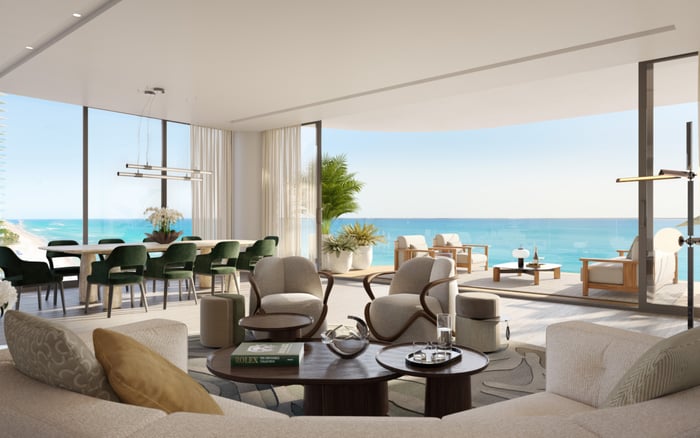
Second is a renewed emphasis on the home as sanctuary. Current design commentary in Miami points to layered, personality-driven interiors and a tropical-modern wellbeing sensibility, prioritizing comfort and calmer daily routines over sterile minimalism. In practice, that translates into dedicated wellness rooms, quieter materials, and spaces that feel collected rather than staged. The preference is less about a singular trend and more about how the home performs day to day.
Third is service, particularly for condominium buyers who want single-family standards without the operational burden. This is where branded residences continue to matter. Owners are buying not only a view and a floor plan, but also a managed lifestyle. In this tier, service is not a perk. It is risk management, time savings, and consistency, which can be especially valuable for buyers who split time between multiple homes.
At the very top, “Miami” is too broad a label. Buyers tend to underwrite the market by micro-neighborhood, because each enclave trades on its own combination of supply constraints, access, security, and lifestyle.
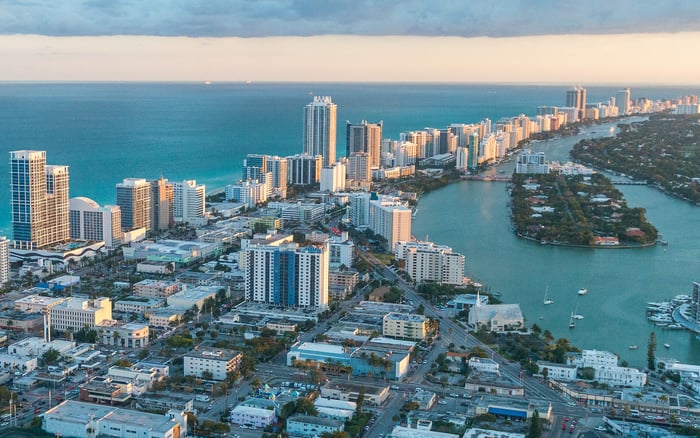
Miami-beach continues to command a scarcity premium because it offers a mix few places replicate: water, global visibility, and a social calendar that functions year-round. The luxury buyer is often underwriting not only the physical asset, but also the frictionless ability to arrive and be in the center of the city’s coastal lifestyle.
For condo buyers who want Miami Beach energy with a contemporary, new-build profile, Five Park Miami Beach is often discussed in the context of South-of-fifth lifestyle evolution. The point is less about any single building and more about the broader demand pattern: newer inventory, modern planning, and walkable surroundings that feel curated rather than incidental.
For those oriented toward classic resort positioning and ultra-prime service culture, Shore Club Private Collections Miami Beach reflects the broader preference for hotel living at home, where privacy and hospitality can coexist. In this segment, the building’s service model and the owner experience can matter as much as interior square footage.
Downtown has grown into a true luxury address where brand, design, and proximity to culture can feel as decisive as beachfront frontage. For certain buyers, a skyline residence is not a compromise. It is the most efficient way to access dining, events, museums, and the broader urban energy, while maintaining the lock-and-leave convenience many global households prefer.
Branded residential towers are part of that shift, creating a more international buyer experience. A case in point is Aston Martin Residences Downtown Miami, marketed as a 70-story branded tower with 391 residences and ultra-luxury penthouse offerings. For certain buyers, the “arrival” narrative of a recognized brand is not marketing fluff. It is shorthand for materials, service expectations, and resale positioning within a global peer set. In other words, the brand can help a buyer benchmark quality and supportability in a way that feels legible across markets.
Sunny-isles continues to attract buyers who want oceanfront views, newer inventory, and a pricing structure that can feel more rational than the rarest Miami Beach offerings. It is also where “mansion in the sky” product has become increasingly legible, especially for households that value security, amenities, and modern systems.
The Bentley-branded project in Sunny Isles has been widely marketed around a patented car elevator concept, enabling residents to bring vehicles to a private in-unit sky garage. Whatever one thinks of the theater, the underlying appeal is practical: engineered convenience and heightened privacy for collectors and high-security households. Bentley Residences Sunny Isles captures that preference set.
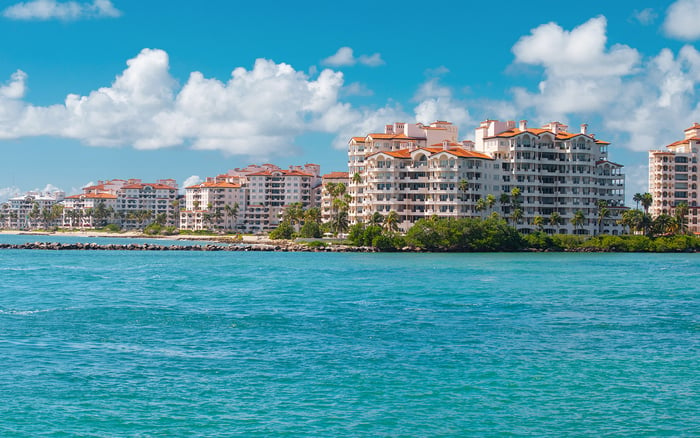
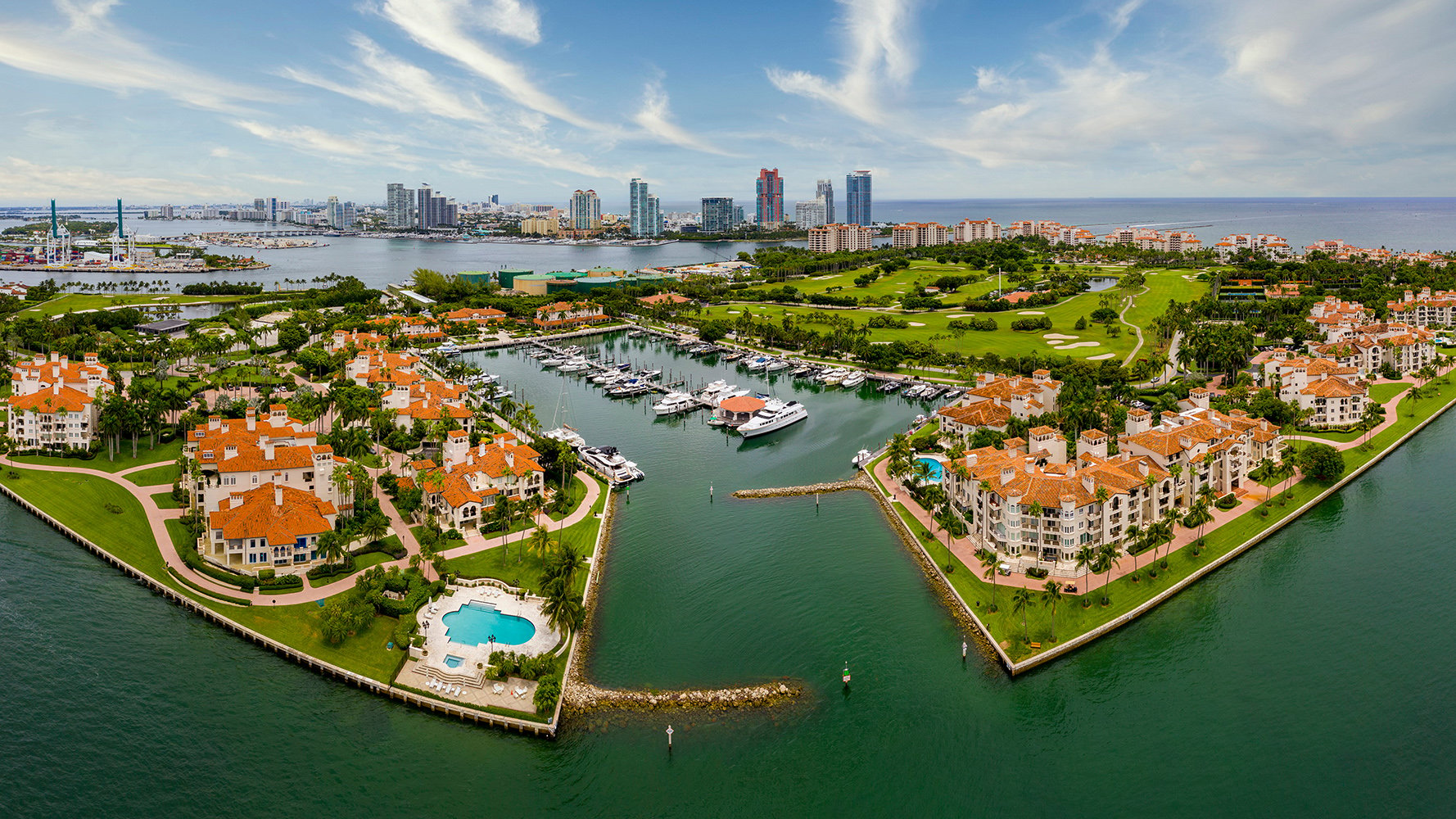
The most defensible luxury pricing usually sits where supply cannot respond. Fisher-island is a contemporary example. It was cited in early 2026 coverage as the most expensive ZIP code in the United States, a datapoint that aligns with what buyers already understand intuitively: access is constrained, privacy is high, and the lifestyle is purpose-built for discretion.
For buyers comparing Fisher Island to trophy single-family options, the decision often comes down to management burden and exposure. A condo with service and controlled access can be the more “private” choice, even if it is not a standalone estate. In this sense, privacy is not only about acreage. It is about friction, predictability, and who can get close to your daily routine.
If you are purchasing in the $10 million-plus tier, treat 2025’s headline sales as reference points, not targets. The value of a benchmark is that it clarifies what the market will pay for when the right asset appears. It does not mean that every adjacent property automatically deserves the same premium.
Underwrite the micro-market, not the county. A record on Star Island does not automatically reprice every waterfront street, but it does reinforce what scarcity is worth when the right property trades. Focus on controlled access, frontage, and the specific street or pocket where buyers compete most consistently.
Pay attention to land and frontage. The reported high-value Indian Creek-area land trade shows that land liquidity remains strong when the location is singular. In a supply-constrained market, land often holds optionality that finished product does not. Optionality includes the ability to design to current preferences, adjust for changing household needs, and avoid inheriting another owner’s layout decisions.
Decide whether you want lifestyle or control. Branded condos may offer a cleaner ownership experience. Single-family may offer maximum customization. The premium you pay usually aligns with which friction you are removing. If you prioritize low operational overhead and consistent service, a managed building can be the more rational choice. If you prioritize customization and perimeter control, a single-family estate may justify its complexity.
Consider wellness and interior strategy early. If you are buying for immediate use, prioritize homes that already support wellbeing-driven living. If you are buying for renovation, budget for the current preference toward richer materials and more personal, collected spaces rather than purely minimalist finishes. The fastest path to enjoyment is alignment between the home’s layout and how you actually live in Miami, including indoor-outdoor flow and day-to-day comfort.
Are these prices typical for Miami-Dade luxury homes? No. These are trophy-level outliers that set benchmarks; most luxury inventory trades well below these numbers.
Do record sales mean every nearby home should be priced higher? Not automatically. Benchmarks influence sentiment and select comparables, but condition, frontage, and micro-location still dominate.
Is Downtown truly competitive with Miami Beach at the top end? For some buyers, yes. Branded towers and walkable culture have made Downtown a lifestyle choice rather than a compromise.
Why does land trade so aggressively near Indian Creek? Control and scarcity. Trophy lots provide optionality, security advantages, and the ability to build a highly specific residence.
For bespoke guidance across Miami-beach, Downtown, Sunny-isles, Fisher-island, and Coral-gables, explore MILLION Luxury.
If branded residences are on your mind — as a home or as an allocation — we would be glad to share what we are seeing, privately.
Begin a quiet conversation