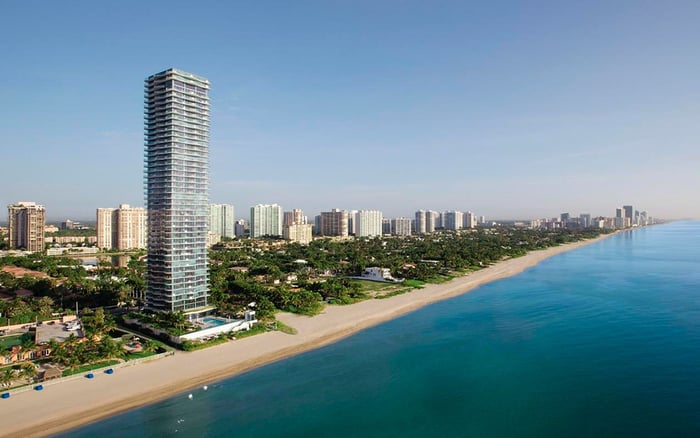
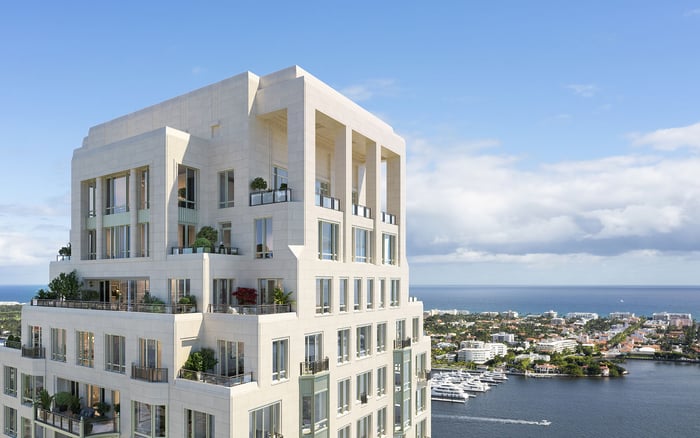
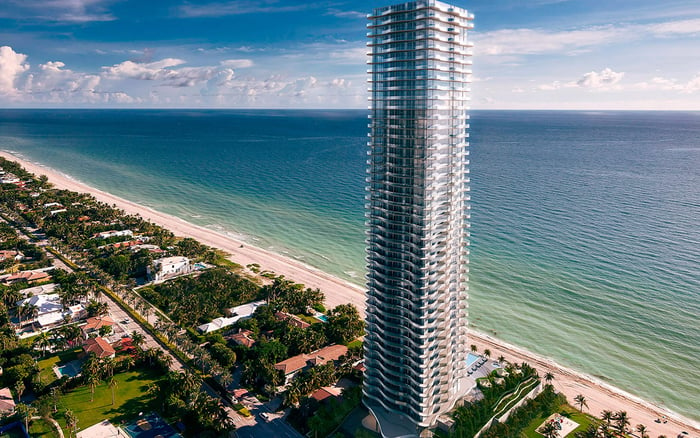
A buyer-focused look at how Regalia Sunny Isles Beach balances privacy, intermittent ownership, and condominium governance in an ultra-luxury oceanfront setting.
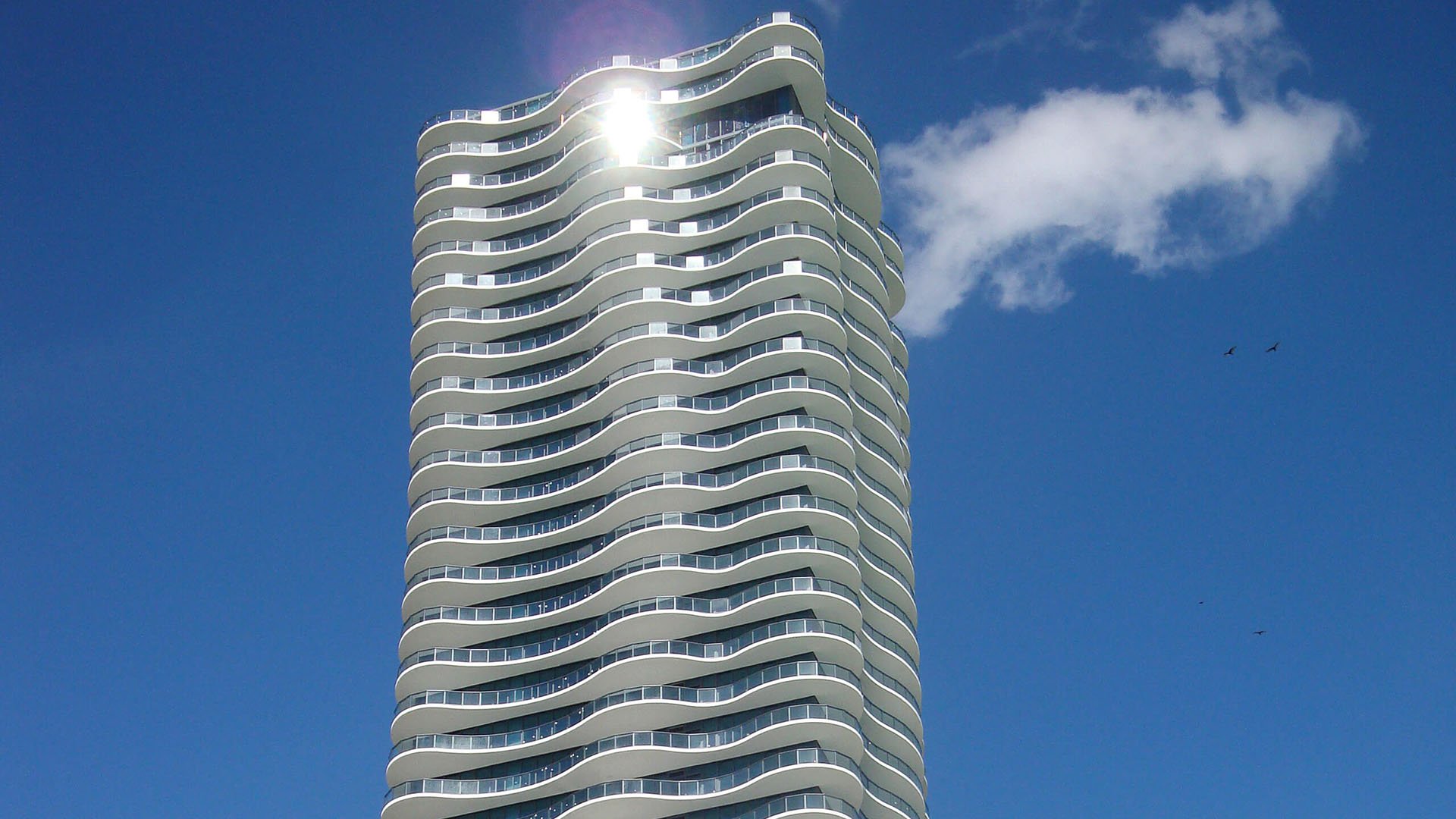
At Regalia Sunny Isles Beach, the appeal begins with a premise central to South Florida’s highest tier of condominium ownership: live expansively while in residence, then leave with confidence when life returns to another city, another home, or another season. For luxury buyers, the lock-and-leave ideal is not mere convenience. It is a lifestyle architecture built around discretion, continuity, and trust.
Regalia is positioned as an ultra-luxury oceanfront condominium in Sunny Isles Beach, with a boutique high-rise identity shaped by privacy, exclusivity, and low-touch ownership. Its defining design idea, one residence per typical floor, changes the way ownership feels. There is no corridor lined with neighboring front doors. There is no lateral adjacency in the conventional sense. Neighbor relationships become primarily vertical, tied to elevators, building systems, service coordination, and shared exposure to risk.
That is where the quiet complication emerges. The more private a building feels, the more consequential its governance becomes. In a lock-and-leave residence, owners may not be present when a leak begins, a storm approaches, a service provider needs access, or an association manager must coordinate building-wide protection. Neighbor-notice rules, access protocols, and disclosure requirements can feel counterintuitive in an ultra-private environment, but at this level they are often less about intrusion than preservation.
The one-unit-per-floor model is central to Regalia’s identity. It affects privacy, elevator circulation, and the psychological distance between owners. A buyer may reasonably expect fewer everyday encounters and a calmer arrival sequence than in a larger condominium with many residences per level. In that sense, Regalia reads as boutique rather than institutional, even while operating within the shared legal and mechanical framework of a condominium.
Yet vertical living creates its own obligations. Water does not respect ownership lines. Smoke, fire response, flood preparation, and storm readiness are not confined to a single private threshold. In a high-value oceanfront building, the residence above and the residence below can matter as much as the neighbor across the hall would in a more conventional tower.
This is the essential lock-and-leave question: how much autonomy can an owner expect when absence itself introduces risk to others? The answer is rarely found in marketing language. It lives in governing documents, association procedures, management practices, and the practical culture of the building.
For affluent owners who divide time among residences, notice requirements may initially sound like bureaucracy. In practice, they can function as an insurance-adjacent layer of discipline. If management knows when a residence will be vacant, who has authorized access, how to reach the owner, and which contractors or guests may appear, the building can respond more effectively before problems become expensive.
The major risks are familiar in coastal luxury condominium ownership: water intrusion, fire, flood exposure, storm conditions, security issues, and reputational damage inside a high-value address. A small incident in an unattended residence can become a building matter quickly. Neighbor-notice rules and access protocols help determine who can act, how quickly they can act, and whether other owners receive appropriate information when their property may be affected.
This does not mean every building operates the same way, or that Regalia owners should assume a particular rule without review. Specific requirements should be confirmed through the condominium’s governing documents, resale disclosures, association materials, and legal counsel. The luxury buyer’s mistake is not objecting to oversight. It is failing to understand the oversight before closing.
Sunny Isles Beach attracts buyers who may use residences intermittently rather than as full-time primary homes. That pattern is part of the broader oceanfront appeal: arrival without friction, service without explanation, and a residence that feels ready whenever the owner returns. In this context, second-home ownership is not incidental. It is a core use case.
Nearby luxury offerings reinforce how seriously the market takes this lifestyle. Buyers comparing the Sunny Isles corridor may also evaluate Bentley Residences Sunny Isles, St. Regis® Residences Sunny Isles, or The Ritz-Carlton Residences® Sunny Isles, each of which sits within a buyer conversation where services, access, privacy, and absence management are part of the value proposition.
For Regalia, the question is especially refined because the building’s low-density configuration intensifies expectations. Owners who choose a one-residence-per-floor building are often seeking the feeling of a private home in the sky. But a private-home feeling does not erase condominium interdependence. It makes clear rules more important, not less.
The best due diligence is practical. Buyers should ask how the building handles extended absences, whether emergency access procedures are defined, what notice is expected for contractors or guests, and how management communicates issues that may affect adjacent residences. They should also understand any policies around storm preparation, balcony or terrace readiness, leak monitoring, security protocols, and owner contact information.
The point is not to negotiate away governance. In a building of this caliber, governance is part of the asset’s protection. A well-run association can be one reason owners feel comfortable leaving a residence for long periods. Staff and management become the unseen infrastructure of lock-and-leave ownership, especially when the owner’s physical presence is occasional.
Resale buyers should be particularly attentive. In a resale setting, the residence may already have established patterns for maintenance, vendors, and owner access preferences. Those patterns do not replace formal documents, but they can reveal how the building actually functions. In Sunny Isles, where seasonal ownership is an important buyer consideration, the lived rhythm of the building matters.
The most sophisticated reading of Regalia is not that it eliminates neighbor obligations. It changes their shape. The owner may have extraordinary spatial privacy, but the tower still depends on coordinated systems, responsive management, and predictable behavior among residents.
That is not a flaw in the lock-and-leave model. It is the condition that makes the model durable. The owner who understands notice rules in advance can build a clean operating routine: designate contacts, authorize trusted representatives, maintain clear access instructions, and align travel patterns with storm-season expectations. The result is not less luxury. It is a more resilient version of it.
For buyers considering Regalia alongside Turnberry Ocean Club Sunny Isles and other ultra-luxury addresses, the question should be framed carefully. Do not ask only how private the residence feels when you are there. Ask how protected it is when you are not.
Is Regalia Sunny Isles Beach designed for privacy? Regalia is positioned around privacy and exclusivity, with one residence per typical floor shaping a more private ownership experience.
Does one residence per floor mean no neighbor concerns? No. It reduces lateral proximity, but vertical relationships still matter through building systems, water risk, access, and shared operations.
Are neighbor-notice rules confirmed for every Regalia owner? Specific rules should be confirmed through governing documents, association materials, resale disclosures, and legal review.
Why do lock-and-leave owners need building oversight? Oversight helps address leaks, storm preparation, security, fire response, and access needs when an owner is away.
Can notice requirements coexist with luxury privacy? Yes. Clear notice rules can protect privacy by making access, communication, and emergency response more predictable.
What should a buyer ask before purchasing at Regalia? Ask about absence procedures, emergency access, contractor protocols, storm readiness, owner contacts, and communication practices.
Is Regalia mainly for full-time residents? The Sunny Isles luxury market includes intermittent users, and Regalia’s low-touch positioning speaks to that lifestyle.
Why is water intrusion such a central issue? In a vertical condominium, a problem in one residence can affect other owners and building systems quickly.
Do resale buyers need extra diligence? Yes. Resale buyers should review formal documents and understand how the residence has been maintained and operated.
What is the main buyer takeaway? Lock-and-leave convenience works best when privacy is paired with clear governance, trusted management, and advance planning.
For a discreet conversation and a curated building-by-building shortlist, connect with MILLION.
If branded residences are on your mind — as a home or as an allocation — we would be glad to share what we are seeing, privately.
Begin a quiet conversation