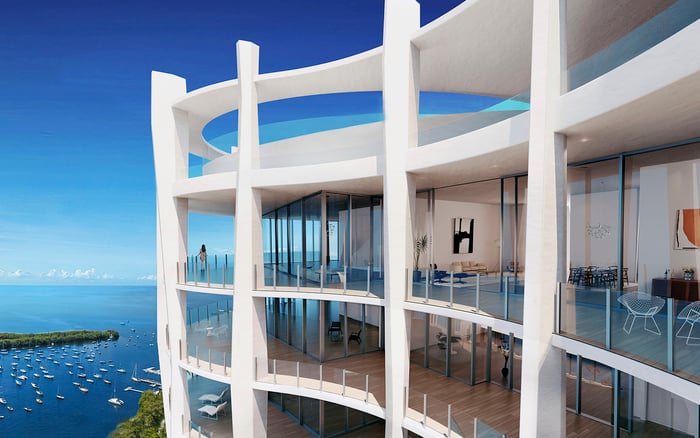
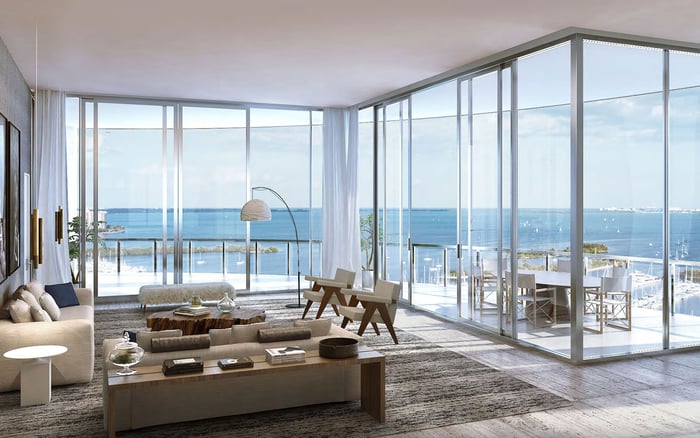
A discreet, practical guide for households at and around Mr. C Tigertail Coconut Grove evaluating private guard coverage through a layered, risk-based lens.

For households at or near Mr. C Tigertail Coconut Grove, private security should not be reduced to a simple question of more guards or fewer guards. The more sophisticated question is where human presence adds value after the property’s existing systems, staff procedures, access controls, and household habits have already done their work.
That distinction matters in Coconut Grove. The neighborhood’s appeal is not fortress living. It is the ability to move between tree-lined streets, marinas, schools, restaurants, parks, and private homes with an ease that feels rare in a major city. Security planning should preserve that texture. The objective is a quieter form of confidence: reducing personal, property, and reputational exposure without making daily life feel staged or defensive.
High-net-worth households often begin with concerns around visibility, travel, children’s schedules, staff access, deliveries, or event hosting. A better starting point is a layered model: establish the baseline, identify residual risks, and deploy guards only where a trained human presence improves outcomes.
In a full-service residential tower, building-level security is the foundation. Residents should first understand how arrivals, visitors, vendors, deliveries, parking, elevators, staff communications, and after-hours issues are handled by the property. From there, the household can decide whether a private layer is warranted.
This is especially relevant for residents comparing Coconut Grove’s new residential energy, including Four Seasons Residences Coconut Grove and other design-forward projects nearby. The building may manage many access and operational risks, but it does not automatically resolve every household-specific concern. Residual questions may involve unit-level privacy, vehicle protection, guest screening, personal movements, family routines, or coordination between private staff and building personnel.
The most effective private guard plan begins with a written map of those residual risks. Who comes and goes? Which entrances matter? Which hours create exposure? Who has authority to approve a visitor? How should a guard respond to a persistent delivery, an unexpected contractor, or a late-night arrival? Without those answers, guard coverage can become ornamental rather than operational.
A household inside a luxury tower does not face the same security environment as a nearby townhome or single-family residence. In a tower, the critical interface is often coordination: between the resident, private household staff, building staff, valet, vendors, guests, and any dedicated guard. Coverage may focus on arrivals and departures, secure movement from vehicle to residence, elevator etiquette, visitor verification, and privacy around deliveries or service appointments.
For a townhouse or one of Coconut Grove’s single-family homes, the emphasis changes. There may be more direct exposure at the street, driveway, side yard, gate, or service entrance. Guard coverage may involve gatehouse staffing, neighborhood rovers, shared guard arrangements among neighbors, perimeter checks, and protocols for unplanned visitors. In this setting, the human element is less about navigating a building ecosystem and more about watching thresholds, patterns, and unusual activity.
This is why a residence near Arbor Coconut Grove may require a very different approach from a private home closer to a residential lane. Coconut Grove contains multiple security environments within a small geography. A single template is rarely adequate.
Private guard coverage should be defined with precision. A vague promise of “extra security” is not a plan. Households should specify posts, time windows, patrol zones, communication channels, response protocols, escalation rules, appearance standards, and performance expectations.
A fixed post can make sense at a driveway, lobby interface, private elevator landing, event entrance, or temporary contractor access point. A roving patrol can be more effective for perimeter checks, neighborhood movement, or a cluster of nearby residences. Off-duty law enforcement details may be considered for certain higher-exposure moments, while unarmed guards may be appropriate for hospitality-oriented access control. Gatehouse staffing may suit private residential enclaves, while shared neighborhood coverage may be more efficient when several households have overlapping concerns.
The right solution is not always the most visible one. A guard who understands discretion, tone, and restraint may be more valuable than a larger presence that unsettles guests or signals anxiety. At the highest level, security is as much about judgment as manpower.
The strongest security plans mirror the way a household actually lives. Frequent travel may justify added coverage during departures, returns, or extended absences. Event hosting may call for temporary screening, valet coordination, vendor control, and guest flow management. Public visibility may require closer attention to predictable routines. Families may need support around school movements, drivers, nannies, tutors, or after-hours activities.
Deliveries and contractors deserve particular attention. Luxury households often involve chefs, stylists, art handlers, designers, maintenance teams, pet care providers, and seasonal staff. Guard coverage should not simply block access. It should help verify, document, route, and escalate. The goal is to reduce confusion and prevent casual access from becoming normalized.
Residents accustomed to full-service living at properties such as Park Grove Coconut Grove may already understand the value of calm operational discipline. Private security should extend that discipline into the household’s specific patterns, not duplicate what the property already provides.
A guard is most effective when integrated with access control, video surveillance, visitor management, delivery rules, and written standard operating procedures. The household should decide who receives incident reports, how urgent matters are escalated, when building staff should be contacted, and what information should never be shared casually.
Written protocols are especially important when several people make decisions for the residence. If family members, assistants, domestic staff, drivers, and property managers all give instructions independently, security can become inconsistent. The guard needs one clear command structure and a defined scope.
For households evaluating newer wellness and lifestyle-oriented addresses such as The Well Coconut Grove, the best guard coverage should feel aligned with residential hospitality. It should be alert but not intrusive, firm but not theatrical, and capable of protecting privacy while allowing the home to function naturally.
Before engaging a vendor, households should examine hourly rates, overtime rules, minimum shifts, supervision, insurance, liability, incident reporting, replacement staffing, training standards, and whether guards will be armed, unarmed, or off-duty law enforcement. These are not administrative details. They determine how the coverage performs under pressure.
Scope of work is equally important. Does the guard receive packages, or only observe delivery activity? Can the guard deny entry, or only escalate? Will the guard patrol a perimeter, remain at a post, escort residents, coordinate with building staff, or monitor cameras? What qualifies as an incident? How quickly must it be reported? Who reviews performance each week?
The recommended sequence is simple: conduct a risk assessment, design coverage, select the vendor, write protocols, deploy, monitor, and refine periodically. Households change. Staff changes. Travel schedules change. Security should be reviewed as a living service, not a one-time purchase.
Coconut Grove rewards subtlety. The best security plan supports privacy, movement, family life, entertaining, and the open rhythm that makes the neighborhood desirable. It recognizes that a luxury tower, a boutique condominium, a townhome, and a private residence each carry different exposures.
The question for residents at Mr. C Tigertail Coconut Grove is not whether a guard can add value. The question is when, where, and under what instructions a guard adds the most value without creating unnecessary friction. In that sense, the most secure household is not always the one with the largest visible presence. It is the one with the clearest plan.
Should every household at Mr. C Tigertail Coconut Grove hire a private guard? Not necessarily. Building-level procedures should be the foundation, with private coverage added only where household-specific risks remain.
When is dedicated guard coverage most useful? It is often most useful during arrivals, departures, events, contractor access, late-night activity, or extended absences.
Is a fixed post better than a roving patrol? A fixed post suits a defined threshold, while a roving patrol may better serve perimeter checks, neighborhood movement, or multiple nearby residences.
How should tower residents think about private security? They should focus on coordination with building staff, guest screening, vehicle protection, unit privacy, and personal movement patterns.
How do townhomes and single-family homes differ? They often require more attention to gates, driveways, service entrances, perimeter checks, and neighbor coordination.
Should guards be armed or unarmed? That decision should be made through a risk assessment, legal guidance, vendor qualifications, and the household’s tolerance for visible security.
What should be in a guard scope of work? It should define posts, hours, patrol zones, communication rules, escalation procedures, incident reporting, and performance expectations.
Can several neighbors share guard coverage? Yes, shared neighborhood coverage can be effective when households agree on patrol zones, funding, supervision, and reporting protocols.
How often should a security plan be reviewed? It should be revisited periodically, especially after changes in travel, staffing, public visibility, family routines, or property access.
What is the right tone for security in Coconut Grove? The right tone is discreet, calm, and hospitality-aware, preserving the neighborhood’s walkable character while reducing exposure.
For a tailored shortlist and next-step guidance, connect with MILLION.
If branded residences are on your mind — as a home or as an allocation — we would be glad to share what we are seeing, privately.
Begin a quiet conversation