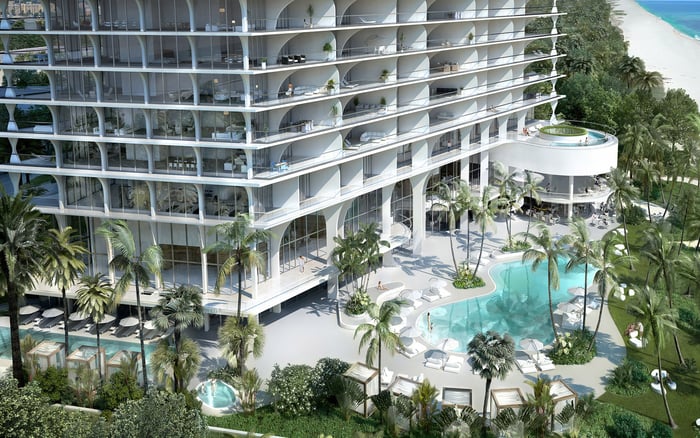
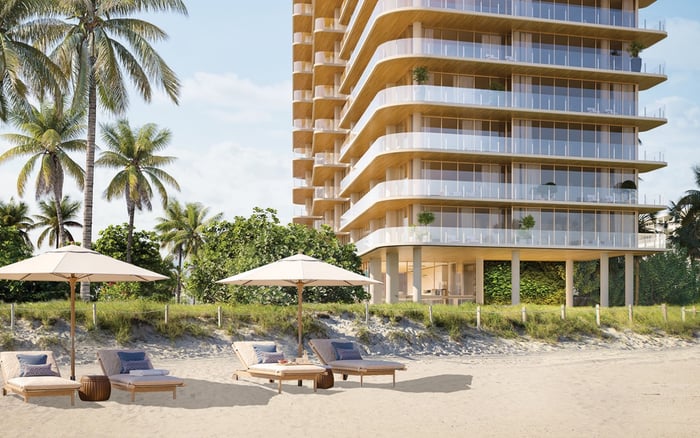
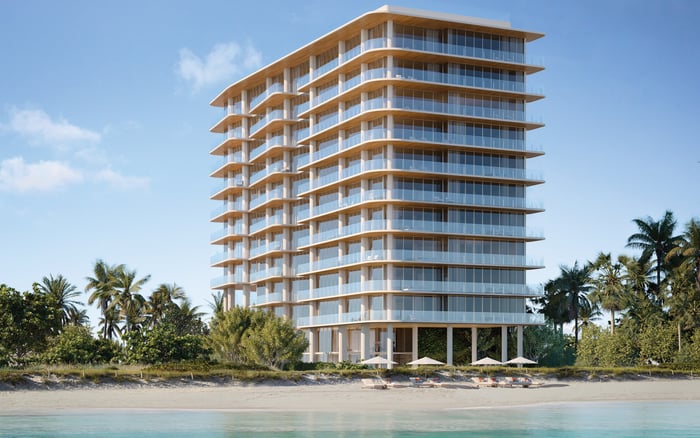
A buyer-focused comparison of Regalia Sunny Isles Beach and Ocean House Surfside for discreet handling of art, wine, and luxury-goods deliveries, with emphasis on due diligence rather than assumptions.
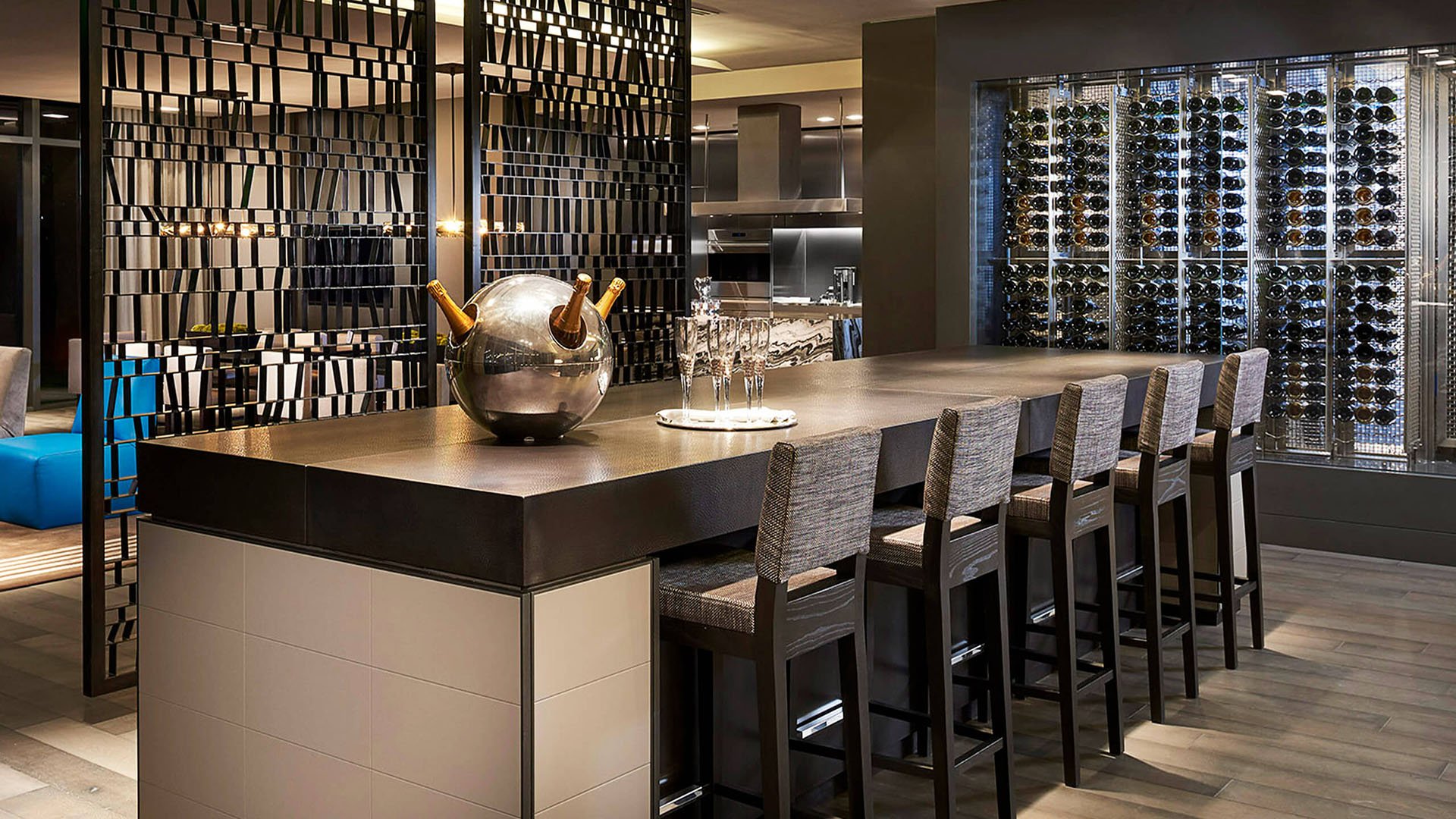
For a certain South Florida buyer, privacy is no longer limited to tinted glass, controlled elevator access, or a quiet lobby. It extends to how a painting arrives from storage, how a temperature-sensitive wine shipment moves from vehicle to residence, and whether a jewelry trunk or couture delivery is ever visible to other residents, guests, or vendors.
That is the real comparison between Regalia Sunny Isles Beach and Ocean House Surfside. Both sit within rarefied coastal markets, both speak to buyers who value privacy, and both require a more forensic review than a typical amenity checklist. But they point to two different forms of discretion.
Regalia Sunny Isles Beach appears to have the stronger buyer-facing case for infrastructure-led discretion, provided its private-arrival, elevator, loading, and service-circulation features are confirmed in condo documents or directly with management. Ocean House Surfside may be the more appealing choice for buyers who prioritize Surfside quiet, human-scale familiarity, and a lower-profile setting, provided its receiving, freight, security, and vendor-access protocols are equally verified.
In short, Regalia is the more plausible fit for collectors who want operational capacity. Ocean House is the more plausible fit for buyers who want a boutique environment where fewer moving parts may support privacy. The answer is not aesthetic. It is logistical.
Regalia Sunny Isles Beach is the natural first stop for buyers who want a residence to function like a private operating platform. The building’s appeal in this comparison is not based on any single unverified feature. It rests on the broader question of whether a larger luxury tower environment can offer more robust service movement, more controlled routing, and clearer separation between resident-facing and service-facing activity.
For art buyers, the key issue is not whether a lobby feels elegant. It is whether large-format works can be unloaded, staged, insured, moved vertically, and installed without improvisation. The due-diligence list should be precise: freight-elevator dimensions, private elevator access, loading-dock enclosure, certificate-of-insurance requirements, service-hour rules, and procedures for approved fine-art handlers.
For wine buyers, the question becomes even more exacting. A serious cellar acquisition can be compromised by heat exposure, vibration, public staging, or long waits in non-climate-controlled areas. Regalia should be evaluated for whether deliveries can move from vehicle to residence with minimal delay and minimal environmental disruption. The ideal path is short, secure, cool, and predictable.
For luxury-goods buyers, Regalia’s likely advantage would come from any verified combination of private elevator use, secure receiving, controlled access, and low-exposure service routing. Those are not decorative amenities. They are risk-management tools. A buyer moving handbags, watches, couture, rare books, or design pieces into an oceanfront residence should know exactly who receives the item, where it waits, who logs it, and how it reaches the home.
The caution is equally important. Claims about museum-grade art handling, biometric freight access, wine cold-chain continuity, or confidential luxury-delivery protocols should not be accepted as assumptions. They belong in document review and management interviews.
Ocean House Surfside offers a different type of appeal. Its strongest argument is not necessarily infrastructure depth. It is the possibility of a quieter residential rhythm, a smaller social footprint, and a Surfside setting where discretion can come from familiarity rather than scale.
For some buyers, that matters. A boutique building may have fewer daily interactions, fewer unfamiliar faces, and a more intimate relationship between residents and staff. In the best cases, that can make deliveries feel more personal, less exposed, and easier to coordinate discreetly. But it must be verified rather than presumed.
The art-buyer checklist at Ocean House Surfside should begin with the physical path. Confirm service-entry width, elevator capacity, turning radius, protected staging areas, and whether large-format works can avoid public resident paths. A beautiful residence is not enough if a major canvas, sculpture, or collectible design piece cannot make the journey cleanly.
Wine buyers should focus on receiving-room temperature, scheduling windows, elevator wait times, backup-power procedures, and rules for third-party wine logistics vendors. The question is not whether wine can be delivered. The question is whether it can arrive with minimal heat exposure, minimal vibration, and no unnecessary pause in a public or uncontrolled area.
For luxury-goods buyers, Ocean House may appeal because smaller buildings can sometimes offer staff familiarity and lower traffic. Yet privacy is only as strong as the building’s actual protocol. Buyers should ask how vendors are vetted, whether deliveries are logged discreetly, whether staff can coordinate direct handoff, and how the association treats high-value parcels that require confidentiality.
Art is the most revealing category because it exposes every weakness in a building’s service choreography. A collector should ask for dimensions, routes, and rules rather than promises. Can the piece be removed from the truck in a protected area? Is there room to turn a crate? Can handlers pad corners and walls? Does the elevator accommodate the work without tilting it beyond acceptable limits? Are certificates of insurance required from all handlers?
Regalia Sunny Isles Beach is the stronger candidate if those answers reveal a more controlled and capable vertical path. Ocean House Surfside remains viable if its smaller scale still allows private, protected movement. The distinction is practical: art does not reward improvisation.
Wine logistics are less visible but no less demanding. The move from vehicle to residence should be measured in exposure, not elegance. Heat, vibration, waiting time, and uncontrolled staging are the risks.
A buyer comparing Sunny Isles and Surfside should ask both buildings whether wine shipments can be scheduled to avoid peak elevator activity, whether receiving areas are temperature appropriate, whether backup-power procedures protect climate-sensitive storage, and whether preferred wine logistics vendors are allowed direct coordination. Regalia may prove stronger if it offers a more predictable service route. Ocean House may satisfy buyers whose shipments are smaller, more scheduled, and easier to manage discreetly.
High-value luxury deliveries are often about visibility. The best building protocol minimizes the number of people who see the item, know the vendor, or understand the timing. That applies to watches, jewelry, couture, design objects, technology, and bespoke furnishings.
Regalia’s advantage would be strongest if secure receiving, private elevator movement, controlled access, and staff discretion are documented. Ocean House’s advantage would be strongest if its lower-traffic setting and staff familiarity create a more private handoff. Either way, the buyer should ask for procedure, not reassurance.
For buyers whose collections are active, valuable, and logistically complex, Regalia Sunny Isles Beach appears to be the better starting point. Its advantage is the likelihood of a stronger infrastructure-led case, especially for art, wine, and luxury-goods movement that requires secure vertical circulation and controlled service coordination.
For buyers whose definition of privacy is quieter, more residential, and less operationally intensive, Ocean House Surfside may be the more elegant answer. Its potential strength lies in boutique discretion, Surfside calm, and a smaller-scale environment that may feel less exposed day to day.
The decisive move is not to choose by reputation. It is to walk the route. Start at the delivery vehicle. Follow the path through receiving, staging, elevator, corridor, and residence. Ask who has access, who signs, where items wait, what happens during power interruptions, and whether vendors can bypass public lobby areas. The better building is the one whose answers are specific, documented, and calm.
Which building is the better fit for discreet art deliveries? Regalia Sunny Isles Beach appears to have the stronger case if freight dimensions, loading privacy, and service routing are confirmed.
Can Ocean House Surfside still work for serious collectors? Yes, if its service-entry width, elevator capacity, staging areas, and vendor protocols support protected movement without public exposure.
What should wine buyers verify first? They should verify temperature exposure, elevator wait times, receiving procedures, backup-power rules, and approved third-party vendor access.
Is boutique privacy the same as logistical privacy? No. Boutique privacy may mean fewer people and lower traffic, while logistical privacy requires documented routes, controls, and staff procedures.
Should buyers assume either building has museum-grade handling? No. Museum-grade art handling should be treated as a due-diligence question, not an assumed building feature.
What matters most for luxury-goods deliveries? Secure receiving, discreet logging, controlled access, direct handoff, and low-exposure movement from vehicle to residence matter most.
Is oceanfront living harder for sensitive deliveries? It can be if service routes create heat, humidity, vibration, or delay, which is why delivery choreography should be reviewed closely.
What documents should a buyer request? Buyers should request building rules, insurance requirements, vendor-access policies, elevator procedures, and any receiving protocols.
Which area feels more private, Sunny Isles Beach or Surfside? Surfside may feel quieter and more residential, while Sunny Isles Beach may offer a stronger tower-infrastructure thesis for service needs.
What is the safest conclusion for high-value logistics? Regalia appears stronger for infrastructure-led discretion, while Ocean House may suit buyers prioritizing a quieter setting.
If you'd like a private walkthrough and a curated shortlist, connect with MILLION.
If branded residences are on your mind — as a home or as an allocation — we would be glad to share what we are seeing, privately.
Begin a quiet conversation