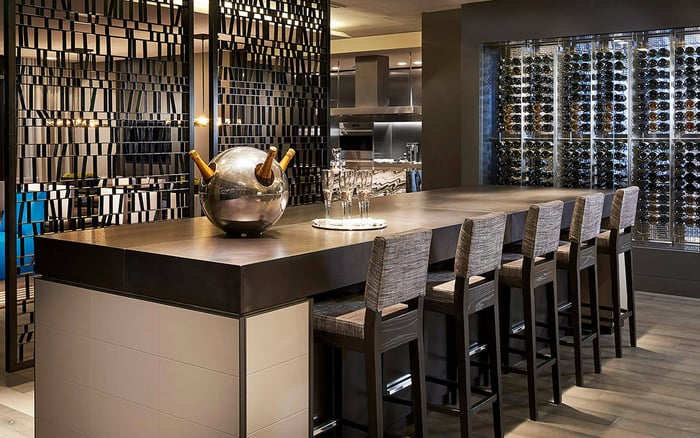
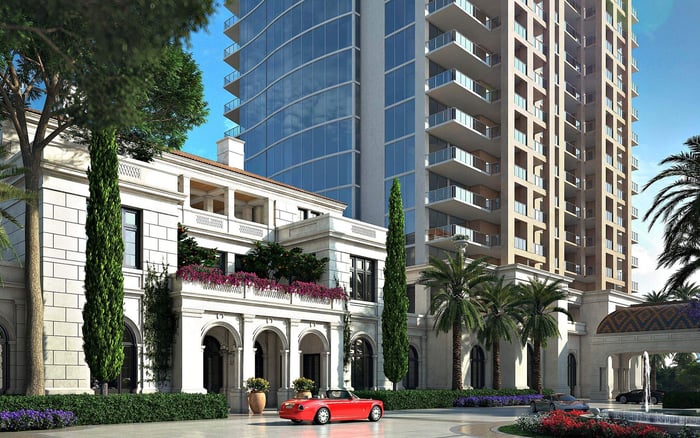
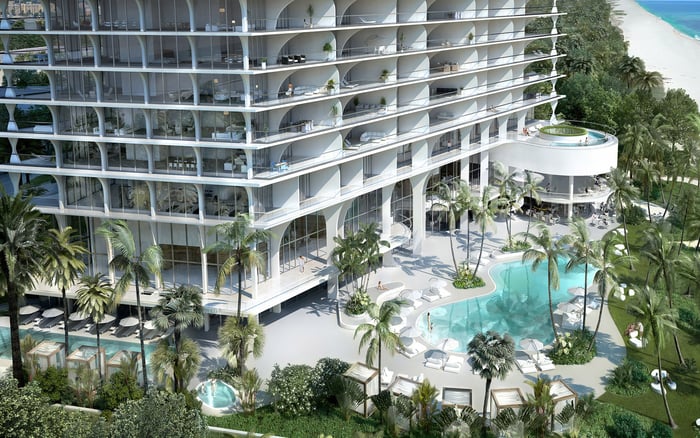
Ocean House Surfside and The Estates at Acqualina in Sunny Isles represent two distinct philosophies of oceanfront luxury: intimate boutique living versus full resort-scale ownership. This MILLION Luxury comparison frames what each style delivers, who it fits, and the questions sophisticated buyers should ask before choosing.
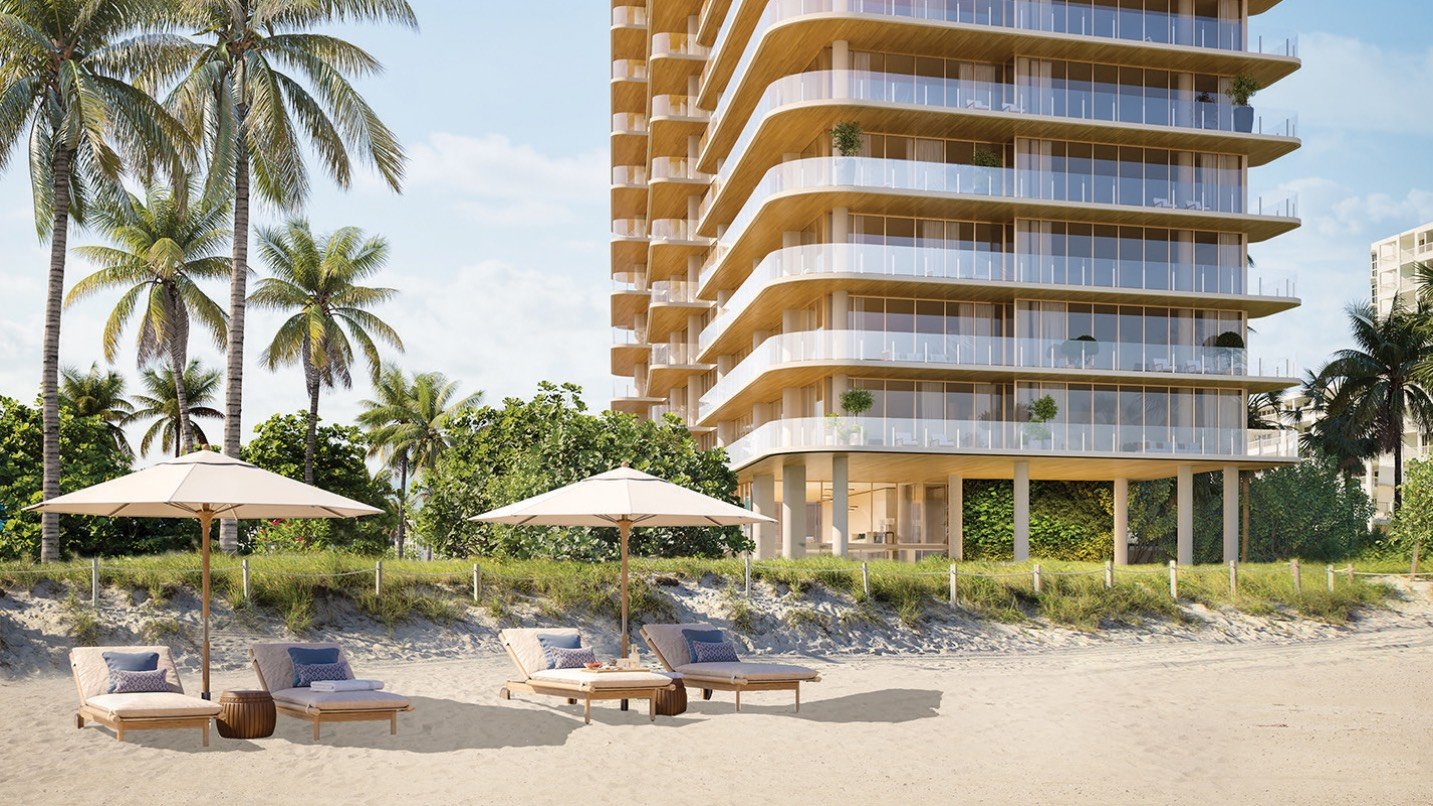
In South Florida’s highest tier, “oceanfront” is no longer a single category. It’s a spectrum of cadence-from a low-key, concierge-forward address where days are shaped by quiet routines, to a resort-scale environment where ownership feels adjacent to a private club. That spectrum comes into sharp focus when comparing Ocean House Surfside with The Estates at Acqualina Sunny Isles.
What truly separates them isn’t the view, the beach, or the level of finish you’d reasonably expect in either. It’s the lived experience: how many people you pass in the lobby, how the pool deck reads at peak hours, how guests are handled, and whether your home functions as a retreat from the scene-or as part of it.
For buyers who already understand floor plans and price-per-foot dynamics, this is the more nuanced decision. It’s about selecting your preferred expression of luxury: the boutique tenor of Surfside’s village-like calm, or the resort scale and programmed energy of Sunny Isles.
Surfside feels deliberate and composed, with an intimate beachfront atmosphere that suits residents who want to step into a walkable, residential enclave. The daily tone is “fewer, better”: fewer crowds, fewer interruptions, and a sense the community is designed for living rather than touring.
Sunny Isles, by contrast, is a vertical coastline with a distinctly international pulse. It supports an amenity-rich, hotel-adjacent lifestyle where the buildings themselves can feel like destinations. For buyers who want a vacation-state of mind without leaving home, that dynamism is a feature-not a drawback.
If you’re weighing Surfside against Sunny Isles, start with one clarifying question: do you want your address to disappear into your life, or to anchor your social and family orbit?
Boutique living isn’t simply fewer residences. It’s the sense that the building is calibrated to the resident, not to the crowd. In a boutique environment, service often feels more anticipatory because the team learns patterns quickly. The pool deck stays serene. Elevators feel effortless. Even the arrival sequence can read more like a private residence than a grand lobby.
That is the thesis many buyers seek when they gravitate to Ocean House Surfside: an oceanfront home that operates as a refuge, where privacy is not an amenity but the baseline.
Resort-scale living, on the other hand, is built on breadth and optionality. The day can be fully contained within the property: multiple ways to swim, dine, train, recover, entertain, host, and reset. For multi-generational use, that range is powerful. It reduces friction for families and guests because there’s always something to do-and space to do it-even when weather shifts or weekends fill up.
The Estates at Acqualina conceptually belongs to that world: a high-service, high-program environment designed to support a fuller calendar and a more social rhythm.
At the top of the market, service is less about whether it exists and more about how it shows up.
In a boutique building, the highest form of service is discretion. Residents often prefer a staff culture that is present without being performative-one that respects the fact that many owners are escaping visibility. The most valuable outcome is fewer decisions: packages handled, cars coordinated, deliveries simplified, the home watched while you travel. It’s luxury that stays out of your way.
In a resort-scale environment, service can be more theatrical by design-not showy, but hospitality-forward. There’s a rhythm to it: arrivals, departures, peak periods, holiday seasons, and family patterns. The building is engineered to support motion. Owners who enjoy entertaining and hosting often find this style easier because the infrastructure is already in place.
Neither is “better.” They simply suit different temperaments.
Amenities are often presented as a checklist. Sophisticated buyers evaluate them as a lifestyle contract.
In a boutique setting, amenities tend to be highly curated and calmly used. The appeal isn’t endless variety; it’s that the spaces are consistently comfortable when you actually want them. Your swim isn’t a competition for chairs. Your workout isn’t a line item on someone else’s itinerary. For many owners, that reliability matters more than the total count.
In a resort-scale setting, the appeal is optionality and redundancy. Multiple environments can coexist: quiet corners for residents who prefer a softer mood, and more active zones for families and guests. Owners who split time between cities often value this because it compresses “vacation logistics” into one address.
If you want a useful benchmark, consider how you live in other markets. Buyers who value the calm precision of boutique properties often also gravitate to Surfside neighbors like Fendi Château Residences Surfside or the architectural restraint of Eighty Seven Park Surfside. Buyers who prefer a larger amenity universe frequently cross-shop Sunny Isles icons, including Bentley Residences Sunny Isles, where the story is as much about experience as it is about the residence.
Privacy isn’t binary. It’s engineered through circulation, staffing, and the way a building manages guests.
Boutique properties can feel more private simply because there are fewer touchpoints: fewer residents, fewer visitors, fewer competing agendas. Your arrival can be predictably quiet, and the building’s rhythm can align with owners who treat the home as a sanctuary.
Resort-scale environments manage privacy differently. They often rely on zoning: separate areas, multiple amenities, layered access, and a hospitality team that directs flow. The advantage is capability. The trade-off can be a higher baseline of activity, particularly during prime seasonal windows.
When evaluating either approach, run a “guest stress test.” Picture hosting friends for a weekend: arrival, valet cadence, elevator timing, pool experience, dinner coordination, and how comfortably your guests can enjoy the property without you managing every detail.
Ocean House Surfside’s boutique tenor tends to resonate with owners who want a second-home that is genuinely restorative. The home is the destination, and the destination is a quieter version of the coast. This appeals to principals who travel frequently, maintain multiple residences, or simply value a place that feels intentionally removed from performance.
The Estates at Acqualina’s resort scale often appeals to buyers who see the property as a family hub. If children, grandchildren, and friends are part of the equation, the ability to “arrive and plug in” matters. The home becomes a stage for time together, with enough on-site programming and comfort to keep everyone satisfied.
A useful lens is deciding whether your ideal weekend is built around silence and simplicity, or shared activity with built-in options.
When two properties sit at the top of their respective styles, the decision is usually clarified by operational questions-not aesthetic ones:
How important is a consistently quiet pool and common-area experience?
Do you prefer a service culture that is discreet and minimal, or hospitality-forward and highly staffed?
Will the home be used primarily by you, or will it regularly host extended family and guests?
Are you seeking a “lock-and-leave” retreat, or a year-round lifestyle platform?
How do you want the neighborhood to function: as a low-key village extension of home, or as a high-energy oceanfront corridor?
Buyers who answer these questions candidly tend to choose with confidence-even when both options are objectively exceptional.
South Florida’s ultra-premium buyer is increasingly segmented. Some are buying for refuge: less noise, fewer variables, and high design without spectacle. Others are buying for experience: a home that doubles as a self-contained resort, with the social and wellness infrastructure to support longer stays.
Surfside has become synonymous with discreet luxury and a carefully controlled atmosphere, while Sunny Isles continues to evolve as a high-service, global beachfront destination. In that sense, Ocean House Surfside and The Estates at Acqualina aren’t just two buildings. They’re two distinct interpretations of what modern oceanfront ownership should feel like.
Is Ocean House Surfside better for privacy-focused buyers? Generally, boutique-scale living tends to feel quieter and more discreet day to day.
Is The Estates at Acqualina more suitable for families? Resort-scale properties typically cater well to multi-generational use and frequent guests.
Which location feels more residential: Surfside or Sunny Isles? Surfside usually reads more village-like, while Sunny Isles feels more vertical and active.
Do boutique buildings usually have fewer shared-space crowds? In many cases, yes, because lower density can reduce peak-time congestion.
Will a resort-scale property feel like a hotel? It can, especially in common areas, though many owners enjoy that hospitality energy.
How should I compare amenities between the two? Focus less on count and more on whether you will actually use the spaces regularly.
Which style is easier for entertaining and hosting? Resort-scale environments often make hosting simpler because the infrastructure is built in.
Is Surfside aligned with other boutique oceanfront options? Yes, the area is also associated with refined, design-forward residences nearby.
Should I prioritize neighborhood walkability in this decision? Yes, because the daily rhythm outside the building often defines overall satisfaction.
What is the most important differentiator between these two? The core difference is lifestyle tempo: intimate retreat versus programmed resort living.
When you're ready to tour or underwrite the options, connect with MILLION Luxury.
If branded residences are on your mind — as a home or as an allocation — we would be glad to share what we are seeing, privately.
Begin a quiet conversation