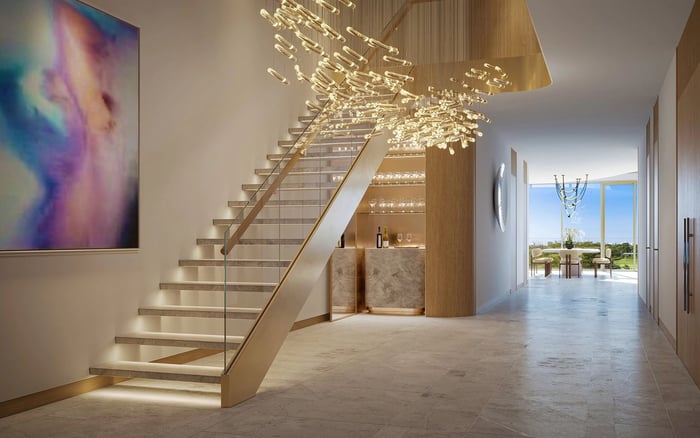
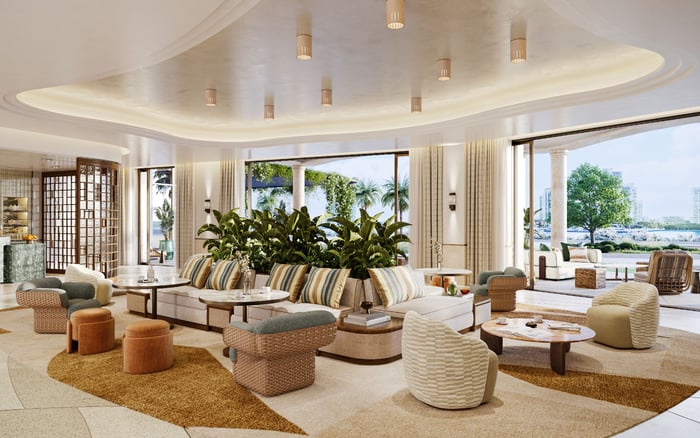
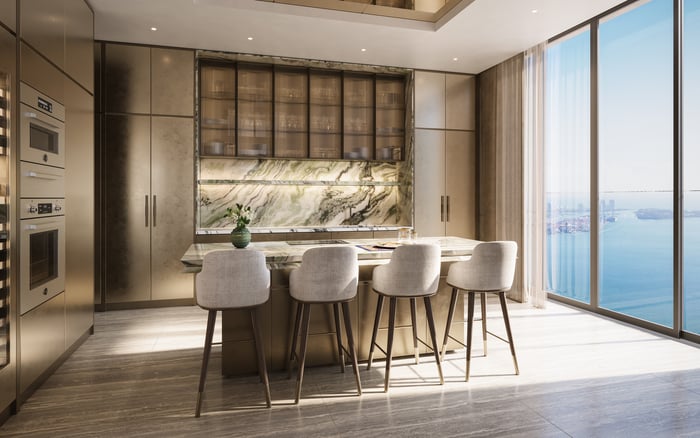
Quiet luxury is reshaping Miami’s design language, trading overt flash for restraint, craft, and longevity. In South Florida, that shift shows up as calm massing, tactile materials, shaded outdoor rooms, and interiors that feel tailored rather than branded. For buyers, the appeal is practical as much as aesthetic: privacy, acoustic comfort, enduring palettes, and a home that photographs beautifully without relying on spectacle. This guide decodes what “understated” looks like in Miami-Dade’s sun, salt, and social calendar, plus how to evaluate it when touring new and resale residences.
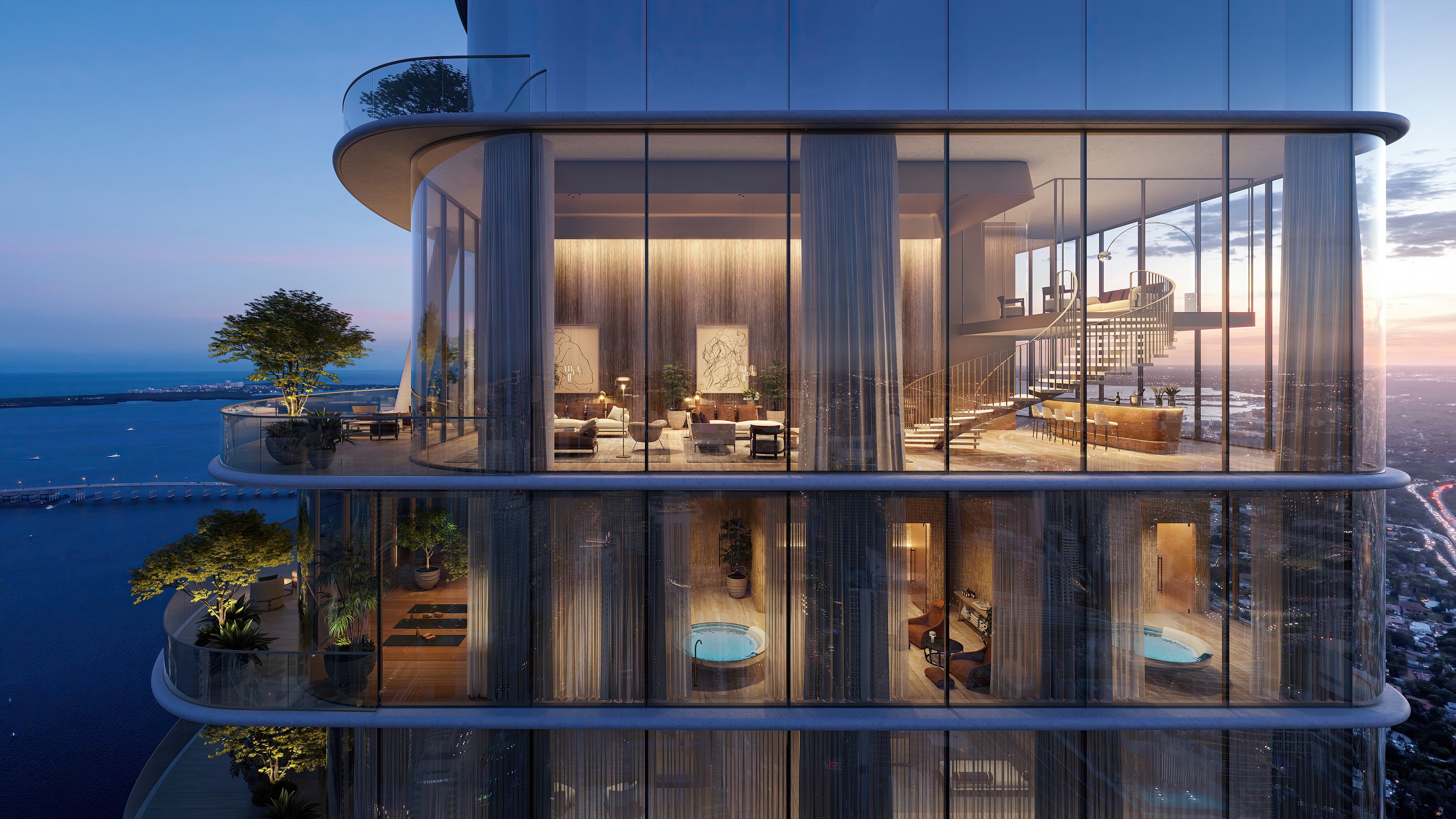
Miami has always been fluent in spectacle, but the market is increasingly rewarding a quieter vocabulary. “Quiet luxury” in architecture is not minimalism for its own sake, and it is not a rejection of glamour. It is a recalibration toward proportion, material integrity, and a sense of ease that feels inevitable rather than performed.
In practice, the aesthetic is legible in what is removed as much as in what is added. Fewer competing finishes. Less visual noise at the facade. More attention to shadow lines, reveals, and the way a hand meets a surface. In a city that moves between the beach and the boardroom, understatement can read as confidence. The home does not need to prove itself.
For South Florida buyers, this shift also reflects a maturity of taste. A residence can still be distinctly Miami without leaning on a theme, a logo, or a single showpiece gesture. Quiet luxury is not anonymous. It is precise, edited, and intentional.
Several forces make Miami especially receptive to understatement right now.
First, the audience has widened. The region continues to draw global owners who value discretion and are accustomed to quiet competence, with expectations shaped by legacy markets, private clubs, and family offices. Many want homes that can host effortlessly, but they also want calm, privacy, and continuity from one residence to the next.
Second, South Florida’s climate and lifestyle reward architectural performance. A house that is truly luxurious here is one that manages heat, glare, humidity, and salt air with grace. When a home performs well, aesthetics often simplify. Deep overhangs, pocketing glass, and shaded terraces can do significant work while still reading visually restrained.
Third, social media has pushed design toward extremes, and the natural countertrend is a return to timelessness. Buyers who have seen the same high-gloss look repeated across markets are increasingly drawn to spaces that feel personal, collected, and difficult to replicate.
Quiet luxury in Miami architecture often starts with massing and composition, not decoration.
You may notice cleaner silhouettes and fewer decorative moves competing for attention. The facade might be defined by a disciplined grid, one primary material, or a sequence of recessed openings that create depth. Landscaping frequently carries equal weight, softening the building edge so the arrival feels sheltered and private.
The strongest examples read intentional from the curb, then reveal detail as you approach. A textured stone wall, a wood-lined soffit, or a carefully proportioned entry stair can communicate more confidence than oversized gestures built to impress at a glance.
Restraint does not mean severity. In Miami, quiet luxury typically remains warm. It favors comfort, tactility, and livability over starkness.
In a coastal environment, materials are part of the home’s long-term value story. Quiet luxury favors finishes that age with dignity and can be maintained without constant replacement.
Expect a preference for natural stones, honed textures, and soft-matte surfaces that deepen in changing light. Metals often skew warmer and less reflective. Woods and wood tones tend to appear in protected areas where they can be preserved. Even when a residence reads ultra-modern at first glance, the most enduring versions avoid feeling cold by pairing crisp lines with tactile, grounded elements.
Color is typically restrained, but never sterile. Think tonal layers that respond to Miami’s bright daylight: creams, sand, mineral grays, and soft charcoals, with high-contrast accents used sparingly. The intent is simple: let the view and the light be the drama.
For buyers, the practical benefit is real. A calmer palette reduces design fatigue, makes furnishing decisions easier, and supports resale appeal across different tastes.
Understated elegance is often most obvious in plan. Quiet luxury is less about novelty and more about how a home behaves hour by hour.
Look for a clear separation between public and private zones that still feels seamless. A gracious entry that creates a psychological transition from city energy to personal space. Circulation that is not wasted, where hallways introduce light, art moments, or a sense of procession instead of reading as leftover square footage.
Kitchens are often a tell. Rather than being staged as a set, the kitchen is conceived as a true workspace with discreet storage, integrated appliances, and a layout that supports real cooking. If there is a statement, it usually comes from craftsmanship and material choice, not novelty.
In condos, quiet luxury shows up as controlled sightlines. Not every room has to open directly to the main living space. A study that can close. A guest suite that feels self-contained. Thoughtful transitions are a form of privacy, and privacy is a form of luxury.
Miami’s sunlight is intense, which makes it a design partner to be managed, not simply invited in.
Quiet luxury favors layered daylight: filtered, bounced, and softened. You may see screens, fins, recessed glazing, or architectural frames that create a gentle gradient from exterior brightness to interior calm. Instead of relying on high-contrast interiors or headline chandeliers, the space feels evenly luminous throughout the day.
At night, lighting becomes architectural. The most elevated residences avoid a ceiling full of downlights and instead use cove lighting, wall washes, and discreet fixtures that shape mood without calling attention to the source.
When touring, pay attention to glare. If you instinctively squint in key rooms, that is not a small issue. It can signal a home that is fighting its environment instead of harnessing it.
In South Florida, outdoor space is not an accessory. Quiet luxury acknowledges this by designing exterior areas as true rooms.
Rather than a balcony that feels incidental, you may find terraces with overhead protection, a sense of enclosure, and materials that track the interior palette. Thresholds are handled quietly, with large openings that visually disappear and flooring that continues so inside and outside feel like one composition.
Privacy matters, especially for owners who entertain. Landscaping, screens, and wall placement can create intimacy without looking defensive. The most sophisticated solutions read like garden design, not security.
If you are evaluating a building in Brickell or along Miami Beach, consider how outdoor space sits relative to neighboring sightlines. A generous terrace is not truly luxurious if it is perpetually on display.
Many buyers first recognize quiet luxury through what they do not hear.
Sound control is a form of discretion. In a high-rise, that can mean thoughtful separation of mechanical systems, attention to door and window performance, and layouts that reduce echo. In a single-family home, it can show up through material choices, ceiling details, and landscape buffers that soften street noise.
You may not be able to verify construction assemblies during a tour, but you can still read the room. Listen for the hush when a door closes. Notice whether the interior stays calm even with traffic outside. A residence that supports conversation without raised voices often signals a deeper level of quality.
Quiet luxury often resists overt branding. Even when a building is well-known, its aesthetic language may avoid obvious motifs in favor of a residential, collected feel.
That does not make the design generic. It simply means the home can hold art, furniture, and personal history without competing for attention. It allows an owner to curate rather than conform.
For buyers, this matters even more when purchasing a second home. A visually restrained residence can feel familiar immediately. It becomes a backdrop for your life, not a prop.
For a neutral reference point in the urban core, explore Una Residences Brickell as a starting place for the contemporary, design-forward conversation buyers are having in Miami today.
Quiet luxury is not one fixed look. The best expressions respond to context.
In Brickell, understatement often means refining the high-rise experience. Sophistication shows up in calmer common areas, discreet arrivals, and residences that prioritize livability over theatrics. Buyers often want a city address that still feels private, with rooms that support both hosting and decompressing.
In Coconut Grove, the aesthetic frequently leans toward warmth and landscape integration. The goal is a home that feels nested. Even contemporary architecture can feel grounded when it respects tree canopy, outdoor rooms, and a slower rhythm.
Along Miami Beach, quiet luxury can be about restraint against a vivid backdrop. The strongest residences allow the ocean and sky to remain the focal point. Interiors stay tonal and composed, while exterior detailing stays crisp without becoming loud.
Across these areas, the throughline is intentionality. The design does not chase attention. It earns it.
Quiet luxury appears in both new and existing inventory, but it can show up differently.
In new construction, you may see it as a reaction against high-gloss lobbies and overly thematic interiors. Developers and designers are increasingly aware that buyers want spaces that feel residential, not like a set. When executed well, new projects can offer the advantage of integrated systems, cohesive detailing, and a unified palette.
In resale, quiet luxury can be discovered in buildings or homes that were disciplined from the start, or in renovations where an owner prioritized craft. The upside can be character and, sometimes, more generous proportions. The risk is that “quiet” can also read as dated if the palette lacks intention.
A smart approach is to evaluate the bones first. Proportion, light, and layout are expensive to change. Finishes are comparatively easier.
Quiet luxury can be harder to spot quickly because it is not designed to be obvious. A disciplined tour helps you read what matters.
Start with arrival. Does the entry sequence feel calm and private, or chaotic and exposed? Understated buildings tend to manage transitions well, with clear wayfinding and a sense of containment.
Then study alignments. Doors, baseboards, and millwork should feel deliberate and precise. When details are clean, imperfections cannot hide, so quality often reveals itself immediately. Look closely at corners, gaps, and how surfaces meet at thresholds.
Assess storage. Quiet luxury interiors are engineered to hide clutter. If closets, pantries, and utility spaces are undersized, the home may struggle to stay serene in real life.
Evaluate light control. Do you have options beyond fully open or fully closed? Layered shading and thoughtful window placement support comfort throughout the day.
Finally, test the emotional read. The best understated homes make you exhale. They feel composed, not contrived.
Buyers sometimes assume quiet luxury means a blank canvas. In reality, it is a curated canvas.
Furniture choices tend to be sculptural rather than ornate. Textiles do the work of softening. Art is given room to breathe. In Miami, the most successful interiors often balance crisp forms with organic elements that relate back to landscape and light.
A restrained foundation also supports flexibility, which is particularly valuable for second-home owners. Seasonal changes, new acquisitions, and evolving tastes can be layered in without forcing a full redesign.
The key is consistency of tone. Too many statements can break the spell. Quiet luxury rewards editing, repetition of materials, and a clear point of view.
In luxury real estate, trend risk is real. A home tied tightly to a specific moment can feel dated sooner than expected.
Quiet luxury, when executed with quality, tends to age slowly. That can protect resale value by appealing to a broad spectrum of buyers, including those who want to personalize without paying to undo a dramatic look.
It also supports everyday satisfaction. Owners rarely tire of comfort, good light, and calm proportions. These are the qualities you experience daily, long after the novelty of a bold finish has faded.
In Miami, where the market includes both end-users and lifestyle-driven buyers, a residence that feels timeless can be both an aesthetic choice and a strategic one.
What are the easiest signs of quiet luxury during a first tour? Look for restraint that feels intentional: a composed arrival, clean alignments in millwork and doors, controlled glare, and outdoor space that reads as a true room. The most persuasive sign is often the overall calm of the home, even before you notice any single finish.
How can I tell if a “minimal” interior is actually high quality? Minimal can hide nothing. Check how surfaces meet, how consistent the detailing feels, and whether the materials read purposeful rather than generic. If the space relies on emptiness alone, it can feel thin. If it relies on proportion, craft, and comfort, it usually feels complete.
Which matters more for resale, a distinctive look or a timeless palette? A distinctive look can be compelling, but timelessness tends to travel better across different buyers. In practice, the strongest resale profile often comes from timeless bones and a restrained foundation, with personality expressed through layers that are easier to change.
What should I prioritize in South Florida for comfort in heat and humidity? Prioritize homes that manage light and air with control: shaded outdoor rooms, thoughtful transitions from exterior brightness to interior calm, and spaces that feel comfortable throughout the day. In Miami, performance and comfort are not separate from luxury; they are the baseline.
If I want understated design, how do I avoid buying something that feels plain? Focus on intention. Understated does not mean empty. The difference is usually in proportion, tactility, and the quiet confidence of good detailing. A plain space feels unfinished. A quiet luxury space feels edited, layered, and ready to live in.
For discreet guidance on design-forward buying across South Florida, connect with MILLION Luxury.
If branded residences are on your mind — as a home or as an allocation — we would be glad to share what we are seeing, privately.
Begin a quiet conversation