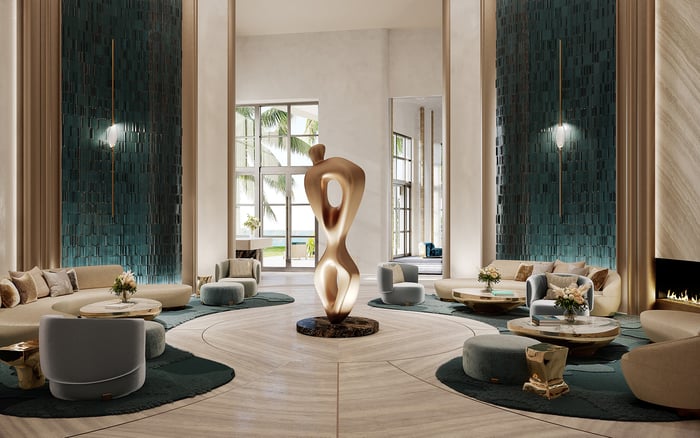
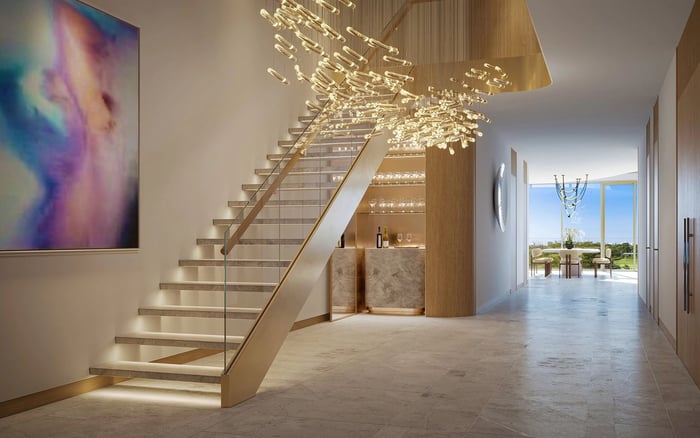
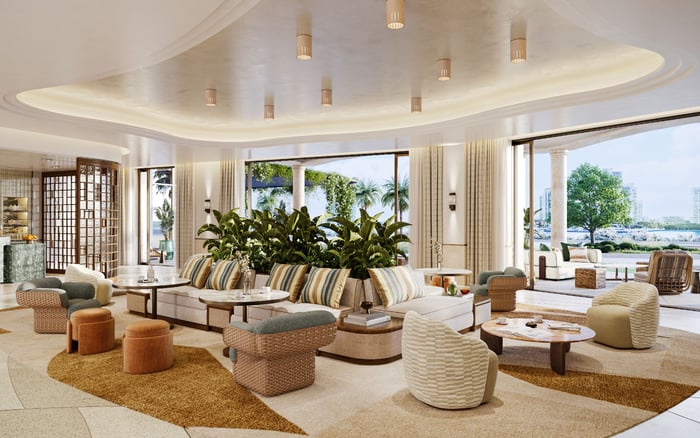
Pagani Residences enters the conversation as more than a branded tower concept. It signals a maturing South Florida buyer, one who evaluates buildings the way collectors evaluate objects: by authorship, proportion, craft, and the discipline behind the experience. With limited public specifics provided here, this MILLION Luxury editorial focuses on what sophisticated purchasers can actually measure today: how architecture performs in the waterfront climate, how a building’s design language ages, and how amenity planning and arrival sequences translate into daily life and resale strength. In that frame, Pagani Residences becomes a lens for the region’s new standard: quieter confidence, higher material expectations, and a preference for design that reads as timeless rather than trendy.
South Florida’s luxury market has moved beyond the era when height and square footage alone signaled prestige. Today’s ultra-premium buyer is sharper, more discerning, and often globally benchmarked-measuring a waterfront residence in Miami against experiences in New York, London, the Riviera, and the Gulf. Patience is thin for buildings that photograph beautifully but live awkwardly.
In that context, Pagani Residences reads less as a headline and more as a signal: a renewed emphasis on architectural discipline. The new standard is what holds up when you walk the site at noon, arrive at night, and live through August. It is rooted in proportion, craft, acoustic comfort, privacy, and the choreography of everyday life.
For buyers and investors, that framing is practical. When a project projects design authorship, expectations rise-and the evaluation must sharpen from “is it luxury?” to “is it coherent, and will it age with dignity?”
In a waterfront climate, real architectural achievement is often the part you do not immediately see. It shows up in how a façade moderates heat gain, how balconies behave in wind, how glazing and seals stand up to salt exposure, and how mechanical systems are isolated so the home reads as calm.
A building can be sculptural and still fall short if outdoor space is unusable for much of the year, if lobbies amplify noise, or if service circulation cuts across resident arrival. Conversely, understated architecture can feel genuinely expensive when it resolves practical realities with precision and restraint.
This is where South Florida’s best new towers are heading: quiet competence over theatricality. In Brickell, for example, the conversation is increasingly about refined density and an urbane arrival sequence-not merely skyline presence. Projects like 2200 Brickell reflect that shift toward a more composed, residential-first expression within a high-energy neighborhood.
For Pagani Residences, the takeaway is not a checklist of promised features. It is an expectation of rigor-that the design story and the day-to-day function are inseparable for residents who value privacy, precision, and a controlled environment.
Luxury buyers have always paid for provenance, but the definition is evolving. Provenance is no longer only an address or a view corridor; it can also be the internal logic of a building and the credibility of its design language.
A growing subset of purchasers is effectively collecting living environments. They want residences that feel authored-where public spaces and private interiors share a consistent vocabulary. They notice abrupt material shifts, lighting that reads as decorative but underperforms, or corridors that feel incidental rather than considered.
This mindset is especially pronounced in the current wave of design-led projects where the brand is not the point; cohesion is. Consider the fashion-inflected approach in 888 Brickell by Dolce & Gabbana: regardless of aesthetic preference, the market appetite is clear. Buyers want a building to feel intentional from curb to closet.
Pagani Residences enters this same zone of expectation. When the narrative is “design,” the building must deliver design as lived experience-not as a logo.
In ultra-premium residential design, arrival is decisive. The instant you turn off the street, the experience should shift-public to private, noise to calm. Great buildings make that transition effortless and discreet. Average ones push residents into shared friction: deliveries, ride-share congestion, and confusing circulation.
The standard top buyers expect includes:
A clear approach and drop-off that never feels like an airport queue.
A lobby that reads as residential, not hotel overflow.
Elevators and corridors that protect privacy and minimize incidental encounters.
Back-of-house planning that keeps service out of sight.
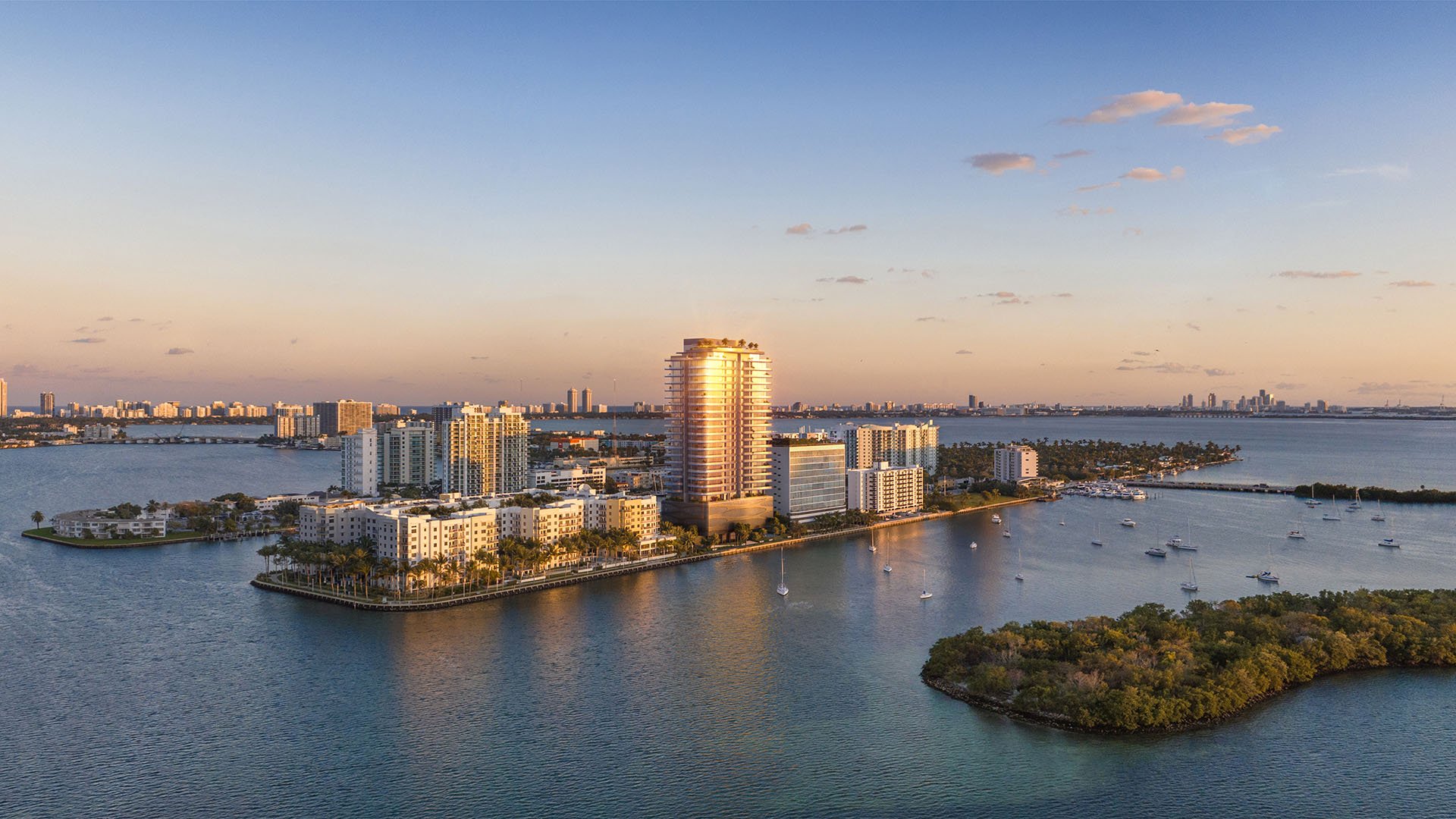
North Bay Village is uniquely positioned for this conversation because it can offer a more controlled, waterfront-adjacent lifestyle while staying connected to Miami’s core. The district is drawing increasing attention from buyers who want proximity without the constant exposure of the densest submarkets. In that same geographic thread, Continuum Club & Residences North Bay Village and Shoma Bay North Bay Village illustrate how the area is being reimagined through a more design-forward lens.
For Pagani Residences, the architectural feat to watch is not only the skyline silhouette. It is whether circulation and threshold moments feel curated, quiet, and cleanly separated.
South Florida buyers routinely ask for “glass, light, and views.” The sophisticated version of that request is more exacting: maximize outlook while protecting comfort. Floor-to-ceiling glazing is only a luxury when interior temperatures remain stable, glare is managed, and sound is controlled.
Outdoor living is equally central. Terraces are a regional signature, but they are also where design meets physics. Depth, orientation, wind behavior, and shading strategies determine whether a balcony is a stage set-or a true extension of the living room.
Miami Beach has long priced the value of true ocean adjacency, and the strongest projects there tend to be uncompromising about the interface between inside and outside. The coastal restraint of 57 Ocean Miami Beach is a useful comparator for how buyers think about waterfront calm: the building should feel composed, not busy, and the residence should feel protected even when the horizon is dramatic.
The point for Pagani Residences is straightforward: “architectural feats” must translate into usable, comfortable space. Views are emotional; comfort is what makes that emotion livable.
In a salt-air environment, materials are a financial decision as much as an aesthetic one. Some finishes develop patina and character; others deteriorate quickly or demand constant attention. The wealthiest buyers are often the least interested in maintenance, and they will pay for solutions that reduce friction.
The new standard increasingly includes:
Exterior systems selected for longevity, not initial impact.
Common areas designed to wear elegantly under real traffic.
Hardware and fixtures that feel substantial in hand, not just in renderings.
Mechanical and air quality strategies that support comfort and discretion.
This is where architecture becomes lifestyle. A residence is not only a place to be seen-it is a place to live without negotiating daily compromises.
Without leaning on unverified specifics, buyers can still apply a high-level, rigorous evaluation that separates design marketing from design reality. Here is what to ask for-and what to watch-as information becomes available:
Plan intelligence: Are layouts efficient, or do they waste area on corridors and odd angles? Do primary bedrooms feel protected from public zones?
Window-to-wall logic: Is the glazing strategy coherent with sun exposure? Is there a plan for shading and glare, especially in key living areas?
Terrace usability: Are balconies deep enough to furnish? Do they feel sheltered, or perpetually windy?
Acoustic calm: Are mechanical systems isolated? Are walls and doors designed for privacy?
Elevator experience: Does vertical circulation support privacy and speed? Are service routes separated?
Amenity realism: Are amenities designed for daily use or for brochure density? Wellness spaces, lounges, and outdoor areas should feel like extensions of the home.
Consistency of language: Does the building’s design story remain consistent from exterior to lobby to residence? In true luxury, transitions are seamless.
Treat the building as a long-term object. The goal is not novelty. The goal is a residence that still feels correct a decade from now.
North Bay Village occupies a strategic position between Miami Beach and the mainland, with water on all sides and access to multiple lifestyle nodes. For certain buyers, that geography offers a coveted mix: an aquatic horizon, a sense of separation, and a manageable distance to the city’s commercial and cultural centers.
As the neighborhood’s residential identity evolves, design becomes the differentiator. The projects that define the next chapter will be those that understand waterfront luxury is as much about quiet as it is about spectacle. Pagani Residences, by virtue of its design-forward positioning, belongs in that narrative shift.
For buyers, the opportunity is to evaluate North Bay Village not only as “up-and-coming,” but as a place where the next generation of Miami living can be more edited, more private, and more architecturally deliberate.
In ultra-premium real estate, the most resilient assets are often the least trend-driven. A building with disciplined proportions, durable materials, and a calm residential experience tends to retain desirability even as tastes shift.
From an investment perspective, the architectural question is simple: does the design create lasting preference? If yes, the residence may command a deeper buyer pool over time. If no, the property competes primarily on view and price-often a less forgiving position in future cycles.
Pagani Residences, framed as a new standard, invites precisely this lens. Buyers should look for signals that the project is designed to endure, not merely to debut.
What is the core idea behind the “new South Florida standard”? It prioritizes livability, privacy, and design discipline over sheer size or spectacle.
Why does architecture matter so much in luxury resale? Coherent, timeless design tends to remain desirable even as trends change.
What should buyers look for in a waterfront tower’s outdoor space? Usable depth, wind protection, and shade are what make terraces truly livable.
How can I evaluate a project when details are limited? Focus on plan efficiency, circulation privacy, material intent, and amenity realism.
Do branded residences always command a premium? They can, but the premium holds best when the brand aligns with true design quality.
What makes an arrival sequence feel genuinely luxurious? A discreet, legible approach with separated service circulation and a calm lobby.
Is North Bay Village a serious luxury address? It is increasingly viewed as a waterfront alternative with proximity to key Miami nodes.
How important are acoustics in high-rise living? Extremely important, since acoustic comfort is a defining element of daily privacy.
What is the most overlooked indicator of quality in new construction? Material durability in a salt-air climate, because it affects long-term upkeep and feel.
How should I compare Pagani Residences to other Miami-area projects? Compare the lived experience: layout intelligence, privacy, outdoor usability, and calm.
For a tailored shortlist and next-step guidance, connect with MILLION Luxury.
If branded residences are on your mind — as a home or as an allocation — we would be glad to share what we are seeing, privately.
Begin a quiet conversation