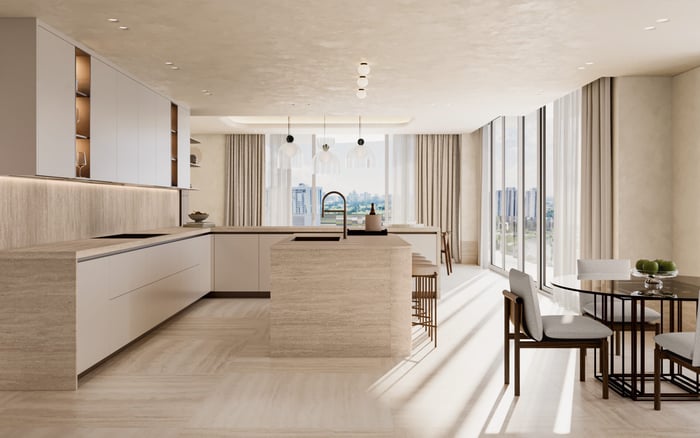
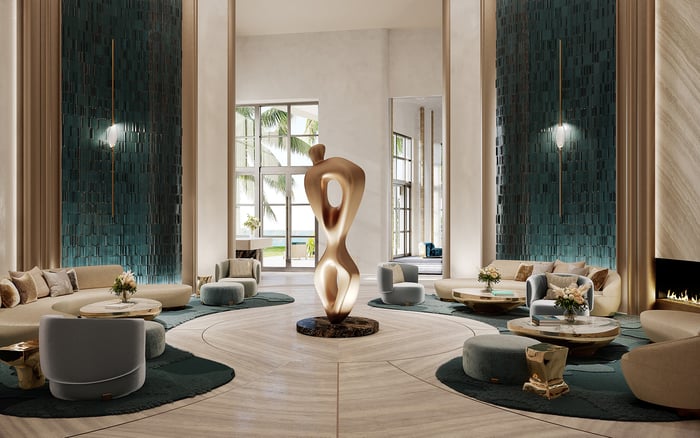
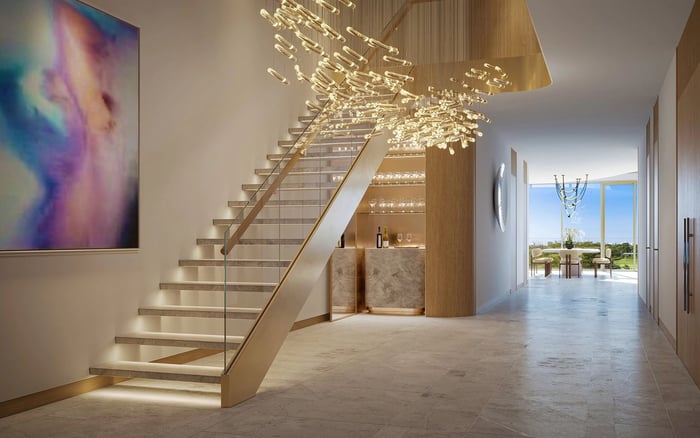
A buyer-oriented guide to assessing custom Italian cabinetry quality in a luxury Aventura residence, from materials and joinery to installation tolerances, hardware, and long-term serviceability.
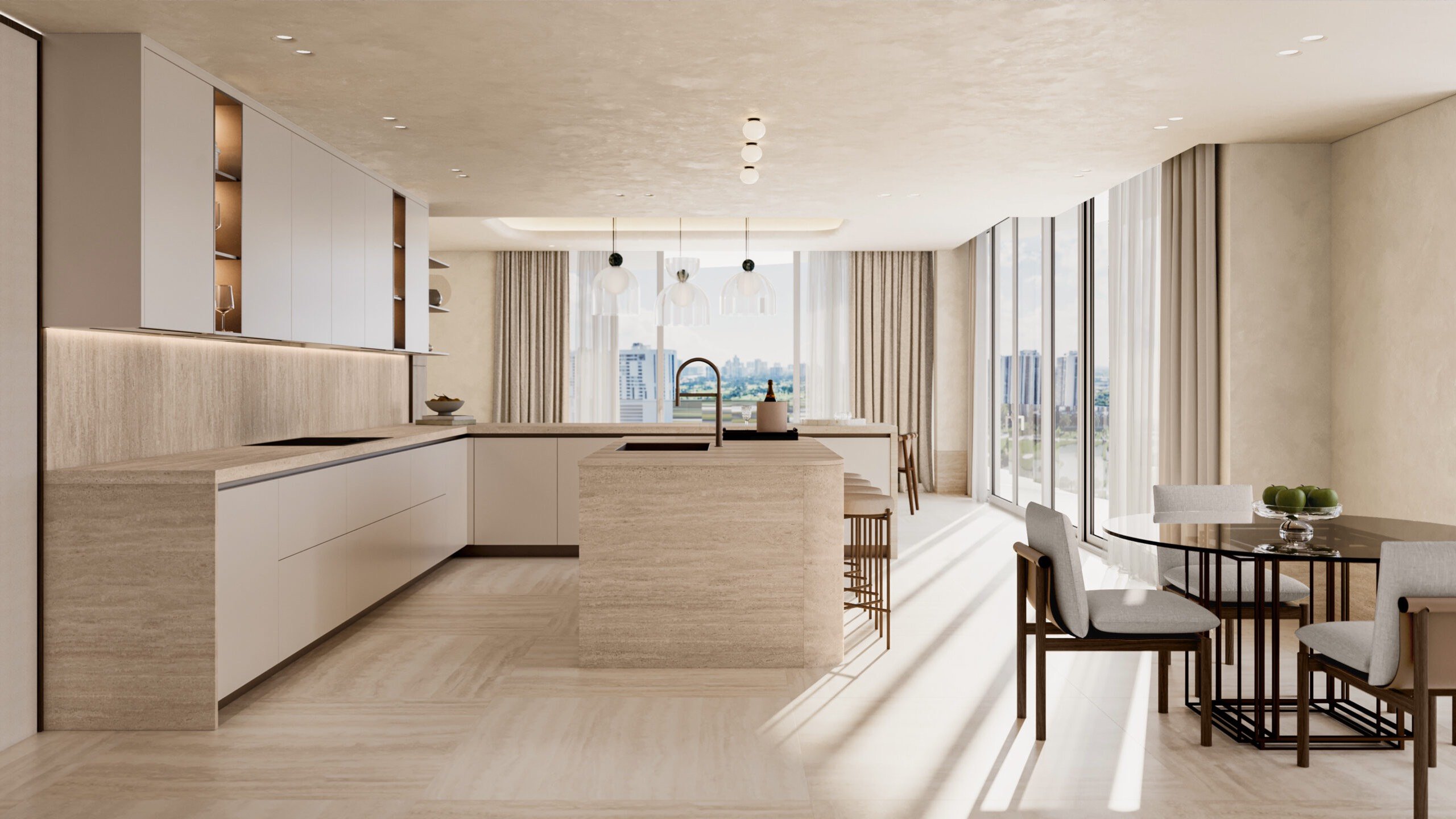
In a premium Aventura home, cabinetry is not a decorative afterthought. It is an engineered system operating in the most demanding zones of the residence: kitchens, wet bars, laundries, and bathrooms. In South Florida, humidity, salt air, and daily use quickly separate cabinetry that only photographs well from cabinetry that performs quietly for years.
At Avenia Aventura, buyers often treat “custom Italian cabinetry” as shorthand for style and provenance. That can be a useful starting point, but a real evaluation is more exacting. The goal is to verify how the cabinetry is built, how it is finished, how it is installed, and how it can be maintained.
The checklist below is built for showings, design-center meetings, and pre-delivery walk-throughs. It also works when you are comparing luxury projects across markets-whether you are touring Brickell product such as 2200 Brickell or evaluating waterfront inventory in other coastal neighborhoods.
Luxury cabinetry is proven by what you don’t see. Doors and drawer fronts can be refinished or replaced; the cabinet box is the foundation.
Focus on three things:
Panel material and thickness (where visible). Open a base cabinet and check the side panels, back panel, and shelf edges. A quality box feels rigid under lateral pressure and doesn’t sound hollow.
Edge-banding discipline. Run a fingertip along exposed panel edges and shelf fronts. High-quality edge-banding is flush, consistent, and firmly bonded, with no lift at corners. Sloppy edge-banding often signals loose tolerances elsewhere in the system.
Moisture-resistance strategy. In South Florida, moisture shapes a cabinet’s lifespan more than fashion. In sink bases and near dishwashers, look for clean sealing, protective liners where appropriate, and detailing that anticipates minor leaks and condensation rather than ignoring them.
Buyer’s tell: if the interior finish reads “commercial-clean” and intentionally specified, it’s usually a strong sign. If it feels like an afterthought, evaluate the rest of the system with healthy skepticism.
“Custom” can mean truly made-to-measure, or it can refer to a catalog system with selectable modules. Either can be excellent-but you need to know what you’re buying, because it affects layout precision, lead times, replacement parts, and future modifications.
Ask the team for clarity on:
Made-to-measure vs. modular sizing. If a panel is scribed to a wall, how is the detail finished-and is it factory-made or field-adjusted?
Finish type and sheen range. “Lacquer,” “laminate,” and “veneer” can all be premium when executed properly. The real test is consistency, durability, and repairability.
Who services it later. High-end cabinetry is only as good as the ability to adjust doors, tune drawers, and replace a damaged front without turning a small issue into a remodel.
If you are cross-shopping other high-design towers, note how different brands treat cabinetry as part of a complete interior package. In Miami Beach, for example, projects like Five Park Miami Beach often present millwork as part of a broader architectural identity, which can influence both detailing standards and aftercare expectations.
Italian-style modern cabinetry is often minimalist on the outside-which is exactly why construction must carry the luxury.
During a walk-through, look for:
Door and drawer-front flatness. Check long runs in raking light. Premium fronts stay planar with minimal waviness, especially on glossy or dark finishes.
Drawer box build quality. Fully extend a wide drawer and inspect the corners. Quality drawer boxes feel square and stable, with clean corner construction and a solid base. Then load-test gently by pressing down at the center; excess flex is a red flag.
Shelf support integrity. Shelves should sit level and feel locked-in at the supports. If a shelf rocks, the issue may be hardware selection or drilling accuracy.
A subtle but meaningful check: open a door halfway and let it go. With well-selected hinges and correct adjustment, the motion feels damped and controlled-no chatter, no rebound, no crooked final landing.
If cabinetry is the tailored suit, hardware is the stitching. Evaluate performance-not marketing terms.
Prioritize:
Soft-close hinges and drawer glides that remain smooth under light and heavier loads.
Full extension drawers in kitchens and pantries, where daily usability matters.
Adjustability in hinges and glides. In high-humidity climates, seasonal micro-movement happens; the ability to re-align doors and reveals is non-negotiable.
Test protocol (practical and revealing):
Open five different doors and five different drawers across the kitchen and baths. Resistance, speed, and sound should feel consistent.
Check for “racking” on wide drawers by pulling from one side. Premium slides resist torsion and still track cleanly.
When comparing lifestyle-driven residences, remember that a strong amenity narrative does not automatically translate to strong millwork. Even in ultra-prime waterfront towers such as 57 Ocean Miami Beach, validate the cabinetry as a working system-not a showroom moment.
World-class cabinetry can be undermined by average installation. In many luxury homes, installation is the make-or-break phase because it’s where walls, floors, and ceilings meet real conditions.
Evaluate:
Reveals and gaps. Study spacing between doors, between drawer fronts, and between panels. Premium work reads as intentional, consistent lines. Uneven gaps suggest rushed adjustment or uneven substrates that weren’t properly addressed.
Plumb and level. Stand to the side and sight down a run of base cabinets. The toe-kick line should be straight, and countertops should sit cleanly-without awkward shims telegraphing through.
Panel transitions at corners. Minimalist cabinetry is unforgiving at corners and returns. Look for tight alignment and thoughtful termination details.
Don’t ignore sound. Tap a side panel and a door; the acoustic response often correlates with mass, fastening method, and overall solidity.
Luxury finishes come down to uniformity, durability, and a credible repair path.
Checklist:
Color consistency across planes. Doors adjacent to panels should match in hue and sheen. Mismatch can occur when parts are finished in different batches.
Surface texture and orange peel. On lacquered finishes, look for a refined surface without excessive texture. On matte finishes, look for even diffusion-not patchiness.
Edge durability. Corners and edges fail first. Inspect door and drawer-front edges closely for chipping, thin coverage, or roughness.
Ask an unglamorous question: if a barstool nicks a base cabinet, what is the intended repair path? A premium program has a clear answer.
Cabinetry quality also shows up in how well it supports the way you live.
Look for:
Logical storage geometry. Deep drawers for heavy items, tray dividers near ovens, dedicated pull-outs that reduce daily friction.
Clearances at appliances. Doors and drawers should open without colliding with handles, appliance doors, or adjacent pulls.
Integrated lighting or power where relevant, executed cleanly and safely.
In Aventura, many buyers value turnkey ease. That puts added weight on whether cabinetry interiors are thoughtfully planned-not simply beautifully skinned.
Even the most sophisticated cabinetry is still a mechanical system-and it will require occasional adjustment.
Before you close, confirm:
Warranty scope. Clarify what is covered: finishes, hardware, alignment adjustments, and exposure-related issues.
Replacement part availability. Hinges and glides should be replaceable without custom fabrication. For door fronts, you want a realistic path to order a matching replacement in the future.
Care instructions that make sense. If the finish requires a ritual that feels incompatible with real life, treat it as a warning sign.
This is where luxury becomes discreet: the best cabinetry looks the same on day 900 as it did on day 9, without constant attention.
When you tour Avenia Aventura, use a repeatable script so your impressions are comparable across visits and across projects:
Open and close every primary cabinet type: base door, tall pantry, upper cabinet, vanity drawer.
Check one long run of doors for reveal consistency.
Pull a wide drawer from one side and feel for racking.
Inspect one sink base for moisture strategy and finish integrity.
Ask how post-close adjustments are handled and who performs them.
If you are also touring other premium South Florida product, keep the same script. Whether you are in Aventura or evaluating a vertical lifestyle in Brickell at 2200 Brickell, disciplined comparison helps you avoid being swayed by lighting and staging.
What is the fastest way to spot high-quality cabinetry during a showing? Open drawers and doors across multiple areas and check for consistent feel, alignment, and quiet soft-close.
Do glossy finishes mean better cabinetry? Not necessarily. Gloss can highlight imperfections; construction quality and installation tolerances matter more.
How important is the cabinet box material in South Florida? Very important. Humidity and daily use reward rigid, well-finished interiors with thoughtful moisture detailing.
What should I look for in drawer performance? Full extension, smooth travel, strong resistance to racking, and predictable soft-close under load.
Are handleless kitchens automatically higher-end? No. Handleless designs demand better alignment and hardware, but execution determines the result.
How can I judge installation quality quickly? Scan long runs for straight toe-kicks, consistent reveals, and doors that sit flush without proud corners.
Is “custom” always better than modular Italian cabinetry? Not always. Premium modular systems can be exceptional; the key is fit, finish consistency, and serviceability.
What questions should I ask about repairs and replacements? Ask how matching door fronts are reordered, whether hardware is standardized, and who performs adjustments.
Do bathrooms require different cabinetry standards than kitchens? Yes. Vanities need strong moisture resistance and finishes that tolerate frequent cleaning and condensation.
What is the biggest hidden risk in luxury cabinetry? Poor aftercare. Without a clear plan for adjustments and parts, small issues can become expensive disruptions.
To compare the best-fit options with clarity, connect with MILLION Luxury.
If branded residences are on your mind — as a home or as an allocation — we would be glad to share what we are seeing, privately.
Begin a quiet conversation