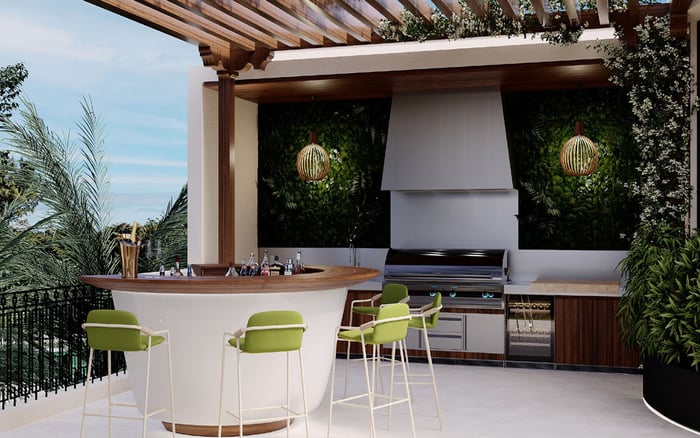
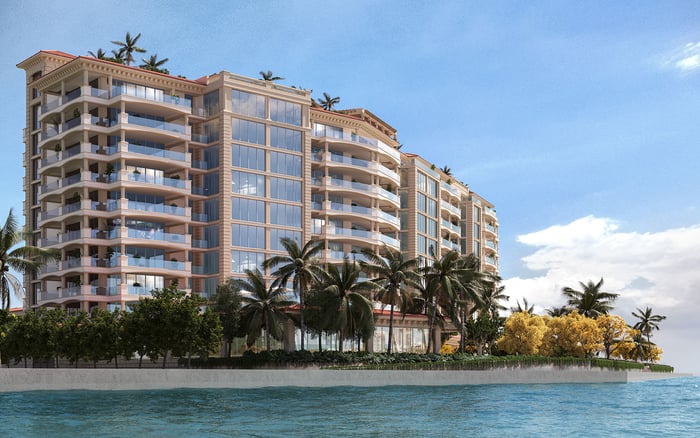
A discreet guide for Fisher Island buyers evaluating private school access, daily commute rhythm, staff coordination, and residence fit without sacrificing privacy or family calm.
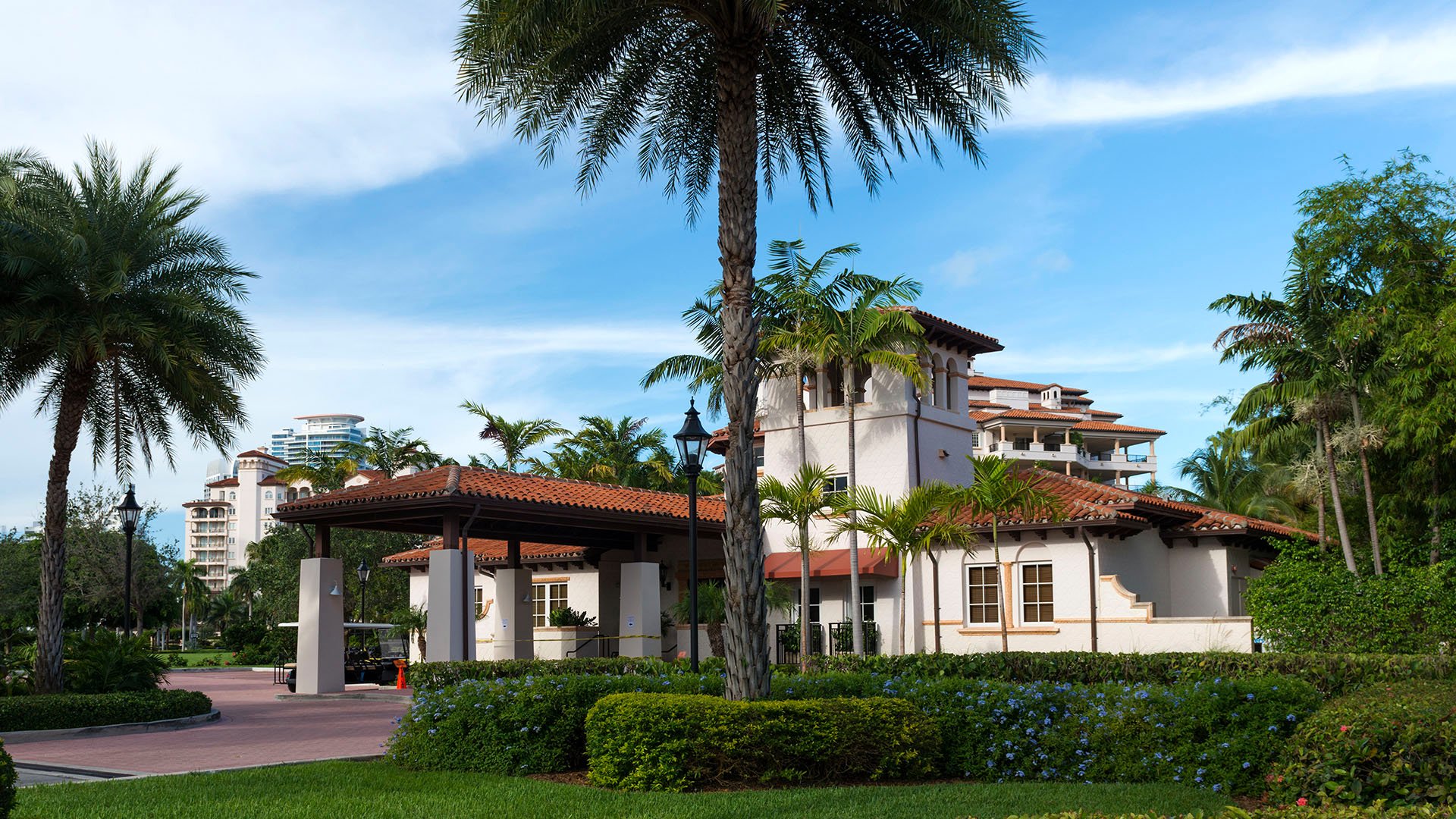
For families considering Fisher Island, the conversation often starts with privacy, water, architecture, and the rare quiet of a controlled residential environment. Yet for buyers with school-age children, the more revealing question is practical: how will daily academic life actually feel from this address?
Private school access is not simply a matter of distance. In the ultra-luxury segment, it is a matter of rhythm, predictability, household staffing, security preferences, and the family’s tolerance for transitions. A residence can be exquisite and still create friction if mornings feel compressed, extracurriculars become difficult, or a second child’s schedule demands a different route and pickup pattern.
For the family office memo, the shorthand may read: Fisher-island, Miami Beach, Private-school, Gated-community. In reality, the diligence is more nuanced. The strongest buyers evaluate the property not as an isolated asset, but as the operating center of a weekly family calendar.
Before comparing buildings, begin with the week itself. Map the school day from wake-up through bedtime, including drop-off windows, pickup times, tutoring, athletics, arts, social events, and parent commitments. A school that appears convenient on a map can feel very different when two children have different start times or when one child has late practice several times a week.
This is where luxury condo diligence becomes personal. A family with a full-time driver may prioritize secure staging, staff circulation, and a calm handoff. A parent who prefers to do school runs personally may care more about garage access, elevator timing, and whether the transition from residence to car feels effortless with backpacks, instruments, or sports gear.
Buyers considering The Residences at Six Fisher Island should evaluate the residence in this operational context: not simply how it photographs, but how naturally it supports a school morning with children, staff, and changing schedules.
In South Florida, travel time can be elastic. For Fisher Island buyers, the important exercise is to compare predictable time, not ideal time. Study how the route performs during the exact windows that matter: early morning drop-off, mid-afternoon pickup, early evening return, rainy afternoons, and peak social or event periods.
A refined buyer will often run the same route multiple times before committing. The objective is not to prove that a commute can be fast once. It is to understand the range. If the best case feels elegant but the worst case feels disruptive, that variance belongs in the decision.
For some households, the island’s seclusion is the point. For others, especially families with children in demanding academic or athletic programs, the value of privacy must be balanced against the number of daily movements the household expects to make. The more active the school calendar, the more important the building’s departure sequence becomes.
At Palazzo del Sol, for example, a buyer’s questions should extend beyond finishes and views to the softer infrastructure of family life: how a typical school-day departure is staged, how staff coordinate, and how the residence absorbs a return from a full day without feeling formal or fragile.
The most successful family relocations treat school access as a service design question. Who drives? Who escorts? Where does the child wait? How are last-minute changes communicated? What happens if one parent is traveling and another child has an after-school commitment?
These questions matter because Fisher Island buyers often value discretion. A household may prefer minimal exposure, consistent routines, and staff members who understand both school expectations and residential protocol. The residence should make that easy. The wrong configuration can turn every departure into choreography.
Look closely at elevator privacy, arrival sequence, parking convenience, service access, and the ease of transferring children, school bags, sports equipment, and projects without crossing paths unnecessarily. The objective is not spectacle. It is a quiet, repeatable routine.
Families comparing Palazzo della Luna may find it useful to create two scenarios: the polished weekday and the imperfect weekday. The polished weekday is when everyone is ready, the car is waiting, and the schedule holds. The imperfect weekday is when a child forgets a laptop, a practice runs late, or weather changes the afternoon. A true family residence must function beautifully in both.
Luxury buyers sometimes focus on a single admission target. That is understandable, but it can be too narrow. A child’s needs can change, siblings may require different environments, and a family relocating from another city may discover that the best long-term fit is not the first school on the shortlist.
A stronger approach is to compare the broader school ecosystem within reach. How many credible options feel workable from the residence? Can the household support different campuses if siblings diverge? Are there nearby resources for tutoring, enrichment, therapies, languages, music, or athletics that complement the chosen school?
The answer may affect whether the family wants the purest island retreat or a residence that keeps them more connected to the mainland day-to-day. For some, the most elegant solution is to retain Fisher Island as the private base while building a staff-supported routine around school access. For others, a second-home strategy or weekday pied-a-terre may become part of the conversation.
A young family may prioritize stroller movement, early bedtimes, caregivers, and proximity between bedrooms. A family with middle-school children may care more about study rooms, casual dining, and flexible spaces for friends. Teenagers may need independence, privacy, and a practical route to athletics, test preparation, and social commitments.
This is where floor plan matters as much as address. Formal entertaining space is not the same as livable family space. A grand residence should still offer places where children can decompress after school, where a tutor can work without occupying the main salon, and where staff can reset the home before dinner.
Buyers looking at The Links Estates at Fisher Island may be thinking in terms of estate-style living, privacy, and long-term family use. The school-access question there becomes broader: does the property support the family’s complete operating model, from weekday departures to weekend recovery?
The most useful comparison is not building versus building in the abstract. It is building versus calendar. Before making an offer, buyers should review four areas with precision.
First, compare the morning departure experience. The best residence allows children to leave without feeling rushed or exposed. Second, compare afternoon flexibility, since pickups, activities, and social plans often create more complexity than mornings. Third, compare staff workflow, including where drivers, caregivers, tutors, and household managers fit into the routine. Fourth, compare emotional tone. A residence that preserves calm during the school week carries value that square footage alone cannot capture.
Private school access, in this context, is not a box to check. It is a lens through which to evaluate whether Fisher Island will enhance family life or simply impress guests. The right property should protect privacy while still allowing children to participate fully in the academic and social world their parents have chosen for them.
Is Fisher Island practical for families with children in private school? It can be, provided the family tests real school-day routines and builds a predictable plan around transportation, staff, and timing.
Should buyers choose a condo based on the nearest private school? Not necessarily. The better comparison is commute reliability, school fit, and how the residence supports the family’s daily rhythm.
How should a buyer test school access before purchasing? Run the route during actual drop-off and pickup windows, then repeat it on different weekdays to understand the range of timing.
What residence features matter most for school-age children? Private elevator flow, easy departure, flexible study space, staff circulation, and storage for school and sports items are all important.
Does staff planning change the school-access equation? Yes. A skilled household team can make an island address feel seamless, especially when multiple children have different schedules.
Should buyers compare several schools before selecting a residence? Yes. Comparing a broader school ecosystem helps protect the family if admissions, age, or academic needs change.
Is privacy always worth a longer school commute? That depends on the family. Some buyers prize seclusion above all, while others need a shorter and more flexible daily pattern.
What should relocating families prioritize first? Start with the child’s school fit, then evaluate which residence best supports that academic and family routine.
Can Fisher Island work for teenagers with busy schedules? It can, but families should pay close attention to evening activities, social plans, athletics, and late returns.
When should school diligence happen in the buying process? It should happen before an offer, because school logistics can materially affect how the residence lives day to day.
For a confidential assessment and a building-by-building shortlist, connect with MILLION.
If branded residences are on your mind — as a home or as an allocation — we would be glad to share what we are seeing, privately.
Begin a quiet conversation