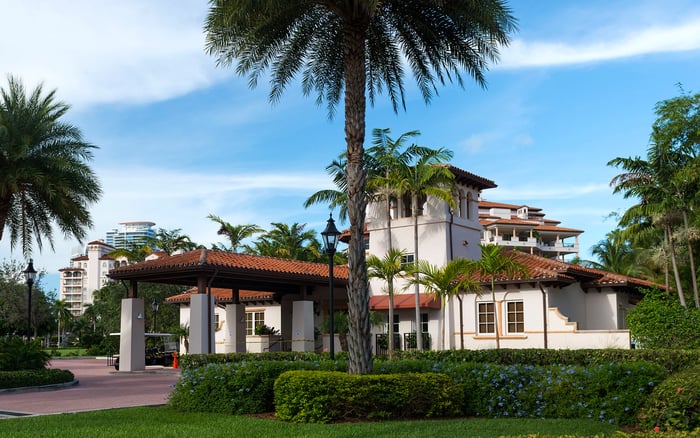
On Fisher Island, “exclusivity” is not a marketing promise. It is a daily operating condition shaped by access, ownership structure, and how a community is physically arranged. For buyers weighing The Links Estates against The Residences at Six Fisher Island, the right decision tends to reveal itself once you define what privacy must accomplish: seclusion from neighbors, insulation from the mainland, or a curated, service-forward lifestyle that still feels residential. This MILLION Luxury comparison focuses on what a discerning buyer can evaluate without relying on speculation: how each option expresses privacy, how arrivals feel, how residences live, and which choice aligns with an owner’s patterns, not just their preferences.
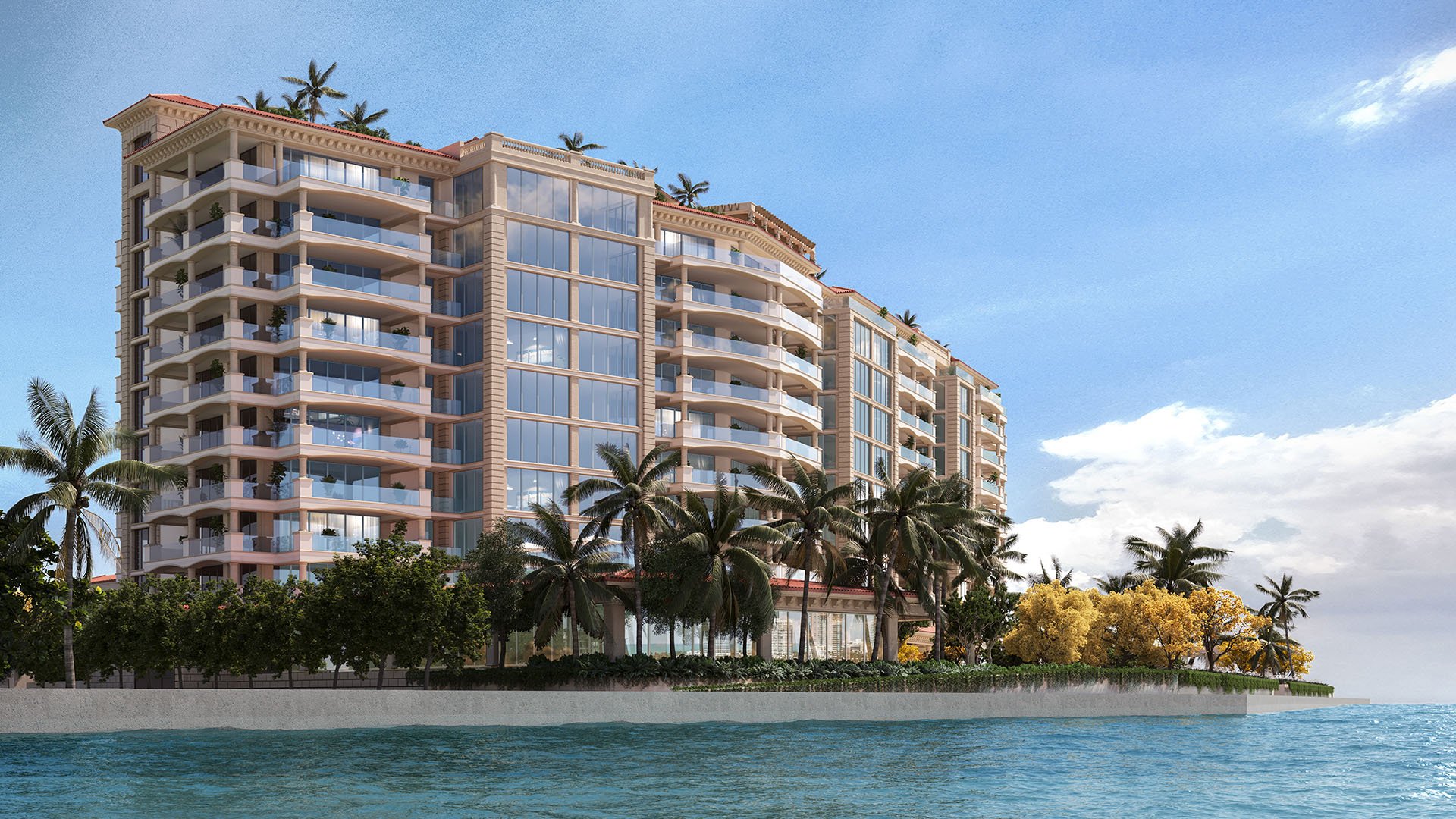
Exclusivity on Fisher Island is as much about choreography as it is about address. The island’s separation from the mainland naturally limits through-traffic and casual visibility, while its access-controlled character reinforces a quieter rhythm. Yet even in a setting this rare, there are tiers.
For buyers comparing The Links Estates at Fisher Island with The Residences at Six Fisher Island, the real distinction isn’t simply “homes versus condos.” It’s how privacy is created, protected, and experienced day to day.
At the estate level, exclusivity is typically expressed through distance, land, and the ability to shape your environment with fewer shared systems. In a boutique residential building, it’s more often expressed through discretion, staff-led operations, and a calibrated sense of arrival designed to feel intentionally removed from public view.
The Links Estates represents seclusion in its most literal form-the kind you can feel in setbacks, gate lines, and the simple comfort of not sharing walls. For certain owners, that is the highest luxury because it delivers autonomy. Daily life can be as self-contained as you want it to be, with privacy that doesn’t rely on schedules, elevators, or shared amenity zones.
Six Fisher Island, by contrast, appeals to buyers who prefer privacy to operate quietly in the background. In a residential building setting, discretion becomes an operating standard: managed arrivals, controlled access points, and the reassurance that staffing and procedures can reduce friction. Owners who favor a lock-and-leave cadence often find this version of exclusivity better aligned with their lives-especially when South Florida is one home among several.
Neither approach is inherently “more exclusive.” They are exclusive in different ways. One prioritizes control. The other prioritizes curation.
On an island, arrivals matter. They set the tone for everything that follows. The question isn’t only who can access Fisher Island, but how your own entry feels once you’re there.
A private-estate environment typically delivers a layered sense of arrival: from island access, to neighborhood context, to a home that becomes a final perimeter. That sequence can be psychologically powerful for owners who want a clear boundary between public life and private life.
A residential building can feel even more discreet in a different way, because it’s designed to reduce exposure right at the threshold. The transition from vehicle to interior may be shorter, more sheltered, and more staff-supported. For buyers who equate exclusivity with ease, a building-led arrival can feel more luxurious than a longer, independent path to the front door.
In practice, the preference often comes down to one question: do you want privacy to be spatial, or procedural?
Exclusivity is often discussed in sweeping terms, but it’s tested in small moments: hearing a door close, crossing paths at the pool, sharing a corridor when you’re not in the mood to socialize.
In a single-family setting, neighbor proximity is more optional. Even in a close-knit community, participation can be selective. The Links Estates format suits buyers who want to be friendly without feeling observed.
In a residential building, the social contract is more immediate. Vertical circulation and certain spaces are shared by design. The upside is a consistent standard of operations and a community cadence that can be especially reassuring for seasonal owners. The trade-off is that privacy depends more on management, layout, and resident culture.
Buyers who are sensitive to sound, pacing, and incidental interaction often find their decision clarifies once they picture a Tuesday morning-not a holiday weekend.
The Links Estates naturally supports a lifestyle that benefits from dedicated space: entertaining that feels residential rather than hospitality-driven, multi-generational stays, or simply a preference to host without relying on shared amenity settings. Owners who keep larger collections, travel with staff, or require flexible storage and staging often find an estate format the most frictionless.
Six Fisher Island aligns with a lifestyle where the experience is intentionally handled. A boutique residential environment can deliver a more turnkey feel: a home that remains deeply personal, supported by a building’s systems. For owners splitting time between Miami Beach, New York, or Europe, this can translate to more time enjoying the island and less time managing it.
In South Florida, buyers often cross-shop this decision with other ultra-premium, service-forward residences. If you respond to the precise, hospitality-led experience of Apogee South Beach in South-of-fifth, or the quiet, design-conscious residential scale of Oceana Key Biscayne, the appeal of a curated building environment will feel familiar. Conversely, if your preference leans toward the autonomy and privacy inherent in estate living, that instinct tends to hold across markets.
Ultra-luxury ownership is partly a question of how much control you want-and how much responsibility you’re willing to accept in exchange.
With estate living, control is the feature. Privacy, landscaping, and daily operations can be tailored to a specific standard. The responsibility is that the home is a true asset you actively manage, even if you delegate. For some owners, that’s the point: the home becomes an extension of identity.
With a boutique residential building, peace of mind is the feature. Many operational tasks are handled within a managed framework, reducing decision fatigue. The trade-off is that certain choices are communal by necessity, and your experience is partly shaped by building governance and shared standards.
A buyer who views Fisher Island as a primary residence may lean toward the Links Estates model. A buyer who views it as a precise retreat may lean toward Six Fisher Island.
Discretion isn’t only about who sees you. It’s also about how often you must be seen.
An estate can be naturally discreet because it reduces the need to pass through shared thresholds. There’s a quiet confidence to stepping outside into your own environment without navigating common areas.
A residential building can be discreet because it professionalizes privacy. It can support a low-profile pattern for receiving deliveries, coordinating household needs, and moving through the property with minimal exposure. For high-profile owners, the difference can feel meaningful: fewer unplanned interactions, more predictability, and a consistent standard.
If you’re deciding between these two options, it helps to define privacy in practical terms. Is it silence? Distance? Control over sight lines? Or is it seamlessness-where you rarely think about privacy because it’s built into the experience?
Fisher Island occupies a singular position relative to Miami Beach: close enough to stay connected, removed enough to feel separate. That duality is a major reason global buyers continue to treat it as a category of its own.
When buyers widen their search, they often explore other expressions of gated, amenity-rich exclusivity. A mainland comparison point might include Continuum on South Beach, where a resort-caliber environment meets a residential community, along with other highly controlled enclaves within Miami Beach. These comparisons are less about direct equivalence and more about clarifying your personal hierarchy: island separation, building service, ocean adjacency, social scene, and the cadence of arrivals.
Within that hierarchy, The Links Estates typically wins for buyers who define exclusivity as physical separation and autonomy. Six Fisher Island tends to win for buyers who define exclusivity as refined ease delivered at a residential scale.
This is a rare case where the “right” choice isn’t about maximizing one variable. It’s about matching a private-island asset to your actual habits.
Choose The Links Estates when you prioritize:
A stronger sense of personal perimeter and spatial privacy.
The ability to live expansively, entertain freely, and control your environment.
The satisfaction of an estate that feels singular and self-contained.
Choose The Residences at Six Fisher Island when you prioritize:
A boutique, managed experience that supports lock-and-leave ownership.
Discretion that is operational, consistent, and low-friction.
A residential scale where ease is part of the luxury.
At this tier, the best buyer isn’t the one who wants “the most.” It’s the one who knows precisely what they need-and refuses to compromise the parts of daily life that matter.
Is Fisher Island considered a gated-community environment? Yes, it is widely understood as access-controlled, which materially contributes to privacy.
What is the biggest lifestyle difference between Links Estates and Six Fisher Island? Links Estates emphasizes estate-scale autonomy, while Six Fisher Island emphasizes curated, building-led ease.
Which option feels more private day to day? It depends: estates deliver spatial privacy; boutique residences deliver procedural, managed discretion.
Is one choice better for seasonal ownership? Many seasonal buyers prefer a managed residence for lock-and-leave convenience.
Which is better for entertaining? Estate living often feels more natural for hosting at home without shared-space considerations.
Do both options benefit from Fisher Island’s separation from Miami Beach? Yes, the island setting itself adds a meaningful layer of exclusivity for both.
How should I think about neighbor proximity in the comparison? Estates typically reduce incidental interaction; buildings may increase it through shared circulation.
Is a boutique condominium less exclusive than a single-family home? Not necessarily; exclusivity can be expressed through discretion, staffing, and limited access.
What kind of buyer usually prefers The Links Estates? Buyers who value control, land-led privacy, and a more independent residential experience.
What kind of buyer usually prefers The Residences at Six Fisher Island? Buyers who value convenience, managed operations, and a refined, low-friction daily rhythm.
To compare the best-fit options with clarity, connect with MILLION Luxury.
If branded residences are on your mind — as a home or as an allocation — we would be glad to share what we are seeing, privately.
Begin a quiet conversation