From Palm-beach compounds to West-palm-beach sky residences, multigenerational living is reshaping what “luxury” means: not just square footage, but thoughtful privacy, effortless caregiving, and future-proof flexibility.
Multigenerational living is no longer a niche arrangement reserved for a small set of families. It has become a measurable, sustained shift that is influencing how luxury buyers brief architects, compare floor plans, and negotiate for adjacent residences. What once read as an exception is now an intentional lifestyle choice, with clear implications for design and for long-term value.
Two data points help frame the change. Pew Research has documented a long-term rise in multigenerational households in the U.S., and reports that about 22% of U.S. adults ages 65 and older lived in multigenerational households as of 2023, up from 17% in 1990. Meanwhile, the National Association of REALTORS reports that multigenerational home buying reached 17% of home purchases in 2024, the highest share since NAR began tracking in 2013.
In South Florida’s upper tier, the motivations often look less like a compromise and more like a strategy. Families are optimizing proximity for caregiving, consolidating costs without lowering standards, and designing residences that keep adult children, aging parents, and visiting relatives close enough to be present, yet separated enough to preserve autonomy. Privacy is not treated as a luxury add-on. It is treated as the operating system of a harmonious household.
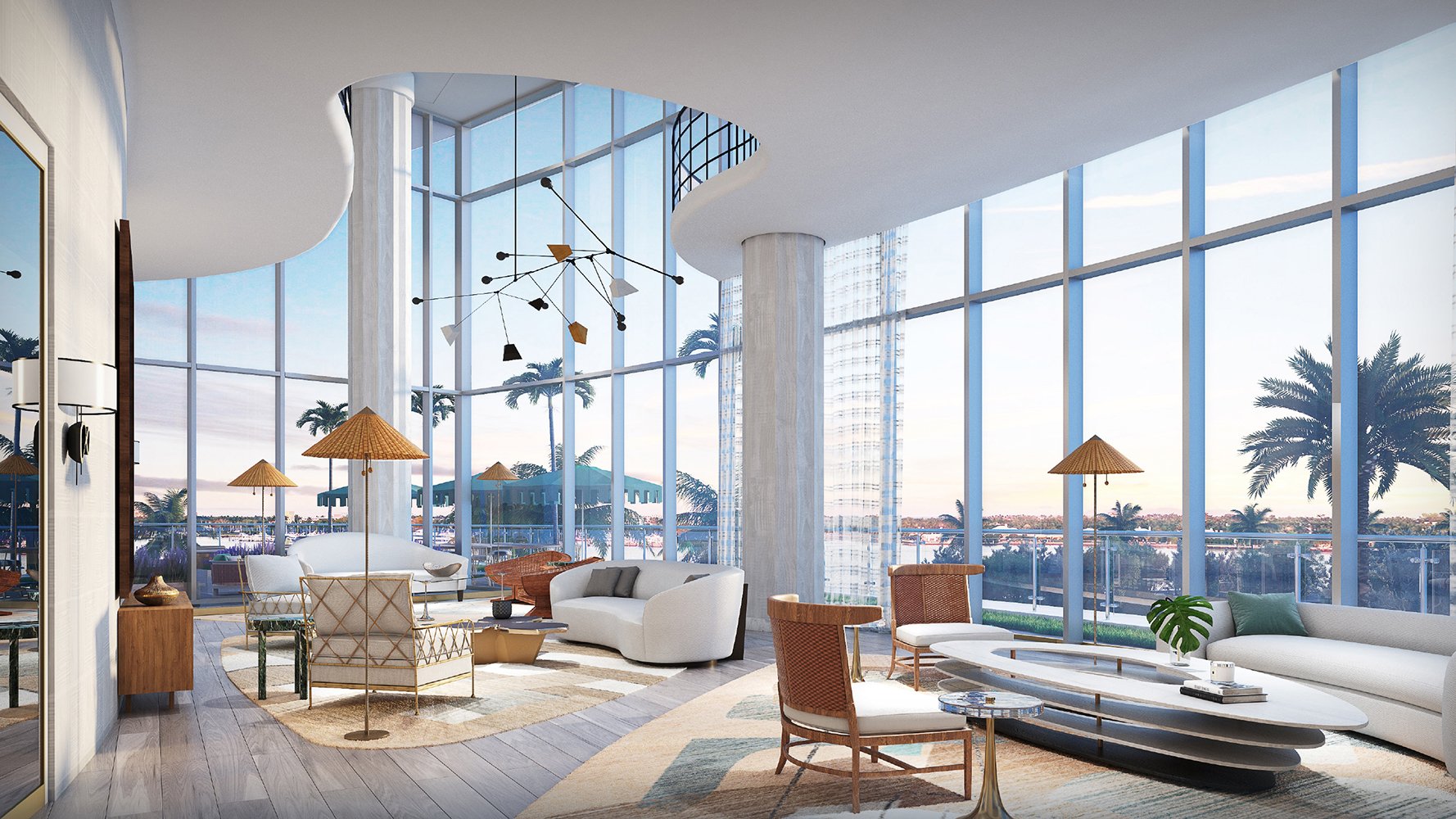
This is also why multigenerational living is reshaping the definition of “luxury.” The new metric is not simply more square footage, more rooms, or more amenities. It is a residence that functions gracefully under real conditions: different schedules, different needs, and different expectations of quiet, routine, and personal space. In that sense, the most impressive homes are not the ones that feel largest. They are the ones that feel easiest.
In high-end estate design, multigenerational success usually comes down to one architectural principle: zoning. Thoughtful zoning separates daily life into distinct domains that might otherwise collide.
First are the social spaces, the entertaining rooms where the home performs as a host: living areas, dining, outdoor lounges, and the parts of the property that welcome guests. Second are the private family domains, where each generation can decompress on its own schedule without feeling watched, interrupted, or “on.” Third are the back-of-house functions: service corridors, storage, laundry, and staff-adjacent areas that allow the residence to run smoothly while keeping front-of-house calm.
Luxury builders often describe this as “legacy” planning or a family campus. The objective is not to isolate relatives. The objective is to protect relationships by removing avoidable friction. Conflicting sleep schedules, different noise tolerances, and the simple reality that privacy is a form of respect are all easier to manage when the plan is designed to absorb them.
For buyers, zoning is also a practical due-diligence lens. On tours, pay attention to what the floor plan is silently telling you. Listen for how sound carries between wings. Notice whether a guest can circulate without cutting through the main living room. Check whether the kitchen is the only route between key areas, which can turn one space into a constant crossroads. The most comfortable multigenerational homes do not require a series of ongoing negotiations to function. They feel intuitive because they were organized with intention.
The defining feature of multigenerational luxury is rarely a bigger living room. More often, it is the separate living unit, designed to operate as a real residence rather than a decorative accessory.
In South Florida, buyers may call it a guest house, an in-law suite, a carriage house, or a casita. In planning and policy language, you will often hear ADU, short for accessory dwelling unit. The label matters far less than the lived experience: a genuine second front door, a true bathroom, and enough kitchen capability to support independent routines.
When that independence is credible, the unit becomes a long-horizon asset. It can flex across decades of family life without feeling like a workaround:
The regulatory side is equally real, even at the top of the market. Rules governing what a guest house can legally be used for vary by municipality and, at times, by neighborhood restrictions. If you are buying for flexibility, treat the legal status as part of the property’s architecture. The right team will confirm permitting history, utilities, and any constraints that could shape future use.
Cost is another reason to think early. Industry coverage describes a wide range for building a casita or guest house, with final numbers driven by size, finish level, site work, and whether it is new construction or a conversion. In luxury, the price can climb quickly when the secondary unit is expected to live like a primary residence. Still, the premium can be rational when it replaces the need for separate nearby housing and supports a coherent long-term family plan.
At the apex of the multigenerational trend is the compound: a multi-structure estate that reads like a private resort. It is not a new idea in Palm-beach, but the contemporary expression is more deliberate. The best compounds are designed around layered privacy, hospitality-grade functionality, and guest accommodation that does not borrow comfort from the main house.
A widely covered example of this compound concept is the Palm Beach listing at 911 N Ocean Boulevard, reported at $185 million, described as an oceanfront property with multiple structures and extensive amenities. The significance is not the headline number. It is what the program communicates: the market recognizes and values estates that can house family, guests, and operations without turning the principal residence into a perpetual hotel.
For buyers who entertain frequently, a multi-structure approach also protects the main house as a sanctuary. Guests can keep their own rhythm without feeling managed. The primary household can maintain routines even during peak holiday weeks. And service activity can be routed in a way that preserves a residential mood, rather than a constant sense of event production.
The compound ideal is also about emotional comfort. In multigenerational living, boundaries that are quietly built into the property reduce the need to set boundaries in conversation. That is why, at this level, the real luxury is not the spectacle. It is the ease.
One of the clearest signals that multigenerational living is becoming a luxury standard is the rise of dual primary suites, sometimes framed as two owners’ suites. House-plan publishers and design commentators have highlighted this as a forward trend for 2025: rather than placing one generation in what feels like an upgraded guest room, the home offers two households a true primary-bedroom experience.
In practice, this means parity. Each suite needs meaningful closet volume, a bathroom that reads like a spa rather than an afterthought, and a location within the plan that preserves quiet. The goal is as psychological as it is functional. When both suites feel “primary,” the arrangement is less likely to create subtle hierarchy that can strain long-term living.
For South Florida residences, dual primary suites can show up in several configurations:
The strongest plans also anticipate how roles change over time. Today’s “adult child suite” can become tomorrow’s “caregiver suite,” and later a long-stay guest apartment. Design that holds its dignity across life stages protects lifestyle now and broadens appeal later.
Multigenerational living often implies that at least one resident is thinking about long-term mobility. In luxury design, the refined response is not to make the home look clinical. It is to embed universal design so subtly that the residence remains beautiful while becoming easier to live in.
Commonly recommended accessibility features for multigenerational households include step-free entries, wider doorways and halls, and bathrooms designed for comfort and safety, such as curbless showers. Another design direction is main-level living, which reduces reliance on stairs and makes daily routines simpler across ages.
For luxury buyers, the nuance is in execution. A step-free entry can be achieved through discreet grading, concealed ramps, and thoughtfully detailed thresholds. Wider circulation can feel like generosity rather than accommodation. Bathrooms can be designed for long-term comfort without giving up on materials, lighting, or proportion. The masterstroke is when the home reads as elegant first, adaptable second.
When evaluating properties, treat accessibility as a quality marker, not a checklist item. A home that can accommodate a range of physical abilities without redesign is often better planned overall. Clearer circulation, fewer awkward transitions, and more coherent room relationships benefit everyone, regardless of age.
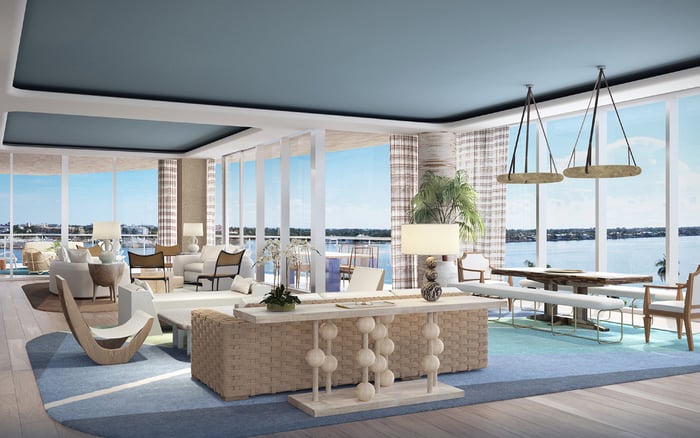
Not every multigenerational plan requires an estate. Increasingly, the concept is moving vertically through luxury condominium living, especially in West-palm-beach, where families may prefer a lock-and-leave profile, staffed amenities, and the ease of being close to culture, dining, and medical infrastructure.
The multigenerational condo playbook typically looks like this: secure a primary residence plus a nearby second unit, or prioritize a layout that creates distinct zones within one home. Privacy is supported through split-bedroom plans, dens that can operate as guest rooms, and building services that make intergenerational hosting feel consistent rather than disruptive.
Within this lens, buyers exploring new development in West-palm-beach often gravitate to buildings where hospitality is built into daily life. Mr. C Residences West Palm Beach captures that service-forward sensibility, which can be especially appealing when family is visiting for extended periods and the home needs to operate smoothly.
Similarly, The Ritz-Carlton Residences® West Palm Beach speaks to a tradition of hotel-grade operations translated into a private-residence context. For multigenerational households, operational reliability can matter as much as finishes: predictable arrival experiences, discreet support, and the feeling that the building is an extension of the home.
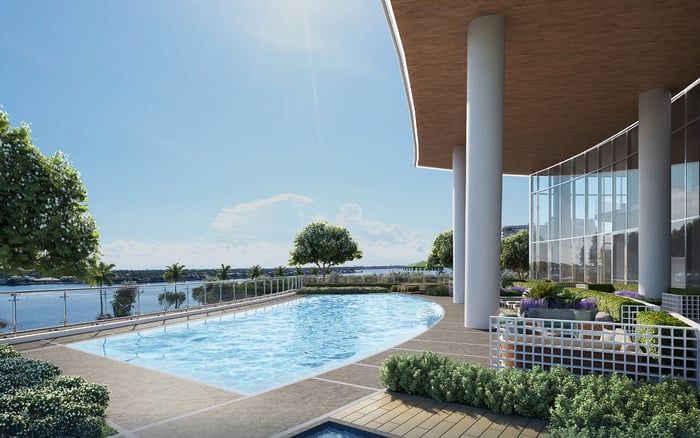
For buyers who want a residential mood with water adjacency and a sense of calm, Alba West Palm Beach offers another expression of how modern waterfront living can align with family needs, especially when the household values both togetherness and the ability to retreat.
The core idea is that West-palm-beach can support a multigenerational lifestyle without a sprawling footprint. With the right plan and the right building, the experience can still feel like a private compound, simply organized vertically and managed with professional consistency.
Multigenerational living adds complexity, and luxury buyers tend to value the confidence that comes from asking the right questions early. The goal is not to overanalyze. It is to verify that the home can deliver privacy, dignity, and practical flow under everyday conditions.
Start with privacy and circulation:
Then confirm flexibility:
Finally, assess how the property will age with you:
These questions are not merely functional. They are the architecture of harmony. When the answers are clear, the lifestyle feels generous rather than crowded, and connected rather than complicated.
Luxury buyers are cautious about claiming universal ROI, but flexibility has a clear form of value: optionality. In a shifting market, optionality is often what protects confidence, because it lets a home adapt without forcing a disruptive move.
Real estate coverage has discussed how ADUs and in-law suites can add flexibility and, in some contexts, potential income or value, depending on local rules and demand. The important qualifier is “depending.” Rental legality, neighborhood restrictions, and utility constraints can all shape what is actually permissible.
Even when rental income is not a goal, the ability to adapt the property to family life is its own return. A home that can welcome parents now, offer independence to adult children later, and still present beautifully to future buyers is a home that stays relevant.
For condominium buyers, the value narrative can be equally compelling. A second unit in the same building can operate as an elegant alternative to a guest house, particularly when the building’s services reduce the friction of hosting. In that spirit, Forté on Flagler West Palm Beach represents the kind of address-driven convenience multigenerational households often prioritize, where proximity and a refined lifestyle are closely linked.
Ultimately, multigenerational luxury is not about moving backwards into crowded togetherness. It is about designing forward: a residence that respects privacy, supports family, and holds its composure through every season of life.
Is multigenerational living mainly a cost-saving move?
It can be, but in luxury it is often equally about caregiving, lifestyle logistics, and keeping family close while preserving independence.
What is the difference between a guest house and an ADU?
“Guest house” is an architectural and lifestyle term. “ADU” is often the regulatory term. The legal classification can affect what is permitted, so confirm status before purchase.
What features matter most for long-term harmony?
Privacy-first zoning, true separation of suites, and at least one flexible room that can change purpose without major renovation.
Do condos work for multigenerational households?
Yes, especially when plans create separate zones or when families secure a nearby second unit, and building services reduce hosting friction.
To explore South Florida residences designed for legacy living, connect with MILLION Luxury.
If branded residences are on your mind — as a home or as an allocation — we would be glad to share what we are seeing, privately.
Begin a quiet conversation