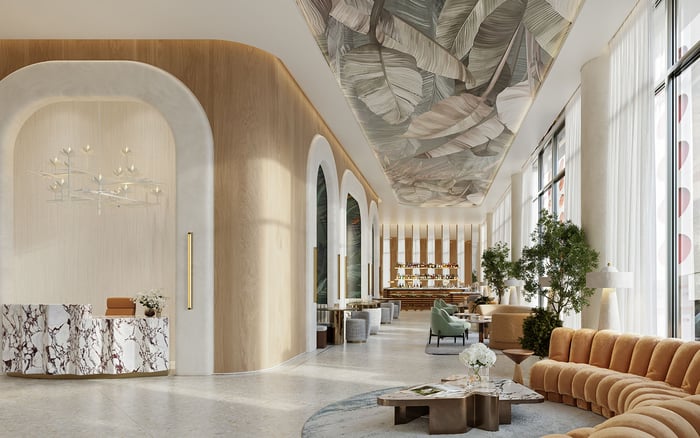
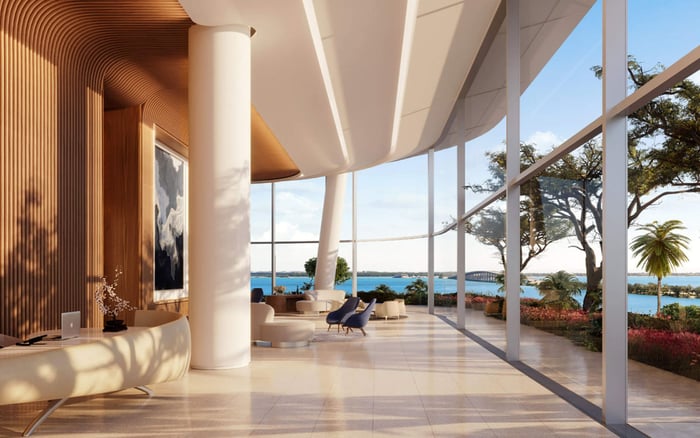
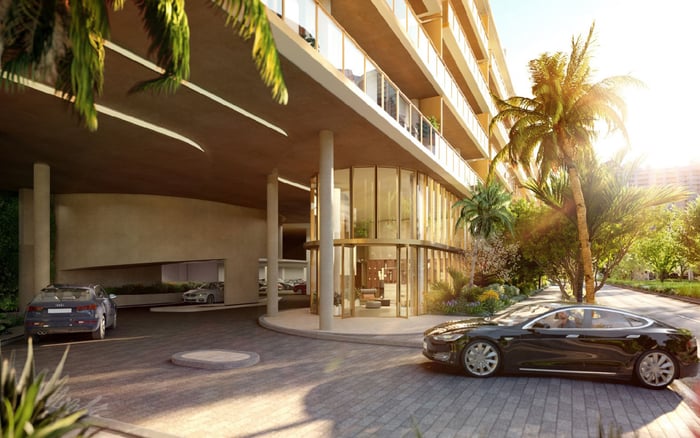
In South Florida, true luxury is often defined by what you do not see: controlled arrivals, quiet service circulation, layered access, and technology that protects without performing. From Brickell towers to Miami-beach beachfront addresses and the leafy calm of Coconut-grove, the most sophisticated residences treat privacy as an end-to-end system, spanning site selection, building operations, and in-home design. This guide outlines discreet, buyer-relevant features to look for, questions to ask, and lifestyle habits that help keep visibility low while comfort stays high.
South Florida’s ultra-premium market draws attention by default. Sun, water, and international access are part of the appeal, and the social calendar can make even a primary residence feel unusually visible. For many buyers, privacy and security are not optional upgrades. They are core performance criteria that protect time, family, reputation, and the freedom to move through daily life without friction.
The most sophisticated residences treat privacy as an end-to-end system. Architecture, building operations, staffing culture, and technology have to align so discretion feels effortless. When they do, security is present but unobtrusive. When they do not, owners end up compensating with workarounds that increase exposure, such as repeated interactions at a front desk, predictable entry routines, or deliveries that spill into public areas.
What follows is a practical, South Florida oriented lens on discreet privacy features found in elite homes. It is designed to help you assess a high-rise, a waterfront home, or a property within a gated community through the same consistent framework. Because privacy is personal, the right solution depends on lifestyle, travel cadence, the frequency of guests and staff, and how visible your public profile is.
Even the best interior plan struggles against an address with constant exposure. Before you focus on hardware or smart systems, evaluate how the setting amplifies or dampens visibility.
Start with arrival patterns. A residence that forces every arrival through a single, public pinch point tends to create predictability. Over time, predictability becomes a vulnerability. Conversely, an address that offers multiple ways to arrive and multiple ways to move lets you vary your pattern without sacrificing convenience. In dense neighborhoods like Brickell, this often comes down to how the building interfaces with the street, how the porte-cochere or drop-off is managed, and whether pedestrian traffic is directed away from resident circulation. In lower-density areas such as Coconut Grove, it can be as simple as how the driveway, landscaping, and sightlines work together to keep arrivals calm.
Consider adjacent uses and the rhythms of the block. Hospitality, nightlife, and major events can elevate foot traffic and increase the number of cameras pointed in your direction. This does not automatically disqualify a location, especially on Miami Beach where proximity is part of the lifestyle, but it changes the security posture you should expect from the property and its management.
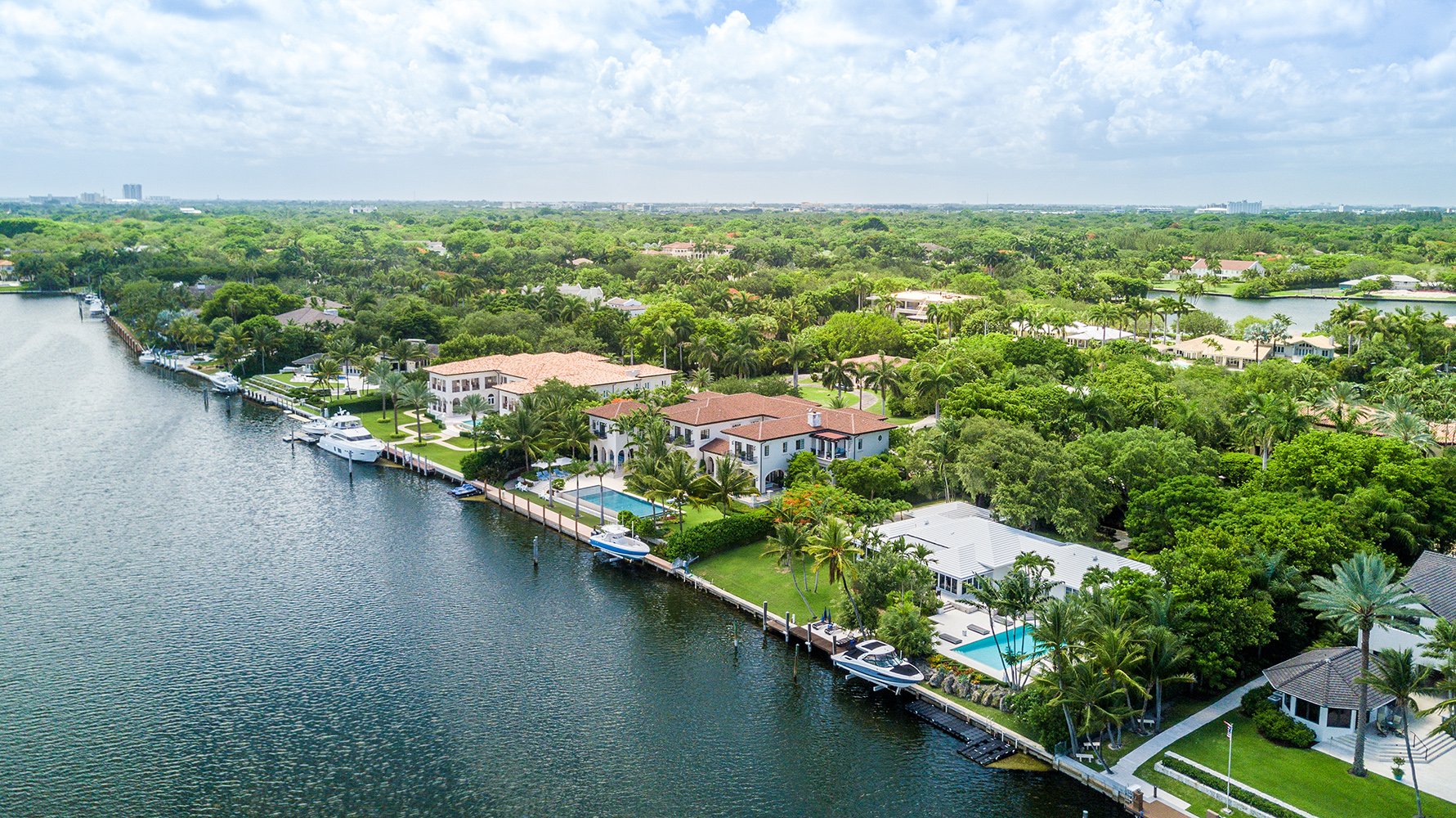
Waterfront properties introduce a second edge: access from the water. Privacy can be excellent if the parcel is shielded and the approach is controlled. It can also be compromised if boat traffic is constant and sightlines are wide open. The simple takeaway is that your privacy strategy should match the exposure profile of the site, not just the quality of the finishes.
The first layer of privacy is not a camera. It is choreography.
Elite residences tend to succeed by reducing the number of moments where you must be recognized, greeted, screened, or waved through. A well-considered perimeter strategy also reduces the number of people who can plausibly claim a reason to be near your front door. When the property defines its boundaries clearly, the experience feels orderly rather than defensive.
Look for subtle spatial cues that guide visitors where they should go and keep them away from private thresholds. Clear, well-lit paths that do not funnel people toward personal entries reduce awkward encounters. Landscaping should screen without reading as a barricade. In single-family homes, the best results often come from a layered approach: a defined outer boundary, a controlled inner approach, and a protected entry sequence. In towers, it usually means a drop-off that keeps vehicles moving, discourages loitering, and avoids forcing residents into prolonged public exposure.
For buyers who use drivers, the ideal is an arrival that feels private without relying on overt security theater. A discreet porte-cochere, a sheltered entry, and a service drive that does not cross the primary guest experience can all reduce visibility. If a property relies on a single, narrow entry point with high public exposure, then privacy will depend more heavily on staffing quality, training, and policy consistency.
In South Florida’s luxury condominium market, lobbies are often designed as brand statements. For privacy buyers, the lobby should also function as a filter.
Discretion improves when the lobby is planned to minimize forced interactions and passive observation. Seating areas that are not positioned as watch points, sightlines that do not reveal elevator banks from the street, and circulation that does not place residents on display all matter. The goal is not to hide. The goal is to eliminate the feeling of being processed each time you come home.
Operational culture matters as much as design. Ask how packages are handled, how visitors are announced, and what verification is required for non-resident access. Strong buildings operate with procedures that do not depend on who is on shift. The experience should feel calm and uniform, not intrusive or improvisational.
If you entertain frequently, look for support spaces that let guests arrive gracefully without concentrating attention on your unit. Private meeting rooms, separate event circulation, and the ability to route deliveries away from public areas reduce unnecessary visibility while keeping hospitality seamless.
High-rise living can be exceptionally discreet when vertical circulation and unit planning are thoughtful. It can also be unexpectedly exposed if every daily movement becomes a public moment.
Elevator strategy is a key differentiator. Many buyers ask first about private elevator entry, but the deeper question is how residents, guests, and staff move through the building day to day. Look for clear separation between resident circulation, guest circulation, and service circulation. When service routes are integrated properly, vendors and deliveries do not spill into resident areas, staff can work efficiently, and the number of touchpoints between private life and building operations drops dramatically.
Inside the residence, privacy-forward planning relies on transitions. A foyer or vestibule that buffers the front door, a gallery that prevents direct sightlines into primary rooms, and a clean separation between entertaining zones and personal zones all help the home feel composed even when family, guests, or staff are coming and going.
Views are marketed as openness, but privacy buyers also evaluate what those views allow in the opposite direction. In dense corridors, consider how neighboring buildings look back. The most comfortable units deliver light and panorama while limiting direct sightlines into the interior. Window treatments, glazing choices, and interior layout contribute, but the building’s placement and geometry are foundational.
Technology can strengthen privacy and security, or it can create new risks if it adds complexity, collects unnecessary data, or becomes a visible signal that you are trying to disappear.
A privacy-first approach prioritizes layered, interoperable systems with clear ownership and clear permissions. If a system depends on a third-party platform you cannot control, or if it requires continuous cloud connectivity for basic functions, you should understand what data is collected and where it is stored. In elite homes, the ideal is that core functions remain reliable even if internet service is disrupted.
Buyers often ask about app-based access, biometric entry, and remote monitoring. These can be useful, but discretion improves when the daily user experience is simple and consistent. If you have to perform security in front of guests, that is a form of exposure. The best systems read as convenience while still providing a strong audit trail and a clean chain of permission, especially when temporary access is needed.
Technology also has limits. Cameras create a record, but they do not automatically prevent problems on their own. A home can have sophisticated surveillance and still feel exposed if arrival routines are predictable, lighting creates glare that draws attention, or access points are not thoughtfully managed.
Privacy is not only about who enters. It is also about what others can perceive.
Acoustic privacy is often overlooked in South Florida, particularly in buildings where social life is active and entertaining is frequent. Sound can travel through corridors, mechanical spaces, and shared walls, and even a refined residence can feel compromised if conversations carry. Ask how the residence is separated from common areas and neighboring units, and consider whether high-traffic amenities sit adjacent to your line.
Visual privacy is more than window coverings. It includes the ability to prevent interior life from becoming a silhouette at night, to reduce direct views from neighboring terraces, and to manage sightlines from exterior walkways. In single-family homes, it also includes the relationship between pool areas and neighboring properties, and whether landscaping truly screens or merely decorates.
Light control supports both privacy and comfort. Thoughtful lighting reduces hotspots that draw attention and minimizes the sense that the home is a stage. Exterior lighting should guide and secure without broadcasting patterns of use or creating a constant halo of visibility.
In South Florida, garages and docks can be as important as front doors.
A privacy-forward garage experience reduces the number of public interactions required to enter or exit. In a tower, that can mean a controlled transition from vehicle to residence that does not require lingering in public spaces. In a single-family home, it can mean a sheltered garage entry that connects to internal circulation, keeping arrivals quiet and minimizing exposure.
If a property has water access, treat it as a second perimeter, not a lifestyle accessory. Consider how guests arrive by water, how vendors might access the property, and how the approach is monitored. Discretion improves when water access is integrated into the overall arrival plan rather than treated as an informal secondary entry.
Secondary entries can be an advantage when they are designed intentionally. A dedicated service entry can keep deliveries and staff movement out of primary spaces. A private garden gate can support discreet family movement. The risk appears when secondary entries are poorly controlled, poorly lit, or inconsistently used, creating weak points. The best homes make every entry feel equally deliberate.
For many luxury buyers, the greatest privacy risks are not physical intrusions. They are information leaks and routine exposure created by everyday operations.
Staffing and vendor management are central to a privacy-forward home. The residence should support clear separation between personal life and service work. In a tower, that includes the building’s protocols for contractors, housekeeping, and deliveries, plus the consistency of enforcement. In a single-family home, it includes how service providers are scheduled, where they park, how they enter, and where they work without crossing personal zones.
Ask how management handles high-visibility situations: How are guest lists managed for private gatherings? How is temporary access granted and revoked? How are maintenance visits documented? Buildings and properties that treat these questions as standard operating procedures tend to deliver a calmer day-to-day experience.
If you employ staff directly, design should protect everyone’s dignity. Effective service circulation is not about hiding people. It is about avoiding friction. When staff can perform their work efficiently without moving through entertaining zones, the home feels composed and private for owners and guests alike.
In an era where household devices can be as revealing as a concierge log, data privacy belongs in the same conversation as locks, gates, and staffing.
Start with network hygiene. Separating guest connectivity from household systems can reduce risk while keeping hospitality seamless. Consider where cameras record, who can access footage, and how long information is retained. If you travel frequently, remote access can be valuable, but it should be controlled, auditable, and easy to revoke.
Audio privacy deserves special attention. Voice assistants, conferencing setups, and smart speakers can introduce unintended exposure. For some buyers, the most discreet choice is to limit always-on microphones in private zones and use dedicated systems that you control.
Also think about what your home reveals passively. Mail, deliveries, and packaged goods can broadcast presence or absence. A discreet package-handling plan, whether through a managed system or a private receiving area, reduces small signals that accumulate over time.
Even the most secure and private homes benefit from consistent human choices that keep routines quiet.
Vary arrival patterns when you can. Avoid predictable timing. Use different entries if the property supports it. Maintain a consistent approach to visitor screening that is polite but firm, so it does not change based on mood, familiarity, or social pressure.
For families, privacy often comes from limiting exposure rather than increasing control. Choose gathering spots that are naturally sheltered. Plan transportation flows that minimize public waiting. Coordinate with staff so guests and vendors do not overlap unnecessarily at high-visibility points like the front entry, the lobby, or the driveway.
For high-profile owners, discretion is also a form of social design. Hosting can be intimate without being isolating. A residence that supports private entertaining, with clear transitions between public-facing spaces and personal spaces, allows you to be generous without becoming visible.
Neighborhood culture matters as well. In some settings, residents value anonymity and minimal interaction. In others, the lifestyle is naturally more social and spontaneous. Neither is better, but the right fit reduces friction. Brickell, Miami Beach, and Coconut Grove each carry distinct rhythms, and privacy buyers often choose not only a property but a pattern of daily life.
When you evaluate privacy and security, it can help to use a well-known, ultra-premium reference point and ask how its overall experience aligns with your priorities, then apply the same questions to every property you tour.
For reference, explore Indian Creek Residences and Yacht Club as a starting point for thinking about how a high-end South Florida address might approach arrivals, access control, and resident discretion. Use it as a framework rather than a checklist, since privacy expectations can vary by buyer and by management culture.
Bring specific questions into every showing: Where are the moments where strangers can approach you? How are visitors authenticated? How are deliveries routed? What happens when you are away? The most compelling homes answer these questions gracefully, without feeling defensive, and without placing the burden of discretion on the owner.
What should I ask a building or seller to understand real privacy, not just security theater? Ask how access is verified for non-residents, how temporary credentials are issued and revoked, and how deliveries are handled from curb to door. Then listen for consistency: strong properties describe clear procedures that do not change by shift or by situation.
How do I evaluate whether a lobby, driveway, or drop-off increases unwanted visibility? Watch the sequence as if you lived there: where do vehicles pause, where do people wait, and where do sightlines land? If the design forces residents to linger in public view, or funnels all traffic through one exposed point, visibility tends to rise.
Which design choices reduce exposure when I entertain frequently? Prioritize layouts with transition zones, separation between entertaining areas and private rooms, and circulation that supports guests without placing your front door on display. In towers, additional support spaces and delivery routing can help keep events graceful and low-profile.
How can I protect household data and connected devices without sacrificing convenience? Separate guest connectivity from core household systems, and keep permissions simple and auditable. Focus on systems you can control directly, understand what data is retained, and ensure access can be adjusted quickly when staff, vendors, or household needs change.
If you want a tailored privacy and security lens for your next tour in South Florida, connect with MILLION Luxury.
If branded residences are on your mind — as a home or as an allocation — we would be glad to share what we are seeing, privately.
Begin a quiet conversation