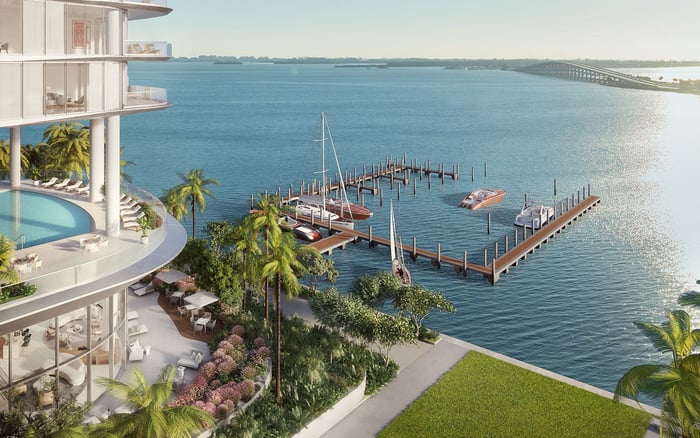
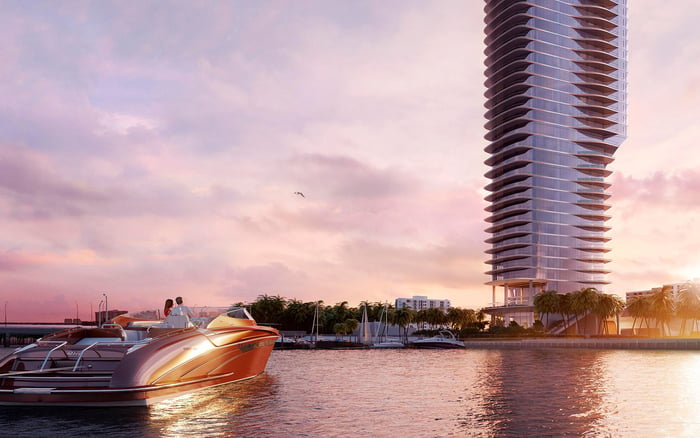
In South Florida’s most rarefied addresses, “amenities” can mean true mobility and membership: arriving by helicopter, stepping from residence to water, and living inside a private social ecosystem. This guide breaks down what sophisticated buyers should evaluate when helipad access, a Boat-slip, or a club-level lifestyle is on the wish list. From discretion and security to operational realities and resale sensitivity, we outline how to compare options across Brickell and Miami-beach while keeping the focus on experience, governance, and long-term usability.
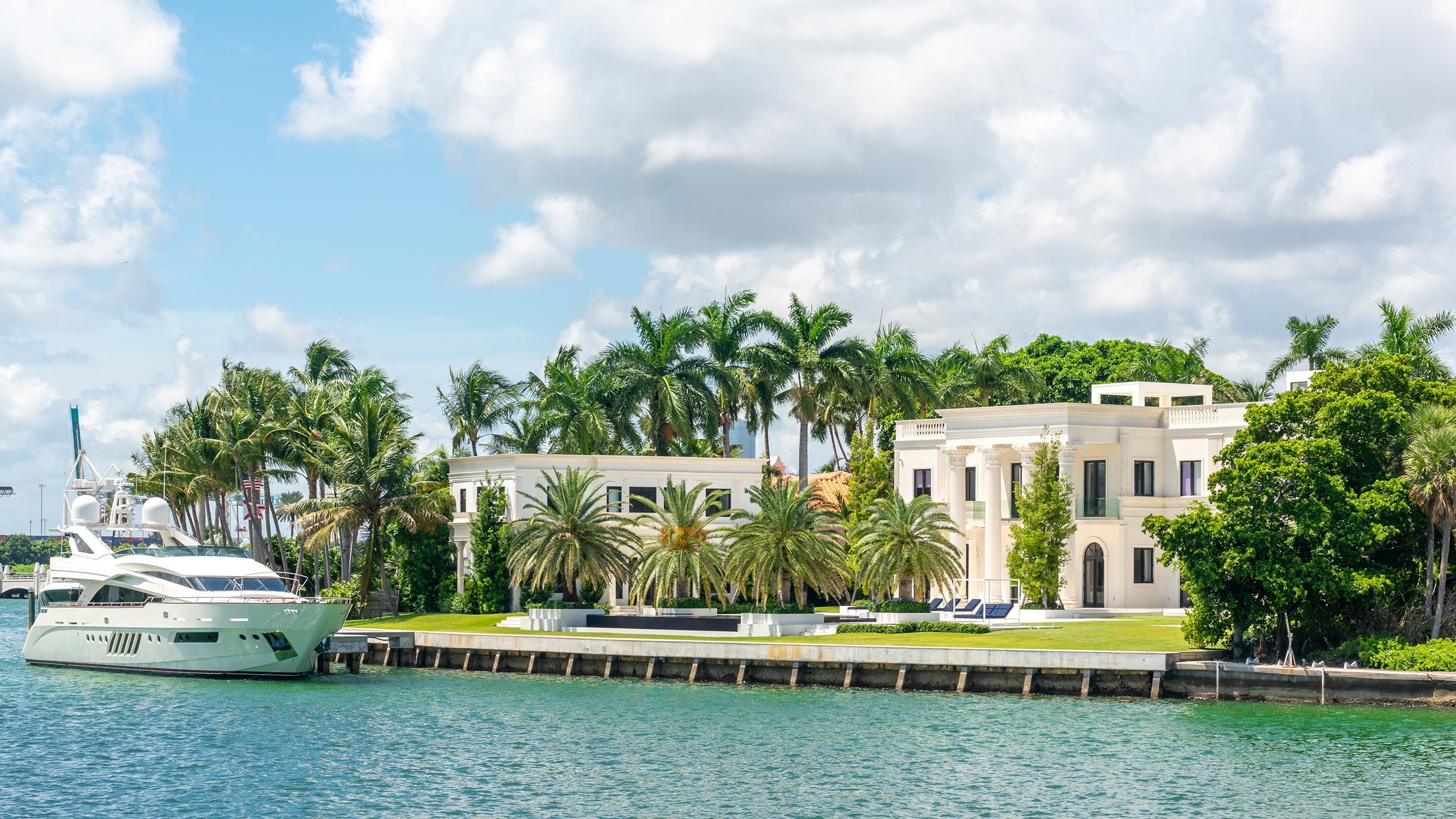
In South Florida, the top tier of residential living is increasingly defined by two things: how smoothly you can move and how quietly you can belong. The residence itself may be extraordinary, but in the most competitive part of the market, the lasting differentiator is frictionless access. Touch down nearby, step aboard at the waterline, or disappear into a members-only ecosystem without turning a simple plan into a public event.
Jet-set amenities are often presented as a checklist, yet the lived experience is more layered. Helicopter access is not simply “a place to land.” It is airspace and permissions, noise sensitivity, safety protocol, and whether the building or community can accommodate arrivals without compromising privacy or peace. A Boat-slip is not just a space at the dock. It is a relationship with tide, staffing, rules, insurance, and the very real geometry of your vessel and the approach. Private clubs can feel like the softest luxury of all until you realize that quality of life often hinges on governance, access, staffing, and whether the culture aligns with your tempo.
This is a South Florida conversation, anchored in how discerning buyers compare options across core Miami corridors such as Brickell and Miami Beach. The point is not to promise any specific amenity at any specific address. The point is to help you identify what is real, usable, and durable, and what reads well in marketing but rarely performs as expected.
A sophisticated approach starts with one question: what does “arrival” mean for your day-to-day? If arrival is about discretion, the chain of visibility matters. If it is about efficiency, operational reliability matters. If it is about lifestyle, service consistency and governance matter. The best homes do not merely feature these amenities; they integrate them into a calm, predictable system.
Helicopter access is the purest expression of personal logistics. When it is thoughtfully implemented, it creates a sense of command over time. When it is improvised or poorly governed, it can introduce conflict, restrictions, and constant friction.
Start by separating access from ownership. Some buyers want a dedicated on-site pad. Others are satisfied with a nearby landing option paired with a seamless transfer. Either way, the amenity is only as good as the operating model behind it. Ask who controls scheduling, how permissions are handled, and whether there are clear protocols that keep activity predictable for residents.
Noise and neighborhood sensitivity are not secondary. They are part of the amenity. A well-managed helicopter experience recognizes that “quiet luxury” is not just a phrase. It is a performance standard. Clarify operational hours, restrictions, and what happens when multiple residents want the same window. The more ambiguous the rules, the more likely the amenity becomes a source of tension.
Privacy is the headline, but privacy is never automatic. Evaluate how arrival is routed: from touchdown to vehicle, to entry, to elevator or private corridor. The best executions minimize visibility, discourage public congregation, and avoid turning a resident entrance into a spectacle. If the path forces a public-lobby moment or a slow, exposed transition, the benefit can evaporate quickly.
Security expectations also rise with helicopter access. Buyers who value airborne mobility often value controlled perimeters, vetted operators, and reliable procedures. The key question is not whether security exists, but whether it is coordinated. How does the property communicate with private security teams, drivers, and staff? Do protocols anticipate your needs, or do they rely on ad hoc decisions each time?
Context matters, especially in Miami. In dense, high-profile environments like Brickell, proximity can amplify convenience while also increasing scrutiny and sensitivity. In Miami Beach, the aesthetic of arrival can be extraordinary, but public attention and neighbor awareness can be higher. In either setting, the right question is not “is there a helipad?” It is “is the experience consistently effortless and discreet for the way I live?”
South Florida is a boating culture, but not every waterfront address is genuinely boat-ready. Listings can be generous with language. A serious waterfront buyer should translate romance into logistics and verify the operating realities.
Begin with suitability, and make it specific. “Boat-slip” can mean many things: whether the slip can accommodate your vessel’s length, beam, and draft; whether the approach is straightforward in different conditions; and whether docking is realistic for your crew and guests. It also includes how you will actually use the boat. Are you leaving early, returning late, entertaining dockside, or loading gear and provisioning with regularity? A slip that works on paper can feel impractical if the daily workflow is awkward.
Then move to operations. A Marina relationship is a living system, not a static perk. Who manages the docks day to day? How are staff and vendors coordinated? How are repairs handled, and what does “service access” mean in practice? If your lifestyle includes frequent departures, you are effectively buying an operating platform, not simply a view.
Rules and governance can be decisive. Some buildings and communities limit what can be stored on decks, how long a vessel can remain unattended, and what kinds of services can occur dockside. These policies are not inherently negative. They often exist to preserve aesthetics, safety, and the resident experience. The issue is alignment. A rule set that protects the community can still conflict with your routine if you expect a more flexible, hands-on dock culture.
Privacy returns as a central theme. Dock life can be social, and many buyers enjoy that energy. Others want complete discretion, with controlled access so the dock does not function as a public promenade. If privacy is the goal, evaluate sightlines, access points, and whether guests can move from boat to residence without a conspicuous moment.
Finally, plan for the unglamorous. Weather sensitivity, maintenance expectations, and basic upkeep are not side notes; they are part of ownership. The best buyers treat the dock as a second front door and expect it to perform with the same reliability, order, and discretion.
In luxury real estate, private clubs are often where value becomes emotional. A well-run club compresses dining, wellness, and social continuity into one address. For buyers who split time between cities, that consistency can be as important as the residence itself.
Evaluate a club as a service model, not a design feature. What does membership actually grant you in practice: dining access, wellness programming, curated events, dedicated staff, and predictable standards? A club that is lightly managed can read as a generic amenity. A club that is tightly managed can feel like a private world with an operating cadence you can rely on.
Culture matters more than décor. Some buyers want a scene. Others want serenity and discretion. Consider whether the tone matches your rhythm and whether it supports the way you plan to use it. A club that works beautifully for a couple may not serve family weekends. Conversely, a club designed for large gatherings may feel less intimate than a buyer expects.
Governance is the hidden variable. Clubs inside residential buildings or private communities are shaped by budgets, rules, staffing decisions, and how changes are approved. Ask how access is prioritized during peak periods, how guest policies are handled, and how standards are maintained over time. The quality of the experience is rarely accidental; it is protected through management discipline.
Location also influences the club’s role in your life. In Miami Beach, a club can operate like a resort extension of the home, particularly for buyers who value leisure and a contained ecosystem. In Brickell, it can counterbalance a city-forward routine, offering retreat without leaving the neighborhood. The takeaway is straightforward: club value is not in the brochure. It is in consistency, staffing, and whether the community protects the experience year after year.
When buyers compare helicopter access, yacht access, and club lifestyle, the temptation is to rank them as “more is better.” A stronger approach is to compare them by usability, predictability, and alignment with how you actually live.
First, define your highest-frequency scenario. Are you optimizing weekday efficiency, weekend entertaining, or seasonal hosting? Helicopter access often serves peak efficiency and discretion. Yacht access often serves leisure, spontaneity, and identity. Private clubs often support daily quality of life and social continuity. Prioritization should reflect what you will do most often, not what photographs best.
Second, compare the privacy chain. Map the moments where you are visible to others: arrival, entry, elevator or corridor, and the transition into private spaces. The best setups shorten or eliminate public moments. When a property is truly designed for discretion, the system feels natural. When discretion is retrofitted, it feels like work.
Third, evaluate staffing and service integration. Many ultra-premium buyers operate with drivers, personal staff, and private security. The most seamless properties are those that can integrate that reality without conflict or constant negotiation. You are not only buying an amenity. You are buying a system that can absorb your operating style and remain calm under pressure.
Fourth, examine governance risk. Amenities that rely on shared management can change. Ask how decisions are made, how budgets are set, and whether resident expectations are aligned. The most enduring value tends to come from environments where standards are protected by design and reinforced by clear policies.
Finally, consider your exit strategy. Even if you are buying for enjoyment, resale sensitivity matters. Features that are difficult to use, controversial with neighbors, or expensive to maintain can narrow the buyer pool. Features that are discreet, well-managed, and broadly desirable tend to protect liquidity. In Miami, where perception and practicality both influence demand, that distinction is not theoretical.
A luxury buyer’s advantage is not simply purchasing power. It is the ability to ask better questions early, verify the operating details, and avoid assumptions that later become limitations.
For helipad access, focus on permissions, scheduling, and the resident experience. Ask how often the pad is active, what restrictions apply, who bears operating responsibility, and how the property maintains calm for other residents. Confirm how arrivals connect to private entry routes and how security is coordinated. Clarity is the goal. If the answer is vague, the experience will likely be inconsistent.
For a Boat-slip, make the conversation concrete. Provide your vessel specifications and ask whether the slip and approach are suitable. Ask what services are allowed dockside, what insurance or liability requirements may apply, and how the dock is managed in practice. Evaluate whether the Marina feels like a curated extension of the home or a busy shared facility. The difference can be subtle until you are living with it.
For private clubs, request an experience, not a pamphlet. Visit at the times you would actually use it. Observe how staff handles peak demand, guest access, and day-to-day service. Ask how the club protects continuity, including staffing consistency and standard-setting. If privacy is central, pay attention to whether the space feels controlled or porous.
Across all three, read the governing documents and confirm policies directly with management. Luxury is fragile when it depends on assumptions. The strongest purchases are the ones where the rules, operations, and culture are aligned from day one.
If you want a single starting point for a broader conversation around waterfront-adjacent, service-forward living in South Florida, explore Indian Creek Residences and Yacht Club as a neutral reference.
Use it as a lens for your own criteria: discretion, access, governance, and whether the lifestyle model matches how you actually move through Miami. The goal is not to fit yourself to an amenity list. It is to select a home whose operating reality supports your routine, your privacy expectations, and your long-term comfort.
How do I evaluate “helipad access” if a residence does not have an on-site pad?
Treat it as an arrival system, not a label. Clarify where the landing occurs, who controls scheduling, what permissions or restrictions apply, and how the transfer is handled from touchdown to private entry. The closer the process is to a predictable, discreet routine, the more meaningful “access” becomes.
What questions should I ask to confirm a Boat-slip is usable for my specific vessel?
Share your vessel’s length, beam, and draft, then ask whether the slip and approach are suitable in real conditions. Confirm how docking is managed day to day, what services are permitted dockside, and what insurance or liability requirements may apply. The right slip is the one that works easily for your actual operating habits.
What makes a Marina feel private rather than public?
Privacy usually comes down to access control, sightlines, and how people move through the space. Ask whether the dock functions primarily for residents or also attracts heavy outside traffic. Then observe whether transitions from boat to residence can happen without a public moment.
How can I tell whether a private club will stay exclusive over time?
Look past finishes and focus on governance and management discipline. Ask how standards are set, how changes are approved, how peak demand is handled, and how staffing continuity is maintained. Consistency is a stronger indicator of long-term exclusivity than marketing language.
For a discreet, buyer-first conversation about jet-set amenities across Brickell and Miami Beach, connect with MILLION Luxury.
If branded residences are on your mind — as a home or as an allocation — we would be glad to share what we are seeing, privately.
Begin a quiet conversation