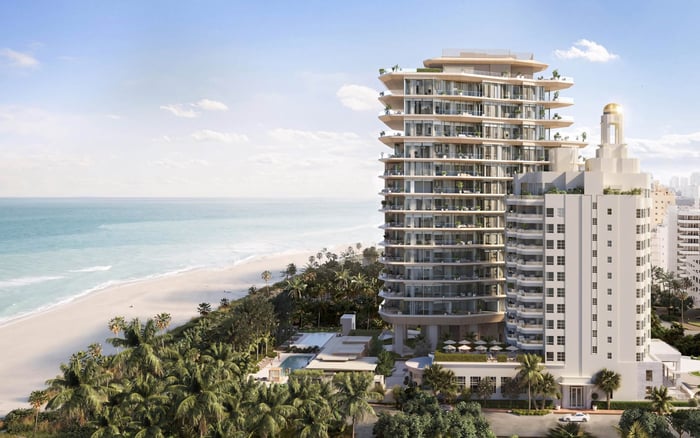
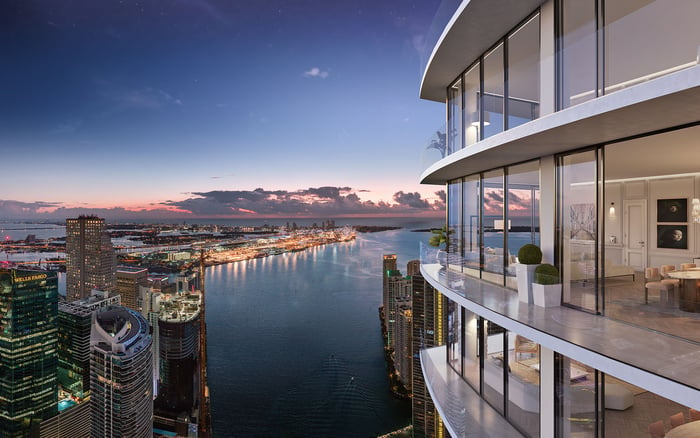
Across South Florida, a growing subset of ultra-wealthy buyers is redefining what “more space” means. Instead of one outsized residence, families are quietly acquiring adjacent properties to create a private, multi-structure compound that supports multigenerational living, staff, wellness, and security with fewer compromises. The appeal is control: control of sightlines, access, noise, future development risk, and the ability to expand without leaving a prized neighborhood. The strategy can be powerful, but it demands careful planning around zoning, operations, and long-term exit options.
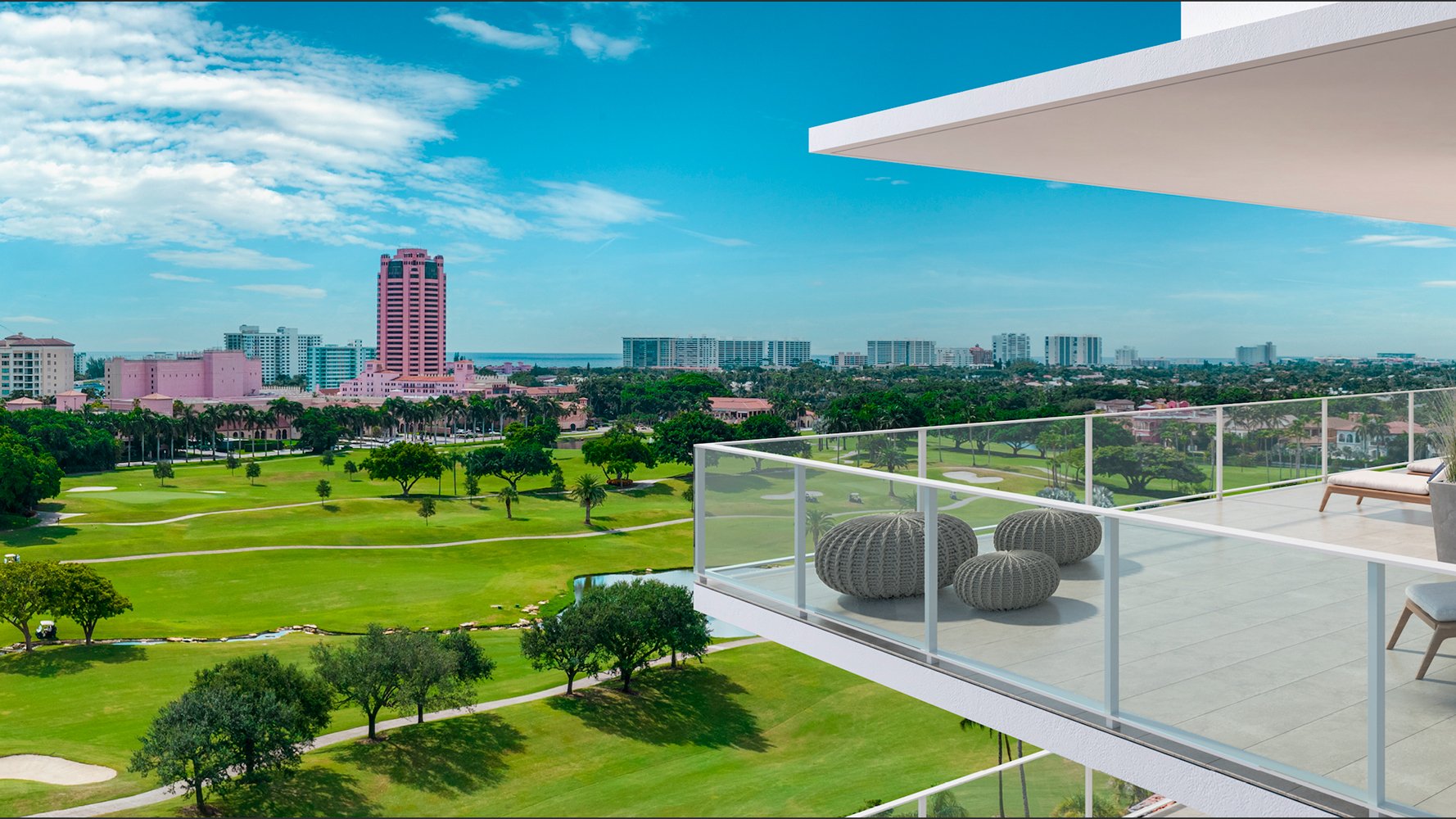
In South Florida’s most rarefied neighborhoods, the most meaningful luxury upgrade is not always a larger main house. It is control. Control of what happens next door, what can be built within view, how arrivals are managed, how staff circulates, and how the home stays discreet even when it is full of family, friends, and shifting travel schedules.
That is why the family compound trend is gaining momentum. Ultra-wealthy households are acquiring adjacent properties and operating them as one integrated environment. Sometimes that looks like two homes side by side. Sometimes it is a principal residence paired with a second home across a quiet street, purchased to protect sightlines or add guest capacity. In other cases, it is a deliberate, phased approach: a family anchors with one purchase, then acquires a neighboring home opportunistically over time.
South Florida is unusually well-suited to this strategy because it offers concentrated micro-markets where lifestyle is measured in blocks. Walkability to dining and marinas, proximity to schools, efficient access to airports, and the social gravity of enclaves that feel like private clubs all encourage buyers to stay tightly localized. In places like Coconut-grove, Miami-beach, and Brickell, the question is often not whether a family can buy a larger property. It is whether the right larger property exists in the right place, with the right privacy, and with future upside protected.
The compound mindset also reflects the realities of modern luxury living. Today’s high-net-worth household can include grandparents, adult children, and a rotating circle of friends, along with security, household management, and wellness support. That lifestyle is often easier to choreograph across multiple structures than inside a single residence that must do everything at once.
Sophisticated buyers gravitate to adjacent acquisitions because the strategy resolves friction points that become more pronounced at the top of the market.
First is livability. An ultra-large single residence can be breathtaking for entertaining, yet surprisingly inefficient day to day. Multiple adjacent properties allow the principal home to remain elegant, calm, and highly curated, while higher-activity functions shift into a secondary structure. Guests can come and go with autonomy. Household staff can operate with fewer interruptions. A multigenerational family can preserve genuine privacy without scattering the family across the city.
Second is flexibility. Adjacent parcels create options that are difficult to replicate within one architectural envelope: a true guest residence, a dedicated wellness studio, or an office environment that does not intrude on private family areas. Even when the ultimate goal is a unified campus, starting with separate homes preserves choice. Renovations can be staged rather than compressed into one disruptive timeline. The family can occupy one home while improving the other, maintaining continuity and reducing decision pressure.
Third is risk management. South Florida evolves quickly. Streets change, neighbors sell, and new construction can reshape light, noise, and traffic patterns. Buying the adjacent property is a direct hedge against uncertainty. It also reduces the likelihood that an incompatible next-door use disrupts an intentionally curated lifestyle.
Fourth is social discretion. True privacy is rarely achieved by gates alone. It often comes from having more than one entrance, more than one parking solution, and more than one way to host. Two adjacent properties can separate formal entertaining from family life, a valuable advantage for households that host business meetings, philanthropic gatherings, or high-profile guests.
Finally, there is the asset logic. While every situation is unique, a multi-parcel strategy can preserve optionality: hold as two residences, plan for a future estate concept, maintain one as a long-term family suite, or sell a component later without disturbing the core home. In markets where the best single-family-homes are scarce, optionality itself can carry a premium.
Because the compound approach is fundamentally lifestyle-driven, it appears most clearly in neighborhoods where buyers are already paying for location, access, and scarcity.
In Coconut-grove, the appeal is often the combination of residential calm and social energy. Buyers who want to remain in a walkable pocket can find that the most elegant solution is not a single oversized site, but a two-home layout that supports everyday living and entertaining without sacrificing privacy.
In Miami-beach, the logic frequently centers on discretion and proximity. Many buyers want a clear separation between hosting and retreat, while keeping the family footprint close enough that the household still moves as one unit. Adjacent homes can also help a family maintain a quieter day-to-day rhythm while still accommodating seasonal visitors.
In Brickell, the compound concept can translate differently. The classic image may be a multi-home estate, but the underlying principle remains adjacency and control. Some buyers pursue side-by-side residences, a primary home with a nearby pied-a-terre for staff or visiting family, or a combination of residences that supports work, fitness, and entertaining without compromising privacy.
In Gated-community settings, the strategy takes on an additional layer. With neighborhood perimeter security already integrated, the focus shifts to internal privacy, circulation, and controlling the immediate adjacency. The result can feel like a private resort inside a protected enclave.
Across Miami-Dade, Broward, and Palm Beach, the throughline is consistent: buyers who already know exactly where they want to live use adjacency to perfect the experience, rather than switching neighborhoods to chase a single larger lot.
Most compounds are not created in a single public moment. The strategy is typically executed with discretion, patience, and a willingness to move quickly when an adjacent opportunity appears.
Phase one is anchoring: purchase the primary residence that best matches lifestyle priorities. At this stage, many buyers are already studying nearby lots with a long view. Even if the neighbor is not available, the family considers how the property could expand later and what constraints might shape that path.
Phase two is optionality: acquire the adjacent home when it comes to market, even if the final plan is not fully decided. This is often the moment families protect a view corridor, remove a potential nuisance, or secure future capacity for guests and staff. In some cases, the second home functions as a “soft asset,” used lightly, held intentionally, and positioned for future decisions.
Phase three is integration: align the properties operationally. Integration does not require physical consolidation. Many sophisticated compounds remain visually separate and legally separate while functioning as one curated environment. Owners coordinate landscaping, lighting, security protocols, and arrival sequences so that the experience reads as one estate.
Phase four is enhancement: implement design choices that elevate the compound beyond simple adjacency. A multi-parcel setup becomes more than the sum of its parts when circulation is intuitive, sightlines are deliberate, and outdoor spaces connect in a meaningful way. The goal is not merely more square footage. It is a more effortless life.
A practical note: buyers often underestimate how much of a compound is logistics rather than architecture. Parking, deliveries, staff access, and guest arrivals should be mapped early. When executed well, the compound feels invisible in operation, calm in presentation, and controlled in practice.
Compounds succeed when they read as a cohesive environment, even when they remain separate residences.
Start with arrival. Luxury should feel frictionless. Owners assembling adjacent properties often define a primary arrival that feels intentional and private, while routing service access elsewhere. The objective is calm from the first moment, with no visible operational noise.
Next, use landscape as the connective tissue. Mature plantings, layered lighting, and coordinated hardscape can unify distinct properties without forcing a literal bridge between them. When outdoor areas are curated as a continuous sequence, the experience becomes campus-like and visually coherent.
Then, program each home with purpose. Many families assign a clear role to each structure: the principal residence, the guest residence, the wellness and office environment. This protects the sanctity of the main home and gives visiting family members independence without the emotional distance of a hotel.
Finally, plan for adaptability. Compounds must evolve as families evolve. Children grow, parents age, and work patterns shift. A well-designed multi-parcel setup can convert a guest house into a long-term suite, shift an office into a quieter residence, or create a staff hub without reengineering the principal home.
This is where the compound strategy can feel more intelligent than a single mega-residence. Rather than forcing one structure to anticipate every scenario, multiple structures can be tuned to the seasons of life.
The compound vision is compelling, but the practical realities should be evaluated with the same rigor applied to any high-value asset.
Zoning and permitted use come first. Rules can vary significantly by municipality and even by street. Buyers should confirm what is allowed for renovations, combining parcels, fences, landscaping, and intended use patterns. If the plan includes meaningful changes over time, the strategy should remain viable across multiple scenarios, not only the ideal one.
Title, boundaries, and access should be clarified early. Adjacent acquisitions can raise questions around easements, shared driveways, and utility routing. Even when everything appears straightforward, careful review helps prevent future friction.
Security planning should be integrated rather than bolted on. A compound typically benefits from a layered approach where perimeter choices, lighting, landscaping, and arrival routing support discretion. The goal is a serene environment, not a fortress.
Operations matter more than many buyers expect. Two residences can mean two sets of systems, maintenance cycles, and staffing rhythms. Plan the back-of-house with intention: deliveries, refuse, storage, and staff circulation. Without that planning, a compound can feel busy rather than private.
Finally, insurance and risk management should be treated as an estate-level strategy. Multiple structures, pools, docks, and guest activity can create unique exposures. Coverage and protocols should reflect how the properties will actually be used.
None of this is meant to discourage the approach. It is meant to ensure the compound feels effortless after closing, which is the truest measure of luxury.
The most successful family compounds are designed not only for today, but with the next decade in mind.
A core advantage of an adjacent-property strategy is the range of exit paths it can preserve. A household may eventually decide the compound is no longer needed in full. Separate parcels can be sold independently, retained as a smaller footprint, or transferred within the family with more flexibility.
However, it is wise to model how future buyers may view the assets. Some want the romance of one grand estate. Others prefer a turnkey primary home with a separate guest residence. Still others value the parcels for development potential. The right positioning depends on the neighborhood, the architecture, and the household’s priorities.
A disciplined approach is to preserve both stories: ensure each home can stand on its own, while also supporting a compelling compound narrative for the right buyer. That often means aligning landscape and security, while keeping each residence legible and functional as an independent property.
Legacy planning is part of the appeal. Many families use South Florida as a year-round anchor across generations. Adjacent homes keep everyone close without compressing privacy. Over time, what begins as a guest residence can become a permanent home for adult children, or a comfortable long-term suite for parents, while the overall family presence remains cohesive.
Even if your end goal is a multi-home compound of single-family-homes, many buyers consider a parallel option: securing a primary residence in a full-service setting and then layering adjacency through additional nearby holdings.
For a neutral reference point, explore Four Seasons Residences Coconut Grove as a way to think about how service, discretion, and lock-and-leave ease can complement a broader family footprint in the area. Specific offerings and policies can vary, so confirm details directly with the development team and your representation.
Ultimately, the compound trend is less about spectacle and more about mastery of daily life. The buyers driving it are not collecting properties for the sake of scale. They are engineering a lived experience: privacy without isolation, hosting without disruption, and multigenerational closeness without compromise.
In South Florida, where neighborhood identity can be as valuable as the home itself, adjacency has become a powerful luxury currency. The best outcomes come from aligning acquisition timing, design intent, and operational planning before the second contract is ever signed.
How do buyers decide whether to combine parcels or keep homes separate? It comes down to how the household intends to live and how much optionality they want to preserve. Many families keep homes legally separate while integrating operations, so each property can remain independently usable and saleable.
What should be confirmed with local authorities before buying the adjacent property? Confirm zoning and permitted use, and verify what is allowed for renovations, fences, landscaping, and any plan to combine parcels. Because rules can vary by municipality and street, confirm assumptions early rather than after closing.
How can a compound remain discreet while still being easy for guests to navigate? Use clear arrival planning and consistent wayfinding through design rather than signage. Coordinated lighting, landscaping, and a defined primary entry can make the experience intuitive for guests while keeping operations out of view.
What is the smartest way to plan staffing, deliveries, and security across two homes? Treat the compound as one estate from an operational standpoint. Map service routes, delivery timing, storage, and staff circulation, then layer security so it supports discretion and calm instead of calling attention to itself.
For confidential guidance on assembling adjacent properties in Coconut-grove, Miami-beach, or Brickell, connect with MILLION Luxury.
If branded residences are on your mind — as a home or as an allocation — we would be glad to share what we are seeing, privately.
Begin a quiet conversation