A discreet buyer guide to evaluating privacy in Hallandale Beach luxury condos, from controlled arrivals and staffing rhythm to resident culture, guest handling, service corridors, and board-level expectations.
In Hallandale Beach luxury condos, privacy is not simply a matter of gates, cameras, or a lobby desk. It is a layered residential experience shaped by arrival sequence, staffing discipline, guest handling, elevator protocol, amenity etiquette, and the tone residents expect from one another. For buyers who value discretion, the question is not whether a building feels exclusive during a tour. The more useful question is whether its daily operations protect quiet living when the building is busy, guests are arriving, vendors are on site, and residents want to move through the property without performance.
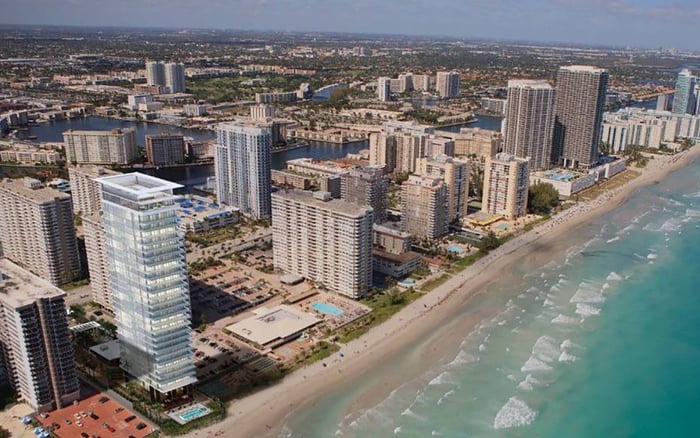
This is especially relevant for buyers comparing Hallandale with neighboring enclaves across Broward and Miami-Dade. The most private condo is not always the largest, tallest, or most visibly guarded. Often, it is the building where access control feels intuitive, staff recognize nuance, and resident culture treats discretion as a shared amenity. When reviewing a residence such as 2000 Ocean Hallandale Beach, the privacy conversation should begin before the unit tour and continue through every threshold of the property.
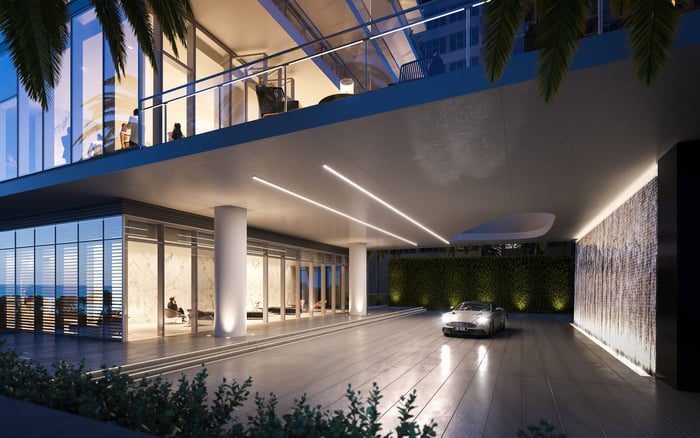
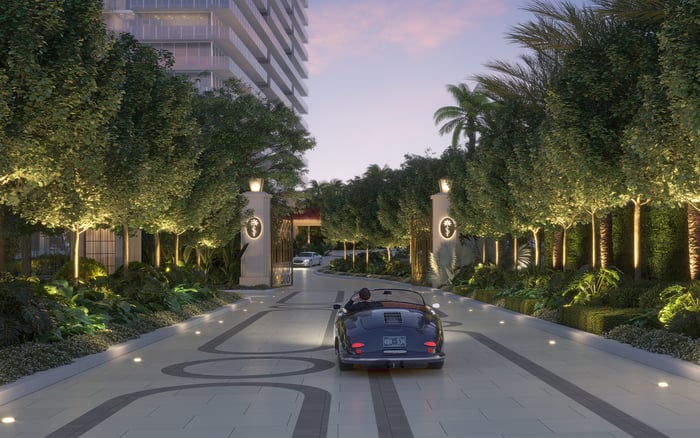
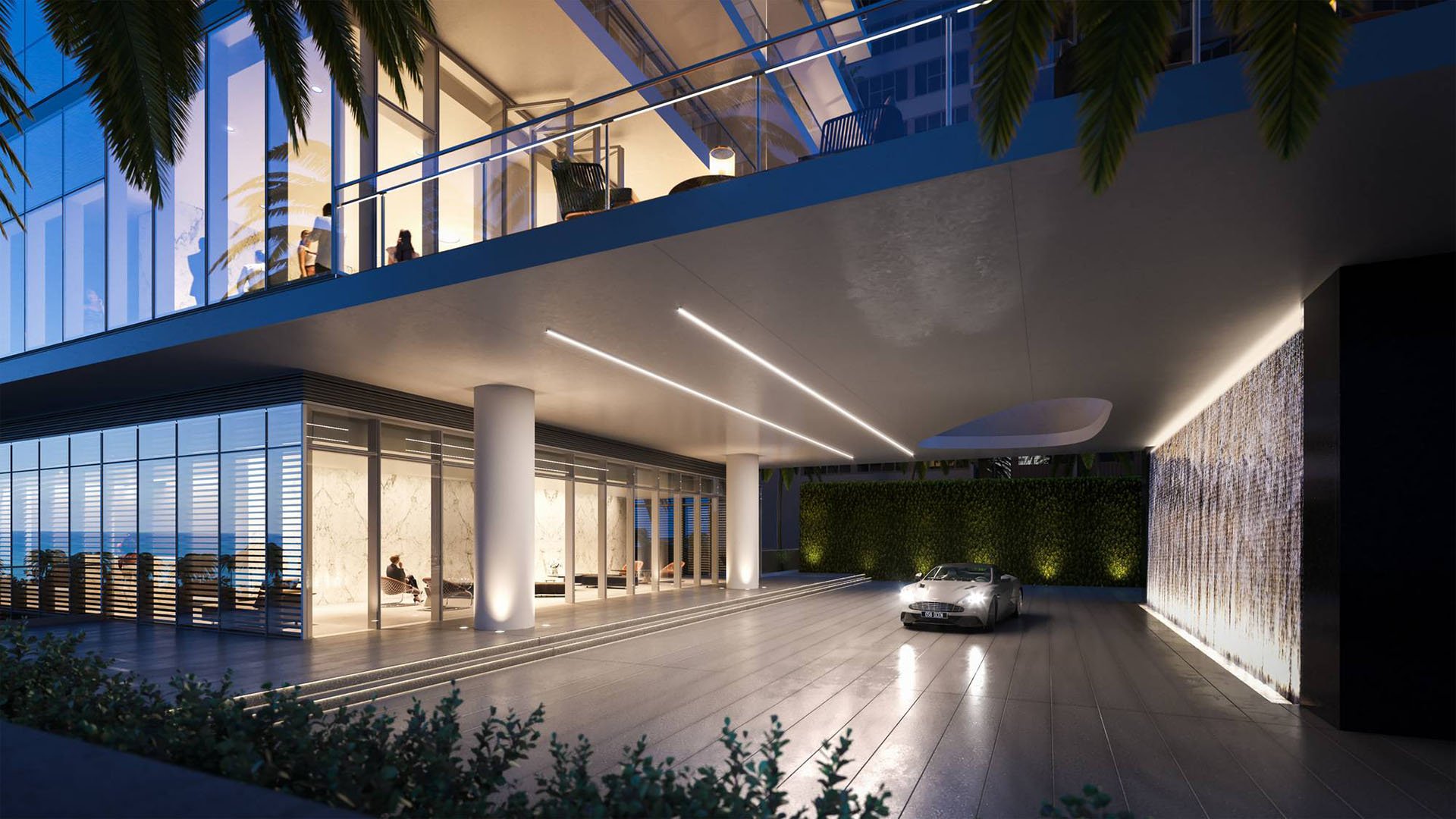
The arrival experience is the first privacy signal. Buyers should study how cars approach, where guests are received, whether service vehicles have a separate rhythm, and how visible the entry sequence feels from surrounding areas. The best privacy planning reduces friction without making the building feel defensive. Residents should not feel processed, yet unauthorized access should never feel casual.
Ask how the building distinguishes residents, invited guests, delivery personnel, vendors, and amenity visitors. A refined building will usually have a clear, repeatable protocol rather than improvisation at the front desk. The point is not severity. It is consistency. A courteous policy applied unevenly can feel less private than a stricter policy applied with grace.
Elevator access deserves particular attention. Buyers should consider whether the route from arrival to residence feels direct, whether guest movement is supervised in a way that feels natural, and whether amenity traffic intersects with residential privacy. In an oceanfront setting, the appeal of views and outdoor living can draw attention to public-facing edges of the property. The private experience depends on how elegantly those edges are managed.
In luxury condominium living, staff become the human architecture of privacy. The doorman, valet, concierge, security team, property manager, and amenity attendants collectively determine whether a building feels composed or porous. Technology can verify access, but people interpret context. They recognize recurring guests, handle unexpected arrivals, and know when to assist without intruding.
Buyers should pay attention to staff posture during visits. Are names used discreetly? Are conversations handled at the right volume? Are residents greeted without broadcasting their movements? Does the team seem trained to protect confidentiality as naturally as they provide service? These details reveal more than a brochure ever could.
Staffing levels matter, but culture matters more. A large team without coordination can create noise. A lean team with excellent discipline can create calm. For a project such as Shell Bay by Auberge Hallandale, privacy-minded buyers should focus not only on the physical plan, but also on the service philosophy that will govern daily life. The most successful buildings make discretion feel warm, not cold.
Every condominium has a culture, even when it is never formally described. Some buildings feel social and visible. Others feel residential, restrained, and quietly self-contained. Neither is inherently superior, but the match matters. Privacy-focused buyers should ask how residents use common areas, how guest activity is managed, and whether the building’s social life supports or competes with personal quiet.
Boutique buildings may offer a more intimate sense of recognition, while larger properties may offer more separation between residents and amenities. The right answer depends on the buyer’s preferences. A high-profile owner may value anonymity through scale. A seasonal resident may prefer a smaller building where staff know household patterns. A family may care most about guest screening, package handling, and how children move between amenities and the residence.
The phrase gated community often suggests privacy in single-family contexts, but vertical luxury requires a different lens. In a condo, privacy is less about a perimeter and more about choreography. It is the way arrivals, elevators, corridors, amenities, staff areas, and resident expectations work together.
A serious privacy review should be conducted with the same care as a view, floor plan, or finish package. Buyers should ask how resident access is authenticated, how guest permissions are recorded, how long visitor information is retained, and who can approve exceptions. They should understand vendor scheduling, move-in procedures, food delivery rules, pet service access, and after-hours policies.
It is also worth asking how the association or management handles short-notice visitors, private events, contractors, and amenity reservations. Privacy can weaken during peak periods if rules are unclear. Conversely, a building with well-understood procedures can maintain a polished atmosphere even when multiple households are entertaining.
Comparison can sharpen judgment. A buyer studying Hallandale may also look at nearby luxury benchmarks such as Rivage Bal Harbour or The Ritz-Carlton Residences® Fort Lauderdale to understand how different coastal buildings frame arrival, service, and residential separation. The goal is not to chase a single model. It is to identify which operating style best protects the life you intend to live.
Privacy can be read in small moments. Notice whether lobby acoustics allow conversations to carry. Watch how staff handle a delivery. Observe whether amenity areas feel visually exposed to arriving guests. Consider whether the pool, fitness, spa, and dining areas require residents to pass through active social zones. Ask yourself whether you would feel comfortable arriving after a long flight, hosting a private dinner, or meeting a confidential guest.
The residence itself should also be evaluated through a privacy lens. Entry foyers, sightlines from elevators, terrace exposure, neighboring balconies, service access, and acoustic separation all contribute to how private a home feels. A spectacular view does not automatically create seclusion. In some cases, the most desirable residence is the one that balances openness with controlled visibility.
For Hallandale buyers, the strongest privacy decision comes from combining architectural evaluation with operational diligence. A building may photograph beautifully, but the daily experience is shaped by who controls access, how staff communicate, and whether residents share a quiet respect for boundaries.
What should privacy-minded buyers evaluate first? Start with the full arrival sequence, including vehicle entry, lobby access, guest handling, and elevator movement.
Is a staffed lobby enough to ensure privacy? No. Staffing helps, but privacy depends on training, consistency, access rules, and resident culture.
How important is elevator control in a luxury condo? It can be very important because elevator flow determines how residents, guests, vendors, and amenity users move through the building.
Should buyers ask about vendor access? Yes. Vendor scheduling, credentials, service routes, and after-hours procedures can all affect privacy.
Can a larger condo feel more private than a boutique building? Yes. Scale can create anonymity, while a smaller building can offer personal recognition and tighter familiarity.
Does oceanfront living reduce privacy? Not necessarily. The key is how the building manages public-facing edges, outdoor amenities, terraces, and arrivals.
Why does building culture matter? Culture influences guest behavior, amenity etiquette, noise expectations, and how residents respect one another’s space.
What should seasonal residents prioritize? They should focus on staff continuity, guest permissions, package handling, and predictable residence access.
Are privacy protocols negotiable after purchase? Some procedures may evolve through management or association decisions, but buyers should be comfortable with the existing framework.
How can a buyer compare privacy between buildings? Tour at different times, ask operational questions, and observe how staff manage real arrivals and daily activity.
When you're ready to tour or underwrite the options, connect with MILLION.
If branded residences are on your mind — as a home or as an allocation — we would be glad to share what we are seeing, privately.
Begin a quiet conversation