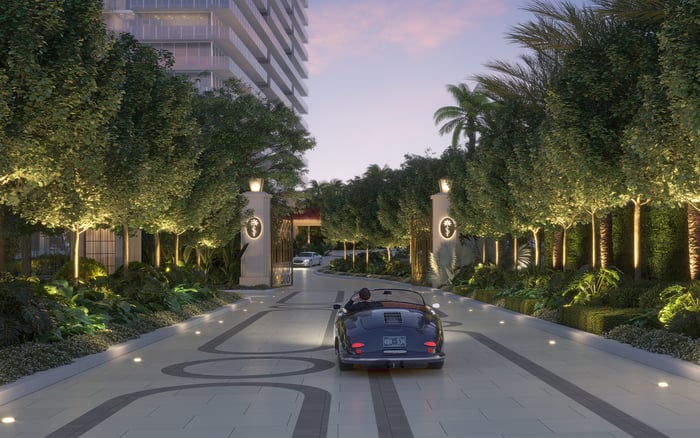
A buyer-focused editorial on how branded residences influence expectations, service standards, liquidity, and lifestyle decisions in Hallandale Beach and the broader Broward luxury market.
In Hallandale Beach, the luxury buyer’s calculation has become more layered. A waterfront address, a gracious floor plan, and the familiar language of resort-style living still matter, but they no longer complete the equation. For a growing segment of buyers, the question is not simply what is being purchased, but who stands behind the living experience.
That is the central shift behind branded residences. A recognizable hospitality, design, or lifestyle name can serve as shorthand for service, taste, and continuity. In a market where buyers may be comparing South Florida options across Miami Beach, Sunny Isles, Fort Lauderdale, Pompano Beach, and Broward, that shorthand carries weight. It reduces ambiguity. It frames expectations. It helps a buyer imagine daily life before ever stepping into a lobby.
Hallandale occupies a particularly compelling position. It is close enough to the established luxury corridors of Miami-Dade to remain part of the same conversation, yet distinct enough to appeal to buyers seeking a different rhythm. For those evaluating Shell Bay by Auberge Hallandale, the brand relationship is not a decorative detail. It becomes part of how the buyer considers service culture, long-term identity, and the emotional confidence of the purchase.
A brand does not replace due diligence. It does, however, reorganize it. Instead of asking only about finishes, views, parking, and building operations, the buyer begins with a broader question: does the total experience feel coherent?
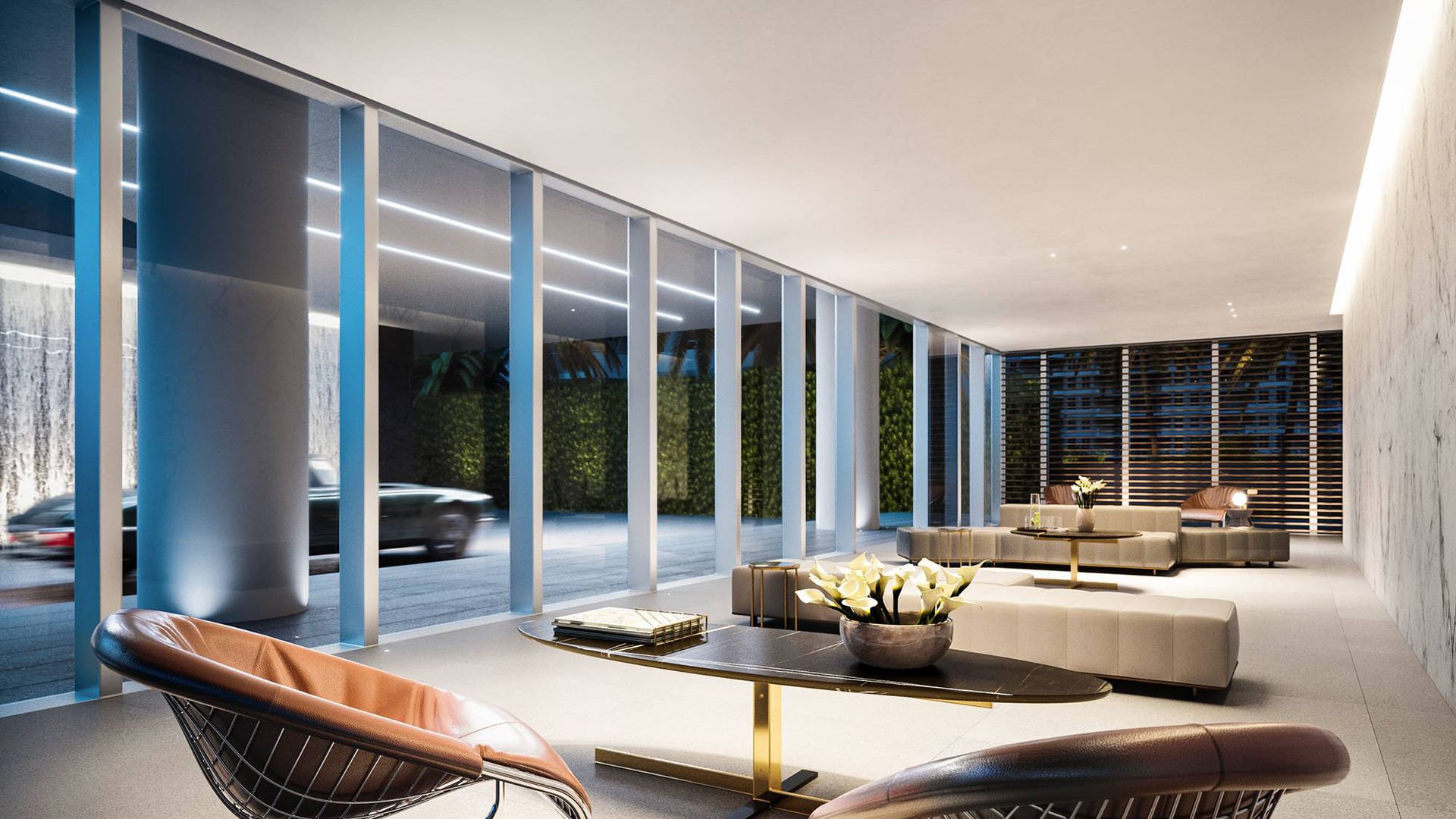
That coherence can appear in many ways: the tone of arrival, the staffing philosophy, the way shared spaces are curated, or the sense that private residential life has been designed with the same care as the architecture. A buyer accustomed to high-touch travel or private club environments may be less interested in a long amenity list than in whether the experience feels disciplined and effortless.
This is where branded living moves the conversation from real estate as asset to real estate as operating environment. The residence remains the core of value, but the services around it become part of its daily utility. For a second-home owner, that can mean confidence when away. For a primary resident, it can mean fewer frictions. For an investment-minded buyer, it can mean evaluating whether the brand identity is likely to remain legible and desirable over time.
Hallandale has always invited comparison. Buyers may look north and south, weighing the energy of larger urban centers against a more composed coastal cadence. In that context, branded residences can help clarify why one buyer chooses Hallandale over another South Florida address.
The choice is rarely just geographic. It is about pace, discretion, access, and the type of community a buyer wants to inhabit. Oceanfront preferences may lead one buyer to consider 2000 Ocean Hallandale Beach as part of a waterfront comparison, while another may focus on the brand-led promise embedded in a hospitality-associated residential concept. Both searches are valid. The difference is that branded living asks the buyer to evaluate not only the building, but also the philosophy of life it is meant to support.
This is especially relevant for buyers who split time between cities. They may not want to manage a residence in the traditional sense. They want a home that feels ready, legible, and cared for. In that setting, brand affiliation can become a psychological advantage. It offers a sense of order before the owner has learned every operational nuance of the building.
Luxury buyers are often comfortable paying for intangibles. Privacy, arrival, silence, taste, and service are not always easily quantified, yet they shape satisfaction. Branded living makes those intangibles a more explicit part of the purchase decision.
Still, the practical review matters. Buyers should separate the allure of the name from the mechanics of ownership. What is controlled by the residential association? What is governed by brand standards? How is service funded? How adaptable is the concept as the building matures? These questions do not diminish the appeal of branded living. They protect it.
A disciplined buyer will also compare the branded proposition with nearby and regional alternatives. In Fort Lauderdale, Auberge Beach Residences & Spa Fort Lauderdale provides another lens through which buyers can consider the intersection of coastal living and a recognized hospitality sensibility. Farther north, Armani Casa Residences Pompano Beach shows how design identity can influence the way a residence is perceived, even before a buyer examines the details of a specific home.
The point is not that one model is automatically superior. It is that the buyer equation has expanded. A residence now competes not only on location and architecture, but also on the credibility of the life it promises.
For many ultra-premium buyers, time is the rarest luxury. A strong brand can function as a filter. It signals the design language a buyer might expect, the level of polish that may be intended, and how the property wants to position itself within the broader luxury landscape.
That filtering effect can be useful in Hallandale because the South Florida luxury market is dense with choices. A buyer may not want to analyze every building from zero. A trusted brand or design association offers a starting point. It does not close the decision, but it narrows the field.
This is why brand alignment should feel personal. A hospitality-focused buyer may prioritize service culture and arrival sequence. A design-focused buyer may be more attuned to materials, restraint, and visual identity. A wellness-focused buyer may examine whether the daily experience supports calm rather than spectacle. In each case, the brand is not merely a logo. It is a cue about values.
Resale is never guaranteed by branding alone. Yet branding can influence how a future buyer first understands a property. In a crowded marketplace, a recognized name can make the story easier to communicate. It can also help distinguish one residence from another when physical attributes appear similar on paper.
That said, the strongest resale logic still depends on fundamentals. Buyers should look at location, floor plan, light, view corridors, building quality, operating discipline, and the durability of the property’s identity. Branding can enhance those fundamentals, but it should not be used to excuse weaknesses.
For Hallandale, the most compelling cases are likely to be those where brand, setting, and execution feel naturally aligned. If the name suggests serenity, the property should feel serene. If it suggests refined hospitality, the service model should be clear. If it suggests design authority, the private and shared spaces should carry that point of view with conviction.
A sophisticated buyer should approach branded living with both enthusiasm and restraint. The right questions are not adversarial. They are clarifying.
First, ask what the brand actually controls. The answer may shape expectations around service, design, programming, and long-term consistency. Second, understand the cost structure. A premium experience typically requires careful funding. Third, compare the residence to unbranded alternatives, because the home itself must stand on its own.
Buyers should also consider how the property fits their personal use case. A primary resident may prioritize daily comfort and building culture. A seasonal owner may value lock-and-leave confidence. An investment buyer may focus on differentiation, recognizability, and the property’s ability to maintain a coherent identity through market cycles.
In the broader South Florida context, The Ritz-Carlton Residences® Pompano Beach is another example of how a recognized name can become part of a buyer’s mental framework. The lesson for Hallandale is not to chase branding for its own sake. It is to understand when a brand meaningfully improves the ownership experience.
Branded living changes the buyer equation in Hallandale Beach because it shifts attention from property features to lived assurance. It asks whether the home will feel as composed in daily use as it appears in presentation. It gives buyers a language for service, privacy, and continuity.
For the right buyer, that can be decisive. Hallandale is not merely competing through square footage or waterfront proximity. It is participating in a more mature luxury conversation, one in which identity, stewardship, and atmosphere can carry real weight.
The best purchase will still be grounded in fundamentals. But in the upper tier, fundamentals are only the beginning. The winning residence is the one where location, architecture, service, and brand promise all point in the same direction.
Does branded living matter in Hallandale Beach? Yes. It can help buyers evaluate service expectations, identity, and lifestyle consistency alongside the residence itself.
Is a branded residence automatically a better purchase? No. Branding can add clarity and appeal, but the floor plan, location, operations, and ownership terms still matter.
Why do luxury buyers respond to branded residences? A brand can reduce uncertainty by signaling a particular approach to service, design, and daily experience.
Should buyers compare branded and unbranded buildings? Yes. Comparing both helps determine whether the brand premium is supported by the actual residence and operating model.
What should an investment buyer consider? An investment buyer should focus on fundamentals, differentiation, ownership costs, and whether the property’s identity is durable.
How does Broward fit into the branded residence conversation? Broward offers buyers a broader coastal field of comparison, including Hallandale, Fort Lauderdale, and Pompano Beach.
Is oceanfront positioning enough on its own? Oceanfront appeal is important, but buyers increasingly look for service quality, privacy, and long-term stewardship as well.
What questions should buyers ask about brand involvement? Buyers should ask what the brand controls, how standards are maintained, and how services are funded over time.
Can branded living suit a seasonal owner? Yes. Seasonal owners often value the sense of readiness and support that a well-run branded environment may provide.
What is the main takeaway for Hallandale buyers? The strongest choice is the residence where location, design, service, and brand promise feel aligned.
To compare the best-fit options with clarity, connect with MILLION.
If branded residences are on your mind — as a home or as an allocation — we would be glad to share what we are seeing, privately.
Begin a quiet conversation