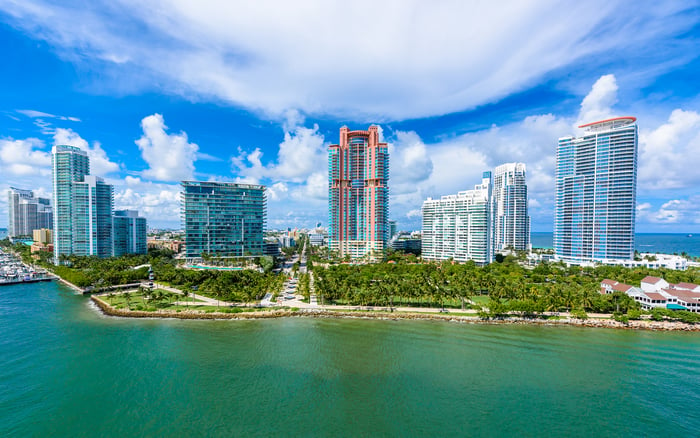
For yacht owners, South Florida real estate leverage should be evaluated across the full balance sheet, including real estate debt, securities-backed credit, vessel financing, taxes, insurance, and waterfront functionality.
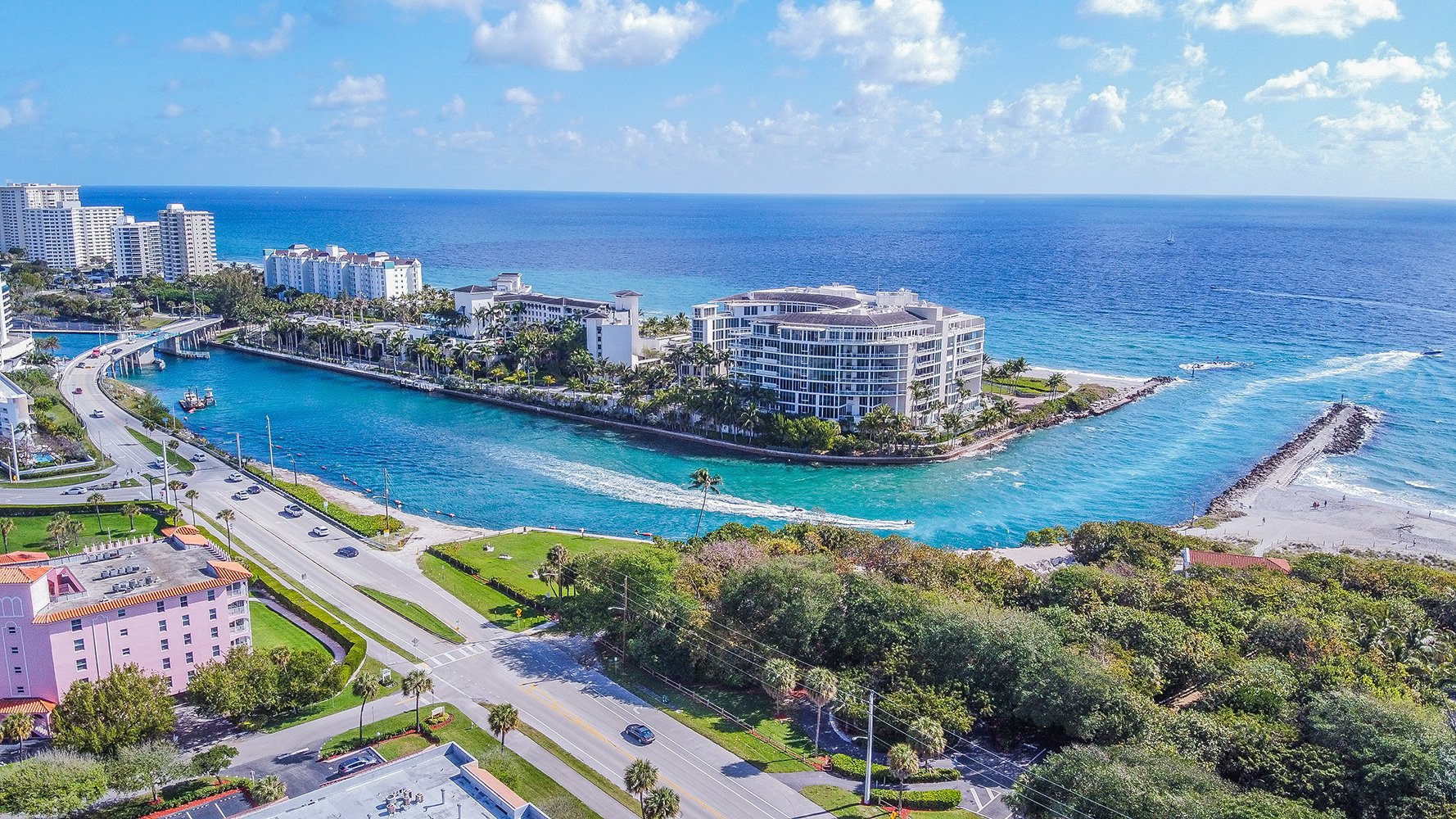
For yacht owners, a South Florida residence is rarely just a home acquisition. It is often one instrument within a larger balance sheet: a primary mortgage or jumbo loan, a securities-backed line of credit, vessel financing, business debt, partnership interests, and liquidity reserves that all need to hold up under pressure. The right question is not simply, “What can I borrow against this property?” It is, “How will every secured obligation interact if markets soften, rates reset, insurance costs rise, or the yacht itself requires capital?”
That distinction matters because leverage magnifies outcomes in both directions. In rising markets, it can preserve cash and amplify returns. In adverse conditions, collateral-based borrowing can require repayment or additional collateral at precisely the moment an owner would prefer to remain patient. Waterfront is seductive, but waterfront financed without a portfolio view can become surprisingly rigid.
Florida’s absence of a state personal income tax is an obvious draw for high-income buyers considering relocation or domicile planning. Yet tax efficiency should not be confused with debt capacity. Homestead benefits may reduce taxable value for qualifying primary residences, but luxury waterfront property still requires disciplined property-tax underwriting. Federal mortgage-interest rules also limit deductibility, so tax treatment should never be the sole justification for aggressive borrowing.
This is why the subject belongs within the discipline of buyer strategy: luxury leverage is not about maximum debt. It is about durable optionality.
A residence can be spectacular from the terrace and still be wrong for a vessel. Yacht owners should distinguish water-view luxury from yacht-functional luxury before committing capital. Draft, beam, bridge clearances, channel depth, turning radius, dock rights, seawall condition, and marina governance can materially alter both utility and value.
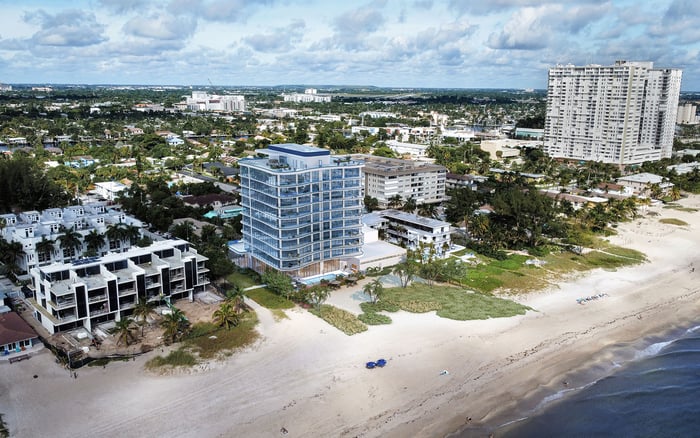
In Fort Lauderdale, where boating culture is part of the city’s identity, buyers often focus on immediate access, dock logistics, and the relationship between residence, marina, and open water. Projects such as St. Regis® Residences Bahia Mar Fort Lauderdale naturally enter that conversation for owners who want the residential decision and the yachting lifestyle to feel integrated. Still, even in the most intuitive boating markets, assumptions should be verified before closing.
The same discipline applies in Miami Beach, Fisher Island, Sunny Isles, Boca Raton, Pompano Beach, and the broader Intracoastal corridor. Oceanfront glamour, bay views, and canal frontage are different propositions. At the private-island and estate end of the market, The Links Estates at Fisher Island may appeal to buyers prioritizing privacy and scarcity, while a coastal condominium such as The Ritz-Carlton Residences® Miami Beach reflects a different lifestyle calculus. Neither should be evaluated by address prestige alone. The asset must suit the boat, the financing, and the holding period.
Many affluent buyers prefer to avoid selling appreciated assets, so they use securities-backed credit for liquidity. That can be efficient when markets are stable. It can also create stress when investment values decline at the same time real estate carrying costs, insurance premiums, assessments, or refinancing obligations rise.
The issue is timing. A securities-backed line can demand more collateral or repayment after market losses. A yacht loan may have its own secured-credit requirements. Documented vessels can be subject to preferred mortgage rules, which means vessel financing should be coordinated with real estate borrowing rather than treated as a separate lifestyle expense.
Adjustable-rate mortgages add another variable. If the rate resets after an initial period, the buyer should stress-test payments under higher-rate scenarios, not just today’s acquisition model. For a large waterfront property, the monthly number is only one part of the picture. Taxes, insurance, dock work, seawall maintenance, crew logistics, utilities, association fees, and opportunity cost all belong in the same model.
The healthiest structure is often not the one with the lowest initial payment. It is the structure that gives the owner the greatest control over timing.
South Florida’s beauty comes with underwriting realities. Flood insurance is separate from standard homeowners insurance, making it a core diligence item for any waterfront purchase. Flood-zone status can affect insurance availability, loan underwriting, and long-term carrying costs. Even limited flooding can be financially meaningful, especially when a property is leveraged and repairs coincide with other liquidity demands.
Sea-level and tidal-flood exposure should be modeled as part of the holding strategy. This is not a reason to avoid the coast. It is a reason to buy with precision. The underwriting should consider elevation, access routes, garage placement, mechanical systems, shoreline condition, and the practical costs of maintaining resilience over time.
Docks, seawalls, and shoreline modifications can require environmental or submerged-lands approvals. Oceanfront and near-shore redevelopment may also face coastal construction controls. A buyer who assumes a dock can be expanded, a seawall can be replaced quickly, or a site can be redeveloped without constraint may be adding unsupported value to the purchase thesis.
For buyers considering Broward and Palm Beach County alternatives, properties near Pompano Beach can offer a compelling coastal lifestyle. A residence such as The Ritz-Carlton Residences® Pompano Beach may sit within a broader conversation about oceanfront living, insurance planning, and long-term carrying-cost discipline.
For condominium buyers, the lender is not evaluating only the borrower. The building matters. Project finances, insurance, litigation, governance, reserve posture, and structural obligations can all influence financeability and risk.
This is especially important in older coastal condominium and cooperative buildings, where milestone inspections and reserve requirements can affect assessments and monthly carrying costs. A highly liquid buyer can still face friction if the project itself has issues. For leveraged purchases, that friction may translate into higher costs, a narrower lending pool, or reduced resale liquidity.
Newer luxury projects are not exempt from diligence, but they may offer clearer documentation, modern systems, and more predictable governance during the initial ownership period. In Boca Raton, Alina Residences Boca Raton illustrates how some buyers compare a refined condominium lifestyle against the responsibility of a private waterfront estate. The correct answer depends on how the owner values control, convenience, privacy, and balance-sheet simplicity.
Before buying, yacht owners should build a consolidated leverage map. It should show every loan, collateral source, maturity date, rate type, covenant, liquidity trigger, and expected annual carrying cost. Then it should model stress: lower portfolio values, higher interest rates, increased insurance costs, flood repairs, assessment exposure, delayed refinancing, and reduced buyer liquidity at exit.
The second step is functional diligence. Confirm navigational constraints, dock rights, depths, bridge clearances, and marina rules. Review flood maps, insurance availability, association documents, reserve posture, and any shoreline-work assumptions. If redevelopment is part of the thesis, investigate coastal construction and environmental approvals before the contract becomes difficult to unwind.
The final step is lifestyle honesty. Some yacht owners should own directly on navigable water. Others may be better served by a trophy condominium paired with a marina solution. Some should pay cash to preserve optionality elsewhere. Others can use moderate debt if the rest of the portfolio remains liquid, diversified, and resilient.
In South Florida luxury real estate, sophistication is not proven by the largest loan. It is proven by the ability to enjoy the asset without becoming captive to it.
Should yacht owners finance a South Florida home differently than other luxury buyers? Often, yes. Vessel financing, securities-backed credit, and business debt should be reviewed with the real estate loan as one balance-sheet system.
Is waterfront property automatically suitable for a large yacht? No. Buyers should verify draft, beam, bridge clearance, channel depth, dock rights, and marina rules before assuming a property works for a specific vessel.
Does Florida’s lack of state personal income tax justify more leverage? Not by itself. Tax advantages can improve the ownership picture, but they do not replace cash-flow, collateral, and insurance stress testing.
Can homestead benefits eliminate property-tax concerns? No. They may reduce taxable value for qualifying primary residences, but luxury waterfront taxes still need careful underwriting.
Is flood insurance included in standard homeowners coverage? No. Flood insurance is separate, and flood-zone status can affect availability, loan underwriting, and carrying costs.
Why are securities-backed lines risky for real estate purchases? They can require additional collateral or repayment if portfolio values fall, which may coincide with property expenses or refinancing needs.
Should adjustable-rate mortgages be avoided? Not always. They should be stress-tested so the buyer understands payment risk after the initial rate period ends.
Why do condominium reserves matter to leveraged buyers? Reserve requirements and inspections can influence monthly costs, special-assessment risk, and lender comfort with the building.
Can a buyer assume a dock or seawall can be modified later? No. Shoreline work can require approvals, so expansion or repair assumptions should be checked before closing.
What is the best leverage strategy for a yacht owner? The best strategy preserves liquidity, coordinates all secured debt, and keeps the owner in control through market and insurance cycles.
When you're ready to tour or underwrite the options, connect with MILLION.
If branded residences are on your mind — as a home or as an allocation — we would be glad to share what we are seeing, privately.
Begin a quiet conversation