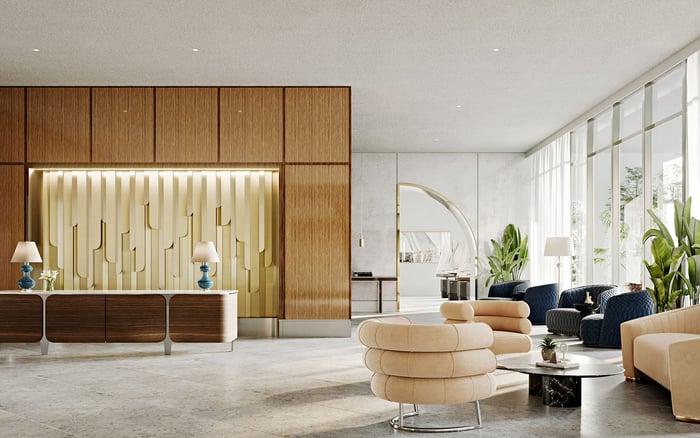
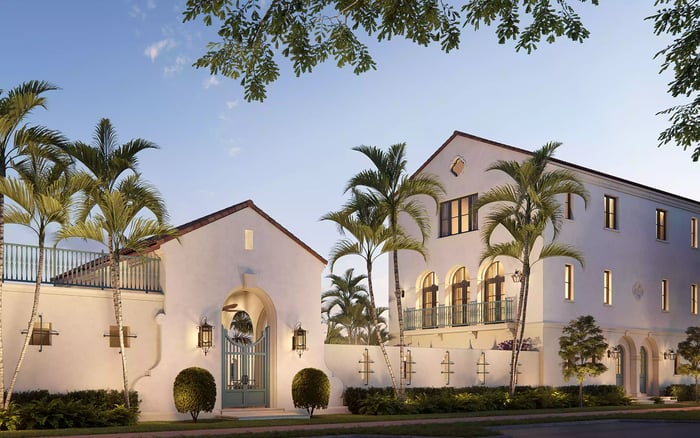
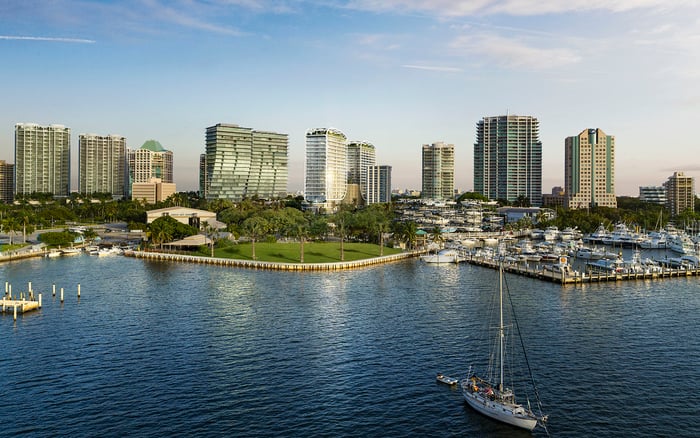
Coral Gables gives young families a rare South Florida balance: historic design, established neighborhoods, school options, parks, polished dining and retail, and efficient access to Greater Miami.
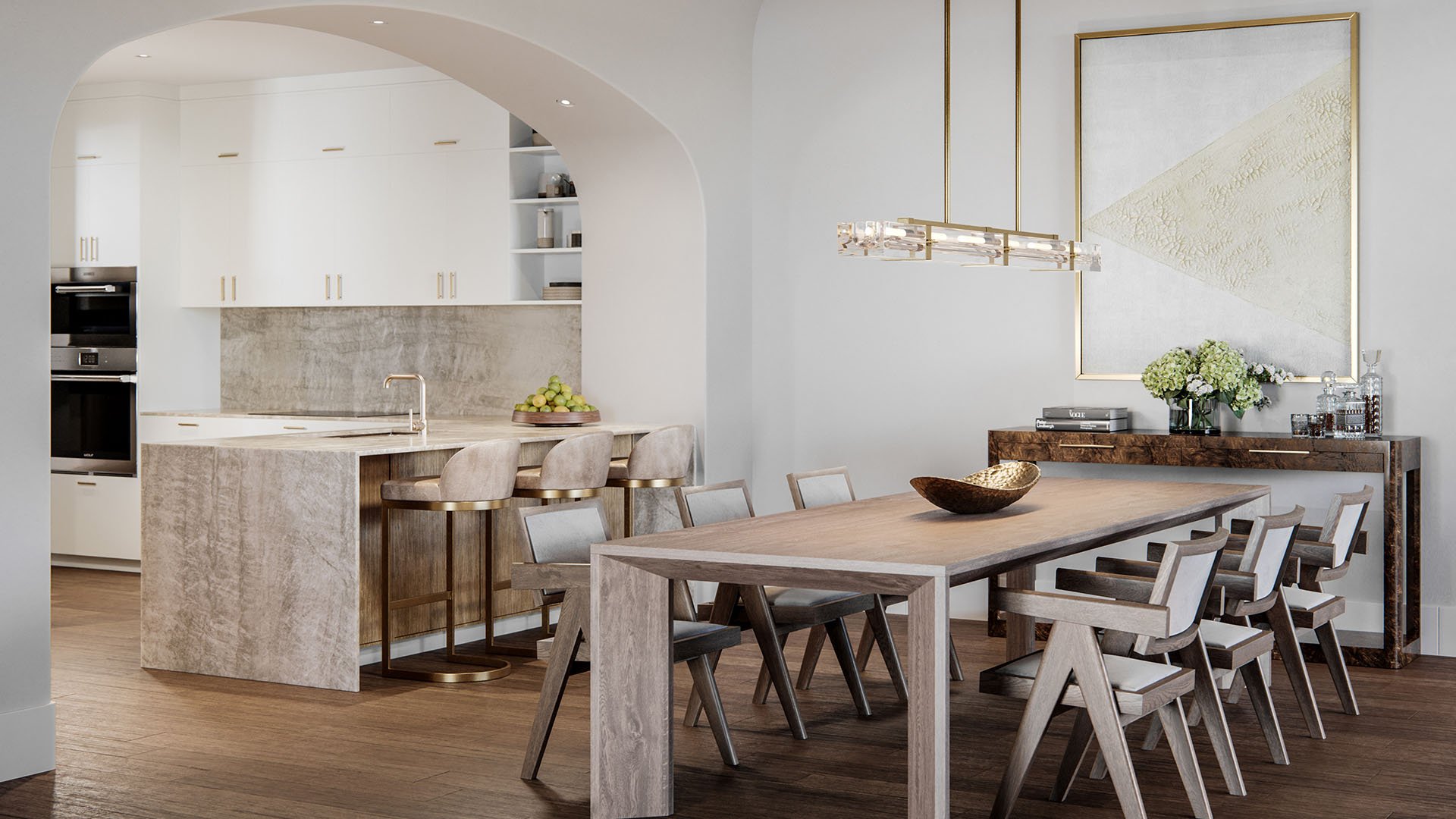
For young families seeking South Florida without surrendering to its intensity, Coral Gables offers a particular kind of luxury: coherence. Developed in the 1920s by George E. Merrick as a planned community, the city still carries the discipline of that original vision. Its boulevards, landscaping, civic spaces, and Mediterranean Revival character give daily life a composed backdrop that feels increasingly rare in metropolitan Miami.
Coral Gables is known as The City Beautiful, a phrase that captures more than curb appeal. It points to a civic idea, where architecture, streetscapes, plazas, and scale work in concert. For parents, that can translate into a calmer sense of place: recognizable neighborhoods, enduring architecture, and a lifestyle that is polished without feeling anonymous.
The city’s historic language is unmistakable. Stucco walls, tile roofs, arches, courtyards, formal plantings, and Spanish and Mediterranean motifs give Coral Gables a visual identity that has outlasted shifting design cycles. That continuity is intentional. Zoning and land-use controls help preserve neighborhood scale and architectural coherence, reinforcing the impression that Coral Gables is curated rather than improvised.
The strongest family argument for Coral Gables is not one amenity. It is the accumulation of practical advantages within a refined frame. Residential neighborhoods sit near commercial districts, allowing families to access restaurants, shops, offices, parks, and services without living in Miami’s densest high-rise cores. The result is a base that feels connected but not overwhelmed.
For buyers comparing new residences within the city, Cora Merrick Park speaks to the appeal of living close to one of Coral Gables’ most polished retail and dining districts while remaining inside a neighborhood known for architectural discipline. Nearby, Ponce Park Coral Gables fits the same broader buyer logic: families often want proximity to the city’s civic and commercial rhythm without giving up the Gables sense of proportion.
That balance is especially relevant for households with two working parents, frequent travel, school calendars, and extended family across multiple neighborhoods. Coral Gables sits within Miami-Dade County, keeping residents connected to Greater Miami’s employment, culture, healthcare, and international business ecosystem. It also offers close access to Miami International Airport, a meaningful advantage for globally mobile families and those who travel often for work.
Families should be careful not to reduce a relocation decision to school shorthand alone. The more useful lens is access to options. Coral Gables is served by Miami-Dade County Public Schools, and its appeal is also strengthened by private-school choices in and near the area, including Carrollton School of the Sacred Heart and Riviera Schools.
The University of Miami’s main campus adds another layer of value to the family equation. It brings educational, cultural, medical, and employment gravity close to residential neighborhoods. For parents, that can mean a more substantial local ecosystem: lectures, performances, athletic events, medical connections, and a steady academic presence that reinforces Coral Gables as more than a bedroom community.
For families weighing neighborhood texture, The Village at Coral Gables also reflects a broader return to human-scaled living. The draw is not simply newness. It is the possibility of contemporary residential comfort within a city shaped by long-term planning, preservation, and design oversight.
A family base succeeds only if it works on ordinary days. Coral Gables’ Community Recreation department manages parks, recreation facilities, youth programming, and public spaces that support the routines of childhood and parenthood. Those everyday assets matter as much as marquee restaurants or trophy architecture.
Venetian Pool remains one of the city’s signature family-friendly amenities, combining history with a distinctly Coral Gables sense of occasion. The Shops at Merrick Park adds upscale retail and dining, giving parents a convenient setting for errands, lunches, gifts, and evening plans. The Biltmore Hotel, meanwhile, reinforces the city’s historic luxury identity and gives Coral Gables a landmark hospitality presence woven into the civic fabric.
This is where the lifestyle proposition becomes clear. Coral Gables is not trying to imitate Miami Beach’s resort energy or Brickell’s vertical urbanism. It offers a more measured rhythm, with enough commerce to be convenient and enough residential calm to feel settled.
For families considering South Florida broadly, Coral Gables often sits between several desirable but distinct choices. Coconut Grove has a lush, bay-adjacent personality and a village sensibility. Brickell is more vertical, finance-oriented, and urban. Miami Beach offers oceanfront glamour, but with a different pace and geography. Coral Gables distinguishes itself through planned beauty, established neighborhoods, access to schools and parks, and a civic identity that has remained legible for a century.
That does not make it the only answer. Buyers comparing The Well Coconut Grove may prioritize Grove atmosphere and wellness-oriented living, while those considering 2200 Brickell may want a more urban, downtown-adjacent routine. Coral Gables tends to resonate when the brief calls for refinement, continuity, and a family-scaled address with strong regional access.
For young families, the city’s best positioning is its mix of architectural heritage, school options, parks, retail, dining, regional connectivity, and long-term design discipline. It is not luxury as spectacle. It is luxury as order, proportion, and livability.
Coral Gables works best for families who value refinement without isolation. It offers access to Miami’s economic and cultural network while maintaining a distinct residential identity. The city’s Mediterranean Revival character, zoning framework, and preserved scale help create a sense of permanence that many young families find reassuring.
The key is to match the household rhythm to the exact pocket and property type. Some families will prioritize proximity to Merrick Park. Others will focus on school commutes, park access, airport convenience, or the feel of a specific street. In Coral Gables, those decisions are not merely logistical. They are about choosing the version of South Florida that feels most sustainable over time.
Is Coral Gables a good fit for young families? Yes, for families seeking established neighborhoods, school options, parks, retail, dining, and access to Greater Miami within a refined setting.
What gives Coral Gables its distinctive character? Its planned origins, Mediterranean Revival architecture, formal landscaping, and long-standing design controls give the city a cohesive visual identity.
Does Coral Gables offer access to schools? Coral Gables is served by Miami-Dade County Public Schools and has private-school options in and near the city, including Carrollton and Riviera Schools.
Why is the University of Miami important to family buyers? The campus adds educational, cultural, medical, and employment energy close to residential neighborhoods.
Is Coral Gables more urban or suburban? It blends both, offering residential streets and family routines near commercial districts, dining, shopping, and regional employment centers.
What family amenities stand out in Coral Gables? Parks, recreation facilities, youth programming, Venetian Pool, Merrick Park, and civic public spaces all support family life.
How does Coral Gables compare with Brickell? Brickell is denser and more vertical, while Coral Gables offers a more residential, historic, and human-scaled environment.
How does Coral Gables compare with Coconut Grove? Coconut Grove has a lush village feel, while Coral Gables emphasizes planned boulevards, architectural consistency, and civic order.
Is airport access a benefit for Coral Gables families? Yes, close access to Miami International Airport supports frequent travelers and globally connected households.
What is the best way to shortlist comparable options for touring? Start with location fit, delivery status, and daily lifestyle priorities, then compare stacks and elevations to validate views and privacy.
For a confidential assessment and a building-by-building shortlist, connect with MILLION.
If branded residences are on your mind — as a home or as an allocation — we would be glad to share what we are seeing, privately.
Begin a quiet conversation