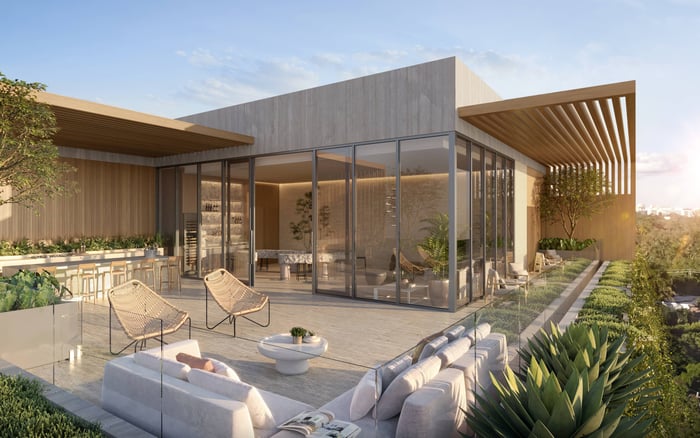
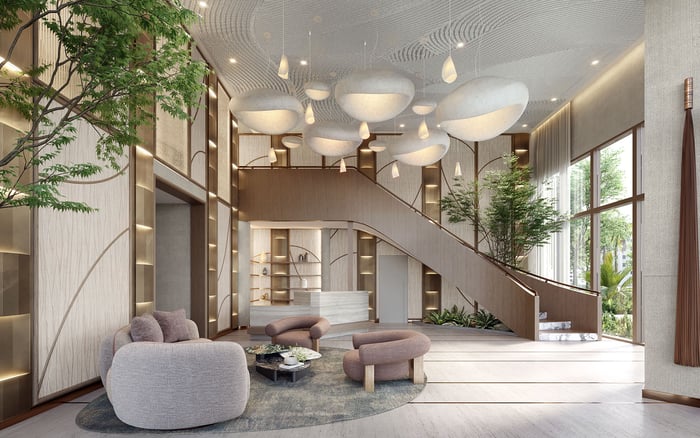
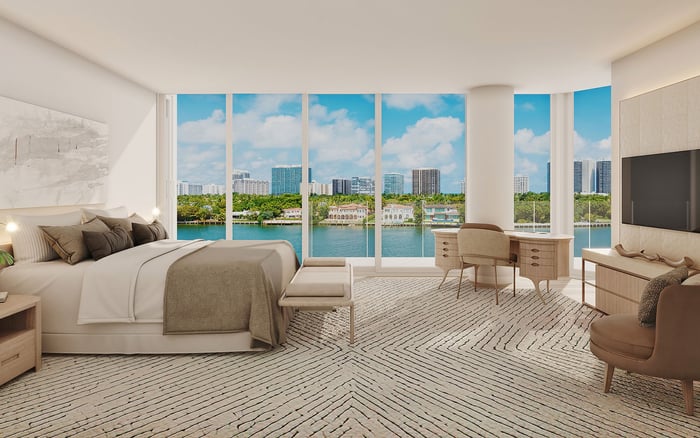
A buyer-oriented look at how Opus Coconut Grove can function for multi-week guests, balancing hotel-style service, serviced-apartment practicality, and private-residence discretion in Coconut Grove.
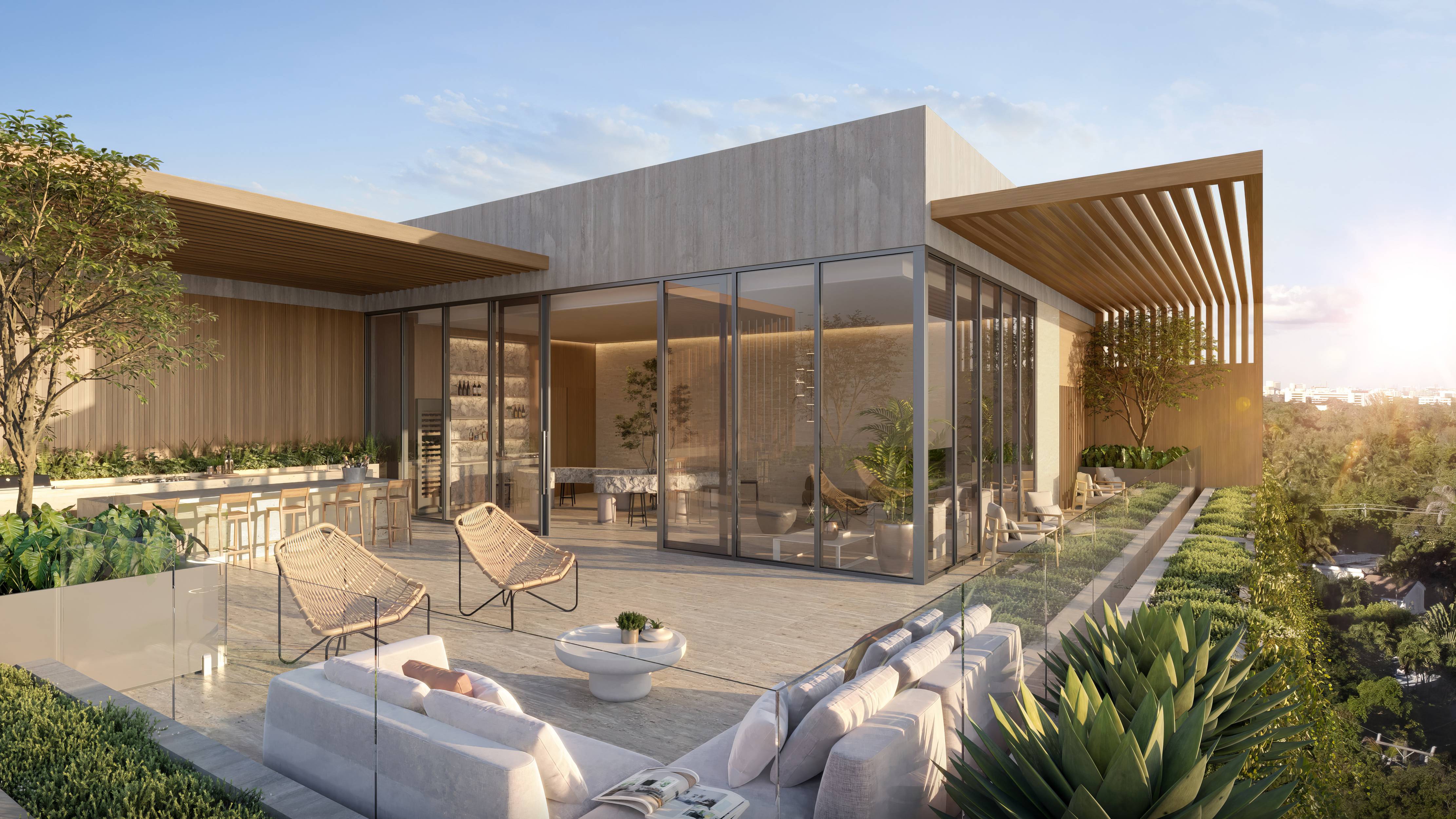
A weekend arrival can be choreographed around first impressions. A multi-week stay is different. By day three, guests are no longer judging the lobby moment or the welcome note. They are using the kitchen, deciding where luggage should live, learning the lighting scenes, scheduling laundry, receiving visitors, and expecting the residence to become more intuitive each morning.
That is the real lens for Opus Coconut Grove. The project is best understood as a luxury residential hospitality concept in Coconut Grove, not a conventional short-stay hotel. Its most important promise is not spectacle. It is the ability to let owners, owner guests, or managed-stay occupants live with polish for weeks while still feeling protected from the intrusions of a hotel environment.
In this context, Opus Coconut Grove sits at the intersection of Coconut Grove calm, long-term-rental discipline, condo-hotel convenience, branded-residence expectations, and residential planning. For the ultra-premium buyer, the question is practical: can the home perform when visitors arrive with real luggage, real routines, and real preferences?
The most successful extended stay begins before anyone steps through the door. A structured pre-arrival conversation should capture the essentials: arrival timing, household composition, housekeeping cadence, dietary preferences, technology needs, parking or car-service expectations, and whether guests want a highly serviced experience or a quieter residential one.
That distinction matters. Some visitors want hotel-like touchpoints, with concierge assistance, regular housekeeping, food-and-beverage support, and fast issue resolution. Others want the residence to feel like a private home, with staff visible only when needed. The strongest operating model gives guests a spectrum rather than a fixed script.
This is where serviced-apartment practicality becomes essential. Multi-week guests do not merely unpack. They establish zones: work surfaces, children’s items, wardrobe overflow, grocery storage, wellness routines, and places for deliveries. The residence has to absorb those patterns without feeling temporary or cluttered.
For a short stay, check-in can be theatrical. For a several-week guest, it should be precise. The arrival moment should answer the questions that become frustrating later: how to reach concierge, how housekeeping is scheduled, how maintenance is handled, where extra linens are stored, how access control works, and what to do if technology needs attention.
The best introductions are calm and layered. Guests should not be overwhelmed with every detail in the first ten minutes. Instead, the team can cover essentials immediately, then follow up once the household has settled. By the end of the first day, the residence should already feel legible.
Security is part of this onboarding. Extended guests may have family members, assistants, drivers, wellness providers, or private chefs moving through their schedule. A discreet access protocol protects privacy while allowing the household to function naturally. The point is not to make guests feel managed. It is to make the residence feel controlled.
The first week is when service shifts from presentation to memory. If guests drink coffee at a certain hour, prefer towels refreshed on particular days, use one bedroom as an office, or need technical help for video calls, the residence should become smarter through repetition. Luxury, in this setting, is not constant interruption. It is fewer explanations.
Housekeeping becomes more complex over time because the home is being lived in fully. Kitchens are used. Laundry accumulates. Closets fill. Bathrooms develop patterns. Outdoor and living areas become part of the household rhythm. A hotel room can be reset. A residence must be maintained without erasing the guest’s sense of possession.
That balance is also visible in nearby Coconut Grove comparisons. Buyers studying Four Seasons Residences Coconut Grove or Mr. C Tigertail Coconut Grove are often evaluating more than architecture. They are considering how service, discretion, and neighborhood life can coexist.
After the first week, operational quality becomes almost invisible when it is done well. Housekeeping should follow an agreed cadence, with linens, laundry support, and deeper cleaning calibrated to the guest’s lifestyle. Engineering or maintenance should be reachable without drama, especially for air conditioning, appliances, lighting, connectivity, and access systems.
Concierge service is most valuable when it becomes anticipatory rather than reactive. Multi-week guests may need restaurant planning, boating logistics, wellness appointments, childcare coordination, personal shopping, transportation, or private-chef support. The residence should be able to coordinate these needs without making the stay feel public.
Coconut Grove’s Biscayne Bay setting gives this a distinctive character. Waterfront plans, boating days, family recreation, and quiet neighborhood routines can matter as much as formal amenities. The Grove is not trying to behave like a resort strip. Its appeal is privacy, greenery, and continuity.
That is why buyers also look closely at projects such as The Well Coconut Grove and Vita at Grove Isle when they are thinking about longer stays, wellness routines, and water-oriented living rather than a purely transient hospitality experience.
The kitchen is one of the clearest differences between a nightly stay and a multi-week residence. Guests may cook, bring in chefs, stock specialty groceries, receive deliveries, or maintain dietary programs. Food-and-beverage support should therefore be flexible. It can mean stocking the refrigerator before arrival, arranging chef service for certain evenings, or simply helping the household function with less friction.
Storage is just as important. Luggage, sports equipment, children’s items, documents, and personal purchases need a logical place. When these details are ignored, even a beautiful residence starts to feel like a suite. When they are handled well, the space begins to feel like a private base in Miami.
For extended guests, departure should be as organized as arrival. The final days may involve shipping, wardrobe packing, vendor coordination, housekeeping reconciliation, technology resets, and the return of the residence to its next mode of use. That next mode could be private owner occupancy, another guest stay, or a pause in use.
This is the central operating challenge at Opus Coconut Grove: the same residence may need to act as a private home for one occupant and a serviced luxury stay for another. The better the system, the less visible that complexity becomes. For buyers, that is the point. Multi-week hospitality is not about more service for its own sake. It is about letting a residence hold a life gracefully, even when that life is temporary.
What is the main idea behind Opus Coconut Grove for longer stays? It is framed as a luxury residential hospitality concept where the home can support guests staying for weeks, not just nights.
How does a multi-week stay differ from a hotel visit? Guests use kitchens, storage, laundry, technology, and living areas more intensively, so service must become more residential.
Why is onboarding so important? Early preference gathering helps staff understand privacy levels, housekeeping cadence, food needs, and technical expectations before friction appears.
Can guests choose how much service they receive? The strongest model allows a spectrum, from hotel-style support to a quieter home-like experience with limited staff presence.
What services matter most after the first week? Housekeeping, linen changes, engineering support, concierge coordination, food support, and security become the core rhythm.
Why does Coconut Grove suit this type of stay? Coconut Grove offers privacy, greenery, neighborhood continuity, and Biscayne Bay access, which support a calmer extended-stay lifestyle.
Who might use the residence for several weeks? Occupants may include owners, owner guests, or guests staying through a managed hospitality or rental-style program.
How does security fit into the experience? Security should manage access discreetly for family, staff, vendors, and visitors without making the household feel exposed.
Why are kitchens and storage so important? Longer stays require groceries, luggage, laundry, personal items, and daily routines to be accommodated without clutter.
What should buyers watch for when evaluating this model? Buyers should study how arrival, personalization, maintenance, concierge, and departure work together over time.
When you're ready to tour or underwrite the options, connect with MILLION.
If branded residences are on your mind — as a home or as an allocation — we would be glad to share what we are seeing, privately.
Begin a quiet conversation