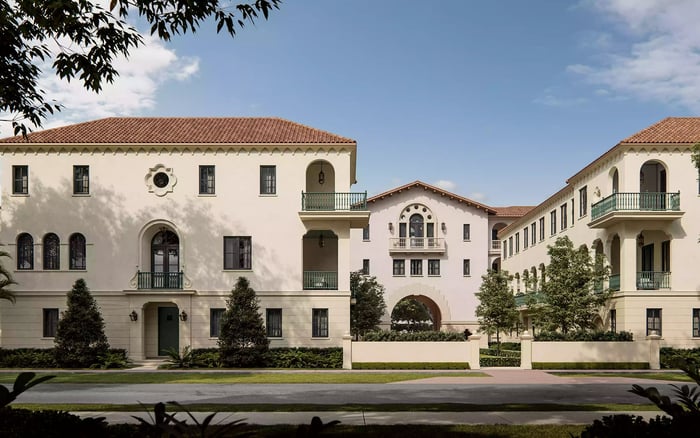
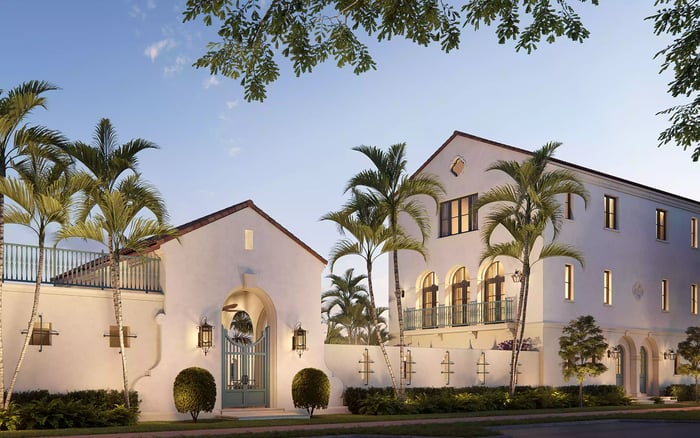
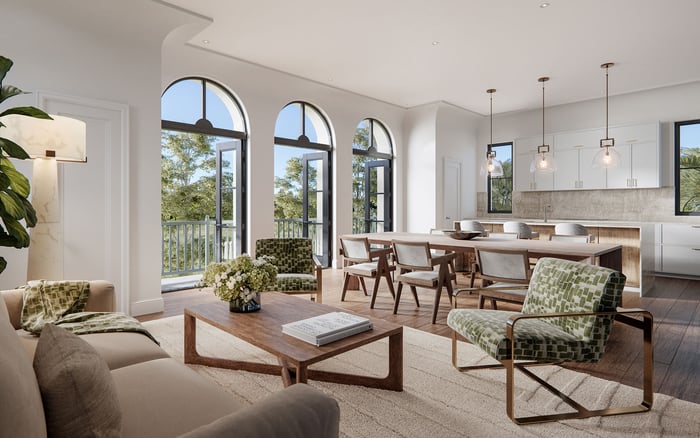
A practical buyer’s guide to Ponce Park Coral Gables for art-collecting households, focusing on delivery access, installation, storage, insurance, security and the logistics of moving valuable works across South Florida and beyond.
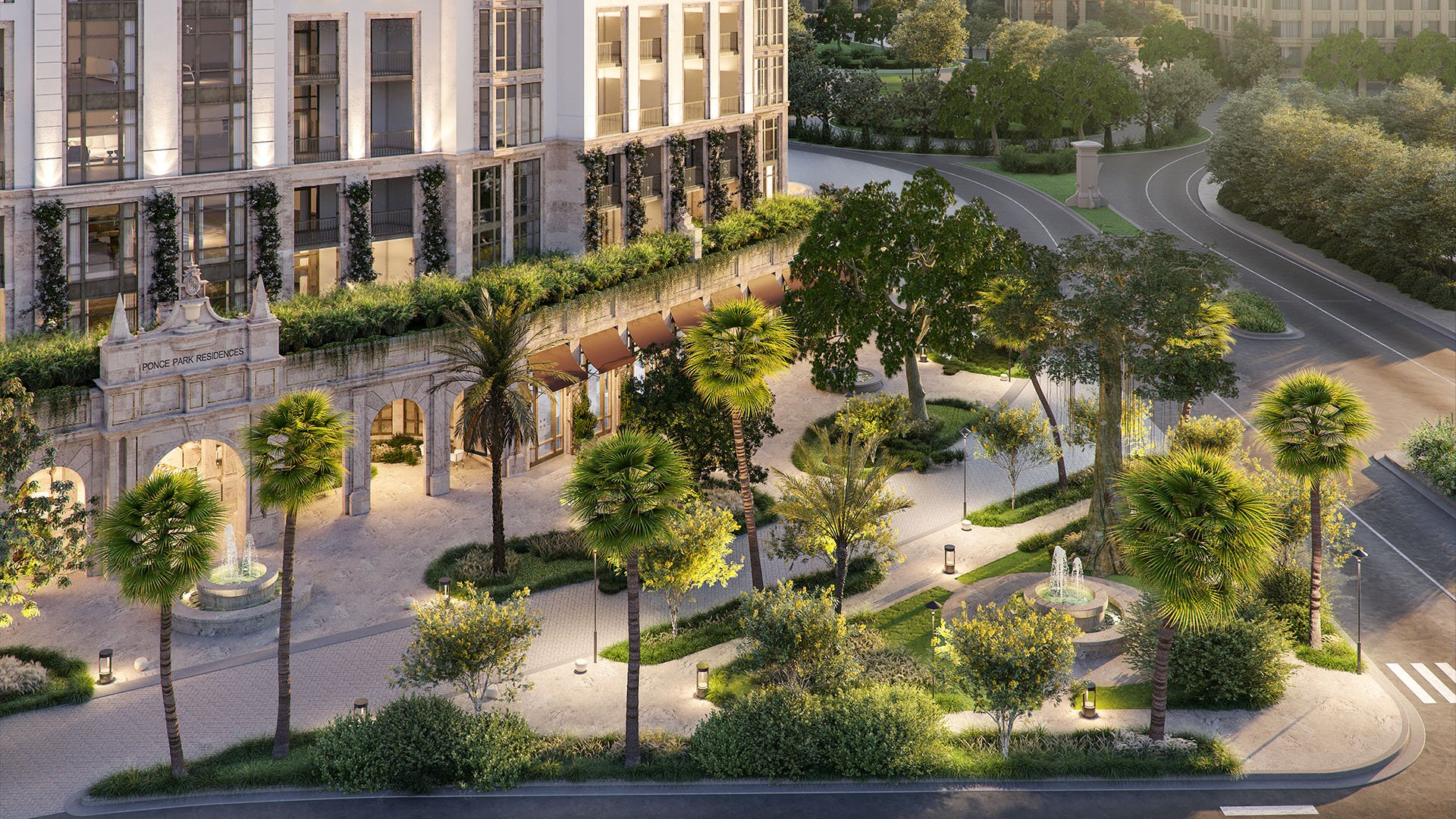
For households that collect seriously, the question is no longer simply whether a residence is close to galleries, museums or a celebrated cultural district. The sharper question is whether the home can receive, protect, install, insure, store and move valuable works without friction. That is the practical lens through which Ponce Park Coral Gables should be evaluated.
The Ponce Park and Ponce Circle Park area sits within the Coral Gables luxury residential market, close to a broader South Florida art ecosystem that extends beyond the city itself. Its appeal begins with setting: Ponce Circle Park functions as a small urban green space and focal point along Ponce de Leon Boulevard, giving nearby residences a recognizable civic anchor rather than a purely private address.
Yet for art-collecting households, the greater value may be operational. A painting, sculpture or design object does not simply arrive. It is sourced, packed, shipped, received, documented, installed, insured, protected and, often, moved again. Buyers considering Ponce Park Coral Gables should treat that full chain as part of the property’s luxury profile.
Coral Gables has a cultural identity that is unusually coherent for South Florida. Its roots in 1920s City Beautiful planning, Mediterranean Revival architecture, public landscapes and civic monuments give the city a residential language that feels curated rather than improvised. Historic preservation, design guidelines and public art further reinforce an environment where architecture, streetscape and civic life remain part of daily experience.
That context matters to collectors. Art is rarely isolated from the way a household lives. A residence near Ponce Park can offer proximity to downtown Coral Gables, Miracle Mile and neighborhood cultural institutions while retaining the calm and order associated with the city’s planning traditions. The Coral Gables Museum contributes to this profile through its focus on architecture, urbanism and civic arts, while the University of Miami and Lowe Art Museum extend the cultural radius nearby.
For buyers comparing the area with other refined Coral Gables addresses, projects such as Cora Merrick Park and The Village at Coral Gables help frame how design, neighborhood access and cultural atmosphere can shape daily life. The specific art-delivery question, however, remains more technical: can the residence function gracefully when specialized handlers arrive with climate-sensitive, high-value works?
Ponce de Leon Boulevard is a key north-south corridor connecting Coral Gables with central Miami, Coconut Grove and the broader metro area. For an art household, this is more than a commuting convenience. It affects how efficiently works can move between homes, storage facilities, airports, installers and advisers.
Homes near Ponce Circle Park benefit from access to arterial roads linking the area to Miracle Mile, downtown Coral Gables, Coconut Grove, Brickell and Miami Beach. Ponce de Leon Boulevard, Le Jeune Road and nearby arterials are also important for reaching Miami International Airport. This matters for collectors who rotate works among Miami, New York, Latin America, Europe or the Caribbean, where the airport connection is part of the art-care equation.
A household with a second-home strategy may receive one shipment before season, send another work out for conservation, and coordinate an installation team between residences. The roads serving Ponce Park do not eliminate the need for planning, but they can reduce unnecessary complexity when timing, security and handling protocols matter.
Proximity to art destinations is useful, but it is not the same as access. Major South Florida cultural moments and destinations, including Pérez Art Museum Miami and the Art Basel Miami Beach orbit, are not in Coral Gables, yet they remain part of the larger market context for households based near Ponce Park. During an Art Basel week, the valuable asset may not be a dinner reservation or a fair pass. It may be a clean, secure installation window.
Buyers should ask practical questions before they fall in love with a floor plan. Can a specialized art truck load and unload without creating a visibility issue? Is there a secure receiving sequence? Are service elevators, corridors, doors and turning radii adequate for oversized works? Can installation crews work discreetly? Is there a place for temporary staging that does not expose a work to heat, humidity or public view?
Insurance adds another layer. Coverage may depend on documentation, approved carriers, condition reports, storage environments and security standards. Even when a work is fully insured, a poor receiving process can create risk. The residence should support the insurer’s expectations as well as the owner’s lifestyle.
South Florida’s luxury market rewards beauty, but art care rewards discipline. Buyers should evaluate whether a residence can accommodate climate-sensitive works, not only once they are hung, but during delivery, unpacking and installation. The path from truck to wall matters. So does exposure to sun, humidity swings, elevator delays and construction activity.
Dedicated storage may not always be necessary inside a residence, but temporary holding conditions should be considered. If works rotate frequently, the household may need a relationship with off-site art storage as well as a building or home environment that can receive pieces with minimal disruption. For condominium buyers, management protocols are as important as square footage. For single-family buyers, driveway access, privacy, security and interior circulation become central.
This is where a disciplined showing should differ from a standard luxury tour. Along with finishes, views and amenities, the buyer should walk the probable delivery route. Measure the practical experience: street approach, service entry, receiving point, elevator or stair condition, corridor width, wall surfaces, lighting and security sightlines.
Ponce Park’s strongest argument is not that it replaces Miami Beach, Brickell, Coconut Grove or the wider regional circuit. Rather, it gives a collector a poised Coral Gables base within reach of them. A household might live near Ponce Park, attend cultural programming in Miami Beach, maintain business ties in Brickell and keep a quieter rhythm in Coral Gables.
That comparison is useful. In Brickell, a buyer may look at residences such as The Residences at 1428 Brickell through the lens of vertical urban access and proximity to financial and hospitality energy. In Coconut Grove, Four Seasons Residences Coconut Grove represents another kind of South Florida lifestyle, shaped by tree canopy, bay-adjacent living and a different residential tempo.
Ponce Park Coral Gables occupies a distinct position between these ideas. It is connected, but not defined by intensity. It is cultural, but not dependent on spectacle. For collectors who value privacy, civic character and access to the region, that balance can be compelling.
The right questions are not glamorous, but they are revealing. Ask how art deliveries are scheduled. Ask whether outside vendors must be pre-approved. Ask where trucks can wait, how crates are handled and whether after-hours installation is possible. Ask what security procedures apply when a valuable work is in transit through the property.
For larger residences, ask whether the home has walls appropriate for heavy installation, lighting that can be controlled, and spaces where fragile works can be unpacked away from household traffic. For condominium residences, ask about service elevator dimensions, corridor protection, insurance requirements and building rules around contractors.
The key is to view art-delivery access as part of the residence’s invisible architecture. The most elegant home can become difficult if it cannot support the movement and care of the objects that define the owner’s life. In the Ponce Park context, prestige and practicality should be considered together.
What does art-delivery access mean for a Ponce Park household? It means the residence can support sourcing, shipping, secure receiving, installation, storage, insurance and protection for valuable works.
Is Ponce Park Coral Gables mainly about proximity to galleries? No. Gallery proximity may be useful, but the more important issue is whether the home can handle the operational needs of a collection.
Why does Ponce de Leon Boulevard matter for collectors? It is a key north-south corridor connecting Coral Gables with central Miami, Coconut Grove and the broader metro area.
How does airport access affect art logistics? Airport access matters when works are shipped internationally or rotated among residences in Miami, New York, Latin America, Europe or the Caribbean.
Should condo buyers ask different questions than single-family buyers? Yes. Condo buyers should focus on service elevators, building rules, receiving protocols and approved vendor access.
What should single-family buyers evaluate? They should review driveway access, privacy, security, interior circulation, staging areas and the route from delivery vehicle to final placement.
Does Coral Gables have a cultural identity that supports collectors? Yes. Its City Beautiful planning roots, Mediterranean Revival character, public landscapes and civic arts environment support a culturally oriented lifestyle.
Are Miami Beach and major art events still relevant from Ponce Park? Yes. They are part of the broader South Florida art-market context even though they are not located in Coral Gables.
What is the biggest mistake buyers make with art logistics? They focus on finished rooms but fail to test the delivery path, secure receiving sequence and installation conditions.
Can art-delivery access influence long-term ownership comfort? Yes. A residence that handles valuable works smoothly can make collecting, rotating and protecting art significantly easier over time.
For a tailored shortlist and next-step guidance, connect with MILLION.
If branded residences are on your mind — as a home or as an allocation — we would be glad to share what we are seeing, privately.
Begin a quiet conversation