A discreet buyer’s guide to evaluating wellness amenities in Coral Gables luxury residences, from privacy and programming to long-term usefulness and daily comfort.
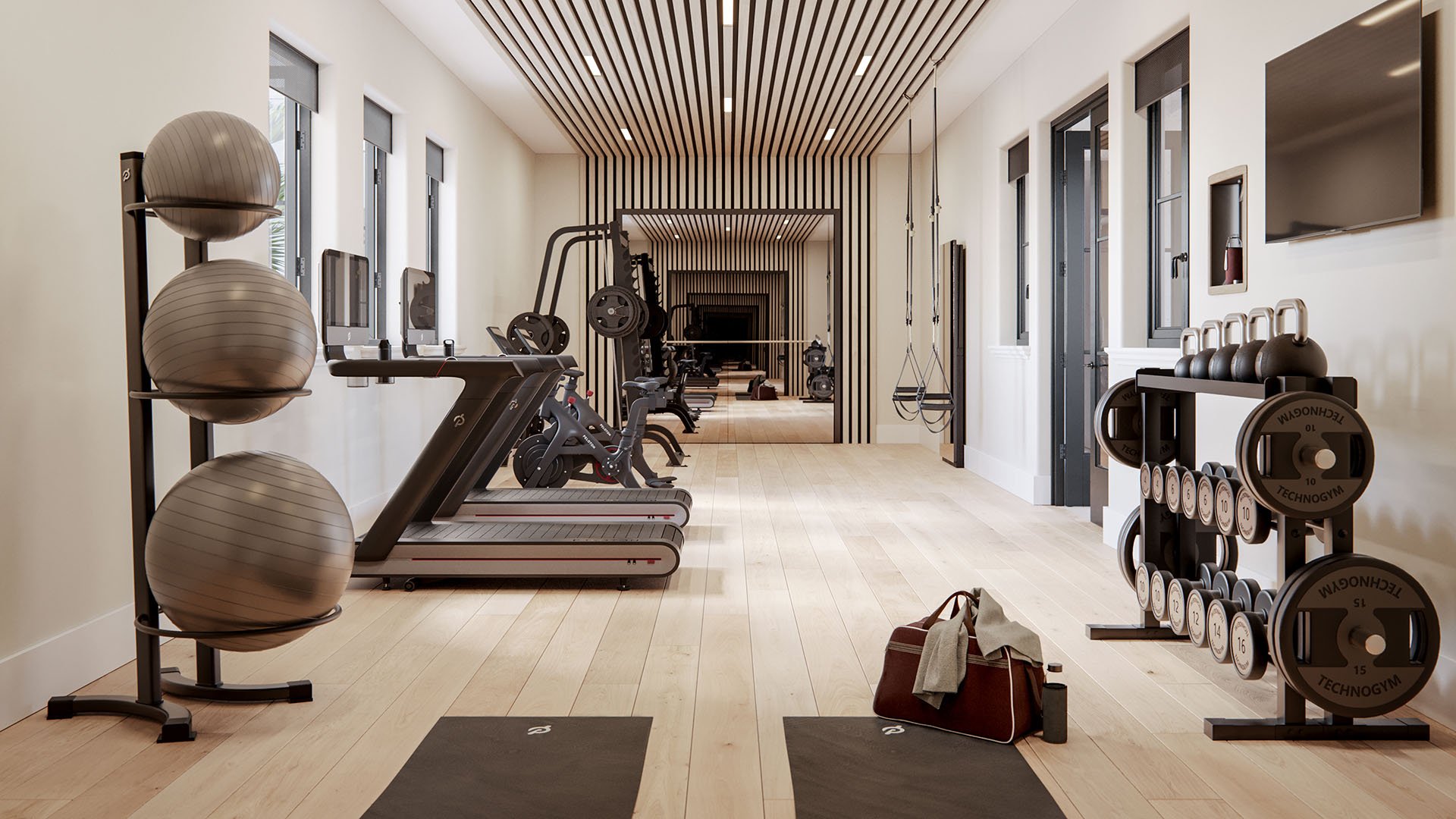
In Coral Gables, the most persuasive wellness amenity is not always the most photogenic. A dramatic spa suite, sculptural fitness room, or resort-style pool can make a strong first impression, but the better question is whether the amenity will serve your rhythm after the novelty fades. For luxury buyers, wellness is less a checklist than an ecosystem of recovery, privacy, movement, air, light, quiet, and ease.
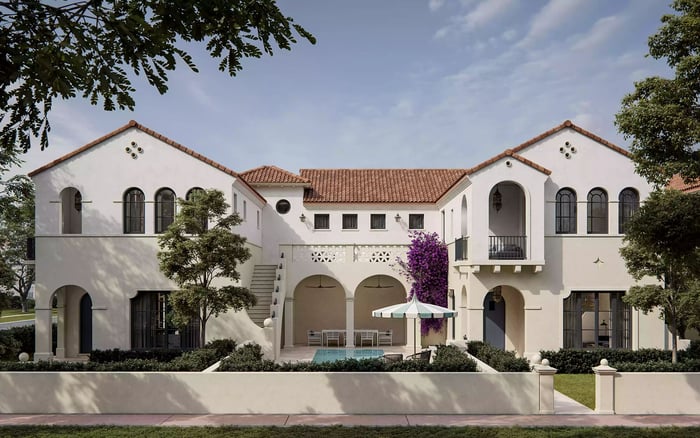
That distinction matters in Coral Gables, where many buyers are balancing residential calm with access to dining, business districts, schools, clubs, and the broader Miami cultural map. The right building should feel restorative without requiring a compromise in daily convenience. A residence that supports an early workout, a quiet swim, a shaded walk, and a dignified arrival sequence may be more valuable to your lifestyle than one with a longer amenity brochure.
Projects such as Cora Merrick Park, Ponce Park Coral Gables, and The Village at Coral Gables frame the local conversation around how new residential environments can meet refined expectations in the city. The evaluation, however, should remain personal and exacting.
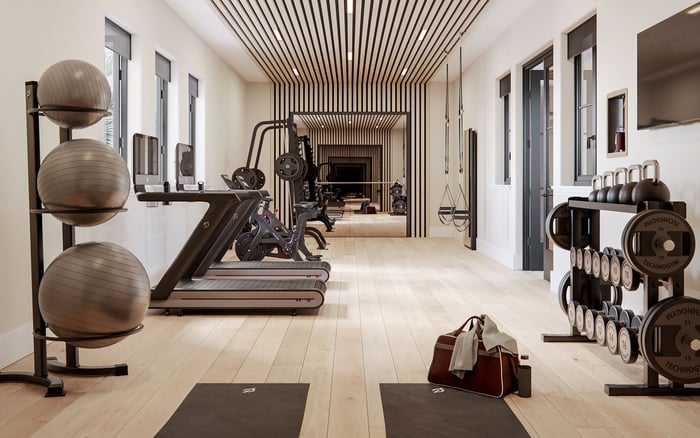
Wellness in a luxury residence begins with the ability to use amenities comfortably. A spa that is beautiful but constantly exposed may be less useful than a simpler, quieter space with thoughtful circulation. Ask how residents move from the elevator to fitness, pool, treatment, or lounge areas. Consider whether guest traffic crosses private wellness zones. Notice whether changing areas, lockers, restrooms, and towel service feel composed or improvised.
Privacy also extends to acoustics. A gym above or beside residences can become a concern if impact sound is poorly controlled. A pool deck may be elegant at noon and active in the evening. Buyers should visit at different times when possible, because wellness amenities are experienced over time, not only in renderings or showings.
The most successful amenity programs separate energy from stillness. Cardio, stretching, spa, pool, outdoor lounge, children’s activity, and social spaces should not feel like one continuous room with different furniture. Luxury is often found in thresholds, discretion, and the absence of friction.
Architecture sets the stage, but operations determine whether an amenity remains desirable. Buyers should ask how wellness spaces are maintained, how reservations are handled, whether private sessions are permitted, and how many residents the facilities are designed to serve at peak times. These questions are not glamorous, but they reveal whether the lifestyle promise is durable.
A wellness suite can be impressive on opening day, yet less compelling if staffing, scheduling, cleaning, and maintenance are unclear. Fitness equipment requires replacement planning. Steam, sauna, and water features require disciplined upkeep. Outdoor spaces need shade, drainage, and materials suited to South Florida’s climate.
This is where buyer discipline matters. Do not simply ask whether a building has wellness amenities. Ask how they work on a Tuesday morning, a holiday weekend, and after several years of ownership. A calm, well-run amenity floor can support daily life with a level of polish that design alone cannot replicate.
Coral Gables buyers often have a clear preference for its scale and character, but comparison remains useful. A nearby project such as The Well Coconut Grove may help frame questions around wellness positioning, even if the desired lifestyle is ultimately more Gables-centered. Similarly, a buyer who works in Brickell may compare commute patterns and daily transitions against the calmer residential profile they seek at home.
The purpose of comparison is not to chase the most amenities. It is to understand what you value most. Some buyers will prioritize a comprehensive fitness and recovery environment. Others may care more about gardens, terraces, walkability, and the ability to live without constant resort energy. A family may value practical wellness, including fresh air, secure outdoor space, and quiet bedrooms. A frequent traveler may value lock-and-leave convenience and reliable building services.
When comparing Coral Gables residences with Coconut Grove, Brickell, or waterfront areas, look past branding and focus on use. Which location makes a healthy routine easier? Which building allows you to host, exercise, rest, and return home with the least friction? Which residence feels composed at the front door, not only in the amenity brochure?
Wellness should not be confined to shared spaces. The private residence is where the concept either succeeds or fails. Natural light, ceiling heights, bedroom separation, outdoor space, storage, kitchen functionality, and the ability to create a quiet work or reading area all shape daily well-being. A spectacular amenity floor cannot compensate for a residence that feels crowded, noisy, or poorly oriented.
Pay particular attention to primary suites. The best wellness-oriented homes create a sense of retreat through circulation, bath layout, closet planning, and separation from social areas. Terraces should be evaluated for depth, privacy, exposure, and usability, not merely square footage. A terrace that can support breakfast, evening air, or quiet reading may contribute more to everyday wellness than a larger space that feels exposed or difficult to furnish.
Air, light, and sound deserve careful review. Ask about glazing, ventilation approach, mechanical placement, and proximity to elevators, amenity spaces, service areas, or loading zones. These details are rarely the headline, but they often decide whether a residence feels restful over time.
Wellness amenities are part of the ownership experience, but they also carry obligations. More elaborate amenities can mean more complex operations, maintenance, staffing, and reserves. Buyers should review budgets, association structure, rules, and any shared-service arrangements with care. The goal is not to avoid amenities. It is to understand whether the cost structure aligns with the level of service and the lifestyle you actually intend to use.
A disciplined buyer will distinguish between amenities that support value and amenities that merely photograph well. The strongest wellness environments feel integrated into the building’s identity, not added as a marketing layer. They are proportionate, private, maintainable, and aligned with the residents they are meant to serve.
For Coral Gables luxury residences, the essential question is simple: will this home make your life feel more graceful every day? If the answer depends only on a rendering or a list of features, keep looking. If the answer emerges through light, quiet, service, movement, and ease, the wellness proposition may be real.
What should buyers prioritize first in a wellness-focused Coral Gables residence? Start with privacy, daily usability, and the quality of the residence itself. Amenities should support your routine rather than distract from weak fundamentals.
Is a large amenity package always better? Not necessarily. A smaller, well-operated amenity program can be more valuable than a broad package that feels crowded, exposed, or difficult to maintain.
How important is the pool in a luxury building? It depends on how you plan to live. Evaluate sun exposure, privacy, seating, service flow, noise, and whether the pool area feels calm at different times of day.
Should I compare Coral Gables with Coconut Grove or Brickell? Yes, comparison can clarify your priorities. Coral Gables may appeal for a different residential rhythm, while nearby areas can provide useful lifestyle contrasts.
Do wellness amenities affect ownership costs? They can. Buyers should review maintenance obligations, staffing expectations, reserves, and rules before assigning value to any amenity package.
What questions should I ask about fitness spaces? Ask about hours, access, equipment maintenance, private training policies, acoustics, and how peak-time usage is managed.
Are spa amenities worth paying for? They may be, if they are private, well-maintained, and genuinely convenient. The value depends on whether you will use them regularly.
How should I evaluate outdoor wellness space? Look at shade, privacy, wind, drainage, furnishings, landscaping, and ease of access. Outdoor space should feel usable, not merely decorative.
Can the residence itself be more important than the shared amenities? Absolutely. Light, quiet, layout, storage, terrace usability, and bedroom separation often shape daily wellness more than shared spaces.
What is the most overlooked wellness factor? Operational quality is often overlooked. Cleaning, scheduling, staffing, and long-term maintenance determine whether amenities remain refined.
For a discreet conversation and a curated building-by-building shortlist, connect with MILLION.
If branded residences are on your mind — as a home or as an allocation — we would be glad to share what we are seeing, privately.
Begin a quiet conversation