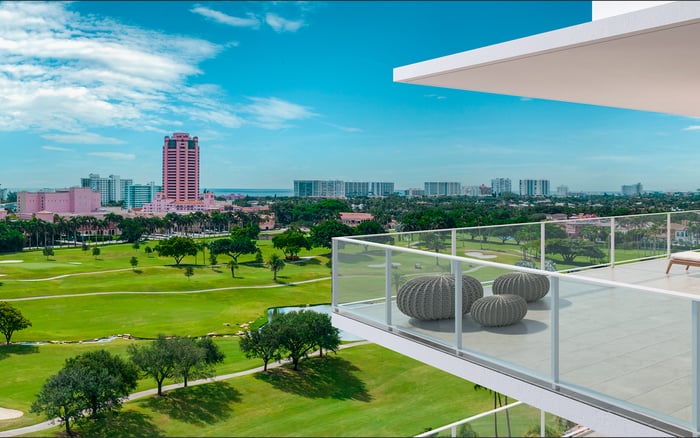
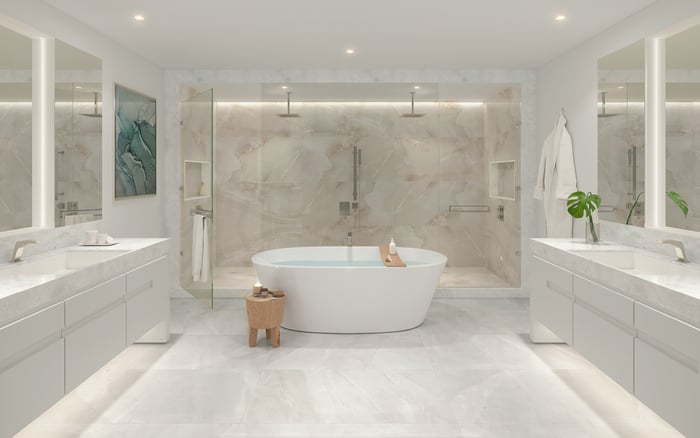
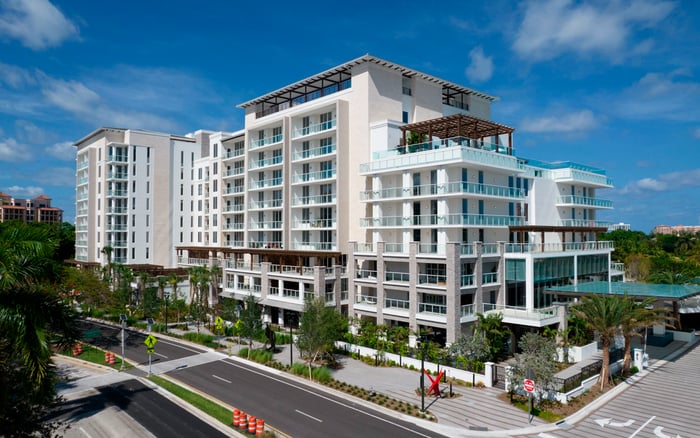
A buyer-focused look at Mr. C Residences Boca Raton as a lock-and-leave case study, weighing branded-residence service, ownership friction, and timing within Boca Raton’s maturing urban core.

For affluent buyers evaluating Mr. C Residences Boca Raton, the defining question is not whether Boca Raton can support another luxury address. It can. The sharper test is whether this residence model serves the buyer who wants South Florida access without the burden of South Florida property management.
That is the essence of lock-and-leave ownership. It is not simply the ability to close the door and spend the season in New York, London, Aspen, or Palm Beach. It is the confidence that the residence remains emotionally and operationally intact while the owner is elsewhere. For high-net-worth buyers, that distinction matters. A beautiful condominium can still become an administrative project. A true lock-and-leave property should reduce that friction.
Mr. C Residences Boca Raton is therefore best understood as a micro-case study in timing. Buyers are not only assessing a branded residential concept. They are weighing whether to enter a forming luxury district before the broader district narrative is fully priced into expectations.
Boca Raton has long carried a resort-suburban identity: private clubs, guarded enclaves, refined shopping, established wealth, and a strong preference for discretion. That foundation remains powerful. What is changing is the buyer’s desire for convenience without surrendering privacy.
The emerging urban-adjacent narrative is not about making Boca Raton feel like Brickell or Miami Beach. It is about compressing everyday luxury into a more walkable, service-oriented, lower-friction lifestyle. For buyers focused on market taxonomy, this is clearly a Boca Raton story, but the substance is more nuanced than a location label. The issue is whether Boca can mature its urban core while preserving the controlled elegance that made it valuable in the first place.
That is why the district matters. A single building can offer polished marketing, handsome interiors, and a compelling brand story. But long-term value is shaped by the surrounding ecosystem: daily convenience, neighboring luxury inventory, buyer depth, and the degree to which the district becomes a recognized destination for repeat high-end demand.
The branded-residence lens is central to the Mr. C conversation. A brand can give buyers a clear emotional shorthand: hospitality, style, recognition, and an implied standard of service. Yet sophisticated purchasers should separate the name from the operating reality.
The useful framework is simple. What does the brand actually do for daily ownership? How does the service model reduce friction? Are the turnkey features meaningful or mostly cosmetic? How should a buyer think about pre-construction risk? And when it is time to resell, will the brand help distinguish the property from other luxury inventory?
Those questions matter because the lock-and-leave promise is operational. It depends on maintenance burden, convenience, response quality, and the owner’s ability to arrive without reactivating a household from scratch. For a second-home buyer, especially one splitting time across markets, the value proposition is measured in hours saved, complications avoided, and confidence preserved.
Boca Raton should not be evaluated in isolation. Boca Raton’s upper-tier condominium audience already has reference points, including Alina Residences Boca Raton, Glass House Boca Raton, and The Residences at Mandarin Oriental Boca Raton. Each name contributes to the broader conversation about what Boca’s luxury buyer now expects from vertical living.
The comparison is not a checklist of amenities. It is a test of positioning. Some buyers will prioritize an established local luxury context. Others will respond to hospitality alignment, design personality, or the implied ease of branded living. The most strategic buyers will ask how each property fits into the next version of Boca Raton, not only the Boca Raton they already know.
This is where district momentum becomes a meaningful variable. If the urban core continues to mature as a luxury environment, early entrants may benefit from owning into the narrative before it feels inevitable. If momentum remains uneven, the building’s own service quality and brand clarity become even more important.
At the million-dollar-plus level, timing is rarely about chasing a bargain. It is about purchasing before a thesis becomes consensus. In a mature oceanfront market, much of the story is already visible. In a forming urban luxury district, the buyer is underwriting both present livability and future perception.
For Mr. C Residences Boca Raton, the acquisition question has two layers. First, does the residence support the owner’s lifestyle today, particularly for travel-heavy households? Second, does the district have enough forward momentum to strengthen the exit story later?
This is not speculation in the casual sense. It is disciplined thesis-building. Advisors and buyers should weigh the brand, service model, turnkey experience, construction-stage considerations, and comparable luxury options. They should also ask whether future buyers will understand the property quickly. In resale, clarity matters. A residence with a distinct identity often travels better through market cycles than one dependent on generic luxury language.
Boca Raton is not developing in a vacuum. South Florida’s luxury buyer increasingly compares across multiple micro-markets. The same household may consider Boca, West Palm Beach, Coconut Grove, Miami Beach, or Fort Lauderdale depending on family patterns, airports, clubs, schools, and lifestyle rhythm.
That is why related branded concepts such as Mr. C Residences West Palm Beach and Mr. C Tigertail Coconut Grove matter in the mental map, even when the final decision is local. They help buyers place Boca within a broader service-led residential movement rather than a one-off project.
For Boca, the opportunity is distinct. It can offer urban-core convenience without fully adopting the intensity of larger city districts. That balance is appealing to buyers who want access, polish, and simplicity, but still value restraint.
A serious buyer should begin with use case. Will the residence be occupied seasonally, intermittently, or as a primary home with frequent travel? The answer changes the importance of staffing, maintenance, building operations, and ease of arrival.
Next, test the brand promise. The name should support the lifestyle, not replace due diligence. Ask how the ownership experience will feel in ordinary moments: receiving guests, coordinating service, leaving for extended periods, and returning on short notice.
Finally, consider exit positioning. The best luxury purchases tend to be legible. A future buyer should be able to understand why the property matters in one conversation: branded residence, Boca Raton urban-core maturation, reduced ownership friction, and a clear place within the local competitive set.
Mr. C Residences Boca Raton is compelling because it sits at the intersection of several buyer themes: branded living, low-friction ownership, Boca Raton’s evolving urban core, and the timing question behind district momentum. The decision is not simply whether to buy a luxury condominium. It is whether this model can deliver the convenience affluent owners now expect while positioning them ahead of a broader shift in Boca’s residential narrative.
For the right buyer, the appeal is not loud. It is practical, discreet, and strategic.
What is the core buyer question at Mr. C Residences Boca Raton? The question is whether the property can deliver true lock-and-leave ownership while benefiting from Boca Raton’s urban-core maturation.
Why does district momentum matter? District momentum can influence long-term perception, buyer depth, and future exit positioning beyond the appeal of the individual residence.
Is this mainly a branded-residence story? Branding is important, but buyers should focus equally on service, convenience, ownership friction, and the strength of the surrounding district.
Who is the likely buyer profile? The natural audience includes million-dollar-plus purchasers, high-net-worth buyers, and advisors evaluating South Florida acquisition strategy.
What does lock-and-leave really mean? It means the residence should support frequent travel or split-market living with minimal maintenance burden and a reliable operating model.
How should buyers compare Boca Raton projects? They should compare positioning, service expectations, lifestyle fit, and resale clarity rather than relying only on amenity language.
Does pre-construction change the analysis? Yes. Buyers should assess construction-stage risk, timing, contract structure, and whether the finished product will match the stated lifestyle thesis.
Why is second-home ownership relevant here? Many affluent buyers want a residence that can be used effortlessly between travel, family obligations, and other homes in different markets.
Is this an investment decision or a lifestyle decision? It is both. The best analysis considers personal use first, then tests whether the district and brand support future marketability.
Does boutique positioning matter in Boca Raton? Boutique positioning can matter when it creates identity, privacy, and clarity, but it must be supported by operations and buyer demand.
For a confidential assessment and a building-by-building shortlist, connect with MILLION.
If branded residences are on your mind — as a home or as an allocation — we would be glad to share what we are seeing, privately.
Begin a quiet conversation