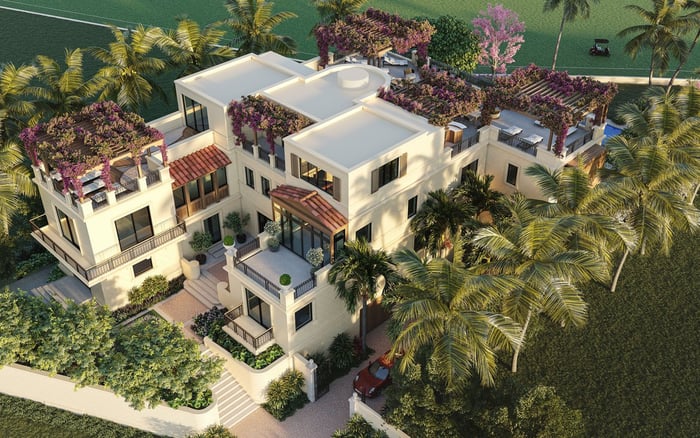
Pinecrest has become the quiet counterpoint to Miami’s high-rise glamour, attracting buyers who want land, discretion, and a polished neighborhood rhythm without leaving the metro’s cultural gravity. Here, luxury is expressed through setbacks, gardens, and architecture that reads as personal rather than performative. Many households also prioritize proximity to respected public and private education options, shaping how they search, renovate, and plan daily logistics. This guide frames what today’s Pinecrest buyer values, the trade-offs versus coastal condos, and the due diligence that protects long-term enjoyment.
Pinecrest appeals to luxury buyers who want full access to Miami without living inside its most performative corridors. The draw is not a nightly rotation of rooftop scenes. It is the steadier pleasure of returning to space, shade, and a pace that feels intentionally separated from the city’s velocity.
Here, the home is not an accessory to a building’s amenity program. It is the center of gravity. The property functions like a private resort: mornings framed by natural light and greenery, evenings that end at a driveway that reads as a threshold rather than a parking strategy. For families and multigenerational households, the value proposition can be straightforward. In South Florida, land and privacy can read as the highest form of luxury.
That distinction matters because the Miami market is a study in contrasts. There is oceanfront spectacle. There is downtown energy. And there is the discreet suburban estate that serves as a long-term base. Pinecrest sits confidently in that third lane. It does not compete with Miami Beach. Instead, it offers a quieter definition of status built on daily ease, architectural individuality, and a neighborhood cadence that feels residential rather than resort-like.
The mindset of a Pinecrest buyer is typically less about a specific view corridor or the newest amenity deck and more about how the property lives on an ordinary week. Shoppers measure setbacks, street ambience, and how noise and privacy behave at different times of day. Luxury becomes a form of control: control of sound, control of sight lines, control of how the home presents from the street, and control of routines that need to fit together cleanly.
In that sense, Pinecrest is not a compromise. It is a choice. You are choosing to prioritize calm over spectacle, stewardship over staff, and a home that feels personal over one that feels curated for an audience.
Pinecrest’s signature advantage is the ability to buy an estate-like experience with breathing room. Even when a home is contemporary and architecturally assertive, it often reads as restrained because landscaping and setbacks buffer it. For buyers who want a “house that behaves like a compound” without feeling defensive, this is the lane.
Design flexibility is central to the appeal. A single-family home buyer can prioritize a motor court, a deep backyard, a guest wing, or an indoor-outdoor plan that supports entertaining without feeling staged. Instead of adapting your life to shared building spaces, you can tailor the home to your habits: morning workouts, family dinners, hosting friends, or simply having quiet, defined zones for work and rest.
Privacy, at this level, is more than a gate and tall hedges. It is a choreography of sight lines, sound, and spatial planning. Buyers often look for mature landscaping, thoughtful fenestration, and floor plans that place primary suites and everyday living areas away from front exposure. When privacy is executed well, it does not feel like hiding. It feels like serenity, and it allows the home to be lived in with ease rather than vigilance.
For the ultra-premium audience, craftsmanship becomes the differentiator. In a vertical building, lifestyle is often judged by the lobby, staffing, and amenity program. In Pinecrest, the evaluation is more intimate. Millwork, natural materials, proportions, ceiling heights, and the transition from formal rooms to relaxed spaces matter because they define how the home feels day after day. The best estates in this category do not merely look expensive. They feel intuitive, and they hold up over time when the design language is grounded in quality.
The trade-off is stewardship. Land brings responsibility. Pools, roofs, landscaping, exterior lighting, drainage, and smart-home systems are not abstract line items. They are ongoing commitments. For the right buyer, that is not a drawback. It is an advantage, because it means you can curate and refine the property over years rather than accept a building-wide standard that may not align with your priorities.
Pinecrest is frequently discussed through the lens of education. Even without treating any single campus as a guarantee, many households choose the area because day-to-day school logistics can define quality of life in Miami-Dade. In practice, “school appeal” is rarely about a headline. It is about how a family’s week functions.
Proximity changes the texture of mornings and afternoons. Shorter drives can reduce daily friction, make after-school commitments more realistic, and allow the home to support a cadence that is difficult to replicate in denser neighborhoods where commutes and traffic patterns can be less forgiving. When buyers talk about schools, they are often describing an ecosystem: public options, private options, enrichment, and the social fabric that forms around these routines.
The private school conversation is also a signal about values. Many luxury buyers want optionality. They want the ability to adjust educational paths as a child’s needs evolve or as a family schedule changes. The Pinecrest home search often includes a map exercise that goes beyond the address itself. Buyers look at how the home connects to core obligations and how predictable the daily loop feels.
This dynamic matters even for buyers without children. School-driven demand can influence neighborhood stability, long-term resale interest, and the broader community profile you live among. Even if education is not your personal priority, the market can behave as if it is. That can be relevant if you are planning a future sale or treating the purchase as a long-hold asset in South Florida.
The discipline is to avoid assumptions. Boundaries, admissions policies, and availability can change. A refined approach is to treat the home as the primary asset, then confirm educational fit separately with the appropriate institutions and professionals.
Pinecrest tends to attract a blend of established local wealth and new-to-market executives who want to live in Miami while maintaining a traditional residential environment. Some are founders and finance leaders, some are healthcare professionals, and some are creative leaders who prefer discretion over nightlife. Many are simply people who have experienced high-rise living and decided they want control, quiet, and the ability to host on their own terms.
In 2026, the luxury conversation leans increasingly toward wellness and privacy. Buyers are often less interested in theatrics and more focused on how a home supports performance and recovery. That translates into kitchens designed for real cooking, bedrooms configured for true rest, and outdoor areas planned for movement, family time, and entertaining without friction. The best properties in this category feel like they were designed to be lived in, not photographed once.
Security expectations are also more sophisticated. Not every buyer wants to live behind a guardhouse, and many prefer low visibility over overt fortification. Still, layered security and reduced exposure can be important. Some shoppers compare Pinecrest with nearby gated community options because a gated entrance can read as a convenience feature as much as a security measure. There is no universal answer. The best outcome is a home whose privacy is achieved through design and site planning first, with hardware as support rather than the strategy.
Pinecrest also attracts buyers who want a home that can evolve. A mansion can shift from family base to entertaining platform, from multigenerational living to an executive retreat. When a property can adapt without major reconfiguration, it becomes a lifestyle asset rather than a single-season statement.
A Pinecrest mansion purchase is not only a design decision. It is a strategy decision. Ultra-premium buyers are best served by aligning the search with how they actually live, then filtering inventory through a clear set of non-negotiables.
Start with land and orientation. A beautiful interior can be compromised by a site that does not live well. Consider how the sun moves across the property, how outdoor areas feel at different times of day, and whether the home offers multiple pockets of privacy rather than one large open lawn. Look for landscaping potential and natural buffers because they can matter as much as finishes in the day-to-day experience.
Next, evaluate floor plan logic. In this segment, a home can be large and still feel inconvenient. Prioritize circulation that works. The best layouts separate formal entertaining from everyday family life while keeping the transition between the two effortless. Note where guests enter, how service areas are tucked away, and whether the home supports both intimate living and larger gatherings without forcing you to choose one mode over the other.
Then, scrutinize renovation narratives. In South Florida it is common to see properties described as “updated,” but that does not always mean upgraded. Distinguish between changes made for taste and improvements made for performance. Mechanical systems, roof condition, windows, waterproofing, and drainage planning can matter more than decorative choices, especially when the goal is long-term enjoyment with fewer surprises.
Finally, do not confuse uniqueness with value. Architectural distinction is an advantage when it is timeless and well executed. It can be a liability when it is overly specific, inefficient, or difficult to maintain. The best luxury purchases in Pinecrest feel personal while remaining liquid within the ultra-premium universe.
Some buyers consider Pinecrest alongside coastal condos and new branded towers. The most useful comparison is not “better or worse.” It is “what do you want your days to feel like.”
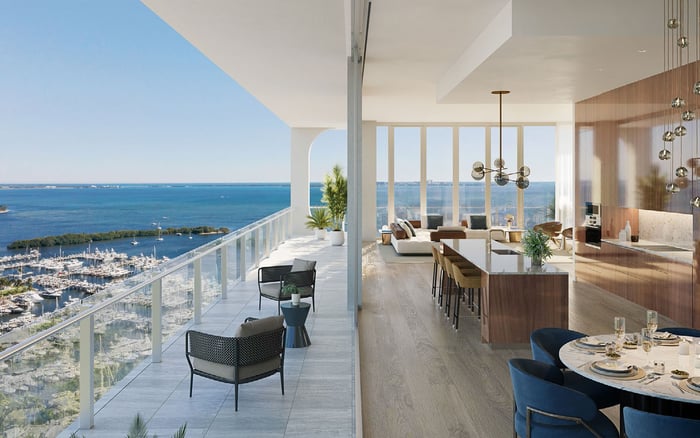
Vertical luxury can deliver lock-and-leave convenience, a staffed arrival experience, and shared amenities that reduce the operational load for an owner. It may also place you closer to dining, arts, and walkable pockets within Miami’s urban energy. For a reference point on high-service living in Miami’s urban fabric, explore Four Seasons Residences Coconut Grove.
Pinecrest offers a different kind of luxury. Instead of curated amenities, you curate your own. Instead of inheriting a building’s design language, you choose an architectural identity that reflects your preferences. Instead of neighbors down a hallway, you often have distance, landscaping, and the ability to shape how your home reveals itself. The property becomes a private world built around your schedule.
The trade-offs are practical. With an estate, you plan for maintenance and, in many cases, staff, even if you keep the operation lean. Some conveniences will be less immediate than in a tower built around service. In exchange, you gain flexibility that a condo cannot match: the ability to redesign, expand, and personalize without being bound to an association’s taste or a shared standard.
Coconut Grove is a useful mental comparison because it can tilt either way. It can feel residential and green while remaining connected to the city’s cultural and dining momentum. Buyers who love Coconut Grove sometimes choose Pinecrest when they want deeper suburban quiet and more land per household without losing proximity to Miami’s core.
Luxury buyers in Pinecrest should treat due diligence as part of the acquisition, not an afterthought. The goal is not caution for its own sake. The goal is to protect the lifestyle you are buying.
Confirm what you are actually purchasing. Review surveys, boundaries, and any recorded easements carefully, especially on larger lots where landscaping and setbacks can create the impression of more usable space than may be legally included. If the home has additions or major renovations, confirm permits and final approvals with the appropriate professionals.
Inspect beyond the cosmetic. A mansion can photograph flawlessly and still conceal expensive issues. Focus on roofing, waterproofing, windows and doors, HVAC performance, electrical capacity for modern loads, and drainage behavior after heavy rain. If the property includes extensive outdoor lighting, irrigation, or automation, verify condition, documentation, and serviceability.
Evaluate the outdoor lifestyle as a system. Outdoor kitchens, pools, terraces, and mature landscaping are experiences, and they are also maintenance programs. Understand what it takes to keep them beautiful, and whether that program fits your travel rhythm. If you want true lock-and-leave periods, plan for monitoring and support accordingly.
Clarify neighborhood expectations. Even in quiet areas, noise, privacy, and sight lines can vary block by block. Visit at different times of day. Pay attention to traffic patterns, school-hour flow, and how the street feels after dark. A property can be ideal, but the block is what you live with.
Consider the governance layer. Some buyers prefer the predictability of an association; others prioritize freedom. In the Pinecrest search, it is common to compare open neighborhoods with gated community environments nearby. There is no universal best choice. The right choice is the one aligned with how you want to live and what you want to control.
How do Pinecrest buyers balance land and maintenance expectations?
Most set expectations early: land is a lifestyle asset, but it comes with an operating plan. Align your purchase with how much time you want to spend managing vendors, landscape, pool care, and systems. If you travel often, build in staffing and monitoring from day one so the home stays effortless, not demanding.
What should I prioritize first: lot quality, architecture, or renovations?
Start with the lot and orientation because they are the hardest to change. Then evaluate architecture and floor plan logic since they dictate how the home lives. Renovations matter, but in this segment it is essential to separate visual updates from performance upgrades like roof condition, mechanical systems, waterproofing, and drainage.
How can I evaluate “school appeal” without relying on assumptions?
Treat education as a separate diligence track. Use proximity as a lifestyle variable, but verify boundaries, policies, and availability directly with the appropriate institutions and professionals. Let the home remain the primary asset, and confirm school fit as its own decision.
When does a gated community make more sense than an open neighborhood?
Choose a gated community when you value a defined governance layer, a controlled entry point, and the predictability that can come with it. Prefer an open neighborhood when autonomy and fewer shared rules are a priority. Either way, aim for privacy that is supported by design and site planning, not only by gates.
To explore Pinecrest and the broader Miami market with discretion, connect with MILLION Luxury.
If branded residences are on your mind — as a home or as an allocation — we would be glad to share what we are seeing, privately.
Begin a quiet conversation