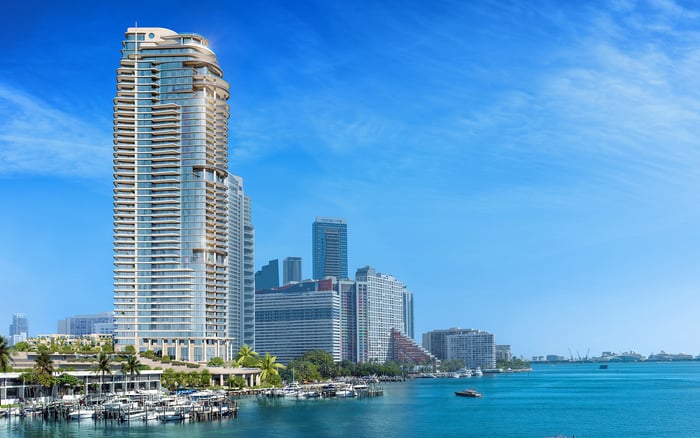
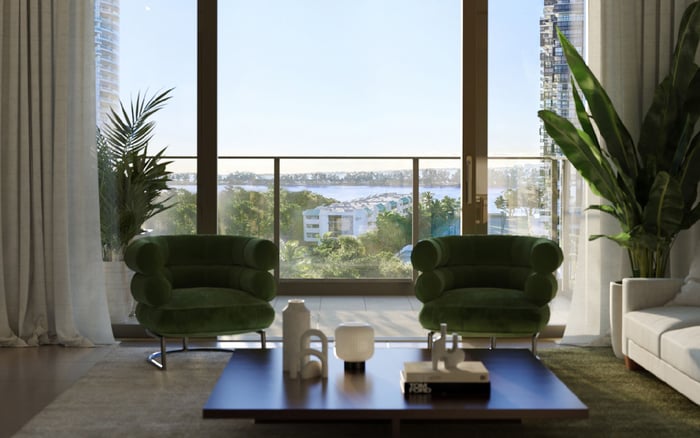
In South Florida, a truly great boutique hotel can do more than refine a neighborhood’s social calendar. It can quietly reset buyer expectations for service, design, and lifestyle, and those expectations often spill into nearby condominium pricing, liquidity, and long-term positioning. This guide breaks down the mechanisms behind the “hotel halo,” from walkable dining and wellness to security posture and global brand signaling. It also outlines practical due diligence for buyers evaluating Miami-beach and Brickell homes with five-star adjacency.
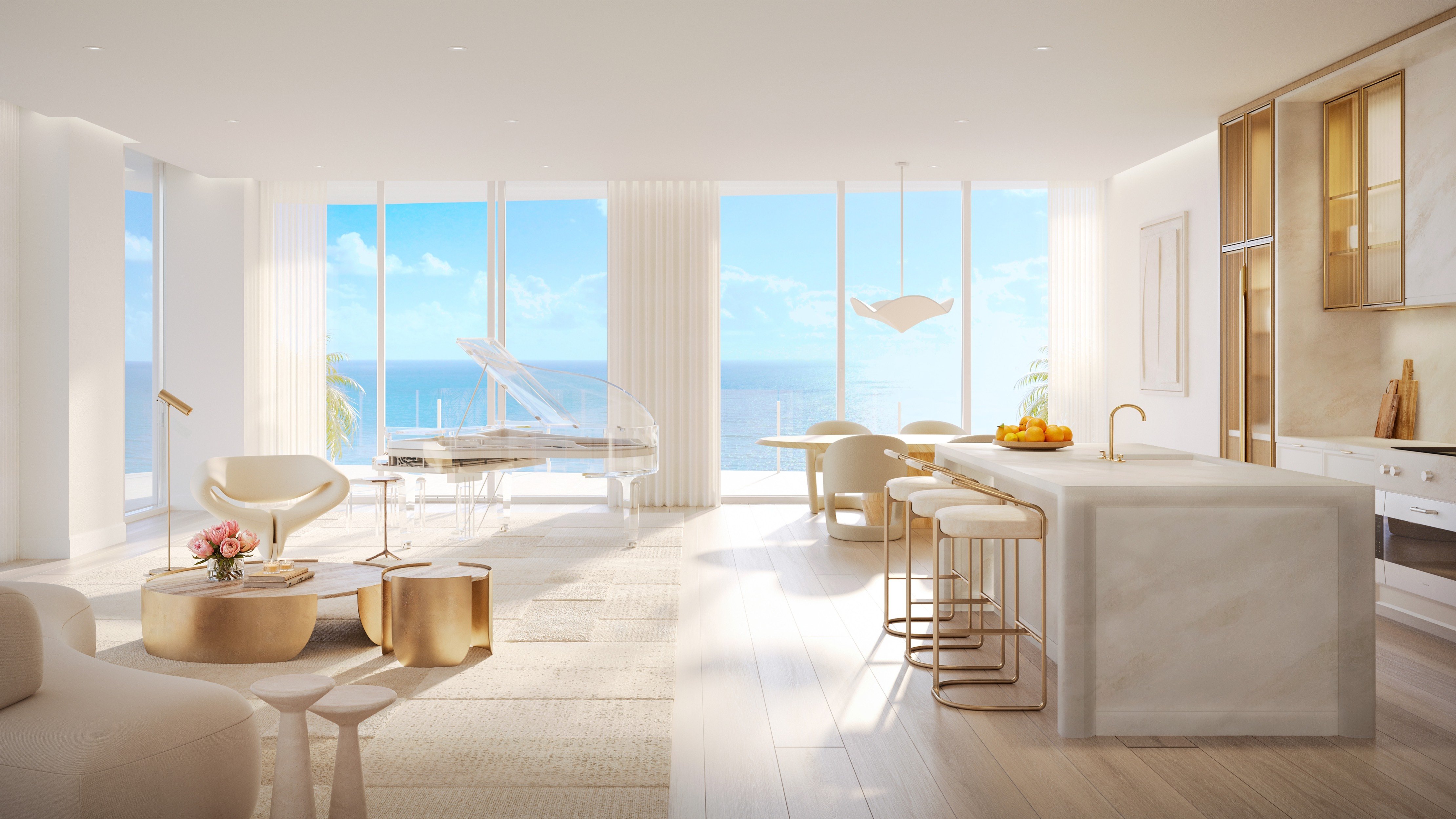
South Florida’s luxury condo market is no longer judged only as a real-estate market. It is judged as a lifestyle market. Today’s buyers compare more than square footage, ceiling height, and stone selection. They compare how a home performs on an ordinary Tuesday, how it hosts on a Saturday, and how it holds its position as an Investment when conditions tighten.
That shift is where the boutique hotel effect becomes real. A nearby five-star hotel can operate as an always-on amenity ecosystem that a condominium does not need to build, staff, or continually refresh. At its best, a hotel supplies the neighborhood with daily ritual and international relevance: a consistent coffee stop, a lobby that functions like a living room, dining that makes entertaining feel easy, and a wellness cadence that attracts the same clientele shopping the ultra-prime condo stack.
In Miami-beach and Brickell, this kind of adjacency often becomes part of the sales language. It is not about turning a building into a hotel. It is about benefiting from the gravitational pull of one, and understanding how that pull can influence demand, confidence, and perceived value.
A large resort can be a destination. A boutique five-star hotel, by contrast, often becomes a curated neighborhood node. The strongest examples are built for repeat use, not one-time tourism. That nuance matters for condominium value because repeat patrons tend to be the same people who evolve into second-home buyers, long-term residents, and high-trust referral sources.
In the luxury context, boutique does not mean small for the sake of being small. It means control. It means design cohesion. It means an atmosphere that feels intentional and predictable. It also means a service standard that is consistent enough to become part of a buyer’s baseline.
When a hotel delivers those elements reliably, it can quietly re-rate a micro-market. You can hear it in buyer conversations. They stop describing only “the building” and start describing “the neighborhood experience.” When that experience is anchored by a five-star operator, many buyers underwrite a premium with more conviction, even if they cannot point to one clean spreadsheet line that explains it.
The boutique hotel effect generally works through multiple, overlapping mechanisms. None of these are guarantees, and all of them depend on context: block-by-block walkability, street behavior, the quality of the hotel itself, and how well nearby residences translate that energy into livability.
Still, these are the recurring reasons luxury buyers often pay more, move faster, and concede less when the right hotel is nearby.
A five-star hotel can extend a condominium’s livability without adding HOA complexity. Residents can fold hotel restaurants, bars, wellness offerings, and social spaces into their routine. That can be especially compelling for buyers who want a lock-and-leave home yet still expect a full lifestyle circuit the moment they arrive.
In Miami-beach, this tends to resonate with buyers who want a feeling of curated ease without managing constant logistics. In Brickell, it can matter to busy executives who value proximity to polished venues that do not require planning, and who prefer a neighborhood that functions efficiently day and night.
The core value is simple: if the neighborhood supplies high-quality routine, the residence feels more usable. Usability is often an underrated driver of premium pricing.
Great hotels set a visual standard. They influence landscaping, lighting, storefront quality, and the kind of retail that follows. In top-tier submarkets, that influence can produce a more cohesive streetscape and a stronger sense of arrival.
From a valuation perspective, the environment is not just “pretty.” It shapes perception, and perception shapes negotiating posture. When surrounding blocks look considered and maintained, buyers tend to treat the area as a premium address rather than a convenient one.
This is also where micro-location starts to matter. Two condos can sit within the same general neighborhood and price very differently if one is framed by a coherent streetscape and the other feels visually noisy or transitional.
Even when a condo is not a branded residence, five-star adjacency can raise what buyers expect from the building itself: concierge responsiveness, valet cadence, package handling, and day-to-day operational polish. Some buildings rise to meet that expectation, and those that do can earn reputational lift.
In practice, this creates a selection effect. Buyers trained by five-star service often prefer residences within easy reach of it, and they bring those standards into their evaluation process. Over time, that preference can translate into deeper demand and stronger pricing power for buildings that feel aligned with the surrounding service culture.
This is also where management quality becomes a value input. The gap between a hotel-level experience and a residential operation is not always large, but it is visible to discerning buyers.
Luxury frequently communicates itself through cues rather than explanations. A neighborhood anchored by a respected five-star hotel can function as soft validation, particularly for out-of-town buyers. It reduces uncertainty by signaling that the area can support a certain standard of dining, security posture, and discretion.
This effect can be especially relevant for international and bi-coastal buyers early in their search, when they are still translating Miami’s micro-markets from afar. A recognizable hotel experience can act as a proxy for neighborhood quality until they have enough time on the ground to refine preferences block by block.
Importantly, this signaling is not about hype. It is about clarity. In luxury, clarity lowers friction, and low-friction decisions tend to close faster.
High-performing luxury assets are often the easiest to explain. A nearby five-star boutique hotel gives a listing agent a clean shorthand narrative: walkability to a known lifestyle anchor, an effortless entertaining circuit, and an environment that feels curated.
Liquidity is not only about how quickly a home sells. It is also about how cleanly a seller can defend a premium through negotiation. A strong neighborhood story reduces the number of objections a buyer feels compelled to raise, and it can help keep conversations focused on value rather than on trade-offs.
That matters in South Florida, where buyers frequently compare multiple buildings across multiple micro-markets in a short time window. The easier the story is to communicate, the stronger the asset tends to perform when competition increases.
Miami-beach and Brickell can both benefit from five-star adjacency, but the value lift often expresses itself differently.
In Miami-beach, the premium is commonly tied to an experience of escape. Buyers often prioritize quiet luxury, design purity, privacy, and the ability to host without friction. A nearby boutique hotel can provide the hospitality layer while the condo remains a true personal sanctuary.
In Brickell, the premium is frequently tied to convenience and status density. Hotel-adjacent living can mean a seamless transition from workday to evening, plus an address that reads as internationally current. For some buyers, it is also practical: hosting business guests nearby without dedicating square footage to a guest room.
The shared thread is confidence. When the right five-star anchor is present, the neighborhood can feel solved. That “solved” feeling supports faster decision-making and steadier premium retention.
For buyers drawn to hotel-caliber living and looking for a reference point in South Florida’s luxury landscape, explore The Surf Club Four Seasons Surfside.
Use it as a lens for what top-tier buyers respond to: a meticulous sense of arrival, a tone of discretion, and the expectation that lifestyle is integrated rather than appended. Specific offerings, policies, and ownership privileges can vary, so confirm details directly with the project team and your advisor.
Hotel adjacency is a powerful narrative, but it is not automatically positive. Luxury value is sensitive to friction. The same hotel that supplies lifestyle can introduce variables that deserve early, practical evaluation.
A disciplined buyer treats adjacency like any other premium feature: attractive on paper, but only valuable if it performs in real life.
A five-star hotel can change street energy, especially during peak weekends and event seasons. Pay attention to how the drop-off functions at night, how ride-share queues behave, and whether outdoor music or rooftop programming is audible from the residence.
If tranquility is part of what you are buying, visit at multiple times: early morning, late evening, and weekend peak. The objective is not to avoid energy. It is to confirm that the energy matches the lifestyle you want to live.
Also consider the practicalities of access. Convenience can flip into friction if curbside activity regularly interferes with residential arrival.
Some boutique hotels become photo backdrops. That can draw casual foot traffic and content creation. Even when the intent is harmless, it can change the feel of the sidewalk and the ease of coming and going.
In Miami-beach, privacy is often a luxury feature on its own. If discretion matters to you, evaluate sightlines, the separation of entries, and how public the hotel’s most popular spaces are. The more a scene concentrates at the curb, the more it can influence the lived experience nearby.
High-end hotels typically maintain strong security, and their presence can create a perception of safety through staffing and lighting. At the same time, hotels attract visitors. A luxury condo near a hotel can feel safer and busier simultaneously.
Focus on predictability. How consistent does the street feel at different hours? Does the flow of people seem controlled or chaotic? In luxury, predictability is often more valuable than raw activity level.
One subtle risk is the expectation gap. If a buyer becomes accustomed to the hotel’s cadence, they may judge the condominium’s operations more harshly. That can affect satisfaction and, later, the resale narrative.
Before buying, look for evidence that the building invests in staff training, arrival management, and day-to-day polish. Even without hotel branding, an operationally excellent condo can capture some of the same lifestyle premium because it meets buyers at the level of service they now consider normal.
Hotels can accelerate retail and restaurant turnover. Trend can be a value driver, but constant churn can read as instability. Luxury buyers often pay a premium for neighborhoods that feel both current and enduring.
Ask whether the best nearby venues are built for longevity and whether they attract residents, not only visitors. A resident-supported ecosystem tends to hold up better through seasonal changes and shifting tastes.
There is no single metric that applies across every building. The most reliable approach is comparative and behavioral: observe how the market behaves, then compare like with like.
In other words, focus on what buyers do, not what headlines suggest.
Pricing power shows up when sellers can defend their ask through demand. Practically, that can look like fewer concessions, cleaner negotiations, and stronger buyer conviction. The hotel halo contributes when it makes the location feel like a lifestyle choice rather than a compromise.
Be careful not to confuse an ambitious list price with true pricing power. In luxury, real strength is revealed in the terms that survive the negotiation.
When a five-star boutique hotel opens or rises in prominence, pay attention to whether the buyer profile shifts upward. Do more buyers arrive from top gateway markets? Do purchasers treat the area as a long-term base rather than a short seasonal stop?
These shifts are often visible first in broker conversations and in the tone of the market. Data can lag, but behavior rarely does. Listen for changes in what buyers ask for, how quickly they commit, and what trade-offs they refuse.
Walkability is not a score. It is a sequence. Can you walk to coffee that feels consistent? Can you walk to dinner that feels special without feeling like a scene? Can you walk to wellness that feels elevated rather than crowded?
When the answer is yes, buyers often view the home as more usable, and usability supports premium valuation. In South Florida, where driving can be a constant variable, a genuinely workable pedestrian routine can be a differentiator.
A hotel can elevate a micro-market, but future development can change view corridors, traffic patterns, and the overall feel. Ask what is planned nearby and consider how additional density could enhance or dilute the boutique character.
Because this is South Florida, where change can be rapid, sophisticated buyers treat today’s street experience as a snapshot, not a promise.
Hotel proximity can justify a premium, but the premium should be earned. The objective is to pay for durable value, not novelty.
The best outcomes come from aligning the lifestyle upside with disciplined underwriting.
The strongest hotel-adjacent condos feel close to the action, but not trapped inside it. Look for residences where the entry experience, elevator privacy, and acoustics create separation from street-level energy.
This is where a building’s internal circulation matters. Even within the same address, some stacks and approaches feel materially calmer than others.
In many South Florida buildings, orientation matters. Even without discussing specific unit layouts, the principle is consistent: ask which exposures and elevations feel most protected from street activity, then confirm with multiple visits.
Treat the evaluation as experiential. What you hear, see, and feel in person will matter more than what a listing description suggests.
A five-star hotel can host glamorous events, but daily luxury is what holds value. Focus on whether the neighborhood supports routine: morning coffee, fitness, a low-key business lunch, and the ability to secure a last-minute dinner reservation.
When everyday luxury works, the home becomes more than a weekend address. That broader usability deepens demand, and deeper demand tends to support stronger long-term pricing.
For ultra-premium buyers, the strongest assets are those where lifestyle and Investment logic overlap. Hotel adjacency can support that overlap by strengthening narrative clarity, widening demand depth, and adding global familiarity.
In Miami-beach, the upside often reads as emotional and experiential. In Brickell, it tends to read as convenience-driven and status-reinforced. In both cases, disciplined underwriting and on-the-ground observation remain the best protection against paying for hype.
If you own a luxury condo near a five-star boutique hotel, the strategic move is to align your property story with the hotel’s strengths without implying a formal affiliation. Sellers can highlight the neighborhood circuit, the quality of nearby venues, and the ease of hosting, while keeping the tone discreet and precise.
Developers often view hotel adjacency as validation that a submarket can support higher design standards and a more service-forward product. Even when a building is not branded, the hotel halo can raise the baseline of what buyers expect at delivery, from arrival choreography to operational polish.
At the five-star level, hotels do not just bring visitors. They can bring confidence, and confidence is a cornerstone of luxury value.
How close does a five-star hotel need to be to influence condo value?
In practice, “close” means usable. If the hotel is part of your actual routine, as in dining, wellness, meetings, or entertaining, the adjacency is more likely to register as value. If it is technically nearby but not walkable or not convenient to access, its influence can fade quickly.
What are the biggest downsides of living near a boutique hotel?
The common friction points are noise, curb congestion, and changes in sidewalk energy during peak weekends and event seasons. Privacy can also be affected if the hotel becomes a photo-friendly destination. The right choice depends on whether you want the neighborhood’s energy as a feature or experience it as a constant variable.
How can I confirm whether a condo’s operations match hotel-level expectations?
Look beyond finishes and amenities and evaluate the operating rhythm: arrival management, staff presence, responsiveness, and overall upkeep. Visit at different times of day, observe how the lobby and curb function, and review what the building prioritizes in day-to-day service delivery. The goal is to identify whether the building’s standards feel consistent with the expectations the neighborhood has trained into buyers.
Does hotel adjacency matter more in Miami-beach or Brickell?
It can matter in both, but for different reasons. In Miami-beach, the lift is often tied to a curated sense of escape paired with nearby hospitality. In Brickell, the lift often ties to convenience, status density, and seamless transitions between work and lifestyle. The strongest premium tends to appear where the hotel improves everyday usability, not just weekend glamour.
For a discreet, hotel-adjacent strategy tailored to South Florida, connect with MILLION Luxury.
If branded residences are on your mind — as a home or as an allocation — we would be glad to share what we are seeing, privately.
Begin a quiet conversation